Thursday, 16 December 2021

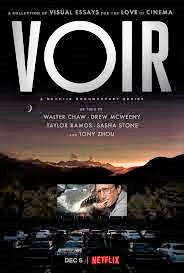
Streaming on Netflix - John Baxter draws attention to a new series devoted to analysing the movies - VOIR (Executive Producers David Fincher and David Prior, USA 2021)


VOIR OU NE PAS VOIR,

            What is one to make of Voir, the new Netflix series on what was called “film appreciation” and subsequently “film studies” but should now perhaps be re-branded “media aesthetics.” ?

             Serious discourse on film and television has taken a battering of late. Not in its quality, since the level has never been higher,  not even in the golden days of Cahiers du CinémaThe deficiency is in the audience.  Those choristers to whom film aestheticians customarily preach are all tucked up warm in front of the TV. That just leaves the vicar, and he’s probably asleep.  

            With film journals largely moribund and publishing on film having retreated almost entirely to the academic press, the best discussion is on line, where Tony Zhou and Taylor Ramos, with their late lamented site Every Frame a Paintingcut a benchmark Closely argued and illustrated with creatively chosen film extracts, their essays, generally in less than ten minutes, addressed with imagination, insight and wit such topics as Akira Kurosawa’s use of weather, the visual and, particularly, musical bankruptcy of the Marvel franchise, and Steven Spielberg’s mastery of those omnium gatherum shots known as “oners”. 


Tony Zhou

            David Fincher was a favourite of the duo –  check, for example, the admirably concise analysis of his style in And the Other Way is Wrong so it’s perhaps no wonder that Fincher has godfathered the entry of the series into the mainstream.

            Netflix enjoyed mixed success with previous exercises in the form. The Movies That Made Us  offered facetious behind-the-scenes accounts of making such hits as Home Alone, Ghostbusters  and Dirty Dancing, whileAttack of the Hollywood Clichés, fronted by an insultingly off-hand Rob Lowe, managed to qualify for inclusion among the shopworn tropes it purported to scorn. More adventurously, Life After Porn invited former stars of adult films to reflect on their careers and the industrial and social changes that ended them. None of these shows displayed a love of movies. Rather, any amusement or revelation was at their expense. 

            Zhou and Ramos have widened the focus of Every Frame a Painting  and lowered their sights. Of the six essays in the first series, two cater to a largely cine-illiterate audience by addressing general questions of perception, one on how animators create a character, the other on the fundamental differences in how we view film and television. 


Peter OToole as Lawrence

            The remaining four concentrate on individual films - Walter Hill’s 48 Hrs., Steven Spielberg’s Jaws, Park Chan-wook’s Lady Vengeance and David Lean’s Lawrence of Arabia – but all from the standpoint of sociology. 48 Hrs. is presented as a pioneer attack on racism, Lady Vengeance  as a meditation on the morality of retribution,  and the character of T.E. Lawrence as a paradigm of the “anti-hero”. Only Sasha Stone’s Summer of the Shark, the series’ curtain-raiser and – perhaps significantly, at 17 minutes, the shortest of the six – relaxes sufficiently to celebrate the innocence of 1975 and Jaws.

            Voir benefits from a new industry policy on the use of clips. Largely due to the persistent activism of Kevin Brownlow and other film scholars, copyright authorities now accept that publishing’s so-called “fair dealing” provisions also cover cinema. Clips may be used without permission or payment, providing they illustrate a specific point and the film gives immediate screen credit to title and copyright holder. This rule, more honoured in the breach by YouTube users, who  relegate such information to a final crawl, is enforced by Netflix,  often with deleterious effects. A montage of scenes from different films, for example, demands a screen credit for each, unleashing a blizzard of text as unreadable as it is distracting.

            While there’s little in Voir to surprise any graduate of Cinema 101, stimulation and even revelation sometimes reside in restating the obvious. 

            The Duality of Appeal invites animator Glen Keane (Beauty and the Beast)  to eschew the curve-based shapes that render a character “appealing” and design one based on straight lines. 


The unappealing character

The anonymous female he creates mimics the shape of a wine bottle, long and straight from hip to feet; also straight but narrower and shorter from hips to hairdo. Interesting, even attractive, but appealing? No.


Brigitte Helm - "Unappealing"

            Yet there was something about her that looked familiar. It took a moment to realise that her leggy body and long, sceptical face replicated characters from scores of films. She was the imperious countess, the no-nonsense friend, business-like manager or omni-competent administrator played by Brigitte Helm, Eve Arden, Valerie Hobson, Charlotte Greenwood and a hundred other sisters of the straight line. Was their casting – perhaps all casting - less a matter of acting and more of anatomy, even... architecture? With its capacity to offer such insights, Voir may yet aspire to Savoir. 

Wednesday, 15 December 2021

Australian Cinema Restored - Peter Tammer and John Cumming re-introduce A WOMAN OF OUR TIME (Peter Tammer, 1972)

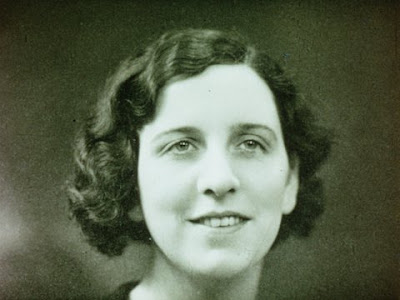
Myra Roper, A Woman of our Time

Peter Tammer writes
:

I'm finally able to release a digital copy of a film which I completed almost fifty years ago. It was first shown publicly at the “Mind’s Eye” Cinema in Spring St., Melbourne… the Melb. Co-op theatre, about 1972.

This film has not been available along with my other titles in Kriszta Doczy’s Artfilms Australian independent collection because until recently we had no digital copy.

Tessa Spooner, General Manager of La Mama Theatre, had this copy made so the film could be exhibited at La Mama Theatre's "War - Rak" celebration event Saturday evening, 11/12/21. Click on this link to see the film.


Following is a commentary which John Cumming intended to present at the screening but John was side-lined by an exposure to Covid so he could not attend the screening. That was most unfortunate as John has done a lot of research on the film to date.


A Woman of Our Time

John Cumming writes:

A Woman of Our Time is a unique portrait of a renowned author, Myra Roper, social commentator and educationalist and a role-model for a whole generation of Melbourne women, made in 1972 by pioneering Australian independent filmmaker and film educator Peter Tammer.


Born in England, Myra Roper moved to Australia in 1947, at 36 years of age, to serve as principal of the Women's College at The University of Melbourne. She is fondly remembered as a mentor to many young women. In 1960 Myra left the university to pursue a public life that influenced the course of Australia’s relationship with China, the development of national cultural institutions, adult education and, especially in the media, the status of women. Peter, whose father was Lebanese, entered filmmaking as a young, second-generation migrant worker and emerging filmmaker in the almost exclusively male, Anglo-Celtic domain of film production in early 1960s Melbourne. In his first job as a library assistant at the State Film Centre of Victoria, he adapted 16mm film-checking equipment for the purpose of editing his own short films. 

Both Myra Roper and Peter Tammer were engaged in cultures of community enterprise and cooperative action. When they met around 1969, Peter was a young freelance editor. His client work included campaign advertisements for Gough Whitlam’s progressive and soon to be elected Australian Labor Party. Myra needed help to edit 16mm footage she had filmed, to illustrate her lectures on Communist China. Accounts from both Myra and Peter indicate that some men in positions of authority could and did go ‘out of their way’ to foster their emerging talents as writer and filmmaker. In the absence of policies, guidelines, training, and professional development programs, it appears that the simple and expansive sociability of peers, employers and informal mentors was critical to the induction of these new entrants to their respective fieldsPeter has said that when he explained to Myra why he saw her as being worthy of such a film he felt that she was thinking in her natural humility … “Oh but I’m not that interesting”’. In her first book 'China - The Surprising Country' she writes of her recovery from self-doubt with reference to a stereotypical and gendered self-image as a ‘misguided female’ and an alternative, gendered image of herself as an ‘enterprising woman on an unusual venture’. Myra encountered several male allies who recognized and affirmed that alternative image. Peter was one of them. Sadly, however, most of the difficulties facing women that Myra identifies in this film persist. She and this little film are still of our time.


During the 1960s, student arts organisations at The University of Melbourne and a vibrant immigrant Italian community in the inner suburb of Carlton stimulated a burgeoning post-war art, theatre and film scene. Carlton soon became a social destination for young people, including students from the new outer-suburban Monash and La Trobe universities and technical and teachers colleges across the state. Its share-houses, cafés, cinemas, and small new theatres became a focal point of cultural activity around the anti-war movement, feminism, and an internationally engaged effort to develop Australian culture independently of colonial influence and British and American commercial interests. By 1971, when Peter and fellow filmmakers officially incorporated the Melbourne Filmmaker’s Coop (MFC, 1968-1976) a wider movement for cultural experimentation and the democratisation of media was also underway in print, radio and community video. The Coop films were notable for their diversity of form. Peter’s filmmaking was, and continued to be, literally experimental. As an artist, he has never repeated himself but has sought to push into new dimensions of what film can be, structurally and spiritually.


With A Woman of Our Time, two committed non-conformists provide a unique, unadorned window on early 1970s Australia, inviting comparison with the status of progressive ideas in filmmaking and gender politics today. The film brings into sharp relief the lack of progress towards gender equity in general, and in Australian film production specifically, both in terms of the diversity of on-screen representations and with regard to entrenched gender imbalance in many professions. It is a personal work, rather than the work of a producer, a director, and their ‘crew’. Out of necessity and enthusiasm Peter conceived, organised, did most of the cinematography, the sound, all the editing and even the negative matching for this film. 


In his several unique portrait films, and A Woman of Our Time in particular, Peter explores the idea that a film about someone can, in a painterly and poetic sense, be turned to modernist portraiture (think Cubism) rather than being locked to the narrative logic of biography. Peter frees himself from the documentary routine of ‘talking heads’. The central organizing principle is neither narrative nor rhetorical – it is dialectical. A Woman of Our Timeengages its viewer-listener at the level of ideas and emotions: ideas about power, sex and gender, about representation and about filmmaking; emotions of love, compassion, respect and dignity. All this is achieved while being playful with images, with sound and with the subject. The film threads images and sounds together densely into a rich tapestry that encompasses and interweaves the everyday, world historical events and a whole complex of political, philosophical and aesthetic concerns and ideas. This little film is sensitive and dense, the result of a rich working relationship between Myra and Peter and of the richness of their creative engagement with the world. 


As often happens with independent films that avoid sensation and adhere to no tradition, genre or orthodoxy, A Woman of Our Time ‘fell between the cracks’ of programming categories and fashions. After a short season at the Co-op theatre in 1972 it had no public screenings. In 2018, Melbourne’s Artists Film Workshop held a retrospective of Peter’s films. For me this film was a revelation. Together with his Flux (1970) it revealed a level of innovation, especially in its editing, that I believe is of historical significance in world cinema. The screening at La Mama Theatre presents a wonderful film about someone who  despite the passage of fifty years remains a woman of our time.

John Cumming,  

11/12/2021


Sources: 

Cumming, J 2014, The films of John Hughes : a history of independent screen production in Australia, The moving image: number 12, 2014, Australian Teachers of Media (ATOM).

Roper, M 1966, China: The Surprising Country, Doubleday, New York.


Roper, M 1989, Myra Roper interviewed by Amirah Inglis [sound recording], Recorded from May 4-5, 1989 in Canberra.

Roper, M- 1973, Myra Roper interviewed by Hazel de Berg (sound recording], 1973 July 16 <https://nla.gov.au/nla.obj-220874394/listen>.

Tammer, P 2011, Early Days interview by John Cumming and Richard Leigh, Kyenton.

Reviving Memories of Kim Maree Penn - Mike Retter remembers an Australian actor who conquered Hong Kong


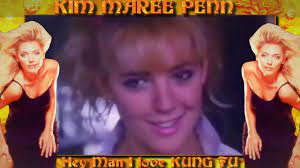
Kim Maree Penn was the Sharon Stone of martial arts films. The most beautiful gweilo to ever work in the Hong Kong film industry. 

The peak of her career would be the classic In The Line Of Duty 5: Middleman ( In The Line Of Duty V: Middleman), with a fantastic end fight against Cynthia Khan (hand to hand, sword fighting). Kim Maree Penn is actually a security expert, bodyguard and martial arts instructor in real life. 

She was able to enjoy one of Hong Kong cinema's peak eras. Pre-CGI, Kim Maree Penn employed lots of physicality and stunt-work in her often villainous roles.

CLICK HERE FOR MIKE RETTER'S YOUTUBE MASHUP OF HER GREATEST HITS


Monday, 13 December 2021

Streaming - Michael Campi draws attention to a new streaming service established by the Polish Film Institute to bring subtitled Polish classics to the world.

A Woman's Decision,
Krysztof Zanussi,Poland, 1975 

Greetings.

You may not need several dozen Polish films to watch before the end of the year but just in case here are details of a new streaming service which seems a model of its kind and, after the establishment of a similar service by the Cinematheque Francaise called HENRI (click to check out the offering) indicates the enormous progress being made by a number of European countries to bring the national cinema heritage to the people.  The Polish links are at the bottom of this note. 

There are several films by Zanussi, Has, Kawalerowicz, Falk, Glinski that I haven't seen.
I saw Has' CODES tonight which was really worth the quite short viewing time. Glowing restoration. 

So far I haven't played with this much.  Using the first of the links below, the Has film played without further intervention apart from choosing subtitles. The link played flawlessly and looked magnificent which is becoming less common with all the invisible watermarks attached to some of these streams lately.  One virtual festival could only be viewed on my iPad in the end with an image so tiny that it was ridiculous to have paid for it. Chrome had been blocked so that the image couldn't be sent to a TV etc. etc. Attaching the MacBook to a television resulted in spluttering images that looked like tiles flying in the wind. 

I believe some of the Polish titles may need an account created which is free till the end of the month. Haha. I've shortlisted about forty titles of interest.  Even if I parted all the waves and watched nothing else for the rest of December, this is an impossible quest. 

There are the usual ways of extending some of the titles on each line and about four pages to be clicked through at the bottom. 

For much of 2021, there has been a steady succession of East European films restored on line.   There were some surprises from Estonia and Latvia and of course Poland has such a rich tradition.  It's interesting how many films by name directors never made our festivals or subsequent national events. 

Happy hunting and all the best for the end of year festivities.  Moreover be safe, well and distanced. 

M

They are available free until the end of the year. 


Somebody has also posted  a set of Polish film posters with all the titles available on the Letterboxd site. The titles are compiled here.


The announcement by the Polish Film Institute is as follows. Sorry about the white on black

In the years 2018-2021, the Polish Film Institute, the Documentary and Feature Film Studios and Studio Filmow Rysunkowych implemented a Project (number POPC.02.03.02-00-0007 / 17), named:

‘Digital restoration and digitization of Polish feature films, documentaries and animated films in order to ensure access in all fields of distribution (cinema, television, Internet, mobile devices) and to preserve Polish film heritage for future generations’, under Sub-measure 2.3.2 ‘Digital sharing of resources of culture’ for Measure 2.3 ‘Digital accessibility and usefulness of public sector information’, under the Operational Programme Digital Poland for 2014-2020.

160 feature films, 71 documentaries, 474 animated films, including 10 full-length animated films have been restored as part of the project. The restoration has covered:

  •  feature classics by outstanding Polish filmmakers, i.e. Wojciech Jerzy Has, Jerzy Skolimowski, Andrzej Munk, Jerzy Kawalerowicz, Janusz Morgenstern, Stanisław Różewicz, Kazimierz Kutz, Andrzej Kondratiuk, Lech Majewski, Krzysztof Zanussi, Feliks Falk, Filip Bajon, and many others ,
  • films present in pop culture, including the ones directed by: Stanisław Bareja, Marek Koterski, Juliusz Machulski,
  • films of the Polish documentary school (including Andrzej Munk, Kazimierz Karabasz, Marcel Łoziński, Andrzej Titkow),
  • animated films of high artistic value (e.g. by Witold Giersz, Jerzy Kalina, Mirosław Kijowicz, Andrzej Czeczot),
  • animated series for children (including the multigenerational series ‘Rex’, ‘Bolek and Lolek’ or a cartoon series for children titled 2 cats + 1 dog).

The project also included the digitization of 3108 unique episodes of the Polish Film Chronicle from 1945-1994.

All the above-mentioned film materials (nearly 4,000 film items) are available on the 35mm.online streaming platform, the final product of the Project. It implements the main goal of the project, which is online sharing and dissemination of restored and digitized film resources as part of the Project.

The 35mm.online platform presents the wealth of Polish cinematography. It offers artistic, educational and historical achievements of Polish cinematography to its users. They can also watch films present in pop-culture.

All film materials presented on the 35mm.online platform meet the requirements of WCAG 2.0 - they have audio descriptions, transcriptions, subtitles in Polish and English, as well as comprehensive descriptions. For foreigners, the entire film library of the Platform is available in English.

The 35mm.online platform has been prepared in accordance with the latest design standards. In addition to the version for web browsers, the platform will be also available as an application for mobile devices (Android and iOS systems) and as an application for smart TVs (Android, Tizen).

As part of the Project, the Distribution Center (a modern digital film distribution center) has been established at the Documentary and Feature Film Studios. The building, which is the seat of the Center (Chelmska Street 21/21) has been modernized and adapted to modern standards and safety requirements.

The Distribution Center has been equipped with specialized hardware, software, systems and technology platforms related to the launch of the digital repository. It creates a system of various environments that enable:

- professional trading of digital copies in all distribution fields (cinema, TV, streaming platforms),

- creating digital film copies in all formats, versions, parameters (according to the order, for the selected field of use),

- automation of the ordering process - generation of a digital file of the appropriate format and online transmission to the recipient (distributor, licensee).

The operator of the 35mm.online platform and the Distribution Center is the Documentary and Feature Film Studios.

The project was co-financed by the European Regional Development Fund. The total value of the project is PLN 109,969,779.89, the value of the European Union funding is PLN 78,336,345.68. The project was also co-financed by the Minister of Culture and National Heritage in the amount of PLN 14,226,983.73. 

Sunday, 12 December 2021

“Thank God for Ken Loach,” writes Tom Ryan who spoke to the British director post-SWEET SIXTEEN (UK, 2002)


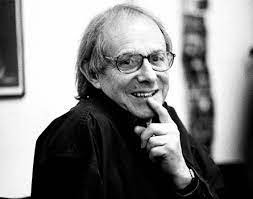
At the heart of Ken Loach’s films and television dramas is an anger at the way people suffer because of their social and economic circumstances. From the abused London mum in his 1967 feature debut, Poor Cow, through the protagonists of films like Kes (1969) and Raining Stones (1993) and TV productions like Cathy Come Home (1966) and Days of Hope (1975) to the wee Scottish lad reaching out for a dream of family in Sweet Sixteen and the title character of I, Daniel Blake (2016), they’re all victims of the inequities of their worlds.  

Loach’s compassion for them and his outrage on their behalf is palpable. It’s why the now 85 year-old, Warwickshire-born director has earned a reputation as the British cinema’s champion of the disenfranchised. And it’s made his work the touchstone for a generation of filmmakers concerned to document the workings of their society, not only in Britain but beyond. 


Which is why I expected a very different kind of Loach from the one I encountered. I’d anticipated a fearsome vehemence; I got a gentle, soft-spoken man, whose seriousness of tone sits side-by-side with an engaging sense of humour, and who confessed at the end of our conversation that he’d been concerned throughout that I might be insensitive enough to raise the subject of “the cricket”. The MCC wasn’t faring at all well at the time.


However, since Loach has always probed the state of the nation through the prevalent social conditions rather than the on-field exploits of its sportsmen or women, that seemed the best place to begin. And, in his films, those conditions always seem to determine his characters’ destinies from the day they’re born. 


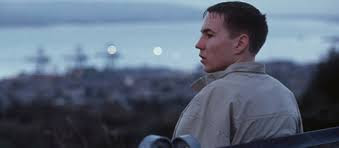
Liam, the 15 year-old protagonist of Sweet Sixteen, for example, has little room in which to move. Played by Martin Compston in his striking screen debut – he’s now probably best known for his work in the TV series, Line of Duty (2012 – 2021) – Liam is a smart kid with decent instincts. But his mother is in prison, his father and his grandfather are drug dealers, and he can’t see any way out of his depressed situation. 


For Loach, characters and their environments are always inextricably linked. Sometimes they become aware of that, of how their lives have been predetermined; sometimes they don’t. So thank God for Ken Loach: he gives them a voice.


When I spoke to him, Sweet Sixteen (2002) had just been released in Australia and he was taking a break from checking out locations in Glasgow for what was to become Ae Fond Kiss (2004).

************


Martin Compston as Liam Sweet Sixteen

TR: Paul Laverty [writer of Sweet Sixteen and frequent Loach collaborator] has suggested that the genesis for Sweet Sixteen came from working on My Name Is Joe [1998]. Do you consider what happens to the new film’s Liam as an unofficial back story for the Liam in Joe?


Ken Loach: Not really, no. I think he’s quite a different character. He’s much sharper, much more in control of things, insofar as he can be. I mean, he sees himself as a winner, this Liam, whereas the other Liam has really lost it. This Liam sees his way through to getting a successful result for himself. He doesn’t see himself as a victim, he sees himself as a winner. He’s an optimist. So they’re very different characters.


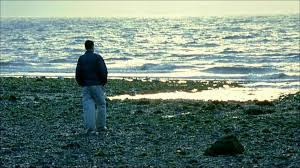
Yes, but we do leave Liam in Sweet Sixteen on the beach, alone, with a very uncertain future, and the impact of the preceding events could easily change somebody’s outlook on their life. 


Yes, that’s true. But that’s the end of that chapter in his life really. The realisation that his mother isn’t the person he’d thought she would be for him. It’s his coming to terms with that illusion – I mean the reality behind that illusion – that is, I suppose, the story of the film. But I think he’s a different guy from the Liam in the earlier film. He’s a different lad really.


"...on the beach alone..." 

You can see why I’m pouncing on this? The two characters are sharing a name.


Yes, yes. Maybe we were a bit lazy about finding another name.


Might this film’s Liam finish up like Joe then?


Um, he’s more likely to finish up like Joe. But, again, he’s too bright really. He’s not an addictive personality. He’s very cerebral. I mean, he works things out in his mind, and he knows which is gonna be the best way for him. I think the probability is that he’ll be in prison – whatever appropriate prison it would be – and he’ll come out nine or ten years later and he’ll have cemented his contacts in the criminal world and that’s where he’ll end up. 


The only hope for him is Chantelle really: whether she’ll stick by him while he’s in prison or whether she’ll be just too concerned for her little boy. It’s impossible to say.


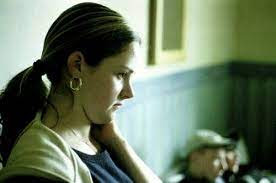
Annemarie Fulton as Chantelle


One gets the sense that all of your protagonists over the years are lost innocents, that they might be saved from disaster, and from themselves, if their social circumstances were different. Is this a view of them you share?


Well, I think the circumstance you live in is another character in the drama in that it affects what happens to you, the person you become and the choices that you have. So it’s another element in the drama and I think that’s true of all good drama. 


I mean, we don’t exist in a vacuum. Economics determines the way we spend our lives. I mean, you and me are here at this moment because we’re working: that determines who we are, how we spend our lives, the choices we have. I mean, it’s kind of a self-evident observation, really. It’s not very deep. Often a lot of films and dramas generally tend to imagine that people live in a self-supporting bubble, which I don’t think is true.


Do you regard all of your characters as, in one way or another, ideologically entrapped?


Well, the vast majority don’t have an ideology at all. They don’t tangle with ideas in that way or with a structure of ideas based on an analysis of how they think. They don’t deal in that, but they’re trapped by their social circumstances.


I meant more in the sense that they’re their own worst enemies: they make decisions based on what they perceive as their place in the scheme of things rather than actually being able to step outside those positions and make other kinds of decisions.


Um, yes. I’m not sure. I think it’s true that most people’s perspective is limited to what they know. Again, that’s self-evident. Whatever you can encompass in your mind, that’s the limit of your perspective and that’s the experience of most of them, although not all. We did Land and Freedom about the Spanish Civil War and there they are politically engaged. And in The Navigators, the film we did recently about the railways where workers are caught in the process of privatisation. But being caught in that process does open their eyes to a lot of things. 


In a number of the films that I’ve worked on, you see the characters involved in a process of struggle which gives them a whole new perspective and a whole new understanding of the way the world runs. But a character like Liam is very bounded by his world and what he knows of it. So that’s the limit of what he can imagine.


Taking a slightly different angle: there is a kind of remorselessness to your films. Even taking on board what you’ve just said, the further a film goes the more your characters’ options seem to close down. They seem entrapped and unable to escape.


That’s absolutely true, I think. It’s quite rare for someone to be able to get their heads high enough to be able to see the landscape beyond. I mean that’s one of the ironies of the town we shot the film in: they’re in this spectacular physical landscape of the mouth of the river, the hills beyond, the moorland… It’s absolutely beautiful and majestic. Geographically they’ve got a huge, wide panorama. But socially they’ve got a tiny, very small, meagre outlook. 


And there is a kind of irony in those characters doing what they do with those limitations in that boundless landscape. I think it’s the inheritance of generations of people who have either been exploited or left with nothing. Some will get out. I mean, because you’re born into it doesn’t mean that you necessarily will stay there. But the majority will stay there because there just isn’t the work and there isn’t the possibility of leaving.


***************

Editor's Note: This is the first part of an interview with the director Ken Loach. It was recorded by Melbourne film critic Tom Ryan as the basis of a feature article for The Age when the film Sweet Sixteen was first released. The Previous posts in this series have been devoted to conversations with Colin Firth (Part One) Colin Firth (Part Two) Lawrence Kasdan (Part One)Lawrence Kasdan (Part Two) Costa-Gavras Jonathan Demme (Part One)  Jonathan Demme (Part Two) Click on the names to read the earlier pieces


Friday, 10 December 2021

Streaming on YouTube - John Baxter remembers a first encounter with Ken Russell's ELGAR (UK, 1962) and how it changed his life.


Ken Russell

ELGAR AND AFTER. 

            “Two roads diverged in a wood,” wrote Robert Frost, “and I took the one less traveled by,/And that has made all the difference.”  But for him, as for most of us, the perception of that event as life-altering came afterwards.He talks of “telling this with a sigh/ Somewhere ages and ages hence.”

                So perhaps I’m deluded that seeing Ken Russell’s Elgar, in less than an hour  changed my life.  But the conviction stubbornly resists correction. 

                Sixty years have not dimmed the memory of arriving home on a Sunday evening in the early nineteen-sixties  (not from a movie, however, since the wowsers who ruled Australia still forbade Sabbath screenings)  to turn the television to the channel which was running a series of new American documentaries. 

                Did the channel even know what it was showing? Based on its ramshackle choice of feature films, this seemed doubtful. Just as the vaguely-titled Midnight Movie could screen, consecutively, half a dozen Billy Wilder or Preston Sturges films in the same week, the bored technician shoving a 16mm print into the telecine that night had no idea he was introducing Australia to cinema verité.

            Since titles were sometimes changed, we had to wait for the credits to know whose work we were watching. But the same names kept appearing: Richard Leacock, D.A. Pennebaker, Albert Maysles, James Lipscombe, Robert Drew. We’d already seen Primary, following John Kennedy on the campaign trail,  Jane, about the stage debut of Jane Fonda, and Mooneyvs Fowle, detailing the rivalry of two high-school football coaches.  

            What would it be this Sunday?The Chair, about the fight to save a convict writer from electrocution? Maybe we’d follow race driver Eddie Sachs through the Indianapolis 500 in On the Pole? Or celebrate jazz vocal trio Lambert, Hendricks and Ross? 

            To my disappointment, it was none of these. Instead, the retrospective ceased as abruptly as it began. American films were supplanted by a British one and, moreover, from the BBC,  that byword for the conventional. Instead of the topical products of Drew, Leacock and Pennebaker, it delved into the life of that most Victorian of composers, Edward Elgar. 


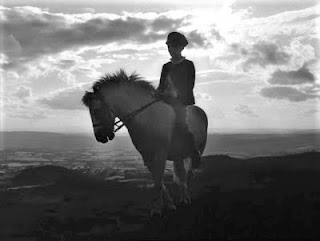
Elgar as a boy, riding a pony to the summit of the Malvern Hills
Elgar (Ken Russell, 1962)

            I poured a beer and sat down, resigned to disappointment. Fifty minutes later, the beer, undrunk, was flat and my life forever changed. That, within the decade, I would move to London, almost immediately meet Russell and write his biography, became, in my perception at least, foregone conclusions. 

            What about Elgar made me so certain? It helped that the affinities Russell felt for the composer, in particular his Catholicism and working class background, were also mine. As well, I recognised in Elgar’s music and Russell’s visual imagination echoes of my own enthusiasms. When he said “I’m eaten up with the image: with the way things look!”, I knew in an instant what he meant.

            As I was to discover, the first wonder of Elgar  is that it was made at all.  A few years after that first screening, a producer from the Canadian National Film Board, David Bairstow, would suggest to an audience of Australian documentary film-makers that the best way to approach making any film was to assume that it was impossible. But even the most Draconian of rules has its minute exception, and it was within this narrow margin that they must resign themselves to working. It was, and remains, one of the best pieces of good sense anyone has ever pronounced on film-making.


Huw Wheldon, Ken Russell, 1962

            In 1962, Russell confronted the weight of documentary tradition as laid down by John Grierson.  He had only just overturned the rule that no actuality film must ever use actors; to do so made it a drama. Under his pressure, Huw Wheldon, producer of the Monitor series, grudgingly agreed he could show the composer Prokofief as a pair of piano-playing hands and a reflection in a pool – “but it must be a murky  pool, mind you!” With the camel’s nose now in the tent, Wheldon accepted that actors might portray Elgar, but with few close-ups, and, naturally, in silence.

            This suited Russell, who always preferred showing what people did to recording what they said. If words were needed, Wheldon supplied them. He wrote the commentary, and spoke its eloquently simple text in his famously resonant voice. Russell matched it with images that became inextricably entwined with the vision of the composer; Elgar as a boy, riding a pony to the summit of the Malvern Hills that look out over an unspoiled British countryside; an adult Elgar strolling through a field of wheat with his new wife, mind filled with the delirious music of the Enigma Variations;  Elgar composing by lamplight while his wife, with pen and ink, ruled the music paper which they were too poor to buy. 

",,,restraint was not among them..."
Russell directing The Devils

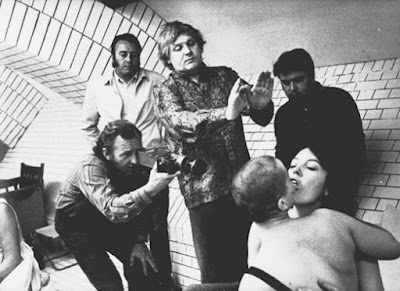
            Ken had many sterling qualities but restraint was not among them. “If he wanted to shoot from the fifteenth floor,” Wheldon explained, “then you carried the camera and all the equipment to the fifteenth floor. And of course you used the stairs!” He invariably leapt before he thought, never more so than when, to convey Elgar’s disgust with the jingoistic employment of Land of Hope and Glory as a recruiting tool, he used it over newsreel footage of blinded soldiers in a stumbling crocodile, each with a hand on the shoulder of the man in front. It created a furore, which Ken claimed to find incomprehensible - as had Orson Welles with his War of the Worlds broadcast. (“People really believed Martians had landed? You can’t be serious.”)

            In 2002 the flagship arts program The South Bank Show invited Russell to take a look back at the film and Elgar in general. Producer/presenter Melvyn Bragg was a sufficiently old friend to put down his foot about content, so there’s no hint of Lisztomania or The Devils. Instead Fantasy of a Composer on a Bicycle recaptures some of the first film’s charm and antique style. The actors are silent and Russell’s own commentary sparse. Instead, fairies dance among the giant beeches of a British forest and three bandaged soldiers and their nurse perform a string quartet on themes of Pomp and Circumstance. Finally, Elgar, upright and Edwardian in bushy moustache and tweeds, bikes around the home town that his fame has made a tourist Mecca before solemnly pedalling down the high Gothic nave of stately Worcester cathedral. 

             Technological advances have not invalidated Bairstow’s thesis about the impossibility of making actuality films. It may be physically easier today, but the number of those able to do so remains stubbornly minute. Talking heads predominate, not often speaking much sense. Recreated reality seldom achieves any feeling for the past.  Cinema verité has become the TV news but, oblivious to its lessons, amateurs using cell phones to document an event still hosepipe about like 8mm home movie makers of half a century ago.  Russell, thou shouldst be living at this hour. Cinema has need of thee.

The 1962 film, with an introduction is HERE ON YOUTUBE

The discussion with Melvyn Bragg is HERE ON YOUTUBE

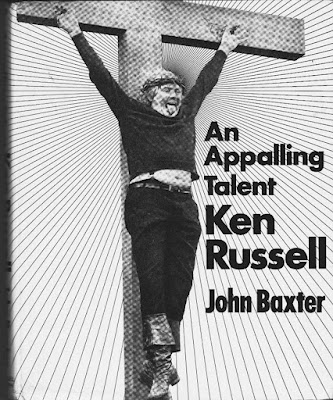
John Baxter's book, cover below, is offered for sale HERE AT BADGER BOOKS OF WOOLLAHRA  and HERE ON EBAY


Thursday, 9 December 2021

On Blu-ray - David Hare is enraptured by the new restored edition of TIH MINH (Louis Feuillade, France, 1918)

 I am unable to hold back any longer.


These two shots of Tih Minh (above and below) are from the end of the first episode in what Jonathan Rosenbaum describes as six hours of a journey through the Garden of Eden.


This staggering new reconstruction and restoration of Feuillade's 1918 serial Tih Minh is one of those movie miracles a great many cinephiles have literally been waiting decades to see.
It's been worth the wait, and I've only begun the journey but I have to say without a hint of exaggeration this is one of the greatest, most defining works of all cinema.
The opening of Episode 1 is a leisurely cast presentation to the camera with portrait-like screen tests for each of the actors and actresses, which is in itself a defining lesson in screen acting, the relationship of the screen to us, and our relationship to the screen.
Only towards the end of the cast call does the final actor, playing M. Placide quickly wink at the camera in one of Feuillade's very rare breaks of the fourth wall. If this opening sequence doesn't rope you in you may as well give up on ever having a relationship with cinema. Everything about this and his earlier Judex also in 12 episodes plus an epilogue from 1917 simply takes the movies once and for all to their most privileged position in human experience.
These new restorations of Tih Minh, begun 2018 and completed last year, and Judex also completed in 2020 are mind bendingly beautiful. The new Blu-ray disc sets from Gaumont are French language but the intertitles are so much easier to manage than spoken dialogue for those of us who have a reasonable but imperfect grasp of French language skill. if you prefer however there is an English subtitle option under the French inter-titles. I commend the two discs to the widest audience possible.