Showing posts with label Ken Loach. Show all posts

Tuesday, 7 October 2025

On DVD - Rod Bishop reminds us of the greatness of DAYS OF HOPE (Ken Loach, Jim Allen, Tony Garnett, UK, 1975)

Paul Copley (centre) Days of Hope

There’s been no sign of any 50
th anniversary celebrations for Days of Hope, a television series Phillip Adams once blessed as the greatest he’d ever seen.

Perhaps it’s not surprising. Even in the politically charged 1970s, Ken Loach’s groundbreaking, unapologetically partisan history of the British working-class, from 1916 in the First World War to the General Strike of 1926, was always highly contentious.

After all, who wants to see members of the British Army tying a conscientious objector to a stake during the First World War and leaving him in No Man’s Land as target practice for enemy fire?

Or watch Winston Churchill as a ferocious strikebreaker; or listen to screenwriter Jim Allen compare Churchill to a vulture and Lenin to an eagle? 

Or endure dialogue like: “The only war worth fighting is the class war.”

Days of Hope recently came to mind when the actor Paul Copley made some brief appearances as a farmer in Downtown Abbey. He was also a farmer, 50 years ago, in Ken Loach’s seven-hour BBC series but that irony would be lost on most viewers today.

For politics, Downton viewers had to make do with Tom Branson (Allen Leech), the IRA socialist-sympathizing chauffeur, who conveniently became an upper-class lap-boy for the aristocracy.

Paul Copley (Downton Abbey)

In Downton, the fiery farmer turned Communist agitator from Days of Hope is now a harmless, benign tenant-farmer for the rural upper-class; while the gormless IRA supporter is now married and converted into the Downton aristocracy. The irony would not be lost on Loach, Allen or producer Tony Garnett.

Paul Copley played Ben Matthews as the central character in all four, feature-length episodes of the BBC series. 

Coming from a Yorkshire farming family, Ben Matthews enlists as a British soldier in 1916 and is stationed in Ireland to deal with the IRA. Disillusioned, he deserts and joins the Durham miners to help in their struggle over oppressive working conditions. He is jailed, then radicalized and by the time of his release joins the Communist Party. Ben and his sister Sarah (Pamela Brighton) devote their lives to confronting the government’s strike-breaking tactics, particularly through the final episode detailing the 2026 General Strike. 

Nikolas Simmonds (Days of Hope)

Ben’s story is counterpointed by Sarah’s brother Philip Hargraves (
Nikolas Simmonds). Philip becomes is a conscientious objector in 1916, but is forced into the army and sentenced to death on the front line in France. Saved by a reprieve, he joins the Labour Party and becomes a Member of Parliament in the first Labour Government. Starting out as a social democrat and defender of the working-class and trade unions during the strikes that threaten to bring down the government, Philip’s careerism prompts him into a right-wing revisionist course.

A great deal of the anger over Days of Hope was levelled at the first episode for its lacerating take on the army, government and police, prompting producer Tony Garnett to declare:

"Our own anger is reserved for the phoney objectivity, the tone of balance and fairness affected by so many programmes. We deal in fiction and tell the truth as we see it. So many self-styled "factual" programmes are full of unacknowledged bias. I suggest that you really are in danger from them and not us."

It is arguably Jim Allen’s greatest writing, and as impressive as anything Loach directed during the next 50 years. But Days of Hope has languished on BBC shelves for decades, becoming difficult if not impossible to see.  


It was never released on VHS and only made it to DVD in the collection of nine Loach works Ken Loach at the BBC in 2011, more than 30 years after its first television release The visual quality of the various episodes varies significantly and the DVDs are obviously made from an old 16mm print with scratches, dirt, blotches and reel change clue markers.

There’s been no restoration, no Blu-ray, no 4K and it doesn’t appear available on any legitimate streaming platforms in the major territories, nor on YouTube.

Ken Loach at the BBC is the only way to currently access the series.


Saturday, 25 December 2021

"Everybody has to do the work they feel they have to do" - Part Two of Tom Ryan’s conversation with Ken Loach about the British cinema and working in "an absolutely collective enterprise".


If there’s one thing that distinguishes your work from that of your contemporaries in Britain at the moment – I’m talking about films like Billy Elliot (2000) and Bend It Like Beckham (2002) –  it’s that they deal with the exceptions while, as I see it, you deal with the rule.


Well, yes. I hadn’t thought of that, but it’s probably true.


What do you think about those other films?


Oh, well. It’s hard enough to make them without somebody coming along and knocking them really. I mean everybody has to do the work they feel they have to do. I mean, if you go so heavily for comedy or sentiment or whatever, I think inevitably you coarsen the subtleties of the way things are. 


You know, the result is you steamroll around the nuances of behaviour and the subtleties of relationships that reveal a lot because you’re driving hard for the comedy and you have to play it in a certain way. So I just find them less interesting. I don’t want to knock them because it’s tough enough to make them anyway.


Can I ask you another way? If you were making a film like Billy Elliot, what changes would you make? How would a Ken Loach Billy Elliot be different?


Well, first of all, it was set during the miners’ strike and I did a documentary during the miners’ strike [Which Side Are You On? (1984)] and met a lot of people there at the time. And the one thing that was apparent was that it was a very culturally-aware time. I mean, the mining communities had creative writing circles. They exchanged poems, particularly the women who were involved, with other mining communities and people who supported them. There were concerts, people came to perform. And the idea that a group of people who were doing that would force a man to cross a picket line for the sake of the 10 or 15 quid it would take for him to get to London is just false. It just wouldn’t happen. I’m not saying that you wouldn’t find one or two idiots who would jeer at what he was doing – I’m sure you would – but, as communities, they were the most artistically aware group of workers I’ve ever known. 


Loach (left) filming Which Side Are You On


And the evidence is there. It’s a matter of record; it isn’t my romanticism. So I just don’t believe it. Although it would feel it was being quite progressive, there’s some very reactionary, ill thought-out, ill-researched work and ideas behind it.


I actually expected the issue you would call attention to was that the father might suffer far more than he does for his betrayal of his union principles. I was accepting that on face value.


He wouldn’t go through it. He wouldn’t have to. I can’t imagine circumstances in which that would happen. I just don’t believe it.


I also felt you would have ended the film with Billy driving away in the bus. He wouldn’t have got to leap around in the West End.


Ha-ha. I dunno. I think the whole premise is flawed. That’s the problem.


I can imagine a Ken Loach film about an older Chantelle [Liam’s sister in Sweet Sixteen, played by Annmarie Fulton]. Maybe you’ve already made it, Ladybird, Ladybird [in 1994])…


Um, yes. That’s an older woman who didn’t have Chantelle’s strength in the crucial years of her life. I mean, Liam’s mother is more in the vein of Crissy Rock [in Ladybird, Ladybird], except that Liam’s mother isn’t a fighter like Crissy Rock. She would take on all comers; she would fight the world. And that was part of the problem, whereas Liam’s mother is defeated and she just has to cling on to whatever support she can find. They’re different responses to similar situations. 


Ladybird, Ladybird


Would you ever consider making a film about the Stans of the world and what’s led them to where they are? [Stan is played in Sweet Sixteen by Gary McCormack]


Um, yeah. Stan was a kid once. He comes from somewhere. He’s learned the world’s a tough place and you’ve got to be pretty tough to survive. He’s a man of limited intelligence and limited ambitions and he’s useful to the bigger guys. His vanity is one of the major features of his character. 


I was thinking more of whether you might consider placing him in the centre of things and making an audience deal with this character. I mean, I’m talking about a very “uncommercial” kind of film.


Yes. He loves the idea of himself as a gangster, that kind of guy with street cred and style and all that. And the sad thing is that he’s nothing of the sort. He’s another guy who’s full of illusions about himself. And that’s the kind of myth he’s built around himself. So, yes, Stan’s an interesting character.


Martin Compston, Sweet Sixteen


What do you think about the fact that Sweet Sixteen was given an MA rating in Australia?


That’s OK. That’s OK. In Britain, it was 18! And that was ludicrous. It wasn’t because of any violence or story. It was just because of one word in the dialogue which they said was used aggressively. I mean it’s pathetic. So I think 15 is what we were expecting. I mean, it’s not a film for young children, obviously. But kids the age of Liam should be able to see it because it’s their world.


How do you go about finding young actors like Martin Compston? You find them all the time.


Well, you just look and look, you know. Try them out and look again. We must’ve seen several hundred, I suppose. There’s always a lot of talent around, really. I mean, again, that’s axiomatic. Every school you go into you’re gonna find half a dozen kids who’re quite bright. So you just keep looking and looking until you get a shortlist and then somebody emerges as the one who’ll really make it work. It’s not so difficult, Tom. It’s just a question of using your common sense really.


Behind the camera, you tend to work regularly with the same people. You know, Barry Ackroyd, Rebecca O’Brien and the others. How important is this kind of collaboration (a) to you and (b) to your working methods?


I think it’s very important because we sort of work out things together really and it relies on everybody’s craft to carry it through. I mean, Rebecca is very important, Barry, Martin Johnson, the designer, the editors, the sound recordist. Everybody’s contribution has been honed over the years. Take them away, I can’t do anything. 


I mean, it’s an absolutely collective enterprise which is why I hate it when it says, “A Film By…” and then the name of the director. I suppose you could say “A film by Kodak” and that’d be about as accurate as you could be, but it’s certainly not “A Film By Me”. I mean, it’s a film by a bunch of us really.


Yes, but everybody always has to blame somebody and it’s always easier to pick on an individual.


Ha-ha. 


Thanks for your time. 


OK, it’s been nice to talk with you. All the best and thanks for not speaking about the cricket.


Ha-ha. Well, India has New Zealand on the ropes at the moment.


Oh, do they? I haven’t heard the scores.


Yes, they’ve got them three for 30-something.


Yes. India look a good bet to me. I mean they’re the only ones who might challenge Australia. 


Yes. And I was politely avoiding the cricket too. 


Ha-ha. OK. All the best.


*******

Editor's Note: This is the second part of an interview with the director Ken Loach. It was recorded by Melbourne film critic Tom Ryan as the basis of a feature article for The Age when the film Sweet Sixteen was first released. Part one can be found If you click here  The Previous posts in this series have been devoted to conversations with Colin Firth (Part One) Colin Firth (Part Two) Lawrence Kasdan (Part One)Lawrence Kasdan (Part Two) Costa-Gavras Jonathan Demme (Part One)  Jonathan Demme (Part Two) Click on the names to read the earlier pieces

Sunday, 12 December 2021

“Thank God for Ken Loach,” writes Tom Ryan who spoke to the British director post-SWEET SIXTEEN (UK, 2002)


At the heart of Ken Loach’s films and television dramas is an anger at the way people suffer because of their social and economic circumstances. From the abused London mum in his 1967 feature debut, Poor Cow, through the protagonists of films like Kes (1969) and Raining Stones (1993) and TV productions like Cathy Come Home (1966) and Days of Hope (1975) to the wee Scottish lad reaching out for a dream of family in Sweet Sixteen and the title character of I, Daniel Blake (2016), they’re all victims of the inequities of their worlds.  

Loach’s compassion for them and his outrage on their behalf is palpable. It’s why the now 85 year-old, Warwickshire-born director has earned a reputation as the British cinema’s champion of the disenfranchised. And it’s made his work the touchstone for a generation of filmmakers concerned to document the workings of their society, not only in Britain but beyond. 


Which is why I expected a very different kind of Loach from the one I encountered. I’d anticipated a fearsome vehemence; I got a gentle, soft-spoken man, whose seriousness of tone sits side-by-side with an engaging sense of humour, and who confessed at the end of our conversation that he’d been concerned throughout that I might be insensitive enough to raise the subject of “the cricket”. The MCC wasn’t faring at all well at the time.


However, since Loach has always probed the state of the nation through the prevalent social conditions rather than the on-field exploits of its sportsmen or women, that seemed the best place to begin. And, in his films, those conditions always seem to determine his characters’ destinies from the day they’re born. 


Liam, the 15 year-old protagonist of Sweet Sixteen, for example, has little room in which to move. Played by Martin Compston in his striking screen debut – he’s now probably best known for his work in the TV series, Line of Duty (2012 – 2021) – Liam is a smart kid with decent instincts. But his mother is in prison, his father and his grandfather are drug dealers, and he can’t see any way out of his depressed situation. 


For Loach, characters and their environments are always inextricably linked. Sometimes they become aware of that, of how their lives have been predetermined; sometimes they don’t. So thank God for Ken Loach: he gives them a voice.


When I spoke to him, Sweet Sixteen (2002) had just been released in Australia and he was taking a break from checking out locations in Glasgow for what was to become Ae Fond Kiss (2004).

************
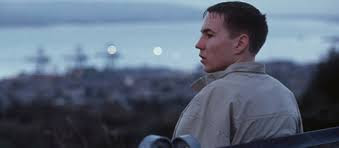
 

Martin Compston as Liam Sweet Sixteen

TR: Paul Laverty [writer of Sweet Sixteen and frequent Loach collaborator] has suggested that the genesis for Sweet Sixteen came from working on My Name Is Joe [1998]. Do you consider what happens to the new film’s Liam as an unofficial back story for the Liam in Joe?


Ken Loach: Not really, no. I think he’s quite a different character. He’s much sharper, much more in control of things, insofar as he can be. I mean, he sees himself as a winner, this Liam, whereas the other Liam has really lost it. This Liam sees his way through to getting a successful result for himself. He doesn’t see himself as a victim, he sees himself as a winner. He’s an optimist. So they’re very different characters.


Yes, but we do leave Liam in Sweet Sixteen on the beach, alone, with a very uncertain future, and the impact of the preceding events could easily change somebody’s outlook on their life. 


Yes, that’s true. But that’s the end of that chapter in his life really. The realisation that his mother isn’t the person he’d thought she would be for him. It’s his coming to terms with that illusion – I mean the reality behind that illusion – that is, I suppose, the story of the film. But I think he’s a different guy from the Liam in the earlier film. He’s a different lad really.
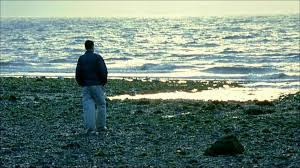
 

"...on the beach alone..." 

You can see why I’m pouncing on this? The two characters are sharing a name.


Yes, yes. Maybe we were a bit lazy about finding another name.


Might this film’s Liam finish up like Joe then?


Um, he’s more likely to finish up like Joe. But, again, he’s too bright really. He’s not an addictive personality. He’s very cerebral. I mean, he works things out in his mind, and he knows which is gonna be the best way for him. I think the probability is that he’ll be in prison – whatever appropriate prison it would be – and he’ll come out nine or ten years later and he’ll have cemented his contacts in the criminal world and that’s where he’ll end up. 


The only hope for him is Chantelle really: whether she’ll stick by him while he’s in prison or whether she’ll be just too concerned for her little boy. It’s impossible to say.
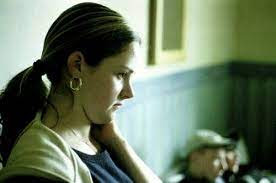

Annemarie Fulton as Chantelle


One gets the sense that all of your protagonists over the years are lost innocents, that they might be saved from disaster, and from themselves, if their social circumstances were different. Is this a view of them you share?


Well, I think the circumstance you live in is another character in the drama in that it affects what happens to you, the person you become and the choices that you have. So it’s another element in the drama and I think that’s true of all good drama. 


I mean, we don’t exist in a vacuum. Economics determines the way we spend our lives. I mean, you and me are here at this moment because we’re working: that determines who we are, how we spend our lives, the choices we have. I mean, it’s kind of a self-evident observation, really. It’s not very deep. Often a lot of films and dramas generally tend to imagine that people live in a self-supporting bubble, which I don’t think is true.


Do you regard all of your characters as, in one way or another, ideologically entrapped?


Well, the vast majority don’t have an ideology at all. They don’t tangle with ideas in that way or with a structure of ideas based on an analysis of how they think. They don’t deal in that, but they’re trapped by their social circumstances.


I meant more in the sense that they’re their own worst enemies: they make decisions based on what they perceive as their place in the scheme of things rather than actually being able to step outside those positions and make other kinds of decisions.


Um, yes. I’m not sure. I think it’s true that most people’s perspective is limited to what they know. Again, that’s self-evident. Whatever you can encompass in your mind, that’s the limit of your perspective and that’s the experience of most of them, although not all. We did Land and Freedom about the Spanish Civil War and there they are politically engaged. And in The Navigators, the film we did recently about the railways where workers are caught in the process of privatisation. But being caught in that process does open their eyes to a lot of things. 


In a number of the films that I’ve worked on, you see the characters involved in a process of struggle which gives them a whole new perspective and a whole new understanding of the way the world runs. But a character like Liam is very bounded by his world and what he knows of it. So that’s the limit of what he can imagine.


Taking a slightly different angle: there is a kind of remorselessness to your films. Even taking on board what you’ve just said, the further a film goes the more your characters’ options seem to close down. They seem entrapped and unable to escape.


That’s absolutely true, I think. It’s quite rare for someone to be able to get their heads high enough to be able to see the landscape beyond. I mean that’s one of the ironies of the town we shot the film in: they’re in this spectacular physical landscape of the mouth of the river, the hills beyond, the moorland… It’s absolutely beautiful and majestic. Geographically they’ve got a huge, wide panorama. But socially they’ve got a tiny, very small, meagre outlook. 


And there is a kind of irony in those characters doing what they do with those limitations in that boundless landscape. I think it’s the inheritance of generations of people who have either been exploited or left with nothing. Some will get out. I mean, because you’re born into it doesn’t mean that you necessarily will stay there. But the majority will stay there because there just isn’t the work and there isn’t the possibility of leaving.


***************

Editor's Note: This is the first part of an interview with the director Ken Loach. It was recorded by Melbourne film critic Tom Ryan as the basis of a feature article for The Age when the film Sweet Sixteen was first released. The Previous posts in this series have been devoted to conversations with Colin Firth (Part One) Colin Firth (Part Two) Lawrence Kasdan (Part One)Lawrence Kasdan (Part Two) Costa-Gavras Jonathan Demme (Part One)  Jonathan Demme (Part Two) Click on the names to read the earlier pieces