Cinema Reborn: Australian Social Realism: Three Shorts (1977- 1983)
My name is Margot Nash. A big thank you to Cinema Reborn for asking me to introduce this program. I’d like to acknowledge the traditional custodians of the unceded land we meet on today, the Gadigal and Bidjigal people of the Eora nation, and pay my respects to elders past and present. Always was, always will be Aboriginal land.
 |
| Mary Callaghan |
When Wall Street crashed in 1929, the world plunged into what is now known as the Great Depression. In Australia, working people suffered mass unemployment and poverty, but the reality of their stories was rarely recorded on screen. The Hollywood behemoth was taking over film exhibition and distribution in this country, shutting Australian filmmakers out, (but that’s another story) and Australian cinemas were dominated by escapist feel good movies, meant to cheer people up. It was before television and newsreels played in the cinemas on a constant loop, with news from Australia and around the world as well as ‘human interest’ stories, which did not include the tough stories of working-class life.
Social Realism emerged as an international art movement, during this time depicting the lives of the poor and marginalized. United by a belief in the power of art to reflect reality, and raise awareness of social issues, it was an anti-war and anti-fascist movement that included film, theatre, photography, painting and literature. In Australia, Sydney’s New Theatre emerged in 1932 from the Sydney Workers Art Club under the slogan ’Art As a Weapon’.
 |
| Ray Argall |
Later, the Melbourne Realist Film Group in the 40s and the Sydney Waterside Workers Federation Film Unit in the 50s documented working-class lives and their struggles for social justice. John Hughes’ 2006 documentary The Archive Project tells the story of the Realist Film Group, and some of you will have seen some of the Waterside Workers Film Unit films, which I introduced at Cinema Reborn in 2022. Both groups were closely connected with the New Theatre.
The most famous Waterside Workers film was The Hungry Miles. Made in 1955 it was about the struggle on the waterfront against the unfair work practices of the shipowners during the Great Depression. Without newsreel archival footage to draw on, the unit staged re-enactments. Today, it is this vivid footage that is often used as archival film of the Depression. Even though it was filmed in the 1950s using wharfie non-actors, many of whom had lived through the Depression.
The Australian film renaissance in the 1970s opened up possibilities for local filmmakers to explore Australian stories. Many focussed on colonial foundation stories, or what has been described as the ‘bonnet’ dramas. However, social realism remained a developing historical thread with feature dramas like Ken Hannam’s Sunday too Far Away, about the 1956 shearers strike, and John Duigan’s Mouth to Mouth about homeless working-class kids.
In the early 1980s, the Art and Working Life movement in both Sydney and Melbourne carried on the social realist tradition, across genres, in an attempt to bridge the gap between professional artists and the labour movement.
 |
| David Hay |
The three films you will see today – Ray Argall’s 1983 Julie, Julie..., Dave Hay and Martha Ansara’s 1977 Me and Daphne and Mary Callaghan’s 1982 Greetings from Wollongong carry on this tradition. Theywere all filmed in existing workplaces and homes using mainly non-actors, thus also drawing on the legacy of Neorealism, which emerged during World War 2 with Rossellini’s Rome Open City, filmed in 1945 on the streets and in the houses of war-torn Rome, using actors like Anna Magnani alongside non-actors.
 |
| Me and Daphne |
All three films explore the reality of working-class women’s work in the late 70s and early 80s. The dead-end, low-paid, repetitive factory jobs, often in isolated rural areas, the desire for social justice and the need to speak out, but also the desire for ‘something more’. For pleasure, for experience, or even just time to rest and reflect.
The women you will meet in these stories all want ‘something more’ and their gritty social realist narratives can also be contextualised within the 1970s women’s liberation movement, which told women they not only had the right to speak up and fight for their rights, but they could do anything they wanted to, if they put their mind to it.
Martha Ansara, who produced and filmed Me and Daphne, fought tooth and nail to get into the Australian Film Television and Radio School (AFTRS) to learn the camera, eventually pretending she wanted to be a director, so she could get access to the camera department, which, at that time, was solely a male domain.
 |
| Greetings from Wollongong |
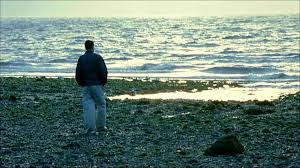
Before directing Greetings from Wollongong, the late Mary Callaghan had directed a short student film called Image Plus about the unreal and unattainable images of women in the media. Callaghan brought this analysis, along with her flair as a visual artist, to Greetings from Wollongong which follows a group of young unemployed kids who all need to find work to survive, but who also desire pleasure, and fun, in a bleak industrial town that has little to offer them.
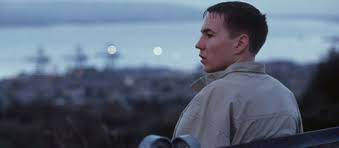
When we meet the main character in Ray Argall’s short film Julie, Julie..., she is cruising on her beloved motorbike, alone and free, on the highway heading for Melbourne from Broken Hill, looking for ‘something more’, when her plans are interrupted and her life changes. Again, the actors are predominantly non-actors and the locations reflect the reality of Julie’s choices.
Of the three films, Greetings from Wollongong was the only one to receive funding from the then Australian Film Commission’s Creative Development Branch and Women’s Film Fund. It also had support from local businesses, unions and regional organisations and Mary produced a set of screen-printed postcards to raise money for the film.
 |
| Julie, Julie... |
Julie, Julie... was made by the filmmakers on spec as a cinema short. The cinema chains, at the time, were talking about screening shorts before features, so they filmed it on Super 16mm in order to blow it up 35mm to this end. Unfortunately, this never happened, but they kept going. Ray, who had been making music videos and working for the ABC, had his own equipment and, working with a small independent crew. He and his co-workers financed it themselves and paid award wages.
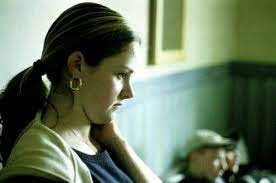
Me and Daphne has a more complex provenance which I don’t have time to do full justice to today, but I will try. It was made at AFTRS ostensibly as a training film for students. The legendary John Flaus, was running the Open program at the time, and wanted a film to teach students about ‘visual thinking’. Why choose a close up as opposed to a wide shot? Why use voice over instead of sync sound etc. Shot in a chicken factory in NSW, the film was directed by Dave Hay and shot by Martha Ansara.
Dave had been to film school at UCLA and, inspired by social realist films he had studied there, decided to film in a local factory and use actors next to non-actors. Martha brought a short story called Confessions of a Cannery Worker by Lillian Rosser. It was about a mother and daughter, forced work in a pineapple cannery in Brisbane to pay their electricity bill. They decided to use this story ‘as the basis for the plot to be illustrated in the proposed training film’. Then they set out to make two films. One for training film school students and the other to show the conditions migrant women workers had to endure, and their struggle for better conditions.
The images of migrant women on the production line in the chicken factory in Me and Daphne are unforgettable and the film itself became something of a cause célèbre because, after it was screened to the Head of the Film School, Jerzy Toeplitz and the Director of the Training School, Storry Walton, Toeplitz pulled it out of circulation and ordered it to be recut.
Fearing it would be destroyed, our fearless young filmmakers decided they would ‘retrieve’ the original negatives from the laboratory and put the film back together. So, Dave forged Toeplitz’s signature, picked up the original negative from the lab (in broad daylight), had it secretly edited and neg matched in Melbourne, and sent out of the country for prints to be made.
While Dave was dodging Commonwealth Police surveillance, Martha mounted a campaign to raise funds to finish the film but, just as it was set to screen at the Sydney Filmmakers Co-op in Darlinghurst, the Co-op received a court injunction from AFTRS barring the screening. Not to be deterred the filmmakers famously screened it outside the Co-op, on a wall in St Peters Lane, where, luckily, Martha met a fancy high-profile lawyer.
AFTRS took them to the Supreme Court and all the film materials were seized. Dave and Martha’s decided to argue that, as the creative originators of the film, they should hold joint copyright with the school, and therefore have an equal say in the film’s exhibition and distribution. Unfortunately, Dave got sick and Martha had to front up alone, but after much ado, while the case was lost (after the judge found out about the St Peters Lane screening), the filmmakers did eventually get all the footage back.
This screening is the first public screening of Me and Daphne since that time, although the film was distributed covertly for years by the late Julie Wiggins.
Martha is very much alive and here if you want to ask her questions later, Martha please stand up. Warrior woman. Not to be messed with.
(Clap clap).
Ray Argall is also here. Another warrior, whose tireless work to restore and value the work of Australian independent filmmakers is also legendary. He restored all three films in this program, along with Greg Fitzgerald who did the restoration work on the sound.
Please stand up Ray and Greg. (Clap clap)

I hope you enjoy the films. You can see the Chips Mackinolty screen-printed poster (above) for the Filmmakers Co - op screening of Me and Daphne, alongside Mary Callaghan’s fluorescent screen-printed postcards for Greetings for Wollongong in the glass case just outside the door when you leave the cinema.
Thank you very much
Margot Nash 10 May 2026