Showing posts with label Louis Feuillade. Show all posts

Monday, 24 June 2024

The Road to Bologna (6) - Feuillade, Litvak, Marva Nabili and Bresson set things alight

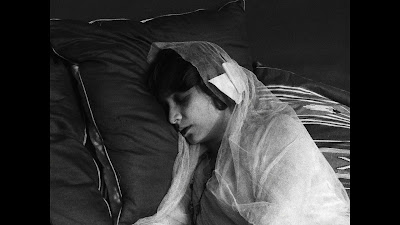
Rene Creste, Judex

It's raining in Bologna....has been for three days, throwing the Piazza Maggiore screenings into chaos even though the eventuality is catered for to a degree.... 

First there was Feuillade and, as has been stated over and over, the first director for whom no allowances need to be made, no excuses for primitivism, no resort to 'in its day'. Feuillade was always modern and the magnificent restoration of Judex, screening in daily bite size pieces is a reminder of his mastery. Goodness knows how much it cost the French Government for the work to be done but for the French people they should feel that this is something of considerable value produced by their taxes at work. It may be a bridge too far for any venue in Australia to screen it. Even in Bologna less than a couple of hundred turned out for the Prologue and numbers started to fall thereafter. Probably for the rest of the world they will have to make do with seeing it on Blu-ray and Ultra HD but boy is it worth spending the hours and watching it oin the biggest screen you can find. Some 95% of the material scanned and restored was taken from the original negative. It helps, it was observed, that Feuillade himself was the head of the company's production and no doubt looked after his own work very meticulously...

Annabella, Charles Vanel, L'Equipage

The next Litvak, and the first of the non-American films on the schedule, was L'Equipage a rousing WW1 story of a team of aviators defying death every day and the woman ( the stunningly beautiful Annabella) who loves two of them, the young recruit (Jean-Pierre Aumont) and the old lieutenant (Charles Vanel). The story may be hackneyed but Litvak's mise-en-scene in all the group scenes is remarkable and there were tears flowing at the end. Beautiful 4K by Pathe from the original negative, no doubt another piece of French taxpayer funded patrimony that really does set a pace...

The Sealed Soil

Khak-E Sar Be Mohr/The Sealed Soil
from Cecilia Cenciarell's Cinema Libero strand is quite a remarkable find. One of very few films made by women directors in Iran . Marva Nabili made the film virtually clandestinely and when she bolted from the country took the negative out in a false-bottomed suitcase. The film remained virtually unseen until now. It is a series of single shot tableaux which slowly uncovers the life of a young woman of marriageable age who is basically doing the hard yakka of providing for her family's domestic needs. Her indolent father, prone to much praying and mouthing "god will provide" as a solution to any problem, is the least of her problems. Her mother and younger sister are also nagging at her to find a husband. Restoration work by UCLA Film Archive has rescued the original 16mm material and the film's only former life being seen on what curator Ehsan Khoshbakht called  'ghastly VHS tapes" is now over.

Isabelle Weingarten, Guillaume des Forets
Four Nights of a Dreamer

Then there was Bresson...at last after being unsighted for decades yet again the French Government has provided the funding for a 4K restoration of Four Nights of a Dreamer that glows and brings back the remarkable Dostoyevsky story of the young man and the young would be suicidal woman who meet on the Pont Neuf.  One thing I had forgotten about the film is the constant diegetic musical interludes that punctuate proceedings and give a sense of the street life buzzing around these two lost souls...

It has to be said that the French Government of funding restoration work, where producers themselves apply for money out of a pot, their applications, no doubt scrutinised by some tough minded people with genuine knowledge of French film culture, seems to me a model way of going about this activity. Then the restoration work itself is undertaken by private laboratories. It is certainly not the way it is gone about in Australia where decisions and budgets remain very mysterious and fim-makers themselves often undertake the task of doing restoration out of their own pocket. Budgets for this work are also very modest indeed at home and nothing like the tens of millions of Euro that the French have spent in recent times...and the French have a lot more film heritage to play with as well.

Here's a snap of the Bologna high life...that's Angelica Waite of Cinema Reborn and the esteemed New Yorker Geoffrey O'Brien enjoying dinner at Trattoria Tony, just across the street from the Tre Vecchi Hotel.


Thursday, 25 August 2022

Streaming on Binge, at MIFF online and the Current Cinema - Movies and the Movies - IRMA VEP (Olivier Assayas, France, 2022), PETROL (Alena Lodkina, Australia, 2022), OFFICIAL COMPETITION ( Gastón Duprat, Mariano Cohn, Spain 2021)

The Orb, Twin Peaks (series 3)

A scene setting comparison.

When David Lynch made his latest Twin Peaks series it was episode eight that set us back on our heels. Shot near entirely in black and white (I think) here’s the summary of the Part, as they were called. In a standoff, Ray shoots Cooper's doppelgänger. Woodsmen tear at his body, revealing an orb with BOB's face. Ray flees and informs Jeffries that the doppelgänger may have survived. The doppelgänger awakens. In 1945 New Mexico, the first atomic bom is detonated. Woodsmen occupy a convenience store and the Experiment spews smoke containing an orb bearing BOB's face. In the building above the purple sea, the Fireman observes these events and levitates, emanating a golden mist and an orb containing Laura Palmer's face. His companion, Señorita Dido, sends the orb to Earth. In 1956 New Mexico, a woodsman descends to the ground, enters a radio station and repeatedly broadcasts a mysterious message, rendering listeners unconscious. A bug/frog-like creature hatches from an egg, enters an unconscious girl's room and climbs down her throat.


It was so far off-piste that you didn’t quite know what you’d seen. The summary hardly helps.


Regina (Devon Ross) Irma Vep 2022


In Episode 6 of Olivier Assayas’ Irma Vep  a similar revelation takes place. The eight part series is basically a tale of making a remake of Louis Feuillade's 1915-1916 serial, an enormous hit in its day and a continuing source of inspiration and study for film-makers and scholars alike. Director Rene Vidal (Vincent Macaigne) is making a series, though in his view he is echoing Feuillade and making a single long film, which will go out in parts on TV. But he is hyperactive and slowly being overcome by low self-esteem. 


By part 6 he has gone off his rocker, abandoned the sets and locations and cant be found. We the audience see him heading off to see his psychiatrist (with a calico bag from Bologna’s Il Cinema Ritrovato over his shoulder). Discussions take place about a replacement director and settle on the American Herman (Byron Bowers).  He’s in LA and needs a day or so to get to Paris. Step up Regina (Devon Ross), aspiring film-maker, film school graduate and the young, wise, if cold, personal assistant to Mira (Alicia Vikander)  an American star actress who has been brought to Paris to play Irma Vep and brings with her a busload of complexes and a chequered romantic history .


With a prospect of directing for a day Regina then launches into an explanation of spiritual cinema, or maybe just the spiritual and Assayas explodes the screen with Regina’s short treatise on the work, influence, imagery and purpose of the cinema of Kenneth Anger. I’m betting most of the audience have absolutely no idea who Anger is/was or any experience of his movies. They may even think all those hallucinatory image excerpts have been created as a spoof by Assayas himself. But Regina gets the job. She’ll direct a day (presumably uncredited but who knows these days) of the new version of Feuiilade’s Les Vampires currently being shot, in English, in Paris. The best of many offhand cinephiliac observations dotted throughout comes from Mira when she's discussing Feuillade's original. "It's not like Feuillade is Dreyer or Lang." Some would disagree about the film-maker whom, in David Thomson's words, is "the first director for whom no historical allowances have to be made."


Assayas burrows into Feuillade's film-making incorporating Feuillade's original and references to his previous 1996 feature with Maggie Cheung, out of which came a marriage to his star, an event which also seems to be reflected on with some regret. Macaigne also plays Feuillade in the sequences drawn from Musidora's autobiography and which recreate filming back in the day, a time when actors had to accept far more physical risk most notably shown in the sequence where an entire train passes over her as she lies on the track, another where she is actually shot and another where she goes to see the Paris Chief of Police who has closed down production after hearing that it might contain something far too risqué


René Vidal may or may not be close to the way Assayas directs his films but whatever that truth  you get the feeling that over the four hundred minutes of the series there is a lot of Assayas autobiography packed into it. Squabbles with stars, producers, insurers and backers form sub-plots in each episode. Gottfried (Lars Eidinger)  who is playing Moreno even manages, quite without remorse, to near kill himself performing  a private auto-erotic act with a noose.


Hannah Lynch, Petrol


Something similar happens with Alena Lodkina’s Petrol.  There is no noose equivalent but its about film-making and the magic of it. And specifically the problems faced by a young film-maker grappling with her life as well as her movie. The film has had screenings at Locarno and MIFF in recent times and will likely be on SBS and its channels and streaming service in the near future. Lodkina doesn’t bring over forty years of film criticism and  film-making to the table as Assayas does. This is her second feature, made on a shoestring with a cast of unknowns. As Assayas brings out the beauties of Paris, Lodkina finds  a small scale equivalent in the back lanes and terraces of a tiny part of Melbourne. But she does share with Assayas a sense of fun, mystery, intrigue and cinematic reference. Her god is the enigmatic Andrei Tarkovsky, not the most humorous of beings but one who revelled in spectacle and magic. She does not explain what the title means. “The evasively titled Petrol” one critic called it. 


Penelope Cruz, Official Competition


Meanwhile lingering around the art houses is a Spanish film called Official Competition, another reflection on modern film-making. It shares one trope with Irma Vep. Production funds are coming from a big corporation. In the French movie it’s all about selling perfume. In the Spanish it’s all about the self-aggrandisement of the billionaire pharma manufacturer who wants a place in the limelight. Penelope Cruz plays a director who, to provoke her two leading players, puts their awards through a metal grinder and runs rehearsals with humiliation of her actors as a key purpose. I guess  there’s a place for it…. 

Sunday, 26 December 2021

Defending Cinephilia 2021 - First instalment of the annual series - The editor offers his thoughts

 So… a delayed start to this series where cinephiles are asked to offer five highlights that made their year.. but contributions now called for and previous contributors will be contacted

Mary Harald, Tih-Minh


Tih-Minh (and Judex) on Blu-ray

David Hare leapt all over this and you can read his thoughts  IF YOU CLICK HERE but what has to be recognised is the fact the French taxpayer paid hundreds of thousands of Euros to get these films restored and returned to an adoring public. A couple of years ago French producers had access to an annual fund of some €30 million to have their back catalogues restored. Needless to say Gaumont and Pathe would have been the major beneficiaries. But when you have Feuillade in your backlist you have both an awesome responsibility, a huge cost and a massive opportunity. The French lab outpost of Bologna’s L’immagine ritrovato has done the company proud with these two films, now released on Blu-ray. David Hare didn’t mention the extraordinary music score by Julien Boury nor the very subtle incorporation of some sound effects – bird song, the sea, pistol shots. 


As a matter of interest, it was reported that Emmanuel Macron’s government has slashed the funding for this program down to €3 million or thereabouts per annum. Nevertheless the most recent list on the CNC site, which you can find IF YOU CLICK HERE means we can look forward to more Feuillade (Vendemiaire) as well as more restorations of Gance, Truffaut, Carax, Becker, Mocky, Capellani, Franju and Doillon among a host of others from every era of French cinema.


Tih-Minh has largely existed in a terrible copy on YouTube. It has French and Dutch intertitles. I tried to watch this version on a couple of occasions but gave up early. You can see what I mean IF YOU CLICK HERE. 


Ever since Tom Milne wrote about a Feuillade season at the NFT, using 35mm nitrate prints  from the Cinémathèque Française, Tih-Minh always had a reputation that placed it in the same Pantheon as Fantomas, Les Vampires and Judex. Now we know.


OK.ru

You can think of it as the 21stcentury equivalent of the public lending library. That’s the most benign view. Needless to say many producers and their heirs and successors going back over a century think of them as thieves, and no doubt despise the Russian authorities who turn a blind eye  to permit blatant free exploitation of someone else’s intellectual property. OK.ru has become the go to site for enthusiastic cinephiles to upload their treasured collections for all to see. No one gets paid to upload a movie, no one gets charged to watch whatever they find in whatever condition they find it.  And its all there in plain sight not some dark backchannel where whatever is the latest has been purloined and uploaded mostly to cause grief. Some of the OK.ru users are utterly dedicated to the task of bringing the cinema’s history out of its closets and archives. By my count, someone called FleurRinna Guta has uploaded some 8000 films, all neatly categorised by star name, genre, period and nationality. A labour of cinephile love.


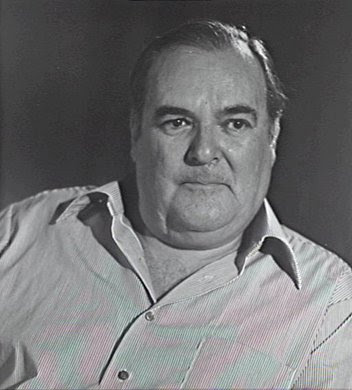
Cecil Holmes

Cecil Holmes and Three in One

The conventional wisdom about Cecil Holmes and his film Three in One is that the first two stories of the trilogy "Joe Wilson’s Mates” and “The Load of Wood” were very good and the third “The City” written by Ralph Petersen, was a clumsy and rather artless afterthought. Wrong. The screening of Three in One at Cinema Reborn in April, on a 35mm print from the NFSA that had hardly ever been through a projector, caused many to sit up straight and do a major re-assessment. The first story with its interpolations of some cod songs by The Bushwhackers goes on far too long. The second with Leonard Teale and Jock Levy is a small masterpiece. Petersen’s story captures the zeitgeist of the day superbly. 


The screening reminded me, if nobody else, that the AFI never honoured Cecil Holmes with the Raymond Longford Award, an oversight I shall not dwell on except to refer you to the list of winners. Many of them are exceptionally worthy but..


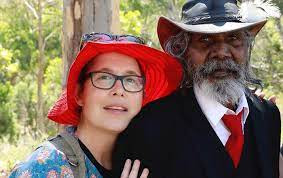
Moly Reynolds and David Gulpilil


My Name is Gulpilil

Moll Reynolds tribute to Gulpilil barely arrived before the great man passed on. A magnificent tribute and a reminder of an extraordinary life and unique career. The sequences featuring an unknown to me one man show that Gulpilil performed should surely be a priority for NFSA preservation, restoration and circulation.


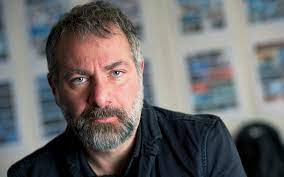
Jed Mercurio


Jed Mercurio

Nobody does TV like Jed Mercurio. Ten years of Line of Duty is one thing. Throw in Bodyguard and an EP job on Bloodlands in just the last couple of years and you get quite some kind of prolific ability to keep millions enthralled.        


Thursday, 9 December 2021

On Blu-ray - David Hare is enraptured by the new restored edition of TIH MINH (Louis Feuillade, France, 1918)

 I am unable to hold back any longer.


These two shots of Tih Minh (above and below) are from the end of the first episode in what Jonathan Rosenbaum describes as six hours of a journey through the Garden of Eden.


This staggering new reconstruction and restoration of Feuillade's 1918 serial Tih Minh is one of those movie miracles a great many cinephiles have literally been waiting decades to see.
It's been worth the wait, and I've only begun the journey but I have to say without a hint of exaggeration this is one of the greatest, most defining works of all cinema.
The opening of Episode 1 is a leisurely cast presentation to the camera with portrait-like screen tests for each of the actors and actresses, which is in itself a defining lesson in screen acting, the relationship of the screen to us, and our relationship to the screen.
Only towards the end of the cast call does the final actor, playing M. Placide quickly wink at the camera in one of Feuillade's very rare breaks of the fourth wall. If this opening sequence doesn't rope you in you may as well give up on ever having a relationship with cinema. Everything about this and his earlier Judex also in 12 episodes plus an epilogue from 1917 simply takes the movies once and for all to their most privileged position in human experience.
These new restorations of Tih Minh, begun 2018 and completed last year, and Judex also completed in 2020 are mind bendingly beautiful. The new Blu-ray disc sets from Gaumont are French language but the intertitles are so much easier to manage than spoken dialogue for those of us who have a reasonable but imperfect grasp of French language skill. if you prefer however there is an English subtitle option under the French inter-titles. I commend the two discs to the widest audience possible.