Showing posts with label Ray Argall. Show all posts

Friday, 15 May 2026

At CINEMA REBORN - Margot Nash's introduction to the Sydney screening of the Australian Social Realism program.

 Cinema Reborn: Australian Social Realism: Three Shorts (1977- 1983) 

My name is Margot Nash. A big thank you to Cinema Reborn for asking me to introduce this program. I’d like to acknowledge the traditional custodians of the unceded land we meet on today, the Gadigal and Bidjigal people of the Eora nation, and pay my respects to elders past and present. Always was, always will be Aboriginal land. 


Mary Callaghan


When Wall Street crashed in 1929, the world plunged into what is now known as the Great Depression.  In Australia, working people suffered mass unemployment and poverty, but the reality of their stories was rarely recorded on screen. The Hollywood behemoth was taking over film exhibition and distribution in this country, shutting Australian filmmakers out, (but that’s another story) and Australian cinemas were dominated by escapist feel good movies, meant to cheer people up. It was before television and newsreels played in the cinemas on a constant loop, with news from Australia and around the world as well as ‘human interest’ stories, which did not include the tough stories of working-class life. 


Social Realism emerged as an international art movement, during this time depicting the lives of the poor and marginalized. United by a belief in the power of art to reflect reality, and raise awareness of social issues, it was an anti-war and anti-fascist movement that included film, theatre, photography, painting and literature.  In Australia, Sydney’s New Theatre emerged in 1932 from the Sydney Workers Art Club under the slogan ’Art As a Weapon’. 


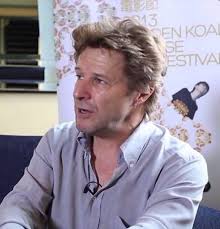
Ray Argall

Later, the Melbourne Realist Film Group in the 40s and the Sydney Waterside Workers Federation Film Unit in the 50s documented working-class lives and their struggles for social justice. John Hughes’ 2006 documentary The Archive Project tells the story of the Realist Film Group, and some of you will have seen some of the Waterside Workers Film Unit films, which I introduced at Cinema Reborn in 2022. Both groups were closely connected with the New Theatre.


The most famous Waterside Workers film was The Hungry Miles. Made in 1955 it was about the struggle on the waterfront against the unfair work practices of the shipowners during the Great Depression. Without newsreel archival footage to draw on, the unit staged re-enactments. Today, it is this vivid footage that is often used as archival film of the Depression. Even though it was filmed in the 1950s using wharfie non-actors, many of whom had lived through the Depression.


The Australian film renaissance in the 1970s opened up possibilities for local filmmakers to explore Australian stories. Many focussed on colonial foundation stories, or what has been described as the ‘bonnet’ dramas. However, social realism remained a developing historical thread with feature dramas like Ken Hannam’s Sunday too Far Away, about the 1956 shearers strike, and John Duigan’s Mouth to Mouth about homeless working-class kids.


In the early 1980s, the Art and Working Life movement in both Sydney and Melbourne carried on the social realist tradition, across genres, in an attempt to bridge the gap between professional artists and the labour movement.


David Hay

The three films you will see today – Ray Argall’s 1983 Julie, Julie..., Dave Hay and Martha Ansara’s 1977 Me and Daphne and Mary Callaghan’s 1982 Greetings from Wollongong carry on this tradition. Theywere all filmed in existing workplaces and homes using mainly non-actors, thus also drawing on the legacy of Neorealism, which emerged during World War 2 with Rossellini’s Rome Open City, filmed in 1945 on the streets and in the houses of war-torn Rome, using actors like Anna Magnani alongside non-actors.


Me and Daphne

All three films explore the reality of working-class women’s work in the late 70s and early 80s. The dead-end, low-paid, repetitive factory jobs, often in isolated rural areas, the desire for social justice and the need to speak out, but also the desire for ‘something more’. For pleasure, for experience, or even just time to rest and reflect.


The women you will meet in these stories all want ‘something more’ and their gritty social realist narratives can also be contextualised within the 1970s women’s liberation movement, which told women they not only had the right to speak up and fight for their rights, but they could do anything they wanted to, if they put their mind to it.


Martha Ansara, who produced and filmed Me and Daphne, fought tooth and nail to get into the Australian Film Television and Radio School (AFTRS) to learn the camera, eventually pretending she wanted to be a director, so she could get access to the camera department, which, at that time, was solely a male domain.


Greetings from Wollongong

Before directing Greetings from Wollongong, the late Mary Callaghan had directed a short student film called Image Plus about the unreal and unattainable images of women in the media. Callaghan brought this analysis, along with her flair as a visual artist, to Greetings from Wollongong which follows a group of young unemployed kids who all need to find work to survive, but who also desire pleasure, and fun, in a bleak industrial town that has little to offer them. 


When we meet the main character in Ray Argall’s short film Julie, Julie..., she is cruising on her beloved motorbike, alone and free, on the highway heading for Melbourne from Broken Hill, looking for ‘something more’, when her plans are interrupted and her life changes. Again, the actors are predominantly non-actors and the locations reflect the reality of Julie’s choices. 


Of the three films, Greetings from Wollongong was the only one to receive funding from the then Australian Film Commission’s Creative Development Branch and Women’s Film Fund. It also had support from local businesses, unions and regional organisations and Mary produced a set of screen-printed postcards to raise money for the film.


Julie, Julie...

Julie, Julie...
 was made by the filmmakers on spec as a cinema short. The cinema chains, at the time, were talking about screening shorts before features, so they filmed it on Super 16mm in order to blow it up 35mm to this end. Unfortunately, this never happened, but they kept going. Ray, who had been making music videos and working for the ABC, had his own equipment and, working with a small independent crew. He and his co-workers financed it themselves and paid award wages. 


Me and Daphne has a more complex provenance which I don’t have time to do full justice to today, but I will try.  It was made at AFTRS ostensibly as a training film for students. The legendary John Flaus, was running the Open program at the time, and wanted a film to teach students about ‘visual thinking’. Why choose a close up as opposed to a wide shot?  Why use voice over instead of sync sound etc. Shot in a chicken factory in NSW, the film was directed by Dave Hay and shot by Martha Ansara.  


Dave had been to film school at UCLA and, inspired by social realist films he had studied there, decided to film in a local factory and use actors next to non-actors.  Martha brought a short story called Confessions of a Cannery Worker by Lillian Rosser. It was about a mother and daughter, forced work in a pineapple cannery in Brisbane to pay their electricity bill. They decided to use this story ‘as the basis for the plot to be illustrated in the proposed training film’. Then they set out to make two films. One for training film school students and the other to show the conditions migrant women workers had to endure, and their struggle for better conditions. 


The images of migrant women on the production line in the chicken factory in Me and Daphne are unforgettable and the film itself became something of a cause célèbre because, after it was screened to the Head of the Film School, Jerzy Toeplitz and the Director of the Training School, Storry Walton, Toeplitz pulled it out of circulation and ordered it to be recut. 


Fearing it would be destroyed, our fearless young filmmakers decided they would ‘retrieve’ the original negatives from the laboratory and put the film back together. So, Dave forged Toeplitz’s signature, picked up the original negative from the lab (in broad daylight), had it secretly edited and neg matched in Melbourne, and sent out of the country for prints to be made.


While Dave was dodging Commonwealth Police surveillance, Martha mounted a campaign to raise funds to finish the film but, just as it was set to screen at the Sydney Filmmakers Co-op in Darlinghurst, the Co-op received a court injunction from AFTRS barring the screening. Not to be deterred the filmmakers famously screened it outside the Co-op, on a wall in St Peters Lane, where, luckily, Martha met a fancy high-profile lawyer. 


AFTRS took them to the Supreme Court and all the film materials were seized. Dave and Martha’s decided to argue that, as the creative originators of the film, they should hold joint copyright with the school, and therefore have an equal say in the film’s exhibition and distribution. Unfortunately, Dave got sick and Martha had to front up alone, but after much ado, while the case was lost (after the judge found out about the St Peters Lane screening), the filmmakers did eventually get all the footage back.


This screening is the first public screening of Me and Daphne since that time, although the film was distributed covertly for years by the late Julie Wiggins.

Martha is very much alive and here if you want to ask her questions later, Martha please stand up. Warrior woman. Not to be messed with.

(Clap clap).


Ray Argall is also here. Another warrior, whose tireless work to restore and value the work of Australian independent filmmakers is also legendary. He restored all three films in this program, along with Greg Fitzgerald who did the restoration work on the sound.


Please stand up Ray and Greg.     (Clap clap)  


I hope you enjoy the films. 
You can see the Chips Mackinolty screen-printed poster (above) for the Filmmakers Co - op screening of Me and Daphne, alongside Mary Callaghan’s fluorescent screen-printed postcards for Greetings for Wollongong in the glass case just outside the door when you leave the cinema.


Thank you very much


Margot Nash 10 May 2026

Tuesday, 3 June 2025

WOOLLOOMOOLOO — Pat Fiske writes about a Restoration Project to restore her classic Australian documentary


Film-maker Pat Fiske writes:


How did the film, Woolloomooloo, come about...

In 1973, Denise White, Peter Gailey and I were struck by the potential life

changing impact of the actions of the various community groups, the NSW BLF and their Green Bans were doing. We began work on our first 16mm feature film. The section about Woolloomooloo and Victoria Street was originally intended to be about 10 minutes in the completed film about the history of the BLF and the Green Bans. When we came to the editing, we had such a bounty of footage our planned 10 minutes had turned into a two hour rough cut. So, we decided to make a film about Woolloomooloo first. When Woolloomooloo was finally completed in 1978, I went back to tell the broader BLF and Green Bans story, creating the film, Rocking the Foundations (1985), which has already been beautifully restored by the National Film and Sound Archive. Sadly, the NFSA can only restore a few films each year. 


We have commenced a Fundraiser to RESTORE this 16mm film to a very high quality digital product.


Donations to this Project are 100% Tax Deductible through Documentary Australia CLICK HERE


Completion Goal: $45,000 + Outreach Goal: $25,000


About the Film

Woolloomooloo is a landmark documentary tracking the fate of the 1969 scheme to

redevelop Sydney‛s old portside area of Woolloomooloo and its notorious neighbour,

Victoria Street, Kings Cross, overlooking the sparkling harbour. When the local

community are faced with the plans to replace working-class homes with high-rise

towers and busy expressways, they enlist support from the Builders‛ Labourers‛

Federation (BLF). Led by Jack Mundey, the BLF‛s Green Bans propel the issue into the national spotlight.


Woolloomooloo captures the historical combat whose players include local, state and

federal governments, the State Planning Authority, the National Trust, the developers,

the residents‛ action groups, the Builders Labourers‛ Federation (BLF), and the police.

Through to late 1977, when a radically reconfigured Housing Commission Project is

completed, it‛s a story rich in human drama. 


To make a donation  and to be kept informed of the progress of fund-raising CLICK HERE


What's going to happen...

Woolloomooloo is now 47 years old and much of the footage is even older. It needs

urgent and tender loving care to survive and to carry this excellent history of

Woolloomooloo and Victoria Street into the future. It will be time consuming to restore this film because of its age. Ray Argall of Piccolo Films, who recently did the gorgeous restoration of my film, For All the World to See, a Portrait of Professor Fred Hollows (1992), will be restoring Woolloomooloo and will do a spectacular job.


Restoration includes digitising the 16mm camera original - over-scanning every frame at a very high quality (4K). An exacting and time-consuming task. The audio will be remastered from the original 16mm mix master. Ray will carry out and supervise the Restoration in consultation with me. The restored Woolloomooloo will be available as a much more pristine and clear-viewing experience on all screens, big and small, and will be able to be transferred to any formats in the future and will have a very long life.


Woolloomooloo is an important part of Australian history and remains highly relevant. It has been screened by interested parties, universities and organisations since 1978

although in poor quality. When restoration is completed, it will be launched in cinemas. And an impact and screening campaign will follow to promote it far and wide.


For any questions or further information, please contact:

Pat Fiske pat@bowerbirdfilms.com +61 407 813 255

Thursday, 21 November 2024

A Conversation with documentary film-maker Tom Zubrycki - Zac Tomé talks to Tom about the forthcoming screening of KEMIRA:DIARY OF A STRIKE (1984) + HOMELANDS (1993)


One of Australia’s key figures in documentary, Tom Zubrycki (above), has recently restored the films
Kemira: Diary of a Strike (1984) and Homelands (1993). Cinema Reborn, alongside OZDOX and the Randwick Ritz, are doing a special one night screening of these underseen yet key documentaries to Australian film history. Kemira (1984) documents a miners strike responding to the mass closure of mines that swept through the nation in the 1980s. Homelands (1993) is one of the first Australian documentaries to tackle the struggle migrants face settling in Australia. Focusing on the Robles family, it’s a tender and honest account of the tensions one faces between redefining, and returning to, a home nation. Tom generously chatted to Cinema Reborn about the choice behind restoring these films, the challenges of documentary filmmaking, Australian film history and more. 

TO BOOK TICKETS FOR THE SCREENING ON SUNDAY 8 DECEMBER AT 5.00PM AT THE RANDWICK RITZ CLICK HERE

What motivated you to restore Kemira (1984) and Homelands (1993) out of the dozens of films that you've made? 

Well, one reason is because I looked at the pathetic nature of the video file which was transferred from the one inch telecine. In those days the quality of video transfers from 16 mm was pretty poor, so I just wanted to have better copies of these films so that they’re a more accurate representation of what the films would have looked like when they were originally projected. I put a little bit of money away every year to do it and I've got a friend down the road who's an extremely good restorer. 

Ray Argall

It was Ray Argall?  

Yes. He's restored many films by filmmakers of that period. Most recently Pat Fiske’s film on Fred Hollows For All the World To See (1992). Ray accesses the original negative (A&B rolls) from the NFSA who make a fresh telecine and then he does the picture grade.


And do your other films from a similar period also have the issue of quality as a result of being transferred from film to video? 

Yes Friends & Enemies (1987) and Billal (1996), which was the last film I made on 16mm. From then on, I shot tape – DV, DVCAM  - older technology than what's available now. Working in 16mm, there's a certain discipline involved, because it was expensive working in film, and I had to cover the story in as small a ratio as I could. As small as 20 to 1, while 200 to 1 is more common these days for an observational doc. 


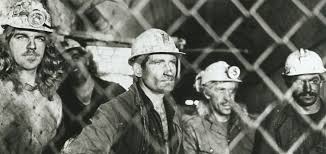
Kemira:Diary of a Strike

You just got odd short ends of film stock from other filmmakers if I’m not mistaken when you started on Kemira?
Yes, exactly. There was no time to apply for funding. The story was unfolding in real time and I just had to cover it as best I could. Filmmakers those days often kept short ends of un-exposed camera rolls, so I had some generous donations. Plus my own savings which allowed me to keep filming through the strike and beyond.


It’s interesting because Homelands (1993) seems to be shot on both 16mm and video?

True. Maria had her own video camera and she was recording scenes for her family and friends as well as for the Salvadorean community in Melbourne. So, it was a very interesting process - me shooting her, and her shooting me. It’s like she was making her own film inside mine.


She seemed to be hyper conscious of the power of film, and then she kind of put that on you. It was as though she was aware of the fact that a documentary, or film in general, is this ‘marker of truth’. Because that seemed to be what she was trying to do at the end there - to tell her kids what was really going on in her marriage, and film seemed to be the avenue for that rather than just a verbal dialogue. 

Certainly. That was the case and at the same time she was wanting to embarrass her husband. So in a way she was using it as a technique of asserting control in the relationship. I think you can take it further and say that the whole process of making Homelands (1993) was like a psycho-drama because it amplified the issues in the relationship that were already there, and possibly quickened the process of trying to resolve them.


Homelands

Would you put that down to Maria’s filming or yours?

I think it was a complicated mixture of the two really, because my presence in the film definitely altered the chemistry, and it became a complex series of interrelationships: me and her, me and Carlos, and the three of us together.


She seemed very determined in her ideals, and it was almost as though part of that idea of settling in Australia meant having a stable family. Of course, it was also out of care for her kids, that she wanted Carlos to be in their lives. She was a heroin figure of sorts though and it made her captivating to watch. 

I agree. But people have different reactions. Some viewers are drawn towards Carlos’ story, and feel sorry for him.


Homelands

I’m curious about an interview you did with ‘The Age’ for Homelands (1993) where you spoke about wanting to separate yourself from the history of anthropological filmmaking. Do you feel that there's any kind of collision between this desire to make films about people and culture, which is arguably the case for both Homelands (1993) and Kemira (1984), and then that desire, at the same time, to separate yourself from that tradition?

I think what I was referring to was visual ethnography - standing back with the camera and just observing and recording, and not getting involved in any way with your subjects. As a counter to that I was quite influenced by what was happening in the US in the mid 1960’s with what was called ‘direct cinema’, or ‘cinema verite’ by others. Early pioneers like Pennebaker and Leacock were following action, editing without commentary, but still having a point of view. The Maysles Brothers were in my mind the prime exponents of this style because they combined observation with character development and story. A major influence for me was Salesman (1969), where the Maysles really got into the lives of their subjects and kept on coming back to them over time. It was an inspiring film for me, and it dictated the style which I adopted for Kemira (1984). I took it a step further with Homelands (1993) where my unseen presence was more apparent than implied. I decided then that I had to insert myself into the film through the voice of a first-person narrator. I found that incredibly challenging.


Do you think shooting in 16mm as opposed to video made any difference to what became the final film?

Well, I'll get back to what I said earlier about working in film. Working in 16mm had a discipline attached to it. You were limited by the amount of film stock you had allocated in your budget, so you had to constantly think through what you were going to be shooting next. You were always trying to predict what might happen with your subjects, and with the ongoing story. After a shoot I used to always jot down the scene descriptions into a notebook, transfer them onto cards, stick the cards up on a pinboard and see what patterns emerge. You could say I was writing the script simultaneously as I was shooting the film. This discipline stayed with me in subsequent films shot on tape, where I brought on my editor – the brilliant Ray Thomas – quite early in the piece to make a scene assembly to help me work out the direction the story was taking. Doing this saved time and money and I didn’t have to pester my participants with more filming requests.


Is that intuition guided by the fact that you're forming relationships with these people around the film, whether it be Maria in Homelands (1993) or Ngaire in Kemira (1984). Because in both films you're clearly conscious of this question.

I chose Ngaire because she appeared to me one of the more vulnerable of the group of women keeping vigil at the pit-top. She really wanted to tell her story. It's as if she had this weight on her shoulder which she wanted to let go. She told us about company cars driving past her house harassing her, and her children not understanding why their Dad couldn’t come home. I felt that for Ngaire the strike was going to be a life-changing event, and so it proved.

On my first meeting with Maria and Carlos I knew straight away that the film was going to be a story of their relationship as a couple. I understood what Carlos wanted, which was desperately to return to El Salvador now that the civil war had just ended. I understood what Maria wanted too, which was to stay with her girls, and to settle the family into quiet suburbia. Their relationship was pulling in different directions and it was augmented by the fact that Carlos had a lousy job, while Maria felt satisfied and fulfilled with hers. 


From what I understand you always try to show the films to those who were in it before picture lock.

Yes, and every time you do that as a filmmaker, you feel like your life's on the line because you have given your subjects the power of veto. That’s always been my practice. However you’ve been filming for several months, and up to that point there’s been a lot of trust on both sides, so you hope they feel that they will be satisfied that you’ve represented their lives fairly and accurately, and hope that they’ll acknowledge the result – warts and all. It’s a tricky thing because you’re also conveying your own perspective as the filmmaker. 


Kemira: Diary of a Strike


Is there a desire with making these films that you would like to incite some kind of change? Even though Kemira (1984) ends with a certain disappointment, do you feel that just documenting it is enough?

One of the reasons for making Kemira (1984) was to amplify the voices of people who were the victims of these larger economic and political forces that were beyond their control. In those days coverage of industrial relations was poor and restricted to brief news reports. I felt a strong sense of responsibility towards the people I was filming with, that I could elevate their voices to a wider public. The role of a documentary filmmaker is to give deep and layered accounts of what’s going on. That’s what makes documentaries so different to current affairs journalism.


In Kemira (1984), the Women's Auxiliaries movement is vital to the strike and also Ngaire is the main protagonist. In Homelands (1993), Maria often highlights the treatment of women in the Salvadorean community.  Could you speak about the role of women in both films? Was it a conscious focus of yours, because it does add to that political edge, considering the role that women were playing at that time in various movements, but maybe weren't being celebrated for their work. 

Oh totally. I think that's one reason I decided to focus more or less on women being the key ‘characters’ in the films. At the time I was making Kemira (1984) stories of women in the union movement had rarely been represented in films – either narrative features or documentaries. The Women's Auxiliary is an important feature and very much the backbone of any strike action in a male dominated industry like mining. With Homelands (1993), I wanted to acknowledge that often women tend to develop and excel themselves in their new host country at a much more rapid pace than the men do. 


Was there a public response to the focus on a migrant story, and additionally one that centred on a kind of positive edge to a female success story? 

Yeah I think there was. Just looking at the reviews of the film and also the stories around the film that appeared in different papers. But I also felt that Maria felt comfortable in telling her story to others. I think she talked to the experiences of a lot of other migrant women by actually exposing the issues around her relationship. The film went into educational distribution for quite a long time. Which to me, is a good sign because it covered issues which were not commonly aired about the migrant experience. There’s an expectation that people coming from a war-torn country would settle in Australia and would love their new homeland, but in fact the situation is much more complex than that. People don't necessarily settle easily. They settle with difficulty, and if they're a couple they react differently. The process can be bumpy and messy.


Kemira (1984) begins with archival footage, I believe from Hewers of Coal (1957), and Homelands (1993) also starts with some kind of archival material. Can you talk about that choice?

With Kemira (1984) it was a homage to those earlier films made by the Waterside Workers Film Unit, specifically the film Hewers of Coal (1957), which has very explicit footage that highlights the hazardous nature of coal mining in Australia and what it's like for people who are part of that industry. We fashioned the opening sequence of the film from this footage to be underscored by original music from composer Elizabeth Drake. Elizabeth wanted to actually feel that experience of being underground to get the inspiration for the score, and through the union we found a way for that to happen. In the case of Homelands (1993), I licensed appropriate footage from a stockshot library. I organised to have it colourized optically. I wanted to set the scene of the civil war and underscore it with music – same way as I did with Kemira (1984). 


At the end of Kemira (1984), there's a credit given to the Creative Development Branch of the Australian Film Commission. If I'm not mistaken, the financing secured through them was given to you after you'd shot the film. There are a lot of conversations about that period in Australian film, and how there seemed to be a larger pool of funding. As you're a producer as well as a director, I’m curious if that kind of funding would be accessible to documentary filmmakers wanting to make a film of a similar subject matter or similar political relevance today?

Well, there was certainly a larger pool of money, in relative terms quite a bit larger, and there weren’t as many filmmakers applying for those funds. What was new and unusual about Kemira (1984) was that it was assessed after it was filmed on the basis of three rolls of film that were actually printed from the negative. Because that's all I could afford. It was a gamble on my part that the Film Commission would support it. One of these rolls featured the storming of Parliament House, an event that had national repercussions and was already being inscribed in history. They recognised the importance of the story and gave me a production grant to complete the film. Back then it was very unusual, but these days it's very common for people to shoot a considerable portion of their films while they're trying to, at the same time, secure funding. This happened on a recent film I produced, The Carnival (2023). The filmmaker Isabel Darling had already been shooting the story for 5 years before I came on board. We eventually obtained a pre-sale from SBS. By that stage the film was already halfway through the edit!  


It’s quite counter-intuitive to funding models considering that part of the premise of a documentary is that you do have to be open to whatever might happen. 

Yeah, that’s right. If you feel you've got the makings of a good story you just have to go and start shooting. Broadcasters and investors don't want to take too much of a risk, particularly of these films that are observational in style, because they don't quite know the ending. Makes it frustrating for documentary filmmakers who are following an unfolding story using an observational documentary approach, and that’s why so few such films are made these days.


While we’re talking about that period in Australian film, considering you made the documentary Senses of Cinema (2022) with John Hughes I'm curious about your relationship to the filmmakers co-ops. They were obviously a vital part of the resurgence of Australian film culture. Did the co-ops and the culture that came out of that time have any influence on you? To what extent were you involved with them?

It did, because you felt that there was a sense of community there, that you were with other people who shared the same values and the same interests. Identity politics was also very strong at the time. People were always meeting up with one another at social events and at the Co-op cinema. Plus there was a lot of skill-sharing going on. There was this sense that we were carving out an underground independent sector that was running alongside the more commercial sector, but with not very much contact between the two, though Gillian Armstrong was one exception. Being part of the Co-op certainly did influence me, there's no doubt. It made me feel that I wasn't isolated, even though each one of us had our own films to make.

Just to finish off, what do you see is the future of Kemira (1984) and Homelands (1993)? Do you have any ideas of where you'd like to see them screened?
Well, they're actually currently being distributed by Beamafilm. I think eventually though I'd like to make them freely available on YouTube. I just want them to be around and for people to know about them and for future generations as well. These films are part of this country’s lived history and also in the history and tradition of documentary filmmaking in Australia. Hopefully they’ll be written about and argued about – and become part of our cultural memory.


That's the whole point of restoration, right? Is kind of keeping that cultural memory alive.
Yeah, exactly.