Showing posts with label Margot Nash. Show all posts

Friday, 15 May 2026

At CINEMA REBORN - Margot Nash's introduction to the Sydney screening of the Australian Social Realism program.

 Cinema Reborn: Australian Social Realism: Three Shorts (1977- 1983) 

My name is Margot Nash. A big thank you to Cinema Reborn for asking me to introduce this program. I’d like to acknowledge the traditional custodians of the unceded land we meet on today, the Gadigal and Bidjigal people of the Eora nation, and pay my respects to elders past and present. Always was, always will be Aboriginal land. 


Mary Callaghan


When Wall Street crashed in 1929, the world plunged into what is now known as the Great Depression.  In Australia, working people suffered mass unemployment and poverty, but the reality of their stories was rarely recorded on screen. The Hollywood behemoth was taking over film exhibition and distribution in this country, shutting Australian filmmakers out, (but that’s another story) and Australian cinemas were dominated by escapist feel good movies, meant to cheer people up. It was before television and newsreels played in the cinemas on a constant loop, with news from Australia and around the world as well as ‘human interest’ stories, which did not include the tough stories of working-class life. 


Social Realism emerged as an international art movement, during this time depicting the lives of the poor and marginalized. United by a belief in the power of art to reflect reality, and raise awareness of social issues, it was an anti-war and anti-fascist movement that included film, theatre, photography, painting and literature.  In Australia, Sydney’s New Theatre emerged in 1932 from the Sydney Workers Art Club under the slogan ’Art As a Weapon’. 


Ray Argall

Later, the Melbourne Realist Film Group in the 40s and the Sydney Waterside Workers Federation Film Unit in the 50s documented working-class lives and their struggles for social justice. John Hughes’ 2006 documentary The Archive Project tells the story of the Realist Film Group, and some of you will have seen some of the Waterside Workers Film Unit films, which I introduced at Cinema Reborn in 2022. Both groups were closely connected with the New Theatre.


The most famous Waterside Workers film was The Hungry Miles. Made in 1955 it was about the struggle on the waterfront against the unfair work practices of the shipowners during the Great Depression. Without newsreel archival footage to draw on, the unit staged re-enactments. Today, it is this vivid footage that is often used as archival film of the Depression. Even though it was filmed in the 1950s using wharfie non-actors, many of whom had lived through the Depression.


The Australian film renaissance in the 1970s opened up possibilities for local filmmakers to explore Australian stories. Many focussed on colonial foundation stories, or what has been described as the ‘bonnet’ dramas. However, social realism remained a developing historical thread with feature dramas like Ken Hannam’s Sunday too Far Away, about the 1956 shearers strike, and John Duigan’s Mouth to Mouth about homeless working-class kids.


In the early 1980s, the Art and Working Life movement in both Sydney and Melbourne carried on the social realist tradition, across genres, in an attempt to bridge the gap between professional artists and the labour movement.


David Hay

The three films you will see today – Ray Argall’s 1983 Julie, Julie..., Dave Hay and Martha Ansara’s 1977 Me and Daphne and Mary Callaghan’s 1982 Greetings from Wollongong carry on this tradition. Theywere all filmed in existing workplaces and homes using mainly non-actors, thus also drawing on the legacy of Neorealism, which emerged during World War 2 with Rossellini’s Rome Open City, filmed in 1945 on the streets and in the houses of war-torn Rome, using actors like Anna Magnani alongside non-actors.


Me and Daphne

All three films explore the reality of working-class women’s work in the late 70s and early 80s. The dead-end, low-paid, repetitive factory jobs, often in isolated rural areas, the desire for social justice and the need to speak out, but also the desire for ‘something more’. For pleasure, for experience, or even just time to rest and reflect.


The women you will meet in these stories all want ‘something more’ and their gritty social realist narratives can also be contextualised within the 1970s women’s liberation movement, which told women they not only had the right to speak up and fight for their rights, but they could do anything they wanted to, if they put their mind to it.


Martha Ansara, who produced and filmed Me and Daphne, fought tooth and nail to get into the Australian Film Television and Radio School (AFTRS) to learn the camera, eventually pretending she wanted to be a director, so she could get access to the camera department, which, at that time, was solely a male domain.


Greetings from Wollongong

Before directing Greetings from Wollongong, the late Mary Callaghan had directed a short student film called Image Plus about the unreal and unattainable images of women in the media. Callaghan brought this analysis, along with her flair as a visual artist, to Greetings from Wollongong which follows a group of young unemployed kids who all need to find work to survive, but who also desire pleasure, and fun, in a bleak industrial town that has little to offer them. 


When we meet the main character in Ray Argall’s short film Julie, Julie..., she is cruising on her beloved motorbike, alone and free, on the highway heading for Melbourne from Broken Hill, looking for ‘something more’, when her plans are interrupted and her life changes. Again, the actors are predominantly non-actors and the locations reflect the reality of Julie’s choices. 


Of the three films, Greetings from Wollongong was the only one to receive funding from the then Australian Film Commission’s Creative Development Branch and Women’s Film Fund. It also had support from local businesses, unions and regional organisations and Mary produced a set of screen-printed postcards to raise money for the film.


Julie, Julie...

Julie, Julie...
 was made by the filmmakers on spec as a cinema short. The cinema chains, at the time, were talking about screening shorts before features, so they filmed it on Super 16mm in order to blow it up 35mm to this end. Unfortunately, this never happened, but they kept going. Ray, who had been making music videos and working for the ABC, had his own equipment and, working with a small independent crew. He and his co-workers financed it themselves and paid award wages. 


Me and Daphne has a more complex provenance which I don’t have time to do full justice to today, but I will try.  It was made at AFTRS ostensibly as a training film for students. The legendary John Flaus, was running the Open program at the time, and wanted a film to teach students about ‘visual thinking’. Why choose a close up as opposed to a wide shot?  Why use voice over instead of sync sound etc. Shot in a chicken factory in NSW, the film was directed by Dave Hay and shot by Martha Ansara.  


Dave had been to film school at UCLA and, inspired by social realist films he had studied there, decided to film in a local factory and use actors next to non-actors.  Martha brought a short story called Confessions of a Cannery Worker by Lillian Rosser. It was about a mother and daughter, forced work in a pineapple cannery in Brisbane to pay their electricity bill. They decided to use this story ‘as the basis for the plot to be illustrated in the proposed training film’. Then they set out to make two films. One for training film school students and the other to show the conditions migrant women workers had to endure, and their struggle for better conditions. 


The images of migrant women on the production line in the chicken factory in Me and Daphne are unforgettable and the film itself became something of a cause célèbre because, after it was screened to the Head of the Film School, Jerzy Toeplitz and the Director of the Training School, Storry Walton, Toeplitz pulled it out of circulation and ordered it to be recut. 


Fearing it would be destroyed, our fearless young filmmakers decided they would ‘retrieve’ the original negatives from the laboratory and put the film back together. So, Dave forged Toeplitz’s signature, picked up the original negative from the lab (in broad daylight), had it secretly edited and neg matched in Melbourne, and sent out of the country for prints to be made.


While Dave was dodging Commonwealth Police surveillance, Martha mounted a campaign to raise funds to finish the film but, just as it was set to screen at the Sydney Filmmakers Co-op in Darlinghurst, the Co-op received a court injunction from AFTRS barring the screening. Not to be deterred the filmmakers famously screened it outside the Co-op, on a wall in St Peters Lane, where, luckily, Martha met a fancy high-profile lawyer. 


AFTRS took them to the Supreme Court and all the film materials were seized. Dave and Martha’s decided to argue that, as the creative originators of the film, they should hold joint copyright with the school, and therefore have an equal say in the film’s exhibition and distribution. Unfortunately, Dave got sick and Martha had to front up alone, but after much ado, while the case was lost (after the judge found out about the St Peters Lane screening), the filmmakers did eventually get all the footage back.


This screening is the first public screening of Me and Daphne since that time, although the film was distributed covertly for years by the late Julie Wiggins.

Martha is very much alive and here if you want to ask her questions later, Martha please stand up. Warrior woman. Not to be messed with.

(Clap clap).


Ray Argall is also here. Another warrior, whose tireless work to restore and value the work of Australian independent filmmakers is also legendary. He restored all three films in this program, along with Greg Fitzgerald who did the restoration work on the sound.


Please stand up Ray and Greg.     (Clap clap)  


I hope you enjoy the films. 
You can see the Chips Mackinolty screen-printed poster (above) for the Filmmakers Co - op screening of Me and Daphne, alongside Mary Callaghan’s fluorescent screen-printed postcards for Greetings for Wollongong in the glass case just outside the door when you leave the cinema.


Thank you very much


Margot Nash 10 May 2026

Tuesday, 30 January 2024

At Antenna Documentary Film Festival - Margot Nash presents the Sydney premiere of UNDERCURRENTS: MEDITATIONS ON POWER

The Blood of Empire, Undercurrents

Margot Nash writes:

Dear Friends


I am thrilled to let you know that my new film, Undercurrents: meditations on power now has a Sydney screening.


It will screen in the Antenna Documentary Film festival in the Australian Shorts Competition, Session 1 on Sat 10 Feb at Dendy Newtown at 11:30am. See: https://antennafestival.org/films/australian-shorts-competition-session-1/ 


See the leaflet below. Check my web site for updates https://www.margotnash.com


Hope to see you there.


Best wishes,


Margot


She thought about power, Undercurrents


Saturday, 17 July 2021

CINEMA REBORN IN MELBOURNE - Updated website details with titles, times, notes and booking links

Sons of Matthew, Charles Chauvel

The Cinema Reborn website has been rejigged to put together all the information needed for the Melbourne season of Cinema Reborn. Just Click Here to Have a Look Around

It's been re-assembled for a season at the Classic Cinemas Elsternwick from 14-17 October. All told ten screenings of nine feature films and five (Australian) short films will be the programme and the Cinema Reborn website has been edited to provide comprehensive program notes, session times, details of the restorations and links to bookings via the cinema website.

The major change is the inclusion of Charles Chauvel's Sons of Matthew.  This film will be screened in a digital restoration prepared by the National Film and Sound Archive of Australia not previously screened in Melbourne. Sons of Matthew replaces Three in One  which screened in the Sydney season on an archival 35mm print. The NFSA is currently preparing a digital restoration of the film.

Below are some more stills taken from the six Australian films that are part of the  nine feature films and five short films in the Melbourne season.

Shadow Panic, Margot Nash


Green Bush, Warwick Thornton


Willaberta Jack, David Tranter

Tuesday, 1 June 2021

CINEMA REBORN - Margot Nash introduces THEJUNIPER TREE (Nietzchka Keene, USA, 1990) and her own film SHADOW PANIC (Australia, 1989)

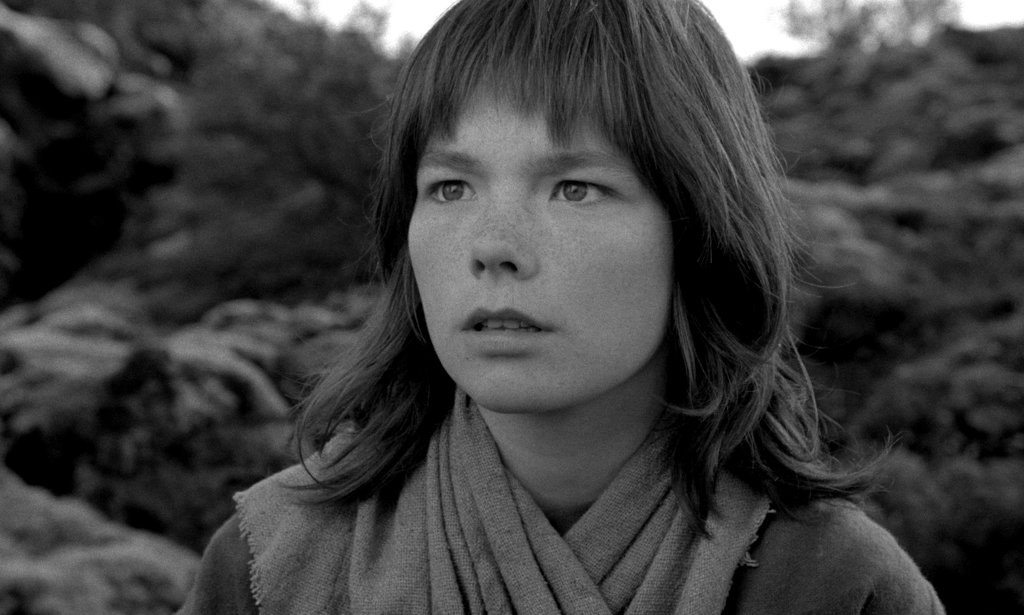
Bjork, The Juniper Tree

I would like to acknowledge that we are here today on the land of the Gadigal and Bidjigal peoples who traditionally occupied the Sydney coast. I acknowledge Aboriginal or Torres Strait Islander people attending today and I pay my respects to Elders past and present.


I’d also like to thank Geoff Gardner and Cinema Reborn for asking me to introduce The Juniper Tree, Nietzchka Keene’s adaptation of a Brothers Grimm fairy tale. After I had looked at it and said yes, Geoff asked if they could screen my experimental short film Shadow Panic with it. Of course I said yes. 


The Juniper Tree was shot in glorious 35mm black and white in Iceland in the late 1980s. It was made on a very low budget with a small cast and crew, yet it is spectacular in its vision and meticulous in its detail. Keene’s mysterious and compelling mise-en-scène reminded me of both Bergman and Maya Deren. Sadly Keene died in 2004 at the age of 52, leaving behind a number of half-finished projects, as well as all the original Juniper Treematerials, carefully archived and able to be sourced for this stunning 4K restoration.  


Shadow Panic was shot in 16mm colour in Sydney in 1989 and remastered in 2020 in 2K by Ray Argall from Piccolo films. We worked from a high definition scan I had made in 2015, in order to use clips in another filmThe scan was made from the ungraded inter-positive held in the archive.


The Juniper Tree has been described as a feminist adaptation of a Brothers Grimm tale. It was also Björk’s first film role. Keene had wanted a 13-year-old girl for the part, but eventually chose Björk, who was 21 at the time.  Her mesmerising performance is at the centre of this film, for she effortlessly inhabits the childlike world of a 13-year-old girl, who, like her mother before her, has the magical power to ‘see’ things that other people can’t.


Keene’s adaptation shifts the point of view from the little boy in the original Brothers Grimm tale to Björk’s character, Margit, making her the protagonist. Keene also shifts the location from Europe to Iceland, setting it in late medieval times and opening the story with two sisters whose mother has just been burnt as a witch. The Brothers Grimm stories were based on folk tales, fairy stories and oral histories they collected and translated, and first published in 1812.


The original tale of The Juniper Tree is very important in folklore, for it is only one of two in the Grimms’ collection printed in dialect, and it contains motifs that possibly hark back several thousand years.  It’s a gruesome and bloody tale of an evil stepmother, who bullies her stepson and then murders him because she wants her biological daughter to inherit everything. She chops him up and cooks him in a stew, which her unknowing husband hungrily eats. Her heartbroken daughter, who loved her half-brother, buries his bones under the Juniper tree and weeps for him. Later the boy reappears in the tree as a little bird, singing ‘My mother slew me, my father ate me.’ Hearing the song, the woman runs out of the house and the little bird drops a millstone on her head killing her. Then the little boy reappears and he and his father and half-sister all live happily ever after.


While there are several hundred versions of The Juniper Tree, Keene’s adaptation radically transforms the narrative of the wicked stepmother, offering a more complex and layered representation of women’s struggle to survive in a time when single women were often persecuted and burnt as witches. While Keene changed the protagonist and parts of the story, she was careful to retain both the essential elements of the story and the ancient motifs that had found their way down, through the ages, into the version the Brothers Grimm wrote down. Keene also added things – things that might help tell the story through women’s eyes – perhaps things not considered important in the retelling or things that had been deliberately left out.


Keene had studied German linguistics as well as Icelandic languages and spent a year in Iceland researching locations and costumes for the film, as well as collecting ancient women’s songs, herbal remedies and spells. Björk sings one of these songs when we first meet her as Margit in the film, and we soon see her older sister, Katla, who becomes stepmother to the little boy, secretly practising spells in a desperate attempt to survive and protect her younger sister. While her older sister grinds herbs and practises spells, it is Margit who has the power to see things no one else can and, because we see through her eyes, we can see them too. In one extraordinary moment worthy of Bergman, Deren or Lynch, Margit crosses the boundary between the living and dead, and literally ‘sees’ and ‘puts her hand through’ the image of, or representation of, her dead mother. 


Keene was an academic as well as a filmmaker and would have been well aware of the debates raging in the 1980s around the representation of women. It was a time when women filmmakers like myself were wrestling with feminist film theory and ideas around the male gaze. How might we create films that challenged the male gaze we had all been brought up to accept as normal? How might we see through women’s eyes and not through men’s eyes? And how might we uncover the repressed stories of women that had been lost, forgotten or neglected?  Both The Juniper Tree and Shadow Panic were completed in 1989 and while they are very different films, and made on different sides of the world, it is these questions that, to some extent, they both share.


Keene wanted to create a mood, an atmosphere or a ‘world’ where we, the audience, might ‘see through’ women’s eyes: a women’s world of survival, where good witches were human and made mistakes; where spells didn’t always work and where many women became isolated, alone and persecuted.


In Shadow Panic I wanted to experiment with ‘seeing’ through women’s eyes too. In it, three women’s ‘worlds’ collide by chance and, in these moments, the gaze is literally thrown from one female character to the next, a bit like a relay. Made in the late 80s, the film was an exploration ofinternal and external states of emergency andwas a direct response to a world beset by greed, natural catastrophe, war and changing weather patterns. Inspired by the avant-garde and the surrealists, it was an experiment in shaking up narrative expectations and exploring the possibilities of image and sound.

Rose Wanaganeen as The Investigator,
Shadow Panic

The first character, The Redhead, is part homage to the legendary experimental filmmaker Maya Deren, who stopped the traffic in New York in the 1940s with her wild red hair and unconventional clothes. Her character came from my interest in the maternal, memory and psychoanalysis.


The second character, The Investigator, is part homage to the late Aboriginal activist Pearl Gibbs, whom I came across working on a documentary film about women’s history. I am told Pearl worked for a government department in the 1920s and crept in at night to search through the files of young women, who had been stolen as children and placed in service, so she could advocate for them. Pearl was a tireless activist and always very fashionably dressed, which is why I have given her such stylish outfits. 


The third character The Hothead, is obsessed with romantic love. She is the wild, immature part of me who caused me such trouble in my youth. Her image was quite simply cut out of a magazine. She is full of life and passion, but terribly hot-headed.


The Juniper Tree and Shadow Panic also share a heightened non-naturalistic performance style. Shadow Panic is clearly not real, but neither is The Juniper Tree.


Maria Tatar argues that early fables and fairy tales like The Juniper Tree were not for children, but cautionary tales for adults [1]. Do not abuse children or they may reappear like the little boy in the original tale and drop a millstone on your head!


Bruno Bettelheim argued that step mothers and mothers were often interchangeable in fairy tales. He thought tales with evil stepmothers were there to teach the child that ‘the mother’ is not only a good and loving mother. She can also get angry and suddenly turn into a wicked witch, but when the witch or the wolf is killed, the good mother or the kind grandmother will return triumphant [2]. But in the Brothers Grimm version of The Juniper Tree, she doesn’t. It is the little boy who returns triumphant. 


I will leave you to discover how Nietzchka Keene transformed this story. I hope it weaves its magic for you.


Margot Nash is a Visiting Fellow in Communications at the University of Technology Sydney. She originally delivered this introduction prior to the Cinema Reborn screening at the Randwick Ritz, 2 May 2021.


This program is being represented in the Cinema Reborn season in Melbourne from 14-17 October. Full details JUST CLICK HERE


In Melbourne the program will be introduced by Robin Laurie, who plays The Redhead in Shadow Panic.


THE JUNIPER TREE + SHADOW PANIC screen at 8.45 pm on Friday 15 October. For bookings JUST CLICK HERE 


[1]Tatar, M Telling Differences: Parents vs Children in ‘The Juniper Tree’ in Off With Their Heads: Fairytales and the Culture of Childhood, Princeton University Press, Princeton, new Jersey, US p. 213

[2]Bettelheim, B. 1976 Transformations: The Fantasy of the Wicked Stepmother inThe Uses of Enchantment, the meaning and importance of fairytales, Thames and Hudson, London. Pp. 66-73