Showing posts with label Bertrand Tavernier. Show all posts

Sunday, 3 May 2026

AT CINEMA REBORN - Barrie Pattison's introduction to THE WATCHMAKER OF ST PAUL (repeat screening on Thursday)

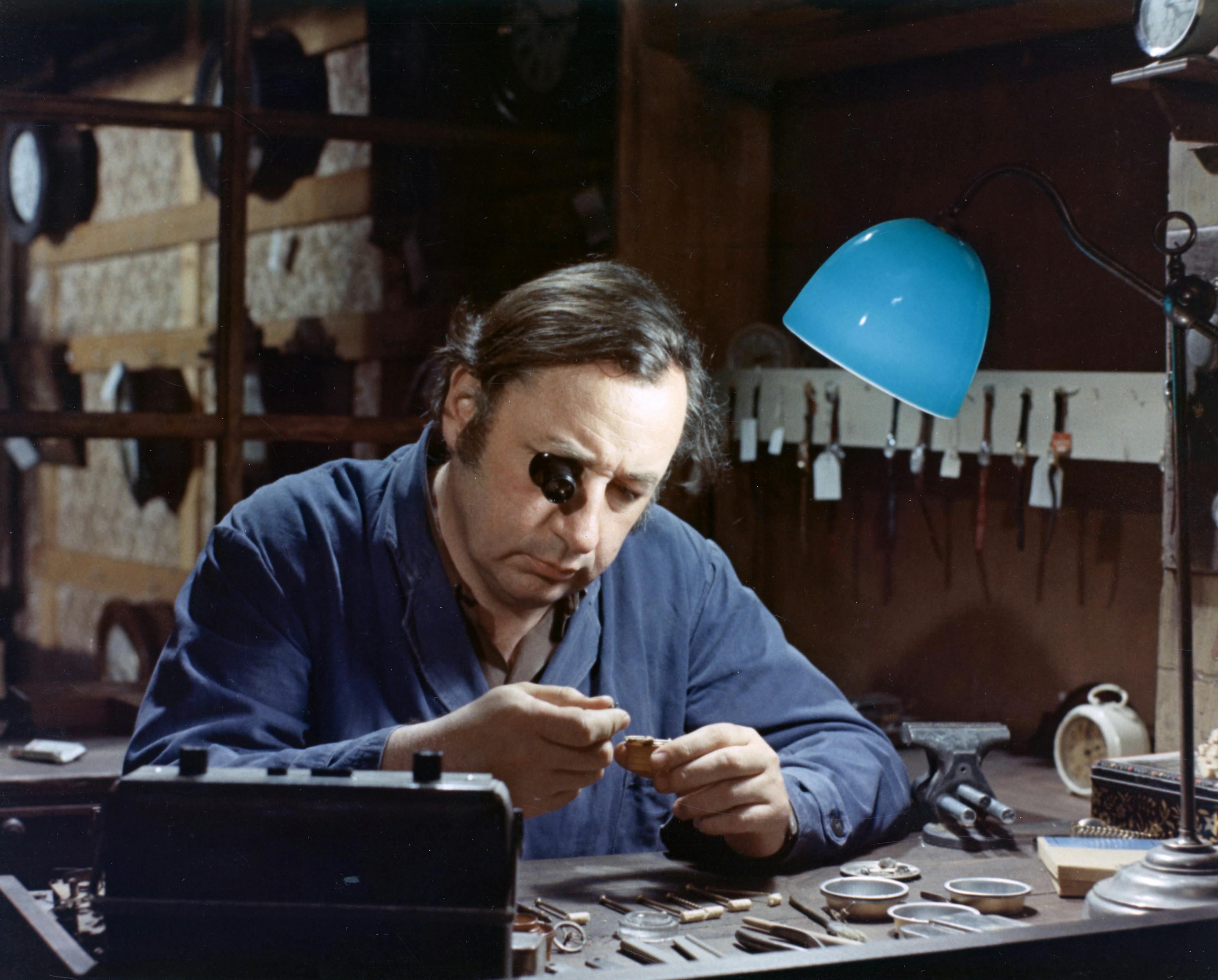
Philippe Noiret, The Watchmaker of St Paul

Editor's Note: THE WATCHMAKER OF ST PAUL  drew a very good crowd at its screening at Cinema Reborn in Sydney screens again in Sydney on Thursday 7 May at 4.15pm. It screens in Melbourne at the Hawthorn Lido on Saturday 9 May at 11.40 am, introduced by Andrew McGregor, and on Wednesday 13 May at 4.00pm.

Below is Barrie Pattison's introduction to the first screening in Sydney. The intro wont be repeated on Thursday at the repeat screening at the Randwick Ritz.  Barrie was a friend of director Bertrand Tavernier and his introduction recalls this friendship.

*********************

This is a slightly expanded version of the introduction I did to the 2026 Cinema Reborn screening.

I’m going to give you a little Film History, so here’s an apology to the people who know this already.

The first archival screenings we hear about, happened in the thirties in New York, London and Paris. The French activity was different, not conducted by institutions’ salaried officers  but by enthusiasts who gathered (and sometimes stole) copies which the Companies were discarding as no longer having any value. This appears to have been a boutique activity, with Henri Langlois and Georges Franju storing their prints in Langlois’ mother’s bathroom.

However (and this they don’t tell you) during The Occupation, a German Major put things on a more business-like basis, expanding the collection substantially from a couple of hundred titles (not a year’s programs for a serious Cinémathque). In the post war period, Paris became known as the only place in the world where you could see many important films. People like director Bob Swaim or writer Carlos Clarens came there, because that was where La Cinémathèque Française was.

A devoted core audience watched Langlois’ screenings at night and,  in the day time, wrote for magazines like Positif,  Cahiers de Cinéma, Présence de Cinéma, Cinéma Soixante dix, and the rest. They developed the celebrated Politique des Auteurs which said that movie directors were as much the authors of their work as composers, painters, sculptors and dramatists and they applied it to Hollywood professionals like Alfred Hitchcock and Howard Hawks, rather than heavyweights like Carl Dreyer or Robert Bresson.

… and they started making films, the celebrated La Nouvelle Vague.

After their phenomenal success with titles like Francois Truffaut’s Four Hundred Blows, Jean-Luc Godard’s Breathless and Louis Malle’s Zazie in the Métro, near three hundred films were made by French directors in their twenties. This process was peaking when I arrived there in the early sixties. 

I encountered press agent and critic Bertrand Tavernier, who was already doing episodes for sketch movies. He drew on his enthusiast background, scooping Laetitia Roman’s resumé out of the pile on his table, exclaiming “Gold of the Seven Saints!” and reviving her wilting career giving her the part in  Les baisers.

Shortly after this,  the authorities took the Cinémathèque away from Langlois - and his indignant supporters staged a demonstration outside the Trocadéro auditorium, which turned into a riot when the gendarmes broke it up. Bertrand Tavernier was seen leaving the event with blood streaming down his face. It was the first of the succession of manifestations of May ‘68, reverberating round the world - Le joli mai! 

I can’t help noticing that that messing with La Cinématèque Française brought down the French government while wiping out the Australian National Film Theatre only stirred interest among the people who wanted to make off with its funding and real estate.

Meanwhile Bertrand Tavernier had interested Philippe Noiret in Tavernier’s proposed adaptation of L’Horloger d’Everton, a story by Georges Simenon,  creator of Inspector Maigret. Noiret become a star out of his Nouvelle Vague movies.  His participation ensured finance and the film that you are about to watch was made. Tavernier rejected the night and fog of preceding Simenon productions.  His  L’horloger de St. Paul/The Watchmaker of St. Paul was about May ‘68, most obviously in the motif of the burning car and in Noiret’s final affirmation. But it’s not just a propaganda exercise, also incorporating a study of the Lyons neighbourhood where the work of the plumber, the glazier, the neighbourhood cafe or even the Cathedral where Noiret maintains the steeple clock,  get mixed in with the action. It is also, centrally, a father and son relationship examined in serious detail.

The film was a notable success and Tavernier followed it with other message pieces. I wasn’t the first person to tell him he was repeating himself and he had already set in train his jazz film ‘Round Midnight, the one that emboldened Clint Eastwood into making Bird, and the the first of the productions that turned Tavernier into one of the major film makers of the late 20th Century - Dimanche  dans la Compagne/Sunday in the Country, La Vie et rien d’autre/Life and Nothing But, Laisser passer/Safe Conduct.

However, he remained an enthusiast. He fronted a season of Julien Duvivier’s thirties Harry Baur films. He toured a retrospective of French war movies to promote his Capitain Conan and he was instrumental in setting up a film museum in his Lyons home town, in the building which had housed the Lumière factory, where what is generally considered the first motion picture had been made. He staged a history of westerns there.

I’d watched Tavernier do the sound mix on a couple of reels of l’Horloger de Saint Paul - the railway scene. Tavernier’s wife is the passenger out of focus behind the actors.  (His daughter Tiffany also appears in the opening scene looking at the car burn from the moving carriage window).  Tavernier was actually singing, caught up in the euphoria of starting his dream career. I’d see this a couple of times more - Peter Fonda after Easy Rider came out  and Oliver Stone when Platoon took off. Being part of a community largely made up of wannabe movie directors, however one of the most interesting things I got to do was watching Bertrand Tavernier go the distance.

I’m placing a 1974 interview I did with Tavernier after the London Premier of Watchmaker, on my Sprocket Sources Blog

Thursday, 19 March 2026

CINEMA REBORN - CLASSIC FRENCH CINEMA - PORT OF SHADOWS (1938), THE WATCHMAKER OF SAINT PAUL (1974), 36 FILLETTE (1988)


The 2026 program includes three remarkable films from three classic periods of French Cinema.

Port of Shadows | Current | The Criterion Collection

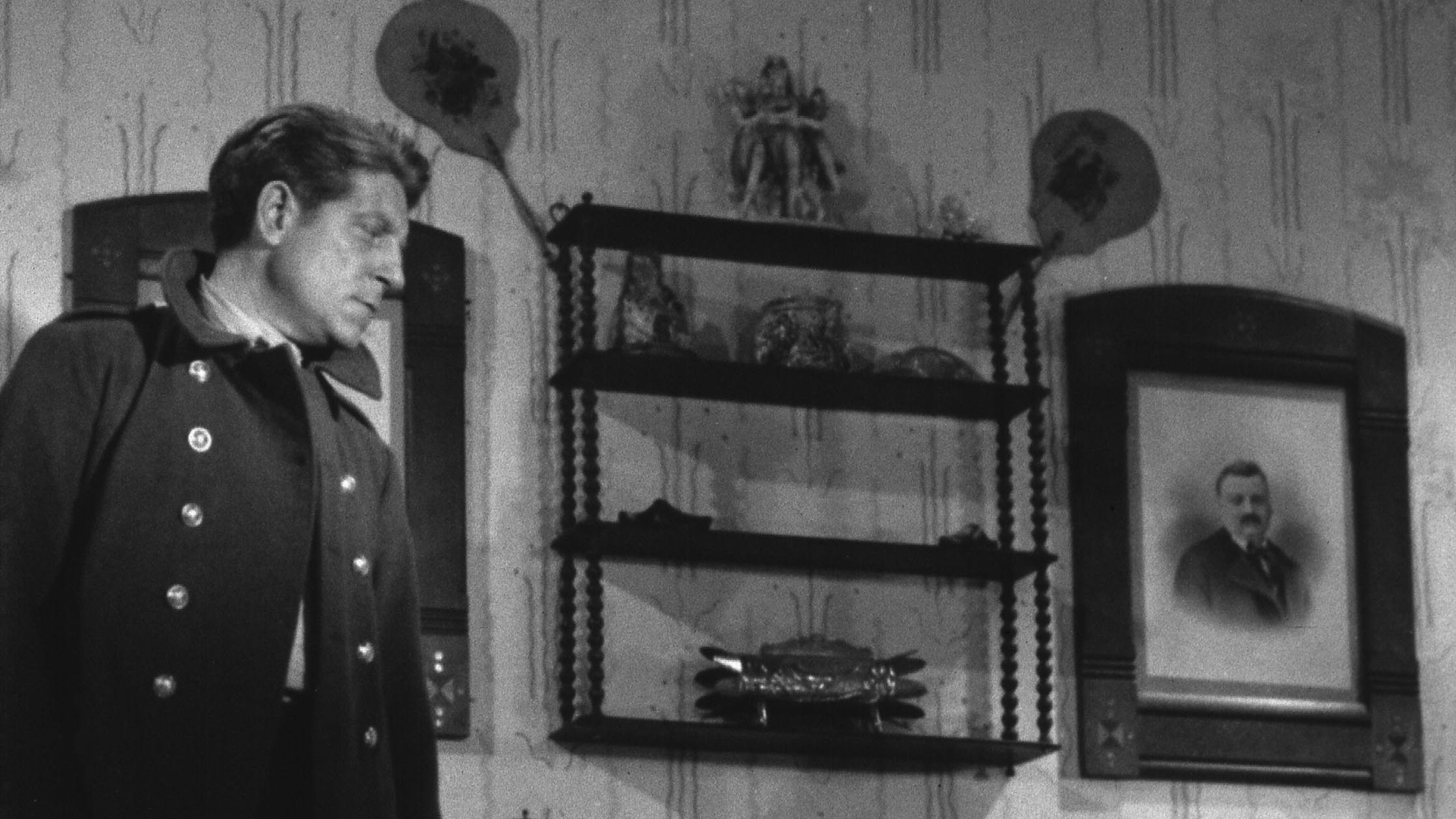
PORT OF SHADOWS (Marcel Carné, 1938) is an early film from the master film-maker best known for the wartime masterpiece Les Enfants du Paradis (1945). In his notes for the film published on the Cinema Reborn website critic Charles Carrall writes: “In his third feature-length film Port of Shadows (Le quai des brumes, 1938), an early masterpiece for Carné, the port city of Le Havre is shrouded in a serious fog. …As one of seven works in his celebrated partnership with screenwriter Jacques Prévert, Carné’s Port of Shadows, based on a Pierre Mac Orlan novel, stands out for its remarkable atmosphere of doom and gloom.

‘A remarkably beautiful motion picture.’ – Frank S. Nugent, The New York Times

The link to Charles’ notes takes you through to bookings and session times in Sydney and Melbourne. Screens twice in each city.

Introduced by Bruce Beresford at Ritz Cinemas and Dr. Felicity Chaplin at Lido Cinemas.

The Watchmaker of Saint-Paul (1974) - Ritz Cinemas

THE WATCHMAKER OF SAINT PAUL (Bertrand Tavernier, 1974)

‘An extraordinary film – the more so because it attempts to show us the very complicated workings of the human personality, and to do it with grace, some humour and a great deal of style.’ – Roger Ebert, Chicago Sun-Times

In Bertrand Tavernier’s feature directorial debut, adapted from a Georges Simenon novel, the quiet, orderly life of a widowed watchmaker (Philippe Noiret) is blown apart by the revelation that his teenage son has gone on the run after killing a man. Forming a relationship with a sympathetic police inspector (Jean Rochefort), the watchmaker searches for answers and grapples with the realisation that he knows far less about his son than he believed.

Introduced by Barrie Pattison at Ritz Cinemas and Dr. Andrew McGregor at Lido Cinemas

Read Ben McCann’s program notes and find links to session times and bookings. Screens twice in each city.

Virgin (1988) - IMDb

36 FILLETTE (Catherine Breillat, 1988)

‘Impressive, painfully candid … Lili is played with devastating realism by Delphine Zentout.’ – David Stratton, The Movie Show

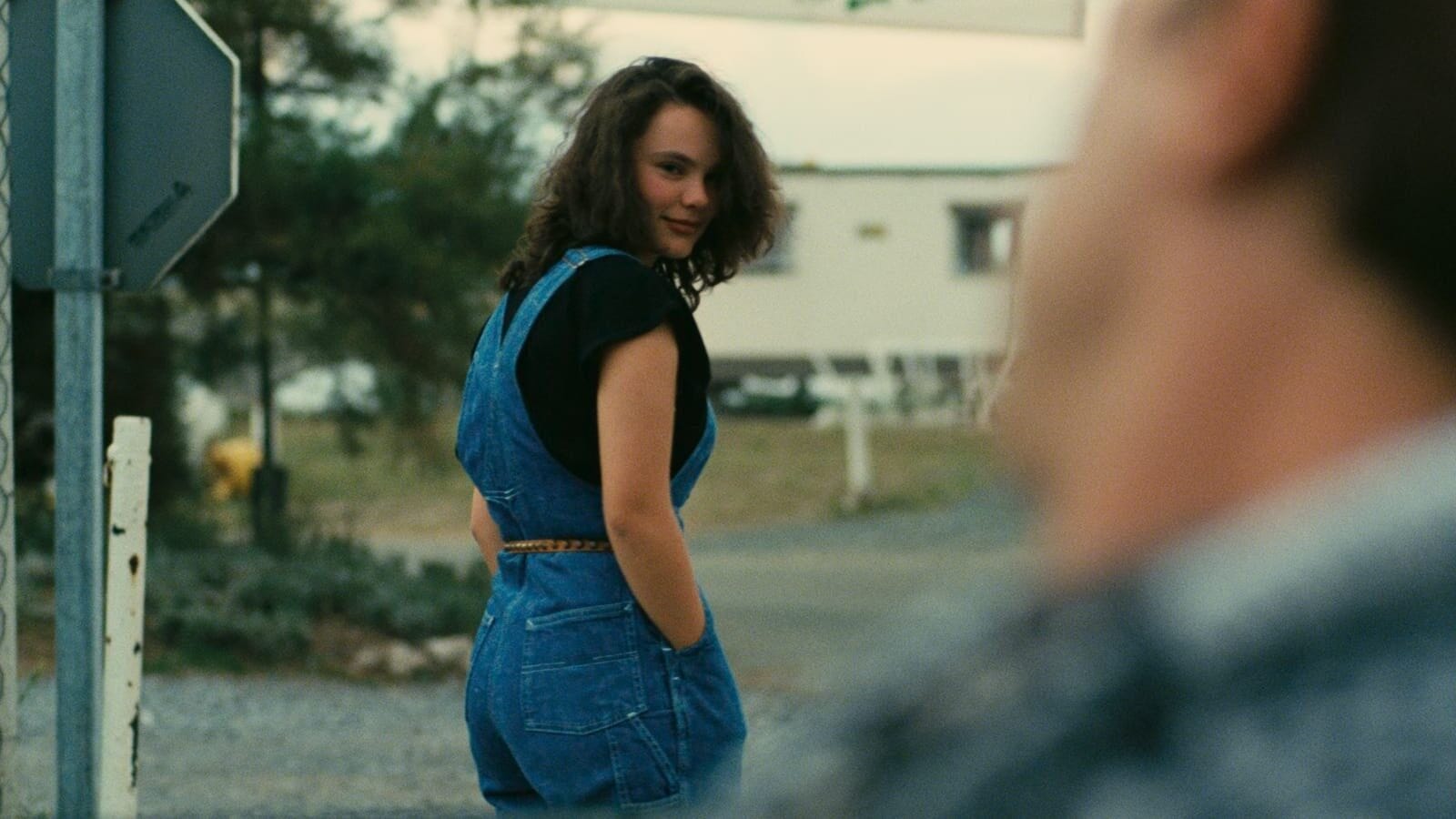
Featuring a key supporting role by French New Wave legend Jean-Pierre Léaud, Catherine Breillat’s international breakthrough film – based on a novel she wrote about her own teenage experiences – was controversial in its day, and time has if anything only increased its transgressive charge. It remains a frank, unsentimental and singularly pungent depiction of feminine coming-of-age, anchored by Zentout’s fearless performance.

Introduced by Beaudicea Smith-Davies at Ritz Cinemas and Philippa Hawker at Lido Cinemas.

Read Jane Mills program notes and find links to session times and bookings. Screens once only in each city.


CHARITABLE DONATIONS

Since our inception supporters have continued to ensure that the annual season is able to present the very latest and very best international and Australian film restorations.

Tax deductible charitable donations have enabled us to keep our admission charges to regular Ritz and Lido prices (with the lowest student concessions of any similar film-related event). We have once again set up a page via the Australian Cultural Fund to receive donations of any size, large or small. You can find it IF YOU CLICK ON THIS LINK

More news soon…

Sunday, 2 May 2021

A French Tribute to Bertrand Tavernier by François Forestier.


 LE CINEMA ET RIEN D’AUTRE          Hommage a Bertrand Tavernier.                                                                       

         He had a loud voice, a militant sentimentality, and cosmic erudition. Bertrand Tavernier, if you met him in the street, was likely to extol a dish of roast pork with prunes, assess the latest best-seller, praise the camera movements of Douglas Sirk, evoke the soul of poets, and speak of Lyon, his place of birth, which he called, with a laugh that belied everything, "that city of mist and lies". But it was a childish kind of lying, he said, of which he himself was the heir, because what is fiction if not a magnificent lie? 

         His strength of conviction emerged in a torrent of words which he framed with the gestures of a conjurer, for his hands had the grace of a prince of the church. His passion for cinema constantly stirred him up, and, having become a director, he unleashed salutary, memorable anger at the injustice of the world and the evil of the times. "I am perpetually indignant," he said, not without regret: he would have preferred to be a contemplative of the Renaissance, which in some ways he was. He only needed the right century. Luckily for us, he was born during the century of cinema.

         You should have seen him, at the end of the year, shortly after Que la Fête Commence,  one of his most successful films, in front of a golden Butterball turkey, sharpening his knife, holding his guests in suspense with stories about Richard Brooks or Michael Curtiz, while in the background we could hear John Coltrane's last concert at the Olatunji Center in Harlem.

         You should have seen him, index finger raised at the presentation of the Césars - he had just received an award, was it for Capitaine Conan? - reminding a whole elegant room and, indeed, the entire world that there were still people, outcast and rejected, who had to be helped.

         You had to see him, delicately taking the book handed to him - in this case the thin volume, bound in vellum, of Pierre Bost's Monsieur Ladmiral va bientôt mourir - in order to smell it, caress it and, ultimately, film it as Un Dimanche à la Campagne. 

         Theater producer, talent scout, adventurer in the lost lands of cinema, Bertrand Tavernier was never so moving as when he spoke of his father, René, whom he evoked in his marvelous documentary series, Voyages à travers le cinéma française. The trouble was that each conversation with him resulted in the immediate purchase of dozens of DVDs and armfuls of books. His culture was communicative and his enthusiasm contagious. When Clint Eastwood, in the Warner's private jet, asked aloud, "What was the first color movie?", nobody reached for a history of cinema. The answer was more simple. “Ask Tavernier.”  

         He had so much to tell. His most beautiful, most terrible, most poignant film is La Vie et rien d’autre, a masterpiece of humanity set in a nation devastated by the war of 1914/18, where a commander, played by Philippe Noiret, is responsible for identifying the soldiers engulfed by storms of steel. 

         With his bear body and large size, Tavernier moved better in the past (Le Juge et l’Assassin, La fille d’Artagnan, La Princess de Montpensier, Laissez-passer) and in the dark world (L'Horloger de Saint-Paul, Coup de Torchon) than in the future. Nevertheless, he tried his hand at science fiction with La Mort en direct. He filmed it in Glasgow, a city ravaged by industrial misery, using its City Hall, one of the rare buildings to survive a past of opulence. "Did you know," he said, "that this building is entirely lined with marble, on all floors? So the cellar ceiling is four meters thick to support the weight?” And with a nod of his head he indicated to a now-apprehensive Romy Schneider that he was ready to shoot. 

         This attention to detail defined him; this precision in directing was his magic. The tiny and the huge, the mundane and the visionary at the same time. 

         He had been a critic, press attaché, actor, producer, and author of some essential  books , including Thirty Years of American Cinema, which become Fifty Years, with Seventy Years in preparation.  Yet "I would have liked,” he said once, “to carry Verlaine's suitcases," a comment that reflected his deep sense of justice - and of poetry. In Sainte-Maxime [a Mediterranean town near St Tropez] , where he had retired during the pandemic, to work on his autobiography - he had so much to tell! -  Tavernier inhaled the air of tranquility, when he was actually a man in tumult. 

         My last vision: in his rumpled military jacket, a little stooped by the weight of his bulging carrier bag, he moves away, on the quays, in a mist of the end of the day, towards the Pont d’Alma - just an ordinary old bugger, who was also a colossus who ate film and spat fire but dispensed sweetness. As a newspaper seller distributes a daily newspaper with bad news, Tavernier turns around, shakes my hand, puts up his glasses, points to the Seine .....and this is the last image I have of him. It hugs my heart.


                                    Nouvelle Observateur Française Paris,  1-7 April, 2021.


                                                      Translated by John Baxter.

Tuesday, 13 April 2021

Vale Bertrand Tavernier - Sydney supercinephile Barrie Pattison remembers his acquaintance with the great man of cinema


Local media hardly acknowledged the death of Bertrand Tavernier but his death severs one of the last links with the golden age of movie enthusiasts - a group for whom attending the Paris Cinémathèques had been the central act of their lives.

Bob Swaim American director of La Balance explained that he went to Paris in the sixties because it was the best place in the world to see movies. Carlos Clarens said the same thing and I found myself falling into step with “The Children of the Cinémathèque” there, frequently the only place in the world where important titles would screen. There was the feeling of being among the last people in the world seeing them, certainly in original thirty five millimeter copies like the breath-catching Way Down East still missing the pieces taken out for the Lillian Gish tour, the 1933 tinted La Tête d’un homme in 1:2 or the four colour 1936 La tendre ennemie printed on stocks that were no longer manufactured, all right speed, right format. 


In the sixties, using my Films & Filming connection, I’d shown up for the Paris press preview for the belated release of The Red Badge of Courage, introduced by John Huston in person, and was talking to friends afterwards, when a voice asked in impeccably accented English “Do you know Richard Whitehall?” (who had just published a Delmer Daves career piece in the magazine). It was Bertrand Tavernier.


He made it his business to meet everyone in the enthusiast scene. We did a couple of good lunches. I ran Victor Seastrom’s Under the Red Robe for him (he liked the design aspect) and I watched him mix a reel of L’horloger de St. Paul bubbling with delight at having gotten his first important feature. He provided loving detail on the menu for the meal he had prepared for the leads to eat on screen. When the film came out, I did his first interview in English, for “Film” magazine. Sight and Sound had rejected that one.


L’horloger de St.Paul was a good foundation for a career. The Simenon opening “Your son has killed a man” is an attention getter and the blazing car remains a striking image. Five decades later, his Vingt Heures obit kicked off with that. Philip Noiret had had to beg the producer to let Tavernier direct and he and Jean Rochefort handled the leads in the director’s early films. These were presentable Boulevard features but with 1984’s Un dimanche à la campagne a greater maturity entered. Tavernier himself saw the departure point as the Natalie Baye Une semaine de vacances. 


In Dimanche Sabine Azema’s daughter character became one of the cinema’s most memorable, eclipsing Michel Aumont as her stolid bourgeois brother who brings his family to visit aging father Louis Ducreux. She can’t wait to get away. Tavernier took out the underlining scene where Ducreux comments on the event-packed weekend only as “My daughter came to see me.”


Taverier’s English saw him through five features including Round Midnight which transcribed to the jazz scene his time as a publicist promoting Raoul Walsh and John Ford on visits to Paris. In with Dimanche..., La Vie et rien d'autre and Le Capitaine Conan these made him a front runner.  The late career association with Philippe Torreton was particularly rewarding. It was a great pleasure to find my own enthusiasm reflected back when using these in screenings.


Few filmmakers ever accumulated a comparable body of work. 


Tavernier had been one of the people who had hardly missed a night at the Cinémathèque and this exposure marked his work. It gave him an inexhaustible reserve of material to re-cycle.  Choosing instances at random - Michel Aumont’s family traveling second class repeating the “like a lady” incentive offered Odette Joyeux  in Douce, the ending of M. Verdoux, where the convicted serial killer is contrasted with the court which condemns him representing a society which has killed thousands in the War. That comes up again with Philippe Noiret and Michel Galabru in Le juge et l’assassin. Compare the scene of Captain Conan reconstructing the events of the combat from the terrain where it was fought with Victor Fleming’s 1931 Renegades where Warner Baxter is told about the battle he missed as they cross its field, indicating where men he knew died. There’s Noiret as the statistician who calculates the time the WW1 dead would take to pass in La vie et rien d’autre. 


Philippe Noiret, Michel Galabru, Le juge et l'assassin

Now if that wasn’t enough, Tavernier never abandoned his identity as an enthusiast. He fronted a Julien Duvivier-Harry Baur retrospective or screenings of items like of Michael Curtiz’ little known The Strange Love of Molly Louvaine and even made it to Sydney with an impressive season of French WW1 movies to contextualise Le Capitaine Conan. Tavernier was behind an initiative to re-stage La Sortie de l’usine Lumière on its anniversary in its original setting in his Lyons home town, using weather records to establish the time of day. There was hardly a movie documentary that didn’t offer his face fringed with his now white mane of hair, expressing an opinion. 


His own 2016 Voyage à travers le cinéma français  and the expanded TV series can be considered the most revealing commentary on French film making and we haven’t even touched his published criticism.


It’s an effort to reconcile Tavernier’s senior cinema statesman persona with the twenty year old coming down the Chaillot steps radiating delight in a rediscovered Marcel Herbier but they are both there in his impressive body of work.

Without the ever amiable Bertrand Tavernier as participant and commentator, the cinema will not be the same, even if his films do remain as an imposing memorial. 

Friday, 26 March 2021

Vale Bertrand Tavernier - John Baxter remembers some lesser known sides of the great French cinephile


The term “well-loved”,  thrown around liberally when any public figure dies, is indisputably appropriate in the case of Bertrand Tavernier.  His amused and cordial presence was such a fixture of the French movie scene, and in particular of film scholarship, that it will, happily, survive long after his demise.

            Among our happiest conversations was his account of representing France in the negotiations with American producers who claimed the fifty per-cent limit on the number of foreign films on French screens represented “restraint of trade.”  

            He led a delegation to Washington that met with studio and presidential representative Jack Valenti and other industry figures.

            “I told them, ‘You accuse us of monopolistic practices. But do you know the percentage of foreign films shown on American screens? One and a half percent!”  

            He smiled in rueful reminiscence. “Looking around the group, I saw the same thought on every face. ‘That much?’ 

            He objected just as vigorously to chauvinism at home. The 1985 L'appât/Fresh Bait, based on a true story, was his acerbic comment ona voguish Americo-philia among France’s post-1968 generation. Three young Parisians rob rich bourgeoises, the girl luring the men into the hands of her murderous partners. “They wanted to open a clothing shop in New York,” Bertrand said scornfully of the trio,”yet none of them had passports.  And none could speak English.” 

            Like Godard and Chabrol, Tavernier entered the film business as a publicist for American distributors. Deciding which of his two hats to wear, as cinéaste or promoter, frequently faced him with crises of conscience. In May 1968, as Truffaut, Godard and others stormed the Cannes Film Festival and clung to the curtains, preventing the screening of Carlos Saura’s Peppermint Frappé, he cheered their courage while grieving that the film was one he’d been hired to promote.  

            Nor did he flinch from going head to head with cinema greats if they impaired his work as publicist.  Delighted to be chosen to representA Clockwork Orange, he lost patience with Kubrick’s nit-picking memos and calls. Unconcerned whether or not it would impair his relations with Warner Brothers, one of his biggest clients, he cabled Kubrick c/- Warners in Los Angeles “I RESIGN STOP AS A FILMMAKER YOU ARE A GENIUS BUT AS AN EMPLOYER YOU ARE AN IMBECILE.” 

            Almost immediately he had a call from distribution executive Joe Hyams in Hollywood. 

            “I got your cable,” he said.

            Bertrand steeled himself for a bollocking. 

“It’s framed on my wall,” Hyams went on. “And listen – whichever of our films you’d like to handle for us in future,  consider them yours.”