Showing posts with label Cinephilia. Show all posts

Tuesday, 12 December 2023

Defending Cinephilia Returns - The editor lists eight things about 2023...and a lot of lists therein....

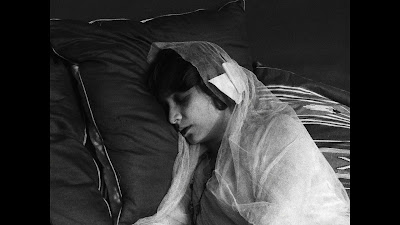
Anna Magnani, The Golden Coach

 A return to Bologna’s Il Cinema Ritrovato….Old friends, new friends and one old new friend…and  restored copies of RIO BRAVO (Howard Hawks), THE DUPES (Tewfik Saleh), THE GOLDEN COACH (Jean Renoir), THE SUSPECT (Robert Siodmak) and LA CAPTIVE (Chantal Akerman) to name just five from forty.
 

Daisy Haggard, Paterson Joseph, Boat Story

Harry and Jack Williams ….
 prolific writers of TV crime. Catching up from some time back. ANGELA BLACK (2016) mercilessly pillaged GASLIGHT and STRANGERS ON A TRAIN but THE TOURIST (made in Australia) and BOAT STORY (made in the UK) were amusing and eccentric examples of the best TV writers’ ability to keep you guessing from ep to ep.


 Firebite (Dir: Warwick Thornton)
 

More great TV than you can jump over… (see Harry and Jack Williams for starters) but see also FARGO, SLOW HORSES, the BBC’s bizarre WOLF, BABYLON BERLIN, JUSTIFIED:CITY PRIMEVAL, FIREBITE, DARK WINDS, ESTERNO NOTTE, PAYBACK, KIN and FULL CIRCLE


Oz movies…not sure anything we made was as good as New Zealand’s UPROAR (Paul Middleditch and Hamish Bennett) which seems to have screened to complete critical indifference…  but heck it’s hard to know what’s been reviewed and what’s been ignored now. David and Margaret are long gone. Especially hard  to know if you don’t/wont buy Murdoch newspapers and barely read anything other than John McDonald in the Fin Review (thanks to John sending out a link to his reviews to his subscriber list  which you can join for free if you click onto his website https://www.johnmcdonald.net.au/ ). But if I had to pick the Best Oz movie I’d go with Ivan Sen’s LIMBO. Runners up WE ARE STILL HERE (Beck Cole, Dena Curtis, Tracey Rigney, Danielle MacLean, Tim Worrall, Renae Maihi, Miki Magasiva, Mario Gaoa, Richard Curtis and Chantelle Burgoyne), PETROL (Alena Lodkina), SHAYDA  (Noora Niasari), THE ROYAL HOTEL (Kitty Green) and SWEET AS (Jub Clerc).


Rhys Darby, Julian Dennison, Minnie Driver
Uproar

Other good movies (new) seen in 2023… THE BANSHEES OF INISHERIN (Martin McDonagh), THE OLD OAK (Ken Loach), TAR (Tod Field), HOLY SPIDER (Ali Abbasi), CLOSE (Lukas Dhont), REALITY (Tina Satter), BARBIE (Greta Gerwig), RETURN TO SEOUL (Davy Chou), SHOWING UP (Kelly Reichardt), FALLEN LEAVES (Aki Kaurismaki), KIDNAPPED (Marco Bellocchio) and HOW TO BLOW UP A PIPELINE (Daniel Goldhaber).


Other good movies (old but seen for the first time)…RINGS ON HER FINGERS (Rouben Mamoulian), ONE WAY PASSAGE (Tay Garnett), LARKS ON A STRING (Jiri Menzel), THE BAD SISTER (Hobart Henley), REMEMBER THE NIGHT (Mitchell Leisen) and I HIRED A CONTRACT KILLER (Aki Kaurasmaki)


Jeanne Moreau, Anthony Perkins, The Trial

Two very pleasurable moments from Cinema Reborn 2023…… Biggest crowds for Orson Welles THE TRIAL, notwithstanding the restored copy's availability on streaming channels and video on demand and probably every backchannels site in the world. Nothing like seeing a masterpiece on a big screen….and, thanks to a Radio National conversation between Jason Di Rosso and Margot Nash crowds for Kira Muratova’s THE LONG FAREWELL. Both beautifully restored by StudioCanal…


Blu-ray Box set of the year…. COLLABORATIONS: The Cinema of Zhang Yimou and Gong Li. Eight films supplied by four companies and all assembled by Via Vision for its (expensive) Imprint label. Beautiful copies but each title immeasurably added to by introductions to each film by Tony Rayns ranging far and wide across China’s history, politics, cinema, personal contact with the director and crucially the conditions of production of each of the films…


Monday, 6 February 2023

Vale Bob Garlick - Cinephile, early MUFS activist, Collaborator with Giorgio Mangiamele - Peter Hourigan pays tribute

As an old comrade said, this means we're moving up the list.

Here is Peter's terrific tribute with a few thoughts of my own at the foot of it.

ROBERT (Bob) GARLICK

                      The early sixties are often looked back on as the period when a new, energetic Cinéphilia emerged in Australia, and Melbourne is often considered as a crucial place for this emergence, especially around the Melbourne University Film Society. I was probably in the right place at the right time, and my own Cinéphilia was shaped by that period.

                      MUFS was an enfant terrible championing Hawks, Ford, Hitchcock and even Jerry Lewis. But its activities in that period didn’t come from nowhere, but emerged from an already active and alive film society on the Melbourne University  campus.

                      Robert (Bob) Garlick was very much part of pre-generation, if I can coin that term. His death, at 85, has just been announced.  When I reached university and  became involved with MUFS, Bob had already completed his law degree and was no longer so active in MUFS. However, he was involved with the University Film Group, the society which  operated as a Film Society for graduates especially people who’d been active in MUFS and had pioneered many of the operations of MUFS. 

                     Bob Garlick kept his involvement with uni. Cinephilia through UFG, contributing articles on various films. Perhaps some of his taste seemed old fashioned to the “young turks” of the early sixties MUFS -  Eisenstein, or British cinema such as Paul Rotha would endorse or the French cinema then starting to be rejected as “le cinema de Papa”. . Not that these weren’t worthy, we’d just latched on to newer, younger cinema. 

                      In the story of Cinéphilia, it is important that we remember the people who created the conditions and the enthusiasm that the new explosion in which the new attitudes to film could flourish. Bob Garlick was very much part of that. He may not have been involved much after the early sixties, but he was part of the years that laid those important foundations for what was coming. 

                     Ultimately Bob’s cultural interests developed more strongly in Classical Music – Wagner and Berlioz were special areas of interest. 

                    Curiously, MUFS was not where I’d first met Bob. Way back before, both his family and mine lived in Mildura.  His mother and mine were friends and involved in such activities as the local book group. Several times when they’d get together, I would meet Bob. But he was six years older than me, and at that stage that meant we had very little in common until we met again at MUFS/UFG.

********************************

Thanks for that Peter


Editors Note:I was going to add another set of memories that all came flooding back but I'm just putting in the key words 

Bob Garlick....awesome presence... Labor politician....union secretary.....film critic..MUFS... Jim Merralls...Film Journal... massive admirer of Bergman, Visconti and all the other 'operatic' directors...Relf... Brian Davies.... Carlton Street houses.....most stirring memory, a rousing speech at a MUFS AGM to repel the John Helmer led forces of darkness who wanted to ban Jerry Lewis, return us to Eisenstein and claimed to have seen the films of Hank Lennon....Giorgio Mangiamele and Beyond Reason...high achiever..... Vale


Thursday, 11 August 2022

Sixty Years of International Art Cinema: 1960-2020 - Part Six (1) of Bruce Hodsdon's history - The Sixties, the United States and Orson Welles

 Part 6: The Sixties   


The sixties was a watershed decade for the post classical feature film in America and the art film in Europe. In Asia the postwar years saw the transition to a modern Japanese cinema and the emergence of a state-supported parallel art cinema in India inspired by the international success of Satyajit Ray's Apu trilogy. Latin American cinemas attracted worldwide attention for the first time following local political initiatives beginning in the 50s given further impetus by the new Cuban cinema. Two pioneering films by Ousmane Sembene in 1963-5 were an inspiration for other credible indigenous filmmakers in sub-Saharan Africa. 


A cinephile’s foreword to the Sixties                                                                                                                      

My first encounter with an art feature film was at the local 'independent' as a 13 year old. By 1960, my first year at university, art cinema was associated with sub-titles and “foreignness,” the director  - Bergman, Antonioni, Cocteau – as author closer to the equivalent of a novelist 'writing on film' than to an orchestral conductor or theatre director. There were not only the globally recognised film 'authors' - Chaplin, Disney and Hitchcock, there was Billy Wilder and David Lean. Short seasons of their films with the supporting Annotations on Film (cover below) were mounted by Melbourne University Film Society in first term in the Union Theatre, 1960. There was also a history of cinema to be discovered at MUFS Friday night members' screenings of silent classics on 16mm with only the sound of the projector in the spartan viewing conditions of a university lecture theatre. This was supplemented by an Eisenstein retrospective - my first film festival - at the Coburg Teachers College. There were the regular visits to downtown art houses, the Savoy and Australia cinemas: Bergman, Antonioni, Resnais, Fellini, Satyajit Ray, Cocteau et al.  The adjacent Carlton cinema ('the Bughouse') screened an eclectic mix of art and mainstream recent releases. In addition to  Annotations I had Arthur Knight's paperback history of cinema The Liveliest Art,Roger Manvell's Film and the Public,Cocteau on the Film from the library,the English monthly Films and Filming and the irregularly Melbourne-published  Film Journal discovered at the local newsagent. In addition to his film reviews, the first specialist film critic in the country, Colin Bennett, had a weekly film column in the Saturday's ‘Age’ newspaper. In my second year I already presumed to write a 1500 word essay, “The Film as Art,” for the college magazine in which, in those nascent days of confusion and controversy surrounding the concept of the director as auteur, I referred to “Brando's The Fugitive Kind in a premature 'launch by default' of the claim for the actor as auteur to the neglect of Anna Magnani, Tennessee Williams, Sidney Lumet and Boris Kaufman.


 Part 6: (1)                                                                                                                                               

Orson Welles (64*) b.1915  

Alfred Hitchcock (64) b.1899   

Stanley Kubrick (65) b.1928  

Elia Kazan (71) b.1918   

Arthur Penn (69) b.1922  

George A Romero b.1940   

Shirley Clarke b.1919                                                                    


Note*:  Inclusion as one of International Film Guide’s '5 directors of the year' indicated above by the year in parenthesis.

****************************


In making the selection of auteurs to span the accelerating decline of Hollywood's studio system through the 60s, five of the list above came almost immediately to mind with the later addition of the  'inspired amateur', from Pittsburgh, George Romero, and of Shirley Clarke an independent filmmaker in New York.  All seven were gifted outsiders in different ways. Hitchcock and Kazan were immigrants, Kubrick at his peak chose to work in exile. Welles's career embodied the romantic notion of the artist working within art cinema breaking the rules in order to “express his innermost self ” as opposed to the director working successfully in the studio system accepting the rules of classical cinema. (Elsaesser 159-61).   


Hitchcock and Oscar

Hitchcock's underlying moral seriousness harnessed by his technical mastery but down-played by a projected persona of performative quirkiness, was never recognised by Hollywood with an Oscar for direction. He was, on the eve of his death, finally honoured with a Lifetime Achievement Award in 1979. After making rather perfunctory acknowledgment of the accolades Hitch drolly simulated the role expected of him, in this instance of a thief whisking away the honorary Oscar cloaked by his dinner jacket. 


Similarly unrecognised by Hollywood, Orson Welles projected on the screen from Europe to the audience and host John Huston, graciously accepted his honorary Oscar in 1971 as “precious because it comes, not from critics or the people but from people who love movies.” He accepted it “not for what I've done but for what I hope to do.” He was he said [still] “hoping to make some movies that deserve it.”   


Orson Welles

In the transition to the new Hollywood, Arthur Penn's embrace of modernity took a lead in challenging the rules of classical Hollywood's transparent storytelling. Bonnie and Clyde is nominated by Paul Monaco as one of the three 'landmark films' made in 1967 (the others: Cool Hand Luke and The Graduate). This was further amplified by the success of Easy Rider(1969) following the assassinations of Martin Luther King and Bobby Kennedy and the events surrounding the 68 Democratic National Convention in Chicago. Monaco refers to their box office success as being primarily with late teens and younger adults based on their shared identification with the antiheroes and outsiders in these films “rooted in a widely shared sense of alienation from middle class American society.” (182-8)


Citizen Kane

Andrew Sarris attributed to Mark Shivas (co-founder of 'Movie' magazine in 1962), the observation that Welles was concerned with the ordinary feelings of extraordinary people and Hitchcock with the extraordinary feelings of ordinary people.  “Whereas Welles flourished in baroque settings, Hitchcock functioned in commonplace settings. To a limited extent, at least, Wellesian cinema is as much the cinema of the exhibitionist as Hitchcockian cinema is the cinema of the voyeur.”


Welles and Sound 

No two directors have had more written about their life and work. David Bordwell argues “that Hitchcock and Welles did more than change the cinema of the forties. They showed directors who came after them that the forties motivations could be revised with unflagging ingenuity” (Forties 461).


Dudley Andrew suggests that Orson Welles(1915-85) “knew the auteur theory in advance and set out to make a series of films whose variety would make sense to later critics intent on their unity.” As referred to above it is no accident that Welles's 'consistently inconsistent' feature films are book-ended by his only fully realised works in his lifetime: the psychological density of fictionalised biography (Citizen Kaneandreverie” (Chimes at Midnight), to borrow again from Sarris. 


John Huston, The Other Side of the Wind

The production of Welles's 'final film', The Other Side of the Wind, was spread over 48 years (1970-2018) to be completed more than two decades after his death. Joseph McBride quotes Welles's description of his film in 1962: “this will be a film about death, the portrait of decadence, ruin.” Michel Legrand described his score for the film as “a requiem.” Stylistically it is a satire of classic and new Hollywood, and European sixties art cinema. Except for the theme of death, Wind is consistently inconsistent in that each Welles' film is stylistically different from the preceding ones while the themes recur throughout. In this, Welles's oeuvre resembles Kubrick's.


Welles was the first American director in the sound era to break with the notion that plot visualised through  style were the invisible servants of the story. As Jean-Pierre Coursodon puts it, Welles “made form the content of his films” marking him as the first modern director (vol 2 367). The innovative deep focus style of Citizen Kane was debated from its first release. While depth of field in cinematography was not new, the availability of a new blimp-less camera in 1934 (of which Gregg Toland was the first user) was combined with the introduction of lens coatings in 1939. Both combined with faster film and shorter focal length lenses allowing the achievement of greater depth of field with any given light level thus enabling Toland's work with depth of field, prior to Citizen Kane, on films with William Wyler and John Ford 1937-40. 

Orson Welles, Citizen Kane
 

Coursodon points to the paradox that Welles's influence was allegedly immense, yet considers that only his first two pictures, Kane andThe Magnificent Ambersons, can be said to have been “influential” (ibid). In challenging the primacy of the story over style in classical narrative, Welles re-invoked the spirit of creative formal invention that was alive in silent cinema. Griffith's genius changed the face of storytelling on film while von Stroheim's refusal to accept the economic and logistical limitations of the medium resulted in his career as a director ending in frustration and failure. Welles managed to complete only one film as he intended, never to be given the opportunity by four of the Hollywood majors (MGM, Paramount, Fox and Columbia). Kane was left stranded ahead of its time as the initial 'maverick' encroachment of modern art cinema into the classic Hollywood studio system.


Welles's on-stage and radio productions embodied a trend Bordwell identifies as Theatricalism, pioneered by European theatre directors Vsevolod Meyerhold and Erwin Piscator. “The trend broke with both Naturalism and Symbolism by admitting the sheer artificiality of the stage space.” (Bordwell 40s 452) Bordwell enumerates ways that Welles took “the Theatricalist impulse” from the stage to another level in his moviemaking, examples being “the harsh sound cuts and surprise visual transitions” in Citizen Kaneand The Lady from Shanghai. Bordwell identifies numerous other ways Welles countered what he saw as dullness in most films, examples being in his experiments with voice-over narration, embedded stories, and ways of weaving pastness into the texture of his storytelling, as in The Magnificent Ambersons. (452-61)  


Anne Baxter, Tim Holt, The Magnificent Ambersons

Carringer points out that “deep focus photography provided Welles not with realism but with the technical means of adapting the Mercury Theatre performance style to the requirements of a new medium. Extreme depth of field gave them a playing space equivalent to what they had on the stage.” (83) The wide angle lens kept them suitably distanced...The heavily theatrical gestures and mannerisms of the Mercury players, Welles included, are very unsuited to the studio style of intercutting.” Long takes facilitated by depth of field permitted the playing of scenes almost continuously. (85)


Dudley Andrew contends that, despite having a background in theatre and an evident theatrical personality, Welles in Citizen Kane from the beginning had the unique opportunity in the studio system to immediately become “fully a man of the cinema,” meaning “someone whose most profound  realisations are made possible in this medium.” The illusory quality of the image, the nature of motion picture technology, the depth of sound and the shallowness of the screen “all contribute to the fullest realisation of Welles's meditations on authenticity, mirage, impermanence, and loss.” Both André Bazin and Roland Barthes “wrote evocatively on the relation of photography to death: the image is a trace left by an object gone before us in time. And yet the animating power of motion confers on the cinema a vibrancy missing from the still photograph.” (DA 168)  


Jeanne Moreau, Welles, Chimes at Midnight

Andrew concludes that Welles's “overriding obsession with the past and death goes against the grain of the medium even while it is best expressed in that medium.”  The arrangement of images and sound in his films so as to embody the notion of loss and death,  Andrew suggests, is realised not only in Kane but even more relentlessly in The Magnificent Ambersons and Chimes at Midnight. He “effectively encloses time in the giant box of his narration.” (171) In Ambersons it's the way Welles's “deep seriousness” expands film's properties, specifically deploying, for example, spatialisation of sound (dialogue levels in relation to character movement and camera placement) in combination with the long take and wide angle lenses, minimising or dispensing with close-ups and reverse angle cutting, “his method right outside the system” in transforming a Pulitzer prize-winning novel, otherwise standard material for classic Hollywood adaptation. Bazin saw 1940 as a watershed year for cinema in which the deep focus styles of Renoir (Le Règle du Jeu) and Welles “tipped film language away from its obsessive self-concern and toward the subjects it was its mission to render.” (Quoted Andrew 7)


Although often touted for his expressionist visual sense Andrew writes that “Welles' most signal moments come from devices realised on the soundtrack.”(166) His fascination with sound culminates in  Chimes at Midnight. After describing it as “perhaps the greatest adaptation of Shakespeare that the cinema has yet produced,” Andrew writes that Chimes is “also the adaptation most difficult to hear...finding our greatest poet left to the mercy of Welles with his bizarre sense of sound mixing and pace.” (167).*  


Laurence Olivier's Henry V (1945) and Hamlet (1948) are often acclaimed as the best adaptations of Shakespeare to film because of the priority given to enunciation of the bard's writing.In contrast Chimes at Midnight is profoundly tied to the actor's voice. “Welles violated the sanctity of the [writing], piecing and patching a single film from the fragments of five different plays. Instead of a text which comfortingly remains behind the scenes and outlasts the film, Welles gives us avoicedisconcertingly disappearing over time... even Shakespeare, cannot outlast deterioration in time and diminution in space.” 


John Gielgud, Chimes at Midnight

Once again Welles has put forward “an immense power”... While he also uses “techniques of transition, of embedding and of parable in his scripts, these are merely a part of the magician's panoply of tricks...The effect of his use of sound is the more disturbing through the simplicity of its means...how to devastate through sheer sound recording...[He] has taken as his model, not the immortal bard, but “a poor player who struts and frets his hour upon the stage and is heard no more.” (ibid)  


* For most of us who have only encountered Chimes at Midnight in the 'difficult  to hear' versions on film and video, Mark Cousins has written of watching a beautifully restored version in 2016 of Welles's film audible like never before. (Sight & Sound Jan. 2017 p.47)  James Naremore, while acknowledging that the badly synchronised soundtrack of Chimes at Midnight can make it “seem like a defaced masterpiece,” this “has tended to obscure the fact that the ideaof the soundtrack, considered apart from the images, is quite satisfying. It contains some of the most beautiful readings of Shakespeare ever recorded for film, especially the case of Gielgud's soliloquies – and the musical settings by Lavaginino are uniformly superb” (233) 


******************************************

Dudley Andrew, “Echoes of Art: The Distant Sounds of Orson Welles” essay in Film in the Aura of Art” 1984                                                

Robert L Carringer  The Making of Citizen Kane 1985

Thomas Elsaesser  “Authorship and Orson Welles”  The Persistence of Hollywood  Routledge 2012 

James Naremore  The Magic World of Orson Welles  Oxford UP 1989 

Jaime Christley, Great Directors: Orson Welles Senses of Cinema January 2003 


*********************************************

Editor’s Note: This is the sixth part of a series by Bruce Hodsdon in which he analyses the history and impact of Art Cinema. 

Part One appeared on 10 March and can be found IF YOU CLICK HERE

Part Two appeared on 16 May and can be found IF YOU CLICK HERE 

Part Three appeared on 3 June and can be found  IF YOU CLICK HERE 

Part  Four appeared on 2 July and can be found IF YOU CLICK HERE 

Part Five appeared on 19 July and can be found IF YOU CLICK HERE

Thursday, 3 February 2022

Defending Cinephilia 2021 (3) - Peter Hourigan on a year where Cinephilia Catches Covid

Quo Vadis, Aida, (Jasmila Žbanić)

Cinephilia [is quite different]… to DVD collecting. …You can watch 300 movies a year (all in a theater on 35mm, of course) and you will never own anything except, perhaps, an ungainly pile of torn ticket stubs.  Cinephilia is instead about collecting experiences, or maybe just the memories of those experiences. [i]

           It’s weeks now since the Editor asked me for a contribution to a look back at Cinephilia in 2021. Somehow, I just couldn’t get started. Had anything been worthy of elevation to the realm of Cinephilia? The essay from which my opening quote is taken has helped me – and it’s not necessarily a cheery picture. If Cinephilia is experiences, had there been standout experiences from this second year of Covid?

            I’ve certainly seen lots of films during 2021. There have been some wonderful ones. They’ve come from many countries, many eras. There are films that I’d thought I’d never get to see, or to see again. The latter have included some beautiful restorations letting the film look more glorious than it has for ages. There was Quo Vadis Aida and Never Gonna Snow Again from Poland  and Upper Case Print from Romania.  Georgia gave us What Do We See When We Look at the Sky?  Helene came from Finland. And from here at home, The Dry  and Higher Ground.

           But Covid was starting to stamp these films.  Among the workers listed in the end credits of many new films, the role of Covid Co-Ordinator started to appear with more frequency. 


The Dry (Robert Connolly)

           Despite the great films,  it’s hard to look back at this second year of Covid with excitement or enthusiasm. The first Covid year didn’t   seem as depressing, although the growing realisation of how our cinematic world was changing was often overwhelming. Festivals were cancelled.  Travel was off the agenda. Meeting up over a cup of coffee became almost overwhelmingly exciting or it didn’t happen.

           In 2020, streaming was one of the elements that came to our rescue. We saw organisations around the world using it so creatively.  We could not go to Bologna and Cinema Ritrovato – but we could stream a lot of it at home and so feel part of it. Moreover, we could participate in more festivals around the world that we’d never been able to visit because of time or distance. 

         But this innovation didn’t seem as exciting in 2021 as it had the previous year. First time around we were grateful for being able to share some of the experiences of these different Festivals.  Second time around, we felt more aware of what we were missing. Not all the Festivals returned online in 2022.

          With those that did return, although appreciative of their offerings, we were also aware that often they were the second tier  Both Melbourne and Sydney film festivals had good online offerings – but even better offerings had been lined up for the real-life cinema screenings. Some of those films may make their way here and even get cinema showings. But you felt more the loss of what we didn’t get. 

           Surfeit and exhaustion have been defining elements. The commercial streamers have offered us more wonderful films and series than we could hope to watch in a year. And that’s part of the problem.  With so many options, why worry if you miss one title? So what if some of your friends loved it? And when you’re trying to choose what to watch one evening, and you can’t decide – perhaps it’s easier to pick up a book instead. 


             This has been exacerbated by the entry of new commercial streamers. I’ve got no interest in many of the offerings they’ve made available. But then you realise that one streamer has ONE film or series you’re interested in. So, a new sense of frustration is added.  For example, Disney+ has a library that holds very little attraction for me but they did have the fascinating series Dopesick.Thank goodness I had a friend who was able to help me see that. Perhaps a new aspect of cinephilia will be working out access to one title on a streamer that you don’t have. 

            MUBI has probably been my favourite streamer over the year.  But even here my jaded Cinephilia sometimes kicks in. At first it seemed exciting to have a new film every day.  But then what looked like an interesting unknown film from Brazil or Mexico turns out to less than engrossing.  Interesting, yes, but not really as special as you’d hoped – and you’ve prioritised it over that DVD you’ve been meaning to watch for eighteen months or more. So, a new sense of frustration rather than exhilaration. Now, I find I’m often glad when it’s something I’ve already seen, which shouldn’t be a cinephiliac emotion!

            But that sense of hope that an unknown film will turn out to intensely satisfying is a cinehpilian emotion, and MUBI does deliver that from time to time. I had this with a film from Congo, Downstream to Kinshasa (Dieudo Hamadi).  This documentary took me where I’ve not been, and introduced me to some wonderful, damaged people.  (It’s still on MUBI, in the library, and I recommend it.) 


Procession

               And there were some other experiences on other streamers that lingered. Robert Greene’s Procession (Netflix) (Click here for my earlier blog post on it ) explored one aspect of the Catholic Church’s relationship with paedophilia. So did Dignity  on SBS OnDemand. This drama was built around a German postwar settlement in Chile where allegations of gunrunning for Pinochet and paedophilia emerged.  Then Netflix chimed in with A Sinister Cult: Colonia Dignidad.These two “Dignity” series were a fascinating double. 

               By year’s end we were going back to the cinema.  I’ve even got a new cinema complex just down the road, that screens a lot of the films I want to see. It’s got great seats – like flying Business Class, and the screens in each cinema are a decent size. But the experience is still not quite the same.  Social distancing in the cinemas isn’t an anxiety - the films I want to see are not usually heavily attended when I want to go.  I have even had several exclusive screenings (e.g.Power of the Dog) and others with only three or four others. 


Power of the Dog (Jane Campion)

               In a postscript to the article I quoted from at the head of this piece, Dibbern writes:

I’ve been going back to the movies for a few months now, but it’s been pretty underwhelming: sitting in eerily empty and quiet theaters surrounded by eerily masked patrons has often felt as if I’ve woken up from a bad dream and found myself in a dystopian hospital ward….. It feels as if the forced time away from movie theaters created a permanent fissure in my memory.

               I know what he means. I’m aware that where I would have once headed off to a screening of something or other, I’ll often think twice and three times about it It’s not that it’s often more comfortable and convenient to just switch on something to watch at home. I’m finding that I also have a different feeling to going out.

                And yet one of the big things missing has that communal experience. The conversations on the stairs out of the cinema. Or over a coffee. Even just being aware of so many others reacting to the same film you’re watching.  

                This has been something so sadly missed from visits to out-of-town Festivals – for me, ranging from going up to Sydney for the first Cinema Reborn, or to Bologna for Cinema Ritrovato. Often the important element was not so much any particular film, but the atmosphere. The old friends. The new friends. The conversations. The meals. The atmosphere. That sense of an experience. 

                 Cinephilia has taken a battering in 2021.  May it recuperate in 2022.


[i][i]On Not Seeing Movies by Doug Dibbern, in Notebook 0 (For the Cinema to Come) publ. MUBI 2021

Sunday, 26 December 2021

Defending Cinephilia 2021 - First instalment of the annual series - The editor offers his thoughts

 So… a delayed start to this series where cinephiles are asked to offer five highlights that made their year.. but contributions now called for and previous contributors will be contacted

Mary Harald, Tih-Minh


Tih-Minh (and Judex) on Blu-ray

David Hare leapt all over this and you can read his thoughts  IF YOU CLICK HERE but what has to be recognised is the fact the French taxpayer paid hundreds of thousands of Euros to get these films restored and returned to an adoring public. A couple of years ago French producers had access to an annual fund of some 30 million to have their back catalogues restored. Needless to say Gaumont and Pathe would have been the major beneficiaries. But when you have Feuillade in your backlist you have both an awesome responsibility, a huge cost and a massive opportunity. The French lab outpost of Bologna’s L’immagine ritrovato has done the company proud with these two films, now released on Blu-ray. David Hare didn’t mention the extraordinary music score by Julien Boury nor the very subtle incorporation of some sound effects – bird song, the sea, pistol shots. 


As a matter of interest, it was reported that Emmanuel Macron’s government has slashed the funding for this program down to 3 million or thereabouts per annum. Nevertheless the most recent list on the CNC site, which you can find IF YOU CLICK HERE means we can look forward to more Feuillade (Vendemiaire) as well as more restorations of Gance, Truffaut, Carax, Becker, Mocky, Capellani, Franju and Doillon among a host of others from every era of French cinema.


Tih-Minh has largely existed in a terrible copy on YouTube. It has French and Dutch intertitles. I tried to watch this version on a couple of occasions but gave up early. You can see what I mean IF YOU CLICK HERE


Ever since Tom Milne wrote about a Feuillade season at the NFT, using 35mm nitrate prints  from the Cinémathèque Française, Tih-Minh always had a reputation that placed it in the same Pantheon as Fantomas, Les Vampires and Judex. Now we know.


OK.ru

You can think of it as the 21stcentury equivalent of the public lending library. That’s the most benign view. Needless to say many producers and their heirs and successors going back over a century think of them as thieves, and no doubt despise the Russian authorities who turn a blind eye  to permit blatant free exploitation of someone else’s intellectual property. OK.ru has become the go to site for enthusiastic cinephiles to upload their treasured collections for all to see. No one gets paid to upload a movie, no one gets charged to watch whatever they find in whatever condition they find it.  And its all there in plain sight not some dark backchannel where whatever is the latest has been purloined and uploaded mostly to cause grief. Some of the OK.ru users are utterly dedicated to the task of bringing the cinema’s history out of its closets and archives. By my count, someone called FleurRinna Guta has uploaded some 8000 films, all neatly categorised by star name, genre, period and nationality. A labour of cinephile love.


Cecil Holmes

Cecil Holmes and Three in One

The conventional wisdom about Cecil Holmes and his film Three in One is that the first two stories of the trilogy "Joe Wilson’s Mates” and “The Load of Wood” were very good and the third “The City” written by Ralph Petersen, was a clumsy and rather artless afterthought. Wrong. The screening of Three in One at Cinema Reborn in April, on a 35mm print from the NFSA that had hardly ever been through a projector, caused many to sit up straight and do a major re-assessment. The first story with its interpolations of some cod songs by The Bushwhackers goes on far too long. The second with Leonard Teale and Jock Levy is a small masterpiece. Petersen’s story captures the zeitgeist of the day superbly. 


The screening reminded me, if nobody else, that the AFI never honoured Cecil Holmes with the Raymond Longford Award, an oversight I shall not dwell on except to refer you to the list of winners. Many of them are exceptionally worthy but..


Moly Reynolds and David Gulpilil


My Name is Gulpilil

Moll Reynolds tribute to Gulpilil barely arrived before the great man passed on. A magnificent tribute and a reminder of an extraordinary life and unique career. The sequences featuring an unknown to me one man show that Gulpilil performed should surely be a priority for NFSA preservation, restoration and circulation.


Jed Mercurio


Jed Mercurio

Nobody does TV like Jed Mercurio. Ten years of Line of Duty is one thing. Throw in Bodyguard and an EP job on Bloodlands in just the last couple of years and you get quite some kind of prolific ability to keep millions enthralled.        


Thursday, 9 September 2021

An Online Talk for all those who think of Paris as the true heart of Cinephilia - John Baxter and Samuél Lopez-Barrantes converse on The Golden Age of French Cinema


More than a century after the Lumiérè brothers presented the first public screening of motion pictures In 1895, Paris remains a center for the production and appreciation of cinema. John Baxter has accumulated an unrivaled wealth of anecdotal and insider lore about the film on both sides of the Atlantic, and Australia as well. During this discussion with writer and literature professor Samuél Lopez-Barrantes, John talks about his life in French cinema and Paris, including tales of encounters with such actors as Jeanne Moreau and Catherine Deneuve, nouvelle vague directors Jean-Luc Godard and Claude Chabrol, as well as meetings with Federico Fellini, horror film master Mario Bava, and “scream queen” Barbara Steele. 

Of course, the history of French cinema is not limited to the confines of Paris. John may also recall some bizarre and occasionally disastrous experiences as a journalist covering the European film scene, including being forced to watch a movie at gunpoint. Dim the lights, open the curtains, and prepare to be amused and surprised at a vision of the movies few outsiders ever glimpse. 

Led by Samuél Lopez-Barrantes, an expert in literature, and John Baxter, one of the world's most prolific film biographers (Kubrick, Spielberg, Fellini, to name a few), this conversation is an introductory course to the history of French cinema in the 20th century. Designed to inform curiosity as well as future travels, participants will come away with insider knowledge of the glamorous worlds of American and European cinema in the 20th century. 

A charge applies. Details and bookings JUST CLICK HERE

******************

Editor's Note: John Baxter advises that the cinema pictured above, the Gaumont Palace, was demolished in 1972. Towards the end of its life it was a Cinerama venue, but once that contract lapsed it was just too big. You can see it briefly in Francois Truffaut's  The Four Hundred Blows, when the Doinel family go there.