Showing posts with label Cinema Reborn 2026. Show all posts

Saturday, 23 May 2026

At CINEMA REBORN - Beaudicea Smith-Davies' introduction to the Sydney screening of 36 FILLETTE (Catherine Breillat, France, 1988)

Beaudicea Smith-Davies is a PhD candidate at the University of Sydney. Her research focuses on monstrosity in the works of contemporary French female filmmakers. This is a slightly edited transcript of her introduction to the screening of 36 Fillette during the Sydney season of Cinema Reborn 2026.


This is the fifth transcript of an introduction to a program in the Cinema Reborn 2026 season. Previous introductions published by Margot Nash on the Australian Social Realism program,  CJ Johnson on One Hour with You, Barrie Pattison on The Watchmaker of Saint-Paul and David Heslin on The Asthenic Syndrome can be found if you click on the author's names.


**************************************


Catherine Breillat 

36 Fillette 
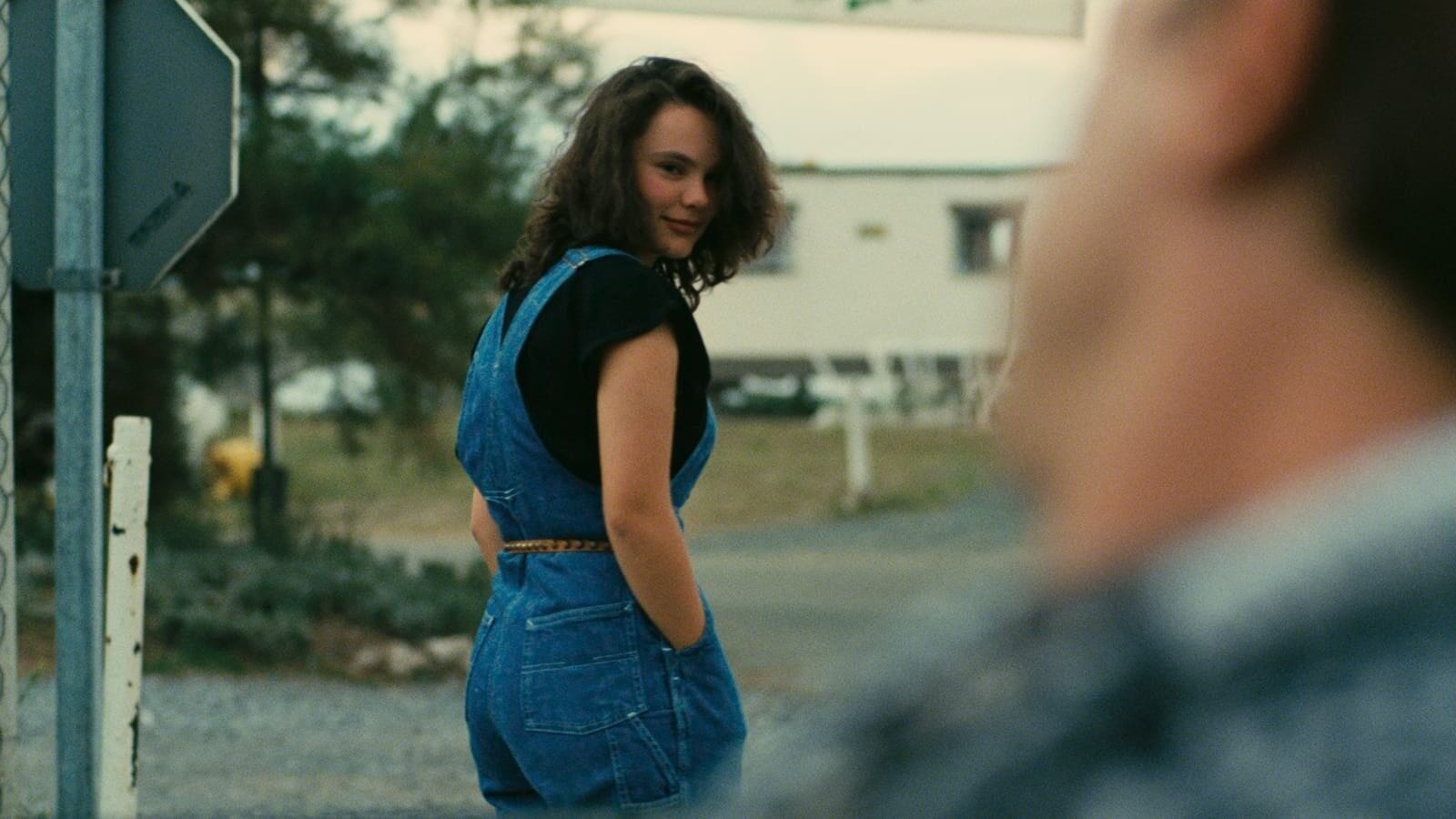
(1998) is Catherine Breillat’s 3rd film and was inspired by her novel of the same name. The untranslated title refers to the European dress size ‘36’ and ‘fillette’ means little girl: the equivalent of an Australian XS or calling someone ‘petite’. Breillat was born in 1948 in the provincial town of Bressuire near the city of Niort in north west France. As a teenager, she spent many of her summer holidays with her older sister on the south west coast, hitchhiking to bars and nightclubs in Biarritz, where this film is set. When it was first released in 1988 it was not a hit in France, but it proved popular with audiences in the US where it was billed as the French Lolita likely due to its focus on a relationship between a teenage girl and an older man. Breillat’s 14-year-old protagonist Lili is played by Delphine Zentout, who was 16 at the time the film was shot, and the relationship between her and Maurice, played by Etienne Chicot, is largely told from her point of view.  Her quest to use the summer to lose her virginity is the driving force behind the story.


At the beginning of her career, the teenage girl’s journey of self-discovery, her desire to explore her body and sexuality on her own terms as she morphs into a woman, arose as a central concern of Breillat’s work.  At 17, she wrote her first novel ‘The easy man’, L’homme facile (1968). A work of erotic fiction about the sexual awakening of a teenage girl. Her first film, ‘A real young girl’, Une vraie jeune fille (1975), explores this same theme. While teenage girl characters were already present in French cinema such as the teenage sisters in Eric Rohmer’s ‘Claire’s Knee’, Le genou de Claire (1970), and Claude Miller’s ‘The Impudent Girl’, L’effrontée(1985), starring a 14 year old Charlotte Gainsbourg, Breillat’s vision is neither festishing like Rohmers nor paternalistc like Millers but honest, and female — a rarity for its time. The metamorphosis of bodies, especially female bodies, Breillat films without ceremony and the gaze her camera produces is as direct and unscrupulous as her dialogues.


Lili (Delphine Zentout), 36 Fillette

Even though she is often thought of as a feminist filmmaker with a specific female or feminine gaze, when speaking about her manner of filming bodies and sex, she insists on the authority that being a ‘metteur en scène’, a film director, grants her. She says: 
‘nothing must be censored[...] the director avoids filming what they don’t want to see and we see exactly what they want to see[...] this is what I call a ‘gaze’. The gaze is placed where the director wants[...] and nowhere else[...] and it’s there that the audience is going to look [...] and nowhere else.’ Sometimes considered provocative or shocking, Breillat offers an alternative to society’s moralising gaze and a refusal of puritanical censoring of what can be projected on the big screen. In her home country, audiences and critics only started taking an interest in Breillat’s cinema after the commercial success of her 1999 film Romance, which includes a scene of unsimulated fellatio and the casting of male porn star Rocco Seffredi. Rather than an anomaly, Romance situates itself within a broader movement of films that at the time flirted with the border between art cinema and pornography — Vincent Gallo’s Brown Bunny (2003) and Virginie Despentes’ Baise-moi (2000), loosely translated as ‘screw-me’, are two examples of this. 


J-P (Stéphane Moquet), Lili (Delphine Zentout)

Generally better known for her cinema, Breillat has since the start of her career always engaged with literary writing; many of her films are adapted from her written work or her films have provided the subject matter for her books. Representations of women’s lives dominate her body of work, of which a large portion is either semi-biographical, as is the case of 36 Fillette or entirely autobiographical. Like Breillat, our protagonist Lili, is precocious, aspires to be a writer, has outgrown her peers and is ready to burst through the tight seams of a world already too small to contain her. Still an adolescent herself when she first entered the French literary scene there is an apparent parallel between Breillat’s personal experiences and those of the fictional female protagonists she represents, and Breillat frequently acknowledges the translation of her own life into her work.Today 36 Fillette (1987) the novel is currently out of print, although in France, several of her novels are readily available. Her well-known text Pornocratie (2001) was translated into English in 2008, and includes an introduction by American writer Chris Kraus, and a very recent book, published in the form of a series of interviews with Breillat, ‘I only believe in myself’, Je ne crois qu’en moi (2023), appears in English as well. 


Lili (Delphine Zentout), Maurice (Etienne Chicot) 

After suffering a stroke in 2004, Breillat experienced a form of renaissance, in France anyway. Her stroke left her hemiplegic, and she published a book ‘Abuse of Weakness’ Abus de faiblesse (2009), which she adapted to film in 2013, about how she was swindled out of a fortune by a conman in the immediate period of her recovery.  Breillat’s highly publicised personal tragedy transformed public perceptions and ignited renewed interest in her as an artist. It prompted a return to her earlier, more avant-gardist works, such as the case for 36 Fillette.


The biographical impulse behind much of her work is evidence of a creative process that arises from a place of intimate personal experience, and throughout her career Breillat has written, filmed, re-written and reimagined what she knows constantly returning and revisiting bodies, sex, desire and intimacy. At the same time her stories move beyond the personal realm and extend to the universal. ‘Blue Beard’, Barbe Bleue (2009), and ‘Sleeping Beauty’, La Belle Endormie (2010), two films from her mid-career are reimaginings of Charles Perrault’s classical fairytales. 


Like Breillat’s films, Perrault’s tales were never intended for children. We know that he wrote them to prove to his peers at the academy that the popular tales of the common folk contained some of humanity’s oldest myths. Her most recent film ‘Last summer’, L’été dernier (2023), returns to relationship depicted in 36 Fillette, where a woman has a romantic relationship with her teenage stepson performing a gendered inversion of the dynamic we see between Lili and Maurice. ‘Last Summer’ is itself a remake of Danish film ‘Queen of Hearts’, Dronningen (May el-Toukhy, 2019), and Breillat self-consciously includes a reference to Hans Christen Anderson’s ‘The Little Mermaid’, acknowledging her film’s Danish roots. 


Lili (Delphine Zentout), Bertrand (Olivier Parnière)


36 Fillette
 equally reaches into the wondrous when Lili leads Maurice to a beach that takes its name from a local legend, a tale that itself recalls the tragic drowning of forbidden lovers Hero and Leander from Greek mythology. 40 years on from its first screening, Lili and her creator continue as forces to be reckoned with, and the film still feels as bold and incisive today in the wake of contemporary debates. Watching Breillat’s films, I find, can sometimes feel like trying to dry swallow a pill and staking a bet that the immediate discomfort will eventually give way to an enlightened sense of relief. I hope you enjoy the film! 

Sunday, 17 May 2026

At CINEMA REBORN - David Heslin's introduction to the Melbourne screening of THE ASTHENIC SYNDROME (Kira Muratova, USSR, 1989)

 Editor's Note: This is the fourth transcript of an introduction to a program in the Cinema Reborn 2026 season. Previous introductions published by Margot Nash on the Australian Social Realism program,  CJ Johnson on One Hour with You  and Barrie Pattison on The Watchmaker of Saint-Paul can be found if you click on the author's names.

*************************************

Kira Muratova

Jonathan Rosenbaum writes of
 The Asthenic Syndrome  that “From beginning to end, this movie comes at you like a tidal wave.” If that sounds like it could be either an exhilarating or rather unpleasant experience, I hope I can provide a little context here to help you swim through this brilliant but very unconventional film. 

The best place to start might be to say something about its director, Kira Muratova. Born in 1934 to Romanian parents in an area now within the borders of Moldova, she began making films in the early 1960s with her husband, Aleksandr Muratov, before launching a solo directorial career that would span nearly 50 years. Much of that time was spent in Odesa, and specifically the Odesa Film Studio, which had been famous for producing the early works of Alexander Dovzhenko, among other pioneering Ukrainian filmmakers. 

By 1989, Muratova had already been making feature films for two decades, but she was mostly unknown abroad thanks in part to the suppression of her early films – particularly her 1971 masterpiece The Long Farewell, (Cinema Reborn, 2022) which was banned for its failure to adhere to the dictates of social realism. Like many iconoclastic Eastern European directors of the time, her career throughout the 1970s and early 1980s existed in tension with authorities. She spent years on end unable to make films, and when she did, the interventions were often intolerable; indeed, her 1983 film Among Grey Stones received such a butchered final cut that she refused to be credited. 

That all changed with glasnost; keen to atone for the sins of their predecessors, a newly appointed film commission rushed to revive her work. Her first two features, Brief Encounters and The Long Farewell, were finally allowed to be screened at festivals abroad across 1987 and 1988, where they received major awards, and The Asthenic Syndrome was fast-tracked into production. But her troubles with the censors weren’t over: The Asthenic Syndrome would go on to receive the honour of being the only Soviet-produced film to be banned during glasnost, having been suppressed for six months due to Muratova’s refusal to remove the profanity in a scene on a train at the very end of the film. After the film was screened at festivals abroad to acclaim, the Soviet censors relented and finally released it without cuts in April 1990.


But it’s hard to imagine that this could have been their only misgiving about the film. The Asthenic Syndrome is an extraordinary satirical portrait of life during the last spasms of the Soviet Union; what it depicts is no less than a society and individuals within it in a state of collapse. Basic amenities don’t work; day-to-day interactions are guided by haphazard, meaningless aggression; aspirational slogans in the classroom are met with indifference. It’s not for nothing that Adam Curtis gave the subtitle TraumaZone to his recent documentary series about this period. Those who lived through these years in the USSR and its successor states – in which scarcity prevailed, institutions crumbled and organised crime was rife – know all too well that that is no exaggeration.

Even in the somewhat heightened, darkly comical version of that reality that The Asthenic Syndrome presents, there is an aspect of documentary. Thus you have some of the film’s stranger excursions, such as a scene in which four women go to look for a lost dog at a pound; we’re subsequently treated to a rather harrowing montage of dogs crowded together in squalid cells that seems to step outside of the film, even ending in an on-screen quotation as if we’d just watched an RSPCA ad. For Muratova, a vegetarian, this sequence indicts her society as a whole; if the most vulnerable are treated this way, what hope is there for humans? But the goal here isn’t didactic; indeed, Muratova approvingly cited Tolstoy for revealing, in her words, “the naivety of the intelligentsia who believe that culture and art can transform the world”. In contrast, Muratova says, “I’m not out to re-educate; I aim only to reflect.”

There’s a lot of bleakness in those reflections, but also a great deal of beauty. Muratova often uses the music of Schubert as a lyrical counterpoint here; and there’s a particularly lovely sequence with a slightly out-of-tune rendition of Frank Sinatra’s “Strangers in the Night” that I think sums up the film’s melancholic humour.

The Asthenic Syndrome has quite an unusual structure: in a sense, it’s two films in one. The first, which goes for about forty minutes, follows middle-aged doctor Natasha, played by Olga Antonova, whose husband has just died, through the streets of Odesa in black-and-white; in the second, in colour, it’s revealed that the first was a film-within-the-film that a schoolteacher, Nikolai, played by co-writer Sergei Popov, has been sleeping through in a cinema. Contrary to what some might assume, Popov was primarily responsible for devising Natasha’s story, whereas Muratova claimed to identify most closely with the character of Nikolai.

Both of these characters have their own struggles: Natasha, in her grief, lashes out at everyone within arm’s reach; Nikolai, on the other hand, a sensitive intellectual who fancies himself a writer, is narcoleptic, and when awake shuffles through life in a detached manner. Both seem to be suffering in their own way from the syndrome of the title: asthenia, or a weakness that renders them unable to function properly. But this is clearly an infirmity shared by everything and everyone that surrounds them, and there is little hope for recovery.

Jane Taubman, whose 2005 monograph on Muratova is still one of the key English-language studies of her work, says of The Asthenic Syndrome that “Muratova’s triumph is in making apocalypse palpable.” So, with that, I’d like to welcome you all to the end of the world – or the end of a world, with the caveat that all empires in decline eventually come to resemble one another.

Sunday, 10 May 2026

At CINEMA REBORN - CJ Johnson's introduction to the Sydney screening of ONE HOUR WITH YOU (Ernst Lubitsch, USA, 1932

Editor's Note: CJ Johnson has introduced a number of films at our Cinema Reborn seasons. CJ has been a resident critic on ABC radio since 2008 and lectures on cinema at the Art Gallery of NSW. In October he will be leading a tour presented by the AGNSW to the Lumière Film Festival in Lyon and participants will have the opportunity to discover the birthplace of cinema and attend one of the cinematic world’s most prestigious annual events. Experience highlights of the week-long Lumière Film Festival, one of the largest international festivals of classic cinema, in Lyon, home of the Cinematograph and where cinema was born. Wander through the Musée Lumière and learn about the Lumière brothers, the fathers of cinema and inventors of the revolutionary camera and projector. Enjoy day trips to the surrounding countryside, with its rolling vineyards and charming medieval villages.

  • Attend the internationally renowned Lumière Film Festival in Lyon, the cradle of cinematic history.

  • Visit the Musée Lumière and discover the various inventions of the Lumiere brothers, the fathers of cinema.

  • Uncover the secrets of filmmaking at the Musée Cinéma et Miniature.

 Click here for more information  

Renaissance Tours 
Tel 1300 727 095 
info@renaissancetours.com.au

ONE HOUR WITH YOU has encore screenings at the Ritz Cinemas Randwick and the Lido Cinemas Hawthorn on Wednesday 13 May at 11.00 am. Tickets available at the door of both cinemas. Just click on the cinemas names to go through if you wish to book in advance.

*************************************


Two years ago I had the great pleasure of introducing Mitchell Leisen’s delightful screwball comedy Midnight, from 1939, for Cinema Reborn, and when I did I questioned, and attempted to answer, why Leisen was not remembered, watched and celebrated in the same way that Preston Sturges, Billy Wilder and Ernst Lubitsch continue to be. Self-evidently, I don’t need to answer that question about Lubitsch. Lubitsch is the sex comedy OG. 

For those of you who weren’t into early 90s Gangsta Rap, ‘OG’ means “Original Gangster”, which you might translate as ‘first great pioneer.’ The OG doesn’t need to have invented the artistic form in question, but rather to have been the earliest pioneer of most defining impact. There is no doubt that, for sex comedy, and romantic and screwball comedy, worldwide, that was Lubitsch. Here’s the thing: with many art forms, once the OG has set the basic template, the artists in their wake tend first to imitate, then build upon, the OG style. Gangsta rap changed radically over the years, from an upbeat party sound to a grittier, more autobiographical, and ultimately brutally violent record of Black American urban life. It grew more radical. 

But the OG of sex and romantic and screwball comedy, Ernst Lubitsch, brought the radical from the get-go. Instead of future practitioners pushing the boundaries of the form, Lubitsch’s followers evolved towards the mainstream, to the point that, ultimately, screwball died off, and sex comedy absolutely died off, leaving the much more middle-of-the-road form of Romantic Comedy as the enduring legacy. Lubitsch’s work was both the pioneering and the radical forms of itself, and very few have managed to match it for its subversive, ground-breaking, rule-breaking joie de vivre. 

Lubitsch really went to town in 1932 and 1933, for he gave us today’s film in 1932, followed in 1933 by Design for Living, the greatest movie ever made about thrupples. Thrupples, for those who may not be aware, are romantic partnerships of three people. Design for Living is about a thrupple. It ends with Miriam Hopkins in the back of a limousine with her two loves, Frederick March and Gary Cooper. They’re heading off into their fabulous new life together. First, she deeply kisses March, then she turns her head and deeply kisses Cooper. Then they all smile and giggle before the screen fades to black. They’re off to have a good time. 

We can have a good time thinking about their good time, even though most of us would find it tricky to emulate in real life. Jack Thompson did, and not only that, he did it with two sisters, for fifteen years. Lubitsch would have loved that. He could have made a very funny film based on that. In Lubitschland, thrupples are funny! 

While Design for Living pushed sexual and societal norms, One Hour With You also pushed filmmaking ones. From the very first scene, which isn’t a song but is spoken in rhyme, this film stands out as radical. When a Parisian police chief instructs his officers in rhyme, something is up. There aren’t that many rules yet and Lubitsch is simultaneously creating and breaking them. The very next scene, he takes another rule - don’t look at the camera - and smashes it. He allows Maurice Chevalier to turn to camera and speak directly to us, the audience. In Chevalier’s hands it feels natural; indeed, he’d done it a few times before with Lubitsch, and it wouldn’t be the last time: famously, 26 years later, Chevalier opens Gigi the same way, extolling the virtues of grooming little girls so that when they come of age you can be ready to pounce. 


Chevalier has always been cast as the classy sleaze, and that’s his role here. His opening monologue to camera, broken down, is basically saying, “Can you believe how young and hot my wife is? My god, I have to tell you, I love sleeping with her and I do it as much as I can.” His wife is played by Jeanette McDonald, who was 29 to Chevalier’s 44, so you can appreciate his enthusiasm. It’s not the world’s biggest age difference, and 
 certainly not by Hollywood standards, but it’s enough for the policeman in the park scene to assume, and assume very confidently, that these two could not be husband and wife. 

So about that park scene, the second in the film, right after the police chief instructs his officers in rhyme: let’s decode it, let’s all get on the same page, which is to say, on Lubitsch’s page. The police chief, at the beginning of the film, after reminding his cops that the tourists who flock to Paris are coming for one thing and one thing only - sex - instructs them to basically let all the tourists get away with whatever they want, except for making love in the parks after dark. It seems the fabled Parisian cafés are losing customers once night falls, because they’re all going off to root in the bushes, and it’s up to the constabulary to root them out of the bushes and back into the cafés. So in the next scene, the cops do exactly that. 

The production code, that hideous studio agreement designed to appease the Catholic League of Decency and keep federal government censorship at bay, was created in 1930 but barely enforced until 1934. This self-muzzling set of restrictions is the reason that the rest of the world, watching American movies made between 1934 and about 1960, thought that American married couples slept in separate beds or even bedrooms, that there was no interracial romance, that there were no homosexuals except self-loathing or homicidal ones, that people didn’t bleed when they got shot, that nobody swore or blasphemed, that adults wore pyjamas, that all adultery ended in punishment, and that nobody went to the toilet. (It’s true - Alfred Hitchcock’s Psycho in 1960 was the first American mainstream release to show a toilet bowl.) 

Films released in 1932, like One Hour With You, are considered ‘pre-code’, which allowed them a great degree of naughtiness but not, perhaps, some of the explicit imagery of the silent era. One Hour With You is pure pre-code; just as Design for Living is a celebration of the joy of threesomes, so too One Hour With You is a hearty endorsement of adultery. In this film, it doesn’t wreck your marriage, it makes it more fun. But that doesn’t mean that Lubitsch was able or willing to show a parkfull of grunting fornicators, so he encoded it. When the cops raid the park, what you’ll see on screen is a lot of couples making out on park benches. But what Lubitsch wants you to see in your mind’s eye is those same couples gleefully humping al fresco. So have that locked and loaded, and make it as filthy as you like. That’s what Lubitsch would want you to do. 

This is a film that is completely, unashamedly, joyously about one thing: sex. It’s about sex in the park and sex with your wife and sex with your wife’s best friend. Credits. Indeed, the key to having the most fun with Lubitsch is simply to remember this: every time you think you’re hearing a dirty double-entendre, you are hearing a dirty double-entendre, and in any given moment, vocal inflection, cutaway shot or simple gesture you can decipher a possible sexual metaphor: bang! You’re right on the money. Every possible lewd interpretation is the right interpretation. That’s part of the Lubitsch touch! 


Marurice Chevalier was all about sex. His persona was very clearly established in the public’s perception as ‘randy Frenchman’. In one of his previous collaborations with Lubitsch and leading lady Jeanette McDonald, The Love Parade - 1929 - his character is a diplomat who has to be reprimanded by The Queen because he’s been bonking everyone at the Embassy including the Ambassador’s wife. Then, right before One Hour With You, Lubitsch directed him in The Smiling Lieutenant, which may as well have been called The Horny Lieutenant. That film, full of Chevalier winking
 and raising his eyebrows before walking into ladies' bedrooms, was Paramount’s biggest hit in 1931, and Chevalier’s reputation as a lascivious continental was truly cemented. 

All of which is important to know to fully appreciate what’s going on in One Hour With You. Chevalier’s speech directly to the audience at the beginning of the film is a big in-joke. The subtext, which would have been clear to all audiences in 1932, was that Chevalier was a man who was always on the make, regardless of anyone’s marital status, so his declaration that he was married, deeply in love with his wife and enjoying plenty of monogamous sex with her, was risible, an ironic metatextual gag. “Chevalier? Married and monogamous? Pah! Pull the other one!” That’s the set-up. We know that’s not his true character and in a way, we’re now put into the position of waiting for him to be tested. It doesn’t take long. But in the early stages of the film, as he valiantly tries to resist the allures of the extremely eager Mitzi, the fact that this is Chevalier, the man who cannot resist the primal urge, raises the comedic stakes. It would be like opening a film with W.C. Fields claiming that he had gone sober and then locking him into an unattended liquor store overnight. 

Chevalier’s trademark was a straw boater hat and bow tie, and the fact that he wears these accoutrements in the film, as he did in most of his films, makes it even clearer that we’re meant to bring our Chevalier baggage with us into the movie. Like W.C. Fields, Charlie Chaplin, Harold Lloyd, the Marx Brothers and others, although Chevalier plays different characters in his different films, he is also always playing ‘Maurice Chevalier’, and ‘Maurice Chevalier’ is a lecherous horndog. That was his reputation in real life, too: Jeanette McDonald called him ‘the quickest derrière pincher in Hollywood’.  

Supposedly, and certainly to do with that derrière-pinching, Chevalier and McDonald did not get along too well, but you’d never know it from their four films together. They had fabulous on-screen chemistry, and that is integral to One Hour With You. We can believe that these two are enjoying a good marriage and are attracted to each other romantically and sexually, and that makes the dramatic and comic tension of Chevalier’s almost inevitable philandering all the stronger. That, and the fact that we don’t want to see McDonald get hurt. Her Colette is the most sympathetic, likeable character in One Hour With You, and McDonald gives perhaps her best performance among her four collaborations with Lubitsch. 

Lubitsch himself did not have a reputation as a groper, lech or adulterer; he was married twice but there is no existing evidence of the kind of sexual adventurism he celebrated in his films. There’s a great quote from critic Michael Wilmington: Lubitsch’s films “were directed by a man who was amused by sex rather than frightened of it – and who taught a whole culture to be amused by it as well.” And that is a huge part of what came to be known as ‘The Lubitsch Touch’. It was a light-hearted, joyful and hugely permissive approach to sex that allowed us to laugh along with things like adultery rather than be shocked or offended by it. In Lubitschland, sexual desire is omnipresent and unregulated: the Parisian cops encourage it, just not in the park. There are no priests tut-tutting, and certainly no children weeping as their parents engage in bitter custody disputes. Sex is free and easy and, most importantly, fun. It’s something to be looked forward to. 

In One Hour With You, the eager Mitzi, played very coquettishly by Genevieve Tobin, schemes to be visited by Chevalier’s Andre, and when her maid confirms he’s on his way over, she moans, falls back on her divan, kicks off her shoes and wiggles her feet in lustful anticipation. She can’t wait to knock Chevalier off this silly, sanctimonious ‘monogamy’ kick he’s on, and neither, quite frankly, can we. You can’t have a sex comedy without sex, and married sex, especially in Lubitschland, is just not very funny. Thrupples are funny. Adultery is funny. And if you can get on board with that, there’s nothing in One Hour With You to shock or offend or disgust or appall you. Lubitsch isn’t trying to provoke you. He just wants you to have a good time. 

Enjoy.

Sunday, 3 May 2026

AT CINEMA REBORN - Barrie Pattison's introduction to THE WATCHMAKER OF ST PAUL (repeat screening on Thursday)

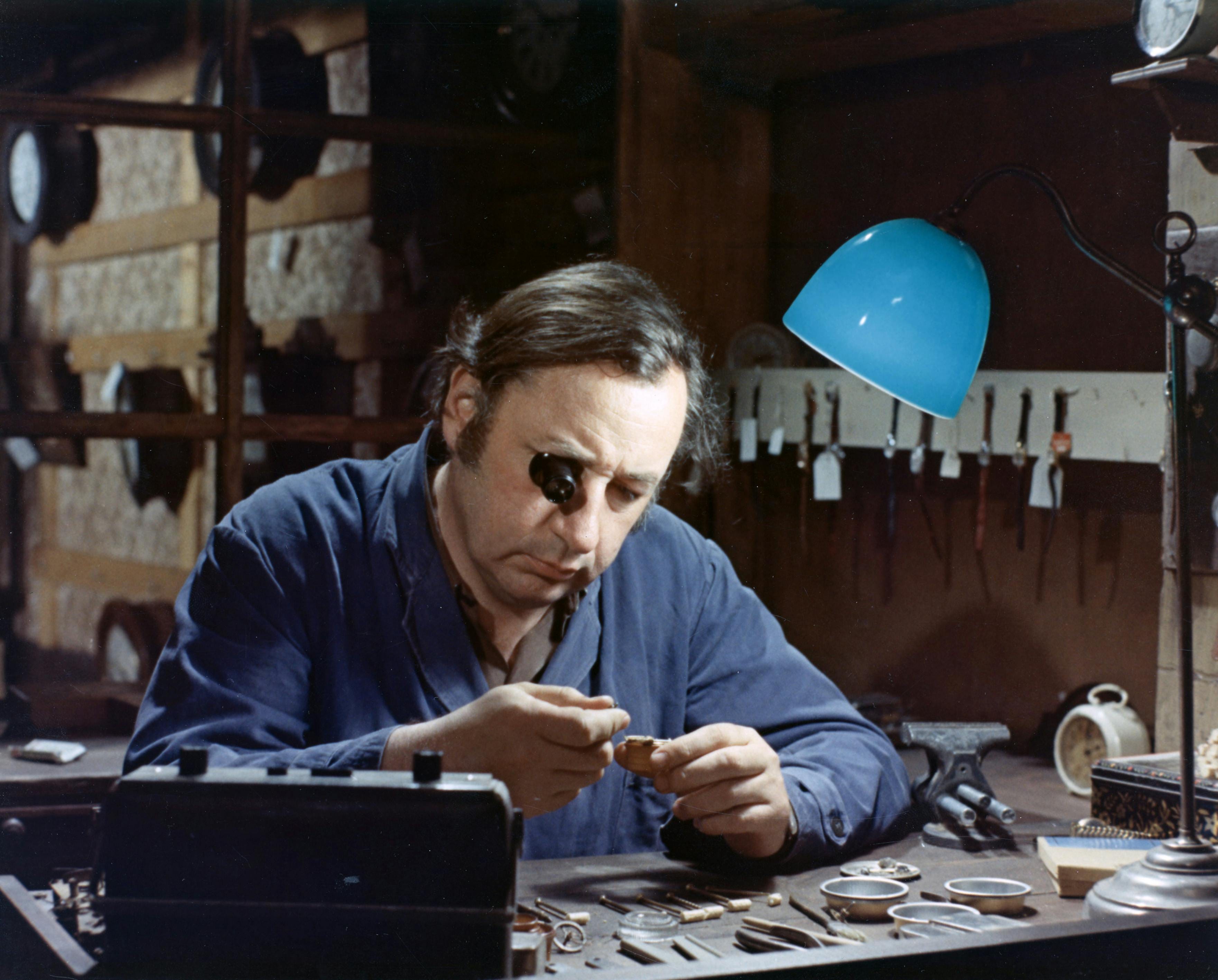
Philippe Noiret, The Watchmaker of St Paul

Editor's Note: THE WATCHMAKER OF ST PAUL  drew a very good crowd at its screening at Cinema Reborn in Sydney screens again in Sydney on Thursday 7 May at 4.15pm. It screens in Melbourne at the Hawthorn Lido on Saturday 9 May at 11.40 am, introduced by Andrew McGregor, and on Wednesday 13 May at 4.00pm.

Below is Barrie Pattison's introduction to the first screening in Sydney. The intro wont be repeated on Thursday at the repeat screening at the Randwick Ritz.  Barrie was a friend of director Bertrand Tavernier and his introduction recalls this friendship.

*********************

This is a slightly expanded version of the introduction I did to the 2026 Cinema Reborn screening.

I’m going to give you a little Film History, so here’s an apology to the people who know this already.

The first archival screenings we hear about, happened in the thirties in New York, London and Paris. The French activity was different, not conducted by institutions’ salaried officers  but by enthusiasts who gathered (and sometimes stole) copies which the Companies were discarding as no longer having any value. This appears to have been a boutique activity, with Henri Langlois and Georges Franju storing their prints in Langlois’ mother’s bathroom.

However (and this they don’t tell you) during The Occupation, a German Major put things on a more business-like basis, expanding the collection substantially from a couple of hundred titles (not a year’s programs for a serious Cinémathque). In the post war period, Paris became known as the only place in the world where you could see many important films. People like director Bob Swaim or writer Carlos Clarens came there, because that was where La Cinémathèque Française was.

A devoted core audience watched Langlois’ screenings at night and,  in the day time, wrote for magazines like Positif,  Cahiers de Cinéma, Présence de Cinéma, Cinéma Soixante dix, and the rest. They developed the celebrated Politique des Auteurs which said that movie directors were as much the authors of their work as composers, painters, sculptors and dramatists and they applied it to Hollywood professionals like Alfred Hitchcock and Howard Hawks, rather than heavyweights like Carl Dreyer or Robert Bresson.

… and they started making films, the celebrated La Nouvelle Vague.

After their phenomenal success with titles like Francois Truffaut’s Four Hundred Blows, Jean-Luc Godard’s Breathless and Louis Malle’s Zazie in the Métro, near three hundred films were made by French directors in their twenties. This process was peaking when I arrived there in the early sixties. 

I encountered press agent and critic Bertrand Tavernier, who was already doing episodes for sketch movies. He drew on his enthusiast background, scooping Laetitia Roman’s resumé out of the pile on his table, exclaiming “Gold of the Seven Saints!” and reviving her wilting career giving her the part in  Les baisers.

Shortly after this,  the authorities took the Cinémathèque away from Langlois - and his indignant supporters staged a demonstration outside the Trocadéro auditorium, which turned into a riot when the gendarmes broke it up. Bertrand Tavernier was seen leaving the event with blood streaming down his face. It was the first of the succession of manifestations of May ‘68, reverberating round the world - Le joli mai! 

I can’t help noticing that that messing with La Cinématèque Française brought down the French government while wiping out the Australian National Film Theatre only stirred interest among the people who wanted to make off with its funding and real estate.

Meanwhile Bertrand Tavernier had interested Philippe Noiret in Tavernier’s proposed adaptation of L’Horloger d’Everton, a story by Georges Simenon,  creator of Inspector Maigret. Noiret become a star out of his Nouvelle Vague movies.  His participation ensured finance and the film that you are about to watch was made. Tavernier rejected the night and fog of preceding Simenon productions.  His  L’horloger de St. Paul/The Watchmaker of St. Paul was about May ‘68, most obviously in the motif of the burning car and in Noiret’s final affirmation. But it’s not just a propaganda exercise, also incorporating a study of the Lyons neighbourhood where the work of the plumber, the glazier, the neighbourhood cafe or even the Cathedral where Noiret maintains the steeple clock,  get mixed in with the action. It is also, centrally, a father and son relationship examined in serious detail.

The film was a notable success and Tavernier followed it with other message pieces. I wasn’t the first person to tell him he was repeating himself and he had already set in train his jazz film ‘Round Midnight, the one that emboldened Clint Eastwood into making Bird, and the the first of the productions that turned Tavernier into one of the major film makers of the late 20th Century - Dimanche  dans la Compagne/Sunday in the Country, La Vie et rien d’autre/Life and Nothing But, Laisser passer/Safe Conduct.

However, he remained an enthusiast. He fronted a season of Julien Duvivier’s thirties Harry Baur films. He toured a retrospective of French war movies to promote his Capitain Conan and he was instrumental in setting up a film museum in his Lyons home town, in the building which had housed the Lumière factory, where what is generally considered the first motion picture had been made. He staged a history of westerns there.

I’d watched Tavernier do the sound mix on a couple of reels of l’Horloger de Saint Paul - the railway scene. Tavernier’s wife is the passenger out of focus behind the actors.  (His daughter Tiffany also appears in the opening scene looking at the car burn from the moving carriage window).  Tavernier was actually singing, caught up in the euphoria of starting his dream career. I’d see this a couple of times more - Peter Fonda after Easy Rider came out  and Oliver Stone when Platoon took off. Being part of a community largely made up of wannabe movie directors, however one of the most interesting things I got to do was watching Bertrand Tavernier go the distance.

I’m placing a 1974 interview I did with Tavernier after the London Premier of Watchmaker, on my Sprocket Sources Blog

Monday, 6 April 2026

CINEMA REBORN and PERSIAN FILM FESTIVAL AUSTRALIA Present Tributes to Bahram Beyzaie Iranian Filmmaker (1938-2025)


Wednesday, 1 April 2026

CINEMA REBORN – CLASSIC ASIAN FILM-MAKING - PEKING OPERA BLUES (Tsui Hark, Hong Kong, 1986) + THE WIFE OF SEISAKU (Yasuzo Masumura

 Two of the most renowned names in Asian filmmaking will be represented in Cinema Reborn’s 2026 programme.

Peking Opera Blues – IFC Center

PEKING OPERA BLUES (Tsui Hark, Hong Kong, 1986)

‘As a director and producer, [Tsui] Hark has emerged as the most influential figure of the [1980s], a virtuoso of high-speed narration and optical panache … at his best, as in the period comedy Peking Opera Blues, his interlocking machinery of cues and responses induces a euphoria in which one is happy to mistake the screen’s leaps and convolutions for a semblance of reality.’ – Geoffrey O’Brien, The New York Review of Books

Set in 1913, after the fall of China’s last imperial dynasty, Tsui Hark’s vibrant action-comedy follows three young women – a cross-dressing spy (Brigittte Lin), a musician and courtesan (Cherie Chung), and an aspiring actor (Sally Yeh) – who become entangled in a political conflict. Forming an alliance with a guerrilla fighter (Mark Cheng) and a disillusioned soldier (Cheung Kwok Keung), the group enacts a plan to protect the democracy of the fledgling Chinese Republic.

Showcasing Tsui at the exhilarating height of his powers, Peking Opera Blues is an enigmatic, richly layered and wildly entertaining opus that director Quentin Tarantino has declared ‘one of the greatest films ever made.’

Introduced by Dylan Cheung at Ritz Cinemas and Cecilia Tsan at Lido Cinemas.

Screens once only in each city. For links to each theatre’s

bookings and session times and to read superb programme notes by Rachel Ho Click here.

Yasuzo Masumura – Windows on Worlds

THE WIFE OF SEISAKU (Yasuzō Masumura, Japan, 1965) 

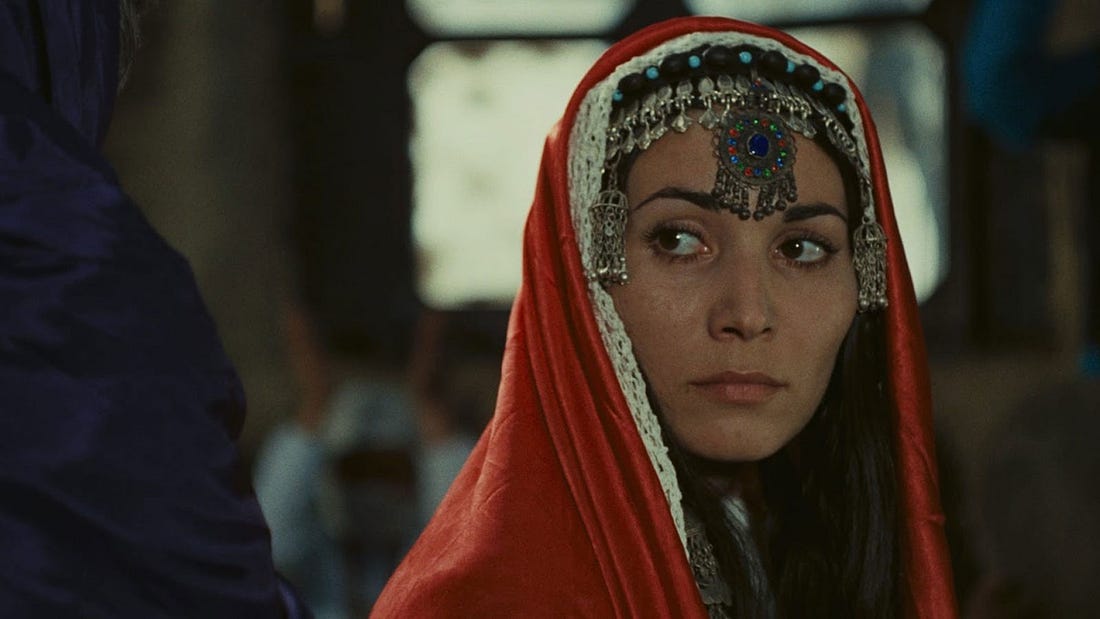
...And from Japan comes a film by the largely unknown director Yasuzo Masumura, a film which in critic Tony Rayns program notes advises us that, with the recent discovery of Masumura’s work and the restoration of his work being undertaken by his distributor Kadokawa The Wife of Seisaku (Seisaku no Tsuma) will soon be known as a 1960s’ classic.”

Set against the backdrop of the Russo-Japanese War and expressing a strong critique of militarism, Yasuzō Masumura’s piercing melodrama is a major work from a long-overlooked director. Wakao, who collaborated with Masumura on twenty films, is a particularly commanding presence, bringing a fierce intensity to the tightly controlled narrative.

Introduced by Jane Mills at Ritz Cinemas and Grant Watson at Lido Cinemas.

Co-presented by The Japan Foundation, Sydney.

Screens once only in each city. For links to each theatre’s bookings and session times and to read superb programme notes by eminent British critic and scholar of East Asian cinema, Tony Rayns Click here.


CHARITABLE DONATIONS

Since our inception supporters have continued to ensure that the annual season is able to present the very latest and very best international and Australian film restorations.

Tax deductible charitable donations have enabled us to keep our admission charges to regular Ritz and Lido prices (with the lowest student concessions of any similar film-related event). We have once again set up a page via the Australian Cultural Fund to receive donations of any size, large or small. You can find it IF YOU CLICK ON THIS LINK

More news soon…

Thursday, 19 March 2026

CINEMA REBORN - CLASSIC FRENCH CINEMA - PORT OF SHADOWS (1938), THE WATCHMAKER OF SAINT PAUL (1974), 36 FILLETTE (1988)


The 2026 program includes three remarkable films from three classic periods of French Cinema.

Port of Shadows | Current | The Criterion Collection

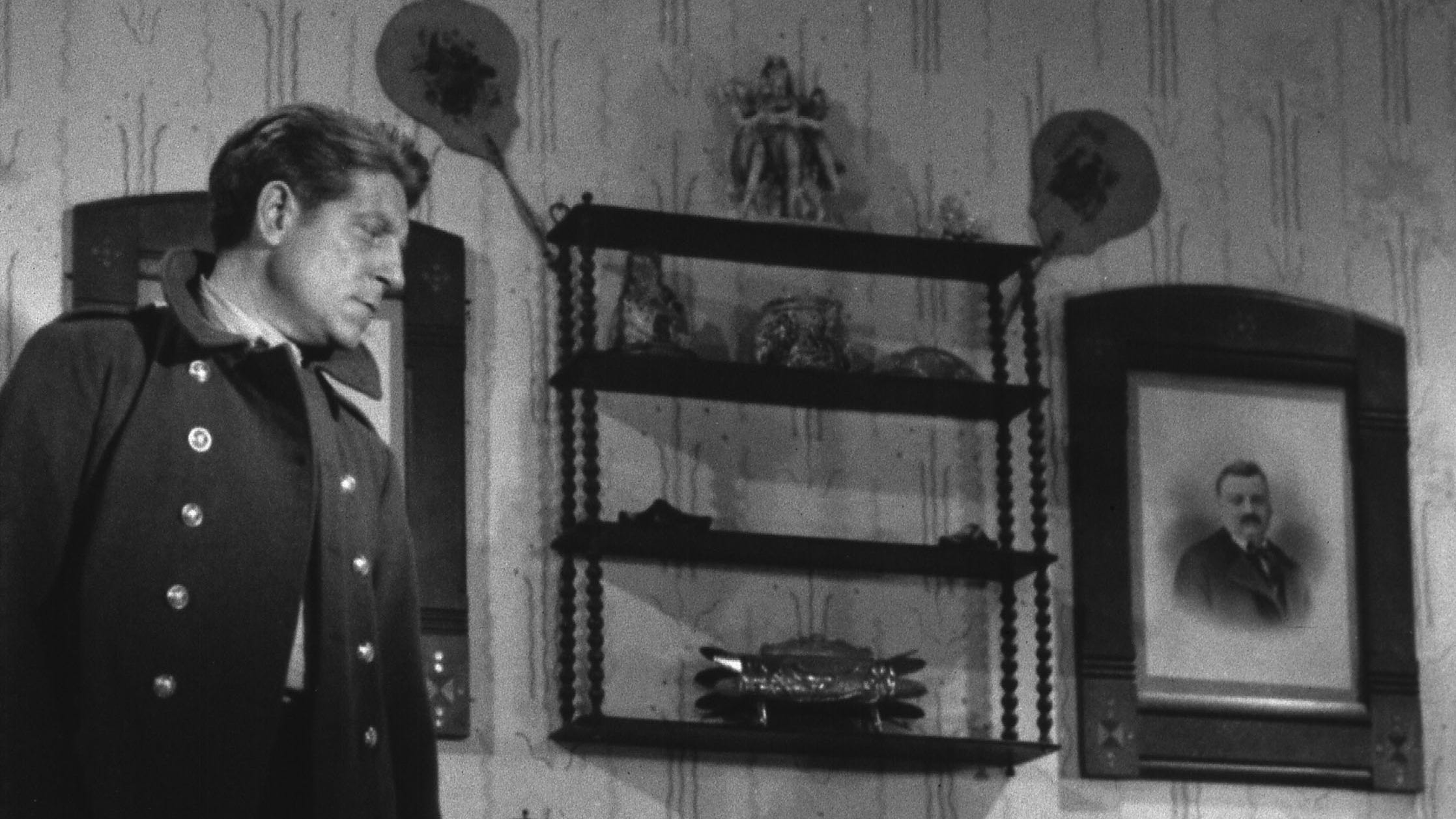
PORT OF SHADOWS (Marcel Carné, 1938) is an early film from the master film-maker best known for the wartime masterpiece Les Enfants du Paradis (1945). In his notes for the film published on the Cinema Reborn website critic Charles Carrall writes: “In his third feature-length film Port of Shadows (Le quai des brumes, 1938), an early masterpiece for Carné, the port city of Le Havre is shrouded in a serious fog. …As one of seven works in his celebrated partnership with screenwriter Jacques Prévert, Carné’s Port of Shadows, based on a Pierre Mac Orlan novel, stands out for its remarkable atmosphere of doom and gloom.

‘A remarkably beautiful motion picture.’ – Frank S. Nugent, The New York Times

The link to Charles’ notes takes you through to bookings and session times in Sydney and Melbourne. Screens twice in each city.

Introduced by Bruce Beresford at Ritz Cinemas and Dr. Felicity Chaplin at Lido Cinemas.

The Watchmaker of Saint-Paul (1974) - Ritz Cinemas

THE WATCHMAKER OF SAINT PAUL (Bertrand Tavernier, 1974)

‘An extraordinary film – the more so because it attempts to show us the very complicated workings of the human personality, and to do it with grace, some humour and a great deal of style.’ – Roger Ebert, Chicago Sun-Times

In Bertrand Tavernier’s feature directorial debut, adapted from a Georges Simenon novel, the quiet, orderly life of a widowed watchmaker (Philippe Noiret) is blown apart by the revelation that his teenage son has gone on the run after killing a man. Forming a relationship with a sympathetic police inspector (Jean Rochefort), the watchmaker searches for answers and grapples with the realisation that he knows far less about his son than he believed.

Introduced by Barrie Pattison at Ritz Cinemas and Dr. Andrew McGregor at Lido Cinemas

Read Ben McCann’s program notes and find links to session times and bookings. Screens twice in each city.

Virgin (1988) - IMDb

36 FILLETTE (Catherine Breillat, 1988)

‘Impressive, painfully candid … Lili is played with devastating realism by Delphine Zentout.’ – David Stratton, The Movie Show

Featuring a key supporting role by French New Wave legend Jean-Pierre Léaud, Catherine Breillat’s international breakthrough film – based on a novel she wrote about her own teenage experiences – was controversial in its day, and time has if anything only increased its transgressive charge. It remains a frank, unsentimental and singularly pungent depiction of feminine coming-of-age, anchored by Zentout’s fearless performance.

Introduced by Beaudicea Smith-Davies at Ritz Cinemas and Philippa Hawker at Lido Cinemas.

Read Jane Mills program notes and find links to session times and bookings. Screens once only in each city.


CHARITABLE DONATIONS

Since our inception supporters have continued to ensure that the annual season is able to present the very latest and very best international and Australian film restorations.

Tax deductible charitable donations have enabled us to keep our admission charges to regular Ritz and Lido prices (with the lowest student concessions of any similar film-related event). We have once again set up a page via the Australian Cultural Fund to receive donations of any size, large or small. You can find it IF YOU CLICK ON THIS LINK

More news soon…