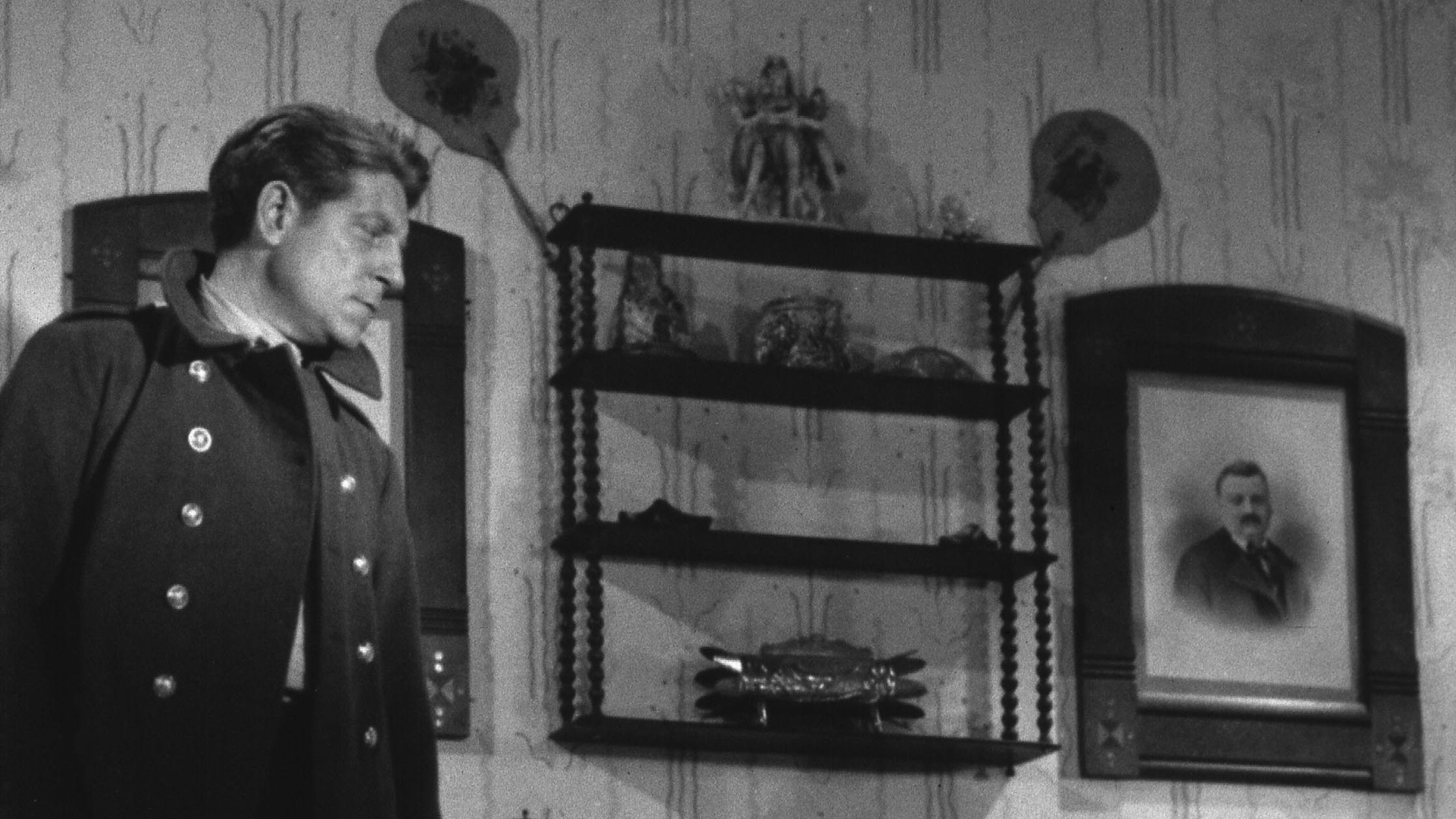
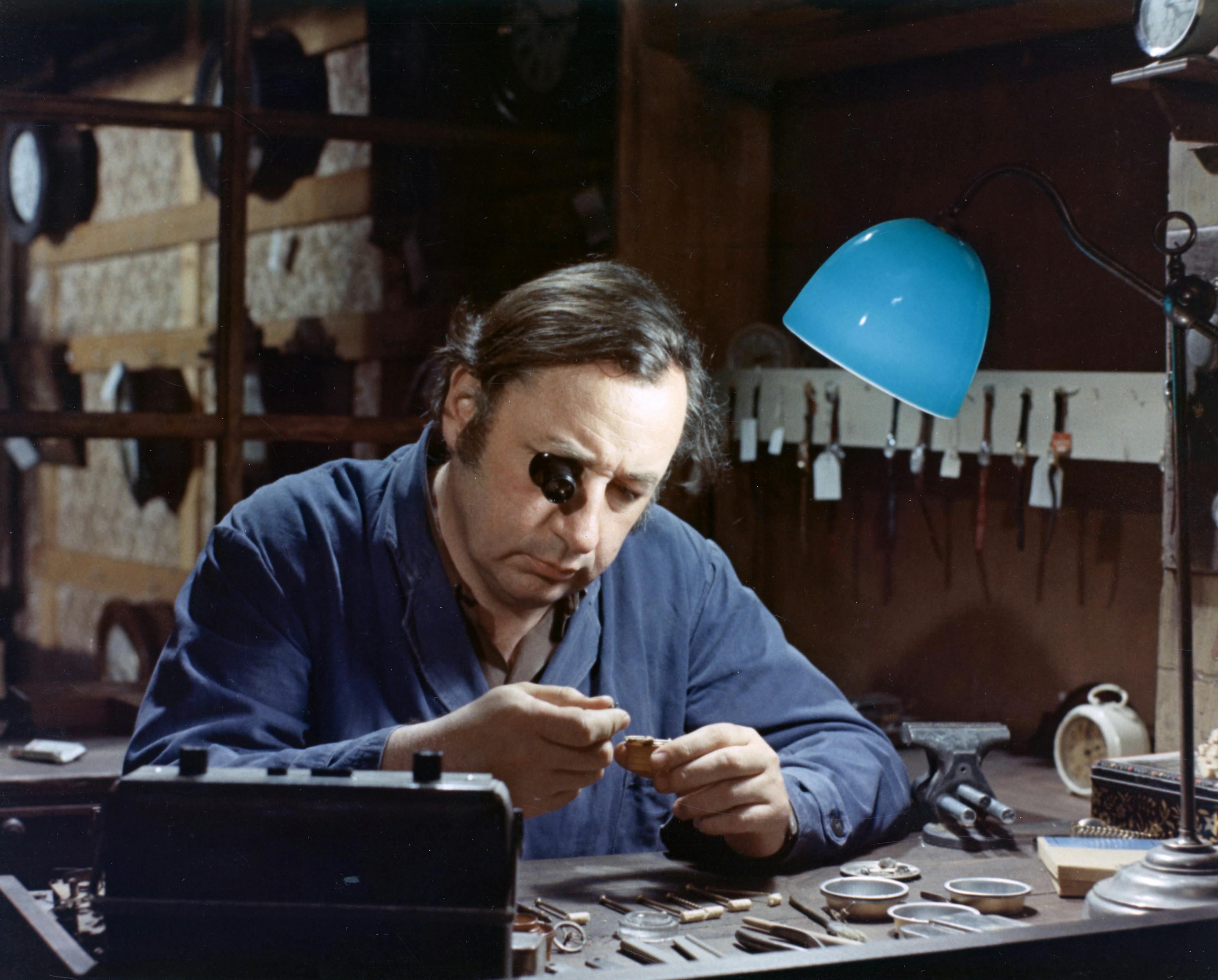
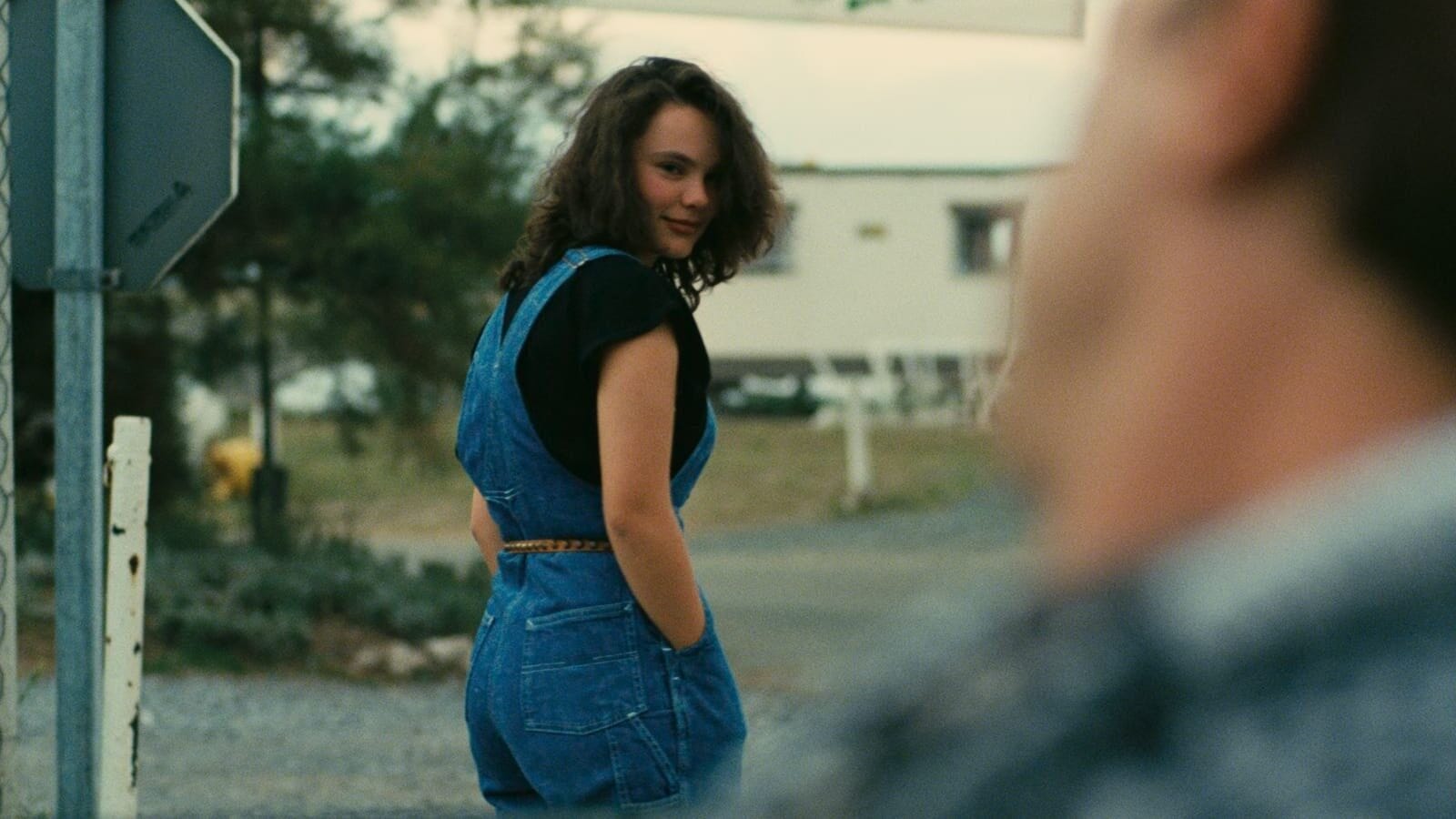
Curiously, around WW2 classic cinema peaked simultaneously internationally, with a group of master crafted costume films which had a common aesthetic.
Gone with the Wind in the U.S. achieved enduring fame. World events and the laziness of critics meant the German
Romanze in Molle never attracted that kind of attention outside
its home language territories but the French
Les enfants du paradis was, in the years after its 1945 post-armistice release, touted as the greatest film of all time
.
I’ve been re-visiting it at fifteen year intervals over my adult life. It’s disturbing to consider that my viewing at this year’s French Film Festival is likely to be my last.
More than any other film I watch, it is different each time. I once saw the Paris Cinémathêque’s first run copy, struck when war time shortages meant that the laboratory chemicals needed to give it a full range of tones were not accessible. The copy was pin sharp but used only shades of gray. The new digital restoration has been darkened, presumably in an attempt to provide a supposed film noir look. Detail is lost. A lighting flash gives a glimpse of the original texture. Arletty here just seems odd, commenting that the Roger Hubert’s studio moonlight streaming through the Trauner decor’s window makes everything beautiful.
However, it’s not just that the film physically changes but the audience response also shifts. Fifties commentators detected a grim war time defeatism. Now that no longer resonates when it comes out of a history most of its audience never lived through. The precision with which it is crafted was, and to an extent still is, the quality I admire in it, though watching the film now, I can see that contemporary Hollywood directors like Victor Fleming and Lewis Milestone exercised even surer control … and this left no room for spontaneity, triggering the freewheeling antagonism of France’s subsequent Nouvelle Vague film makers.
 |
| Le Boulevard du Crime |
Nothing can destroy the imagery. The on-screen curtains open on an extraordinarily elaborate, vivid panorama which immediately amazes viewers who now know the war time shortages that dogged production – making it the most expensive French film them made. Costumed extras leave their already busy side street to join the thronging Boulevard du Crime, named after the lurid melodramas played in the row of theatres there, with performers front of house touting for passer by customers.
Straight into the establishing scenes - Arletty’s Garance, is the star tent show attraction, where punters pay to see her naked but find her decorously holding up a mirror in her barrel of shoulder deep water. She visits murderous dandy Pierre-François Lacenaire (Marcel Herrand, a celebrated classic stage actor who doubled as a1947 Fantomas) in the shop-front where he writes letters for his illiterate customers, one in progress for a begging wife beater. Arletty seeks out the place because (clue) it’s like Theater.
 |
| Arletty as Garance |
On the street, white face mime Baptiste Deburau (Jean-Louis Barrault) is the subject of abuse from his spruiker father Anselme (Étienne Decroux) and Lacenaire picks the watch pocket of fat, rich spectator (André Numès Fils), with a gendarme (Louis Florencie) all set to take Garance away for the crime, when (first and most frequently cited of the set pieces) Baptiste springs to life miming the actual theft to exonerate Garance. His brilliant performance and its context would be enough to make any film exceptional and we’ve just started.
 |
| Jean-Louis Barrault as Baptiste |
The film moves from the street into the Théâtre des Funambules mime theatre, taking us further into director Marcel Carné’s world of romantic grotesques. A pair of bird head men, like the ones in author Jacques Prévert’s collages, mill about back stage where Albert Rémy’s stroppy performer quits, abandoning his tacky lion skin outfit and creating an opportunity to enter the troop for Pierre Brasseur’s wannabe actor Frédérick Lemaître. We don’t see their performance.
 |
| Théâtre des Funambules |
Meanwhile the film has other worlds on display – Jeanne Marken’s rooming house, where the proximity of Brasseur and Arletty means Barrault misses his chance with her and the night time streets, where he wanders encountering bogus blind beggar Gaston Modot. There’s also a fake blind man in Sacha Guitry’s 1939 Ils étaient neuf célibataires and Guitry himself starred in his own Deburau film in 1951. It’s disconcerting to find the famous actor there in a role that will always be associated with Barrault. Les enfants ...is probably consciously threaded through French movie culture. Francis Girod also put the original historical characters on screen in the 1990 Lacenaire.
 |
| Marcel Herrand as Pierre-François Lacenaire |
Here Modot, his sight miraculously recovered, leads Barrault back to the Red Breast Inn, a low dive named after the previous owner’s throat was cut. The actor confronts Herrand’s henchman Fabien Loris, who throws him through the window, with Barrault turning his head so we can see it’s him actually doing the stunt. Loris is surprised to see Jean Louis re-appear, dusting himself off, like Daniel Craig after the train wreck in Skyfall. Barrault drops the heavy with a sabat kick, from which he is unable to recover. Awed, Arletty now can’t get enough of the mime.
However, the action moves ahead, the company, now also comprising Brasseur and Arletty, have achieved prominence, though actor Brasseur chafes at being unable to speak. We see their newly celebrated performance - in stage decors created by celebrity French animator Paul Grimault, for whom Prévert scripted their great cartoon, Le petit soldat.
 |
| Maria Casares, Jean-Louis Barrault |
Barrault marries proprietor Marcel Pérès’s daughter Maria Casarés who, while on stage, sees Barrault and Arletty together in the wings. She calls out, shocking the Children of the crowded Gods seating at hearing a performer’s voice. Casarés will shortly star in Cocteau’s Orphé. These two roles are so prominent that is comes as a surprise to find she made another thirty films. I want to see her TV lady Macbeth.
A further complication is introduced when lecherous nobleman Louis Salou declares his interest in Arletty with a grotesquely enormous floral basket. Meanwhile Herrand has his eye on a bank messenger’s pouch and uses Marken’s rooms to strike and she, jealous of the actress, fingers her as an accomplice. It’s time to ring down that animated curtain for the end of part one.
There’s another mime theatre performance but Brasseur, having lost Arletty has found the emotion to realise his dream role as Othello. “Jealousy belongs to all if a woman belongs to none.” Brasseur’s idea of Shakespeare actually seems kind of tame from the excerpt we see. Herrand, dagger concealed under his frock coat, plans on robbing the famous actor but is stunned to find him casual about splitting his recent lottery winnings. Brasseur’s high jinx with the authors of the proposed bandit Robert Macaire melodrama (Jean Angelo, Jean Marais and Robert Hirsch made Macaire films) gets him into a duel.
 |
| "...an elegant veiled woman..." |
Meanwhile an elegant veiled woman takes a box each night to watch Baptiste perform. In relache, Lemaitre discovers it is Garance/Arletty, who has survived her association with Salou retaining her values where he expected to find her corrupted – “embetisée par l’argent.” In another lavish setting, the theatre metaphor is extended when, surounded by elegant socialite play goers goers, vengeful Herrand pulls back the balcony curtain to reveal Arletty and Barrault together, to the violent Salou, who made the mistake of dismissing the underwold character (“he does not duel”). Casarés sends their child, young Jean-Pierre Belmon, to Barrault, only to have the boy confront Arletty, as the intertwined plots converge.
The structure recalls Carné’s first major film, Drôle de drame, where another Barrault character makes his way among a gallery of grotesques. Again here the name stars – Marken, Modot and maybe Pierre Renoir get to register. The final scene is as imposing as the opening – giant set, mob of costumed extras showered with confetti while Kosma(?)’s score drives the action.
Is Les enfants du paradis still exceptional? Has it had an extraordinary impact on the perception of film? I don’t think there can be any doubt about that. The production’s ambition and craft skill are astounding, particularly in the context of the WW2 Occupation where the decorated studio floors had to be made of papier maché and replaced each time the heavy studio camera tracked over them. A tiled passage way is built for the single shot where Turkish Bath operator Habib Benglia leads Herrand and Loris.
 |
| Marcel Carné (top centre) on the set of Les Enfants du Paradis |
Is it the greatest film of all time? I don’t think so. I don’t even feel it’s Marcel Carné’s best work. It is flawed by miscasting, where everyone seems to be the wrong age. Only the extraordinary Maria Casarés is able to convince us. Arletty had been a gifted comedienne. You don’t know French film if you haven’t seen her as a blonde but she was now just about rusted on to the Carné Productions after her roles in Hotel Du Nord, Le jour se leve and Les visitors du soir, where she already presents elements of the Garance character, which would become the most famous in French film. (when Langlois opened an auditorium in the Pompidou center he called it Salle Garance) However approaching fifty, it’s a big ask to believe the four key male characters are obsessively in love with her. But Garance is not just the actress’ physical presence. I could see Micheline Presle, then at her zenith, in the Mayo costumes and delivering Jacques Prévert’s dialogue under Carné’s direction but it was Arletty who became the face of foreign language film post WW2.
However, anyway you look at it Les enfants du paradis still deserves its landmark status. Knowledge of the cinema is incomplete without it. Not too many films you can say that about.