|
| Andrew Sarris |
Debates about authorship in the cinema have occupied a central place in film studies since the late 1950s when Cahiers du Cinema proposed the politique des auteurs, basically a political strategy in the form of a polemic for a new cinema to replace what mainstream French cinema was seen by a new generation of critics to have become a moribund “tradition of quality” epitomised by stylistically formulaic versions of French literary classics dismissed as ‘bourgeois cinema for the bourgeoisie’.Prior to this, traditional film criticism assumed the industrial nature of film production with its division of labour prevented a single authorial voice from being heard or seen in mainstream cinema. This led some critics to claim that cinema, except in exceptional circumstances, could not be regarded as an art, being commodified entertainment serving the ideology of the capitalist economy. The exceptions were films in which the director - a Renoir, Murnau or Dreyer - assumed the marked unifying presence of the author-artist. As the organising force of a film or group of films so, as Bordwell has argued, the author becomes a kind of protagonist in the drama, a point of identification for the knowledgeable viewer. It is then possible to argue that traditional film criticism has responded to art cinema on its own terms by supporting a complicit relationship between artist-director and critic then forming a link with the receptive viewer.

The long debated canon of classics formed the basis, as already noted, of an art cinema only critically defined as a mode of film practice in the late 70s. Ironically it was films of the French New Wave and the New German Cinema along with classics of Italian neorealism and Russian montage that led the way in this retrospective reformulation of cinema art and its attendant institutionalisation. Ironic because the debate around indigenous cinemas was primarily directed at how to counter American cinematic imperialism. It was the work of latterly recognised auteurs in the Hollywood studios, as much as those in European cinemas, that provided inspiration for the critics-filmmakers-to-be, writing in ‘Cahiers’ in the 50s.
I well remember, as a would-be cinephile in the throes of linking sub-titles with art, taking in Andrew Sarris’s yet to be tested polemical erudition inspired by ‘Cahiers du Cinema’ headed “American Directors,” 68 pages in the 28th (Spring 1963) issue, of Film Culture.
 |
| Howard Hawks |
My first concern was finding Howard Hawks listed in the “Pantheon” then recognising in the “Second Line” list of ten auteurs only the names of Fritz Lang, Ernst Lubitsch and Buster Keaton, and doing a mild double take on David Lean appearing with other “Fallen Idols” having recently seen Lawrence of Arabia, here being summarily deflated along with The Bridge on the River Kwai by Sarris as “hot air […] lacking a point of view.” Very soon to be discovered were the films of ‘unknown’ “Third Liners” like Sam Fuller (Underworld USA) and Nicholas Ray (Johnny Guitar), and in “Esoterica” Don Siegel (The Killers ). Further down the track to enlightenment, waiting for discovery was the “dark humour” in melodramas directed by Douglas Sirk (not only in Magnificent Obsession and Written on the Wind but also it was suggested less persuasively, in the likes of All That Heaven Allows), and the “naive sophistication” in the comic creations of Jerry Lewis (The Patsy, The Nutty Professor) and of his mentor Frank Tashlin (Artists and Models, The Disorderly Orderly)..
It should be noted that when auteurism first emerged in the 50s, directing was, as Sarris noted, almost exclusively a male domain, no more so than in Hollywood, a situation seemingly confirmed, by “that actress of actresses,” Lillian Gish who, after once directing a film in 1921, declared that directing was no job for a lady. Amidst Sarris’s select lists of hundreds of directors in the American cinema there was only one woman, Ida Lupino. He curiously chose to exclude the notable career of Dorothy Arzner as a director in Hollywood from the late 20s to the early 40s, leaving that task to his wife and fellow critic, Molly Haskell, then working towards her pathbreaking book ‘From Reverence to Rape’ subtitled ‘The Treatment of Women in the Movies’ (1973). Sarris commented that only two women - Leni Riefenstahl and Agnes Varda - had then risen above the “Oddities and One shot” classification accorded Lupino by him as an ‘oddity’ along with 14 male directors including ‘one shot’ directors Charles Laughton, Gene Kelly and John (The Alamo) Wayne.
 |
Barry Humphries, Barry Crocker
The Adventures of Barry McKenzie |
The new waves in France and West Germany with their director- focussed auteurism and autorenkino - embryonic notions of ‘writing with the camera’ (mise en scene) - formed the basis of a new, more open, modern aesthetic. This played little evident formative role in the initial audience acceptance of a home-grown genre, 1971-6, in Australia’s film revival (Stork, The Adventures of Barry McKenzie, Alvin Purple, Petersen and Don’s Party, et al). In 1979 when the subsequent Australian period genre was at a low ebb, film critic John Hinde dissented from the earlier chorus of disapproval of ocker comedy by the critics which likely came, he contended, symptomatically from “an ancient unconscious streak of wowserism embedded in the Australian psyche.” Audience approval of ocker or sexploitation comedies was reflected in their box office performance indicating “that they were in touch with some half-conscious self-recognition wandering in the impoverished sexual limbo of our culture.” The films in question, Hinde suggested, “offered, in effect, crude sketchy maps which might have enabled later films to make more detailed exploration of this terrain,” in the then more relaxed censorship environment (Dermody & Jacka vol 2 p.79). In the path-breaking American-Australian coproduction, Wake in Fright (1971), repression had been given disturbing expression to “a horror at the heart of Australia that is about the conditions of sexuality, as Meaghan Morris [said], by being about repression, violence and male segregation” (ibid 81).
The financial viability established by the box office success of Alvin Purple (1973), made on a very low budget, freed the Australian Film Development Corporation from the already politically uncomfortable position of continuing to fund ocker comedies. It is hardly surprising that the recently re-established funding body, the Australian Film Commission, followed through by seizing upon the local and international success of Picnic at Hanging Rock. The institutional agenda shifted to national image (re)building in accord with the varied critical and commercial successes of a relative flood of diverse period dramas in Picnic’s wake (‘the AFC genre’), eg, Sunday Too Far Away, Caddie and The Getting of Wisdom through to The Chant of Jimmy Blacksmith, Newsfront, My Brilliant Career and Breaker Morant, marking the second half, 1975-80, of the first decade of the Australian film revival which had also, arguably, been a decade late in arriving
 |
| Picnic at Hanging Rock |
While both the Australian and New German cinemas shared the basic search for a new audience starting from point zero: in both cases what was actually showing on each nation’s screens was controlled by overseas based distribution and exhibition interests. The major difference was that in Germany the production of ‘denazified’ genre films for domestic consumption resumed after the war (although there was a strong continuity in Germany between popular 30s and post-war film genres) while in Australia there was, at this time, “a complete vacuum of feeling as to what might constitute an Australian feature film” (D & J ibid). In contrast, political protest was given strong voice at Oberhausen and was strategically taken up politically by the group’s only effective spokesman and ideologue, Alexander Kluge. He had varying success in directly addressing the vacuum created by the absence, both domestically and internationally, of an ‘autorenkino’ (authors’ cinema). In Australia on the revival of production, other than the establishment of a loosely integrated national film and TV school and an experimental film fund, there was, at least initially, no culturally coherent direction spoken or taken. There was little recent knowledge or history of audience responses beyond the variable barometer of critical and box office success. This meant that when success came on all fronts with Picnic at Hanging Rock, it was acclaimed as a breakthrough that, by the end of the 70s, looked more like a lone intrusion of Europeanness into the Australian landscape.
****
The initial skirmishes following the arrival of auteurism, such as the one recounted below, were confined to what can best be described as the margins of a post-war emergent Oz film culture strengthened by the film revival. What was being sensed here was an encounter with a new way of understanding style as not just the hallmark of a small number of gifted director-auteurs working in special conditions of creative freedom..
Sarris made no secret of the fact that he was reshaping the Cahiers politique as an instrument for asserting the superiority of American cinema. Robert Stam, in his book Film Theory, acknowledges that Sarris’s work, “at its best,” deployed his broad knowledge of cinema “to convey the genuine achievement of Hollywood cinema.” Stam further describes Auteurism as “less a theory than a methodological focus” that “clearly represented an improvement over antecedent critical methodologies,” in so doing performing “an invaluable rescue operation for neglected films and genres” while playing “a major role in the academic legitimation of cinema studies” (89-92).
Robert Stam “The Americanisation of the Auteur Theory in Film Theory An Introduction 2000,
Albert Moran, Tom O’Regan eds. The Australian Screen, essays by O’Regan “The Ocker Film” and Graeme Turner “The Period Film” 1989
Susan Dermody and Elizabeth Jacka The Screening of Australia vol 2 1986
John Hinde Other People’s Pictures ABC 1981
Tom O’Regan Australian National Cinema 1996
Barrett Hodsdon The Elusive Auteur 2017
Addendum: ‘Word thuggery’ at SUFG
In 1966, with Andrew Sarris and 'Movie' fuelled auteurist fervour, Bruce and Barrett Hodsdon, both then having a sizeable hand in the shaping of Sydney University’s Film Group's term programs, usually in consultation with their then mentor, John Flaus, decided that the twice weekly screenings offered the opportunity to immure members in the work of a chosen auteur. This was seen as a way of both focusing upon and redefining in criticism the creative role of the director in the commercial film industry, Hollywood being the paradigm. In this case the clear choice seemed to them to be Nicholas Ray, both having recently caught up with Johnny Guitar at a suburban “ranch night”.
 |
| Satyajit Ray |
With Flaus’s doubtful assent Bruce had programmed, a double bill of films by the two Rays (Satyajit and Nick) on a Monday night during third term 1965, in the Union Theatre, SUFG's main venue. The former had established himself (quite rightly) from his first film Pather Panchali, as something of a film society and art house icon.*
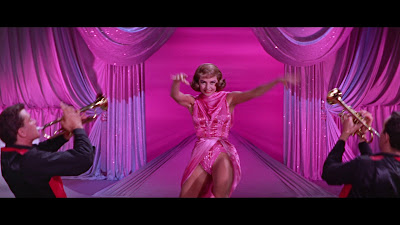
Screened in the first half, the only locally available copy of Satyajit's Devi, a 16mm print of a b&w film in standard ratio, thrown into relief , wall to wall, by the brash 35mm CinemaScope-Eastmancolor spectacle of Nick's Party Girl with the accompanying “ Party Girl, Party Girl” theme song behind the credits. Acting as a prologue to the ensuing drama is the sexually choreographed gyrations of Cyd Charisse which drew an audible reaction, in approval (or otherwise), especially from those sitting in the front section of the theatre where self acknowledged cinephiles tended to sit (and still do), seemingly affirming Mas Generis's much more recent claim in Screening the Past that cinephilia “is a condition of sexual attraction to movies”.
 |
| Nicholas Ray |
The Hodsdons then programmed four more of Nicholas Ray's features – Bitter Victory, Johnny Guitar, Wind Across the Everglades, and Rebel Without a Cause, to be screened in the course of seven weeks during first term, 1966. The then SUFG President, Brian Murphy, insisted they could only have the four Ray films if the series commenced with a 16mm screening of Bitter Victory in a rent-free venue, the large former kitchen of a decaying, soon to be demolished building, in the eyes of the philistines aptly called The Blind Institute.
A surprisingly large number of members crossed City Road to the Institute on a Friday night in March, to view, in those austere surroundings, the lingering death by scorpion bite of a Ray anti-hero played by Richard Burton, the setting being the North African desert during WW11. The President had also resolved to establish a roneoed newsletter in which members could vent their displeasure, or otherwise, at this precocious intrusion on their rights.
It took several weeks for the uniformly hostile response (to the films as much as to the theory) from a small number of motivated members to appear in print in the newsletter which ran six issues. In advocating gradualism in the face of what he saw as overcompensation by the so-called 'new guard', Flaus claimed that it was a violation of a member's right to expect the honouring of a cultural contract for diversity in programming choices when he/she took out a membership. Mike Thornhill responded to Bruce's defence of auteurism in the newsletter with a charge of 'word thuggery'. Both Flaus and Thornhill were concerned with the priority given to the auteurist notion of 'interior meaning' (the equivalent of an authorial sub-text linked in the work of a chosen director) which they felt all but ignored the key literary element ( the role of the screenwriter). John was adamant that 'the concern should be what the work is, not almost exclusively with the artist's (read director's) intentions'. Bruce rebutted that the new pre-eminence given to form (the French term mise-en-scène had not yet been absorbed into the English lexicon) was not to neglect content (what the film is about) but was central to it.
 |
| John Flaus |
So on it went, intensely but briefly with a certain rancour lingering. Thornhill, in a chapter on film culture for the book 'Entertainment Arts in Australia' (1968), quoted 'introspective Sydney film buff, John Flaus and fellow 'member' of the Sydney Push (there was no formal membership), in his essay. John is quoted defining a film buff as 'a compulsive aesthete of the cinema (who is often a secret romantic) caught in one of the cultural traps'
His pale ideology ensures that his own life will be a conformist one, but his imagination seeks a symbolic revolt. The Auteur concept of the director makes an ideal sublimate. He is the lone, creative (self-enclosed?) talent striving to impose his vision upon an insensitive world, yet he is also the masterful leader whose command is law (on the set) (8).
John does not now have a strong recollection of this controversy that surrounded the emergent politics of auteurism. He suspects that he was more the soft voice while fellow Push members Mike Thornhill and Ken Quinnell were 'the hard cops'. (Does John now see himself, in retrospect, as something of a local Bazin figure – a reference to the 'Cahiers' critic and father figure of the French New Wave?). A suggestion was made at an informal late night gathering after the screening of Party Girl ('give the new guys a chance') by ex-MUFS provocateur and aspiring filmmaker Bert Deling (Dalmas, Pure Shit), who was then living and working in Sydney. John opened his response in the newsletter with “the new guard, given a go - albeit restricted - in the first term 1966 programme - have overreached themselves (sic)”. This overreach was the overweighting in film selection by what was being claimed to be the main game in film criticism: the overriding attribution of individual creativity to the authorship of a chosen director especially in the Hollywood studio system. John saw screening five Ray films with the primary purpose of promoting the claimed directorial talents of a director, at times in creative tension with the system, as promoting 'a new orthodoxy' drawing on Andrew Sarris and 'Movie' magazine in the UK “that promoted Hitchcock and Hawks as the great directors”. For 'the new guard' Sarris opened up a new, engaging way of looking at Hollywood films.
 |
| Raoul Walsh |
In the terrain of classical Hollywood's 'journeyman director' hierarchy Flaus did concede a more singularly discernible directorial personality, for example, in Raoul Walsh's work behind the camera, over that of say Henry Hathaway's. John, from his later vantage point as a working actor in films became an increasingly astute observer, in his criticism, drawing the distinction between the director as the “setter of the scene” (metteur-en-scène) who competently but anonymously directs pretty much according to the set rules and conventions, as in much tv drama, and the director as auteur. In 1992 John wrote that the latter “shapes meaning through mise-en-scène” the what and the how unified through visual style – “the orchestration of meaning through the actors and assignment of dramatic priorities to pictorial factors,” in other words,“ the movie director's province of creativity”.
John's lengthy 1992 essay, “Thanks for Your Heart Bart” (9) (now accessible online), goes a long way towards redressing the imbalance of those days of auteur theory-inspired angst, standing as an insightful primer not only for aspiring actors but also for cinephiles. The forthcoming book by Barrett Hodsdon, The Elusive Auteur (2017) has potential to be something close to definitive, if that is possible, in the final laying to rest of a controversy spanning back at least to 1966 and the shock of those five Nicholas Ray films in the SUFG program in six months.
The above essay was first published on “Film Alert 101’ in April 2016
* A better option for the double bill (if prints and then been available) would have been the first film of each director : ‘Pather Panchali’ and ‘They Live By Night’, or say ‘Charulata’ and ‘Johnny Guitar’.
*************
Previous entries in this series can be found if you click the following links
Sixty Years of International Art Cinema: 1960-2020 - Tables and Directors Lists to Accompany Bruce Hodsdon's Series
Notes on canons, methods, national cinemas and more
Part One - Introduction
Part Two - Defining Art Cinema
Part Three - From Classicism to Modernism
Part Four - Authorship and Narrative
Part Five - International Film Guide Directors of the Year, The Sight and Sound World Poll, Art-Horror
Part Six (1) - The Sixties, the United States and Orson Welles
Part Six (2) - Hitchcock, Romero and Art Horror
Part Six (3) - New York Film-makers - Elia Kazan & Shirley Clarke
Part Six (4) - New York Film-makers - Stanley Kubrick Creator of Forms
Part Six (5) ‘New Hollywood’ (1) - Arthur Penn, Warren Beatty, Pauline Kael and BONNIE AND CLYDE
Part Six (6) Francis Ford Coppola: Standing at the crossroads of art and industry
Part 6(7) Altman
6(8) Great Britain - Joseph Losey, Lindsay Anderson, Karel Reisz, Richard Lester, Peter Watkins, Barney Platts-Mills
6(9) France - Part One The New Wave and The Cahiers du Cinema Group
6(10) France - Part Two - The Left Bank/Rive Gauche Group and an Independent
6(11) France - Part Three - Young Godard
6(12) France - Part Four - Godard:Visionary and Rebel
6 (13) France Part 5 Godard with Gorin, Miéville : Searching for an activist voice
6(14) France Part 6 - Creator of Forms - Bresson
6 (15) France Part 6 - Creator of Forms - Jacques Tati
6 (16) - Part 6 - Creator of Forms - Carl Th Dreyer
6 (17) - Italy and Luchino Visconti
6(18 - Italy and Roberto Rossellini - Part One
6(19) - Rossellini, INDIA and the new Historical realism
6(20) - Rossellini in Australia
6 (21) - Italy - Michelangelo Antonioni
6 (22) - Italy - Federico Fellini, Ermanno Olmi
6 (23) - Italy - Pasolini, Rosi