Showing posts with label Japanese Cinema. Show all posts

Wednesday, 1 April 2026

CINEMA REBORN – CLASSIC ASIAN FILM-MAKING - PEKING OPERA BLUES (Tsui Hark, Hong Kong, 1986) + THE WIFE OF SEISAKU (Yasuzo Masumura

 Two of the most renowned names in Asian filmmaking will be represented in Cinema Reborn’s 2026 programme.

Peking Opera Blues – IFC Center

PEKING OPERA BLUES (Tsui Hark, Hong Kong, 1986)

‘As a director and producer, [Tsui] Hark has emerged as the most influential figure of the [1980s], a virtuoso of high-speed narration and optical panache … at his best, as in the period comedy Peking Opera Blues, his interlocking machinery of cues and responses induces a euphoria in which one is happy to mistake the screen’s leaps and convolutions for a semblance of reality.’Geoffrey O’Brien, The New York Review of Books

Set in 1913, after the fall of China’s last imperial dynasty, Tsui Hark’s vibrant action-comedy follows three young women – a cross-dressing spy (Brigittte Lin), a musician and courtesan (Cherie Chung), and an aspiring actor (Sally Yeh) – who become entangled in a political conflict. Forming an alliance with a guerrilla fighter (Mark Cheng) and a disillusioned soldier (Cheung Kwok Keung), the group enacts a plan to protect the democracy of the fledgling Chinese Republic.

Showcasing Tsui at the exhilarating height of his powers, Peking Opera Blues is an enigmatic, richly layered and wildly entertaining opus that director Quentin Tarantino has declared ‘one of the greatest films ever made.’

Introduced by Dylan Cheung at Ritz Cinemas and Cecilia Tsan at Lido Cinemas.

Screens once only in each city. For links to each theatre’s

bookings and session times and to read superb programme notes by Rachel Ho Click here.

Yasuzo Masumura – Windows on Worlds

THE WIFE OF SEISAKU (Yasuzō Masumura, Japan, 1965) 

...And from Japan comes a film by the largely unknown director Yasuzo Masumura, a film which in critic Tony Rayns program notes advises us that, with the recent discovery of Masumura’s work and the restoration of his work being undertaken by his distributor Kadokawa The Wife of Seisaku (Seisaku no Tsuma) will soon be known as a 1960s’ classic.”

Set against the backdrop of the Russo-Japanese War and expressing a strong critique of militarism, Yasuzō Masumura’s piercing melodrama is a major work from a long-overlooked director. Wakao, who collaborated with Masumura on twenty films, is a particularly commanding presence, bringing a fierce intensity to the tightly controlled narrative.

Introduced by Jane Mills at Ritz Cinemas and Grant Watson at Lido Cinemas.

Co-presented by The Japan Foundation, Sydney.

Screens once only in each city. For links to each theatre’s bookings and session times and to read superb programme notes by eminent British critic and scholar of East Asian cinema, Tony Rayns Click here.


CHARITABLE DONATIONS

Since our inception supporters have continued to ensure that the annual season is able to present the very latest and very best international and Australian film restorations.

Tax deductible charitable donations have enabled us to keep our admission charges to regular Ritz and Lido prices (with the lowest student concessions of any similar film-related event). We have once again set up a page via the Australian Cultural Fund to receive donations of any size, large or small. You can find it IF YOU CLICK ON THIS LINK

More news soon…

Monday, 14 July 2025

Sixty Years of Art Cinema 1960-2020 : Bruce Hodsdon continues his series - Asia - 6 (44) Japan - Part 3 : The New Wave’s feminisuto: Imamura

Shōhei Imamura

Shōhei Imamura

Like other New Wave directorShōhei Imamura (1926-2018) rejected Shochiku’s sentimental formally rigorous melodramas focused on the lives of the urban middle classes, the New Wave’s most feminisuto director was even seen as bordering on feminist by some. In contrast to Mizoguchi's favouring of the princess archetype Imamura is, in Desser's words, “definitely the poet of the peasant...his heroines, almost without exception, drawn from Japan's traditional village life in a world characterised by power, and by political, social and sexual difference.” (123). Mark Cousins notes in his The Story of Film “that decades earlier Mizoguchi's and Naruse's women suffered for their men. Imamura says forget that” (297). In his first two “Imamura” films, (his fifth and sixth features and his last with Nikkatsu), both the leads are lower class women forced into prostitution, not out of desperation or male domination, but from a rational determination to survive.

Both Desser and Audie Bock recognise that, “Imamura searches ['with an anthropologist's footwork'] for the essence of Japaneseness through his works.”  He told Bock in 1977, that he feels “the Japanese did not change as a result of the Pacific war - they haven't changed in a thousand years!” (Bock 287). Desser adds that “his characters, especially the women, are representative of Japan - not the Japan as it appears to Westerners, nor the Japan that the Japanese would like to project to the world, but the Japan that persists despite modernisation and Westernisation.” (122)

Pigs and Battleships

Haruko, in the tragi-comic climax of 
Pigs and Battleships (1961), dismisses the gang killing of her small time gangster boyfriend as the death of a fool for ignoring her efforts to persuade him to end his involvement in petty crime further generated by American encroachments in Japan. It is the woman who holds to a deeper spirit of survival, as Haruko takes off to find herself a factory job. If Imamura sees this as close to the Japanese spirit resting within women, Tome in The Insect Woman (1963) represents the essence of that spirit, leaving a life “grubbing like an insect” in rural poverty, to become a prostitute and then a madam, to be ultimately impressed by her daughter's practical ability to find her own happiness: “Three generations of illegitimate women prove to succeed, unfazed by the  war, conventional morality, poverty or weak exploitative men.” (Bock 305)  

Not content merely with focusing on the lack of spirit in his male characters, Imamura followed with Intentions of Murder (1964), perhaps his most tightly structured drama, set in the rigid family system of northern Japan. Another inarticulate country girl, Sadako, not only survives but achieves an unexpected complete victory over a rapist who insinuates himself into her life and releases the deepest impulses of her inner nature previously suppressed by the patriarchal order.

Imamura's subjects are sex and the social underclass, or as he put it, “the lower part of the body and the lower part of the social structure.” To summarise the plots of his films overstates their seeming eccentricity, a frequent off-centre preoccupation with sex, rape, murder and prostitution, which obscures the earthy, subversive humour, his stated individualistic preference being for keeping his films “messy” in disconcertingly mixing documentary and fictional modes, fact and fantasy. He began his film career as an assistant to Ozu but then set off in a very different direction. “I wouldn't say I wasn't influenced by Ozu,” he insists, “I would say I didn't want to be influenced by him. The fact that his directing of actors, for example, was cast in too rigid a mould, was repugnant to me.” (ibid 289)

The Pornographers: Introduction to Anthropology 

The Pornographers:
 Introduction to Anthropology (1966), a social satire centred around a small-time producer of 8mm porno loops, involves the merging of documentary and fiction through the use of a film-within-film structure with Imamura presiding over the opening and closing of the film, and use of films in the main body of the work. Voyeurism is alluded to, not just in scenes involving sexual activity, by filming through windows in long takes, the camera moving inwards. The link between familial and family relationships is expressed in the motif of incest which, as Desser points out, also found expression in the films of other New Wave filmmakers, Oshima, Yoshida and Shinoda. The issue is complicated by Japan's creation myth from Shinto tradition, attributing the birth of the Japanese archipelago to the union between brother and sister gods. “The homogeneity of the Japanese people and their traditional insularity, encourages an image of incest as marriage within a tribe.” (Desser 84). Desser further points out that “the issue is complicated, in a strange way, by Japanese architecture, and the nature of the house itself, where concepts of privacy do not hold sway as in the West.” Imamura's frequent use of the carp in the film is suggested as his way of satirising Japanese family ancestor worship.  

Not content with variations on a single theme, following “anthropological” inclinations in A Man Vanishes (1967), Imamura set up an actual documentary about a woman's search for her missing fiancee which mutates it into a story about her loss of interest in the search as a result of her falling in love with the interviewer (actually an actor), while somewhat tendentious for some, but in the light of his work as a whole, A Man Vanishes can be seen as taking “women's relation with men into philosophically new areas.” (Cousins 297). In a final deconstruction the film alludes to the irrationality of its lack of resolution as the walls of the surrounding teahouse fall away to reveal a studio set.

The Profound Desire of the Gods

The Profound Desire of the Gods/Kuragejima: Tales From a Southern Island 
(1968) was welcomed by the initiated as Imamura's most important (“most auteurist”) film to date bringing together his concerns in an allegorical tale set in a southern island, Kuregejima, where ancient freedoms appearing mad, have been destroyed by modern rationality as we have been rendered mad ourselves by the greed of urban life. “Imamura's response,” Joan Mellen suggests, “to the laissez faire destruction of Japan is essentially religious. It is Buddhist in its distance from social injustice. Rather than attacking social ills, it seeks solace”. Imamura seemed to support this conclusion, being quoted by Mellen as saying “If you think of life as a cycle it is less threatening” (13). At the same time, Desser notes that while Imamura sees much to admire in the islanders' attempts to maintain their traditional ways against encroaching capitalism, “he sees that these traditions have a degree of cruelty about them that cannot be ignored. The only way around this insoluble conflict of tradition vs progress,” it is further suggested, “ is through recourse to the irrational” (ibid 87)

 Imamura and Oshima in the seventies and beyond   

Imamura made two documentaries in the 70s: In Search of Unreturned Soldiers (1971), separate parts in Malaya and Thailand where he sought out Japanese soldiers who did not return home in search of the many and varied reasons which included dissatisfaction with the conditions of greed and selfishness in their home country. Karayuki-san: the Making of a Prostitute (1975), is part of the series made for television of unreturned Japanese.  Here Karayuki-san or 'comfort women' were sold into prostitution in service to the military, many by poor families. History of Postwar Japan as Told by a Bar Hostess (1970) is structured around an interview by Imamura with a bar maid on her life and career (1970) inspired by the director's persistent fascination with the American military port of Yokowuka and the production company's request for a report on Japan in the 25 years since the War.

Vengeance is Mine

Vengeance is Mine
 (1979) described as “an eclectically horrifying mosaic of entwined flashbacks about a psychopathic criminal, Iwao Enokizu,” marked Imamura's return to narrative features after a decade. Vengeance is based on police records and a ‘nonfiction novel’ by Ryuzo Saki. “ The very title begins implicating the viewer in a mystery play that is both compelling and repelling. Iwao is a truly dangerous creature without conscience or remorse, yet “he is fully immersed in a stream of humanity,” having been raised in a devoutly Catholic family. (Tom Allen The Village Voice 22/10/79)

Ejianaika (1981) “a colourful pageant of bawdy tales against the background of Japan's transition from shogun to restoration of the Emperor... (is) both joyful and melancholic but rarely faithful to the period and its modern resonances...clearly designed [by Imamura] to chime with the latent irrationality already diagnosed in The Profound Desire of the Gods and Vengeance is Mine, the latter based on Japan's 'most wanted man' of the seventies whose criminal career Imamura “charts dispassionately, inviting neither complicity nor sympathy.” (Tony Rayns  AFI 2nd national event programme notes)

Imamura's films, like those of Ozu, in Japan were long considered quintessentially Japanese and thus beyond the comprehension of gaijin ('outsider') audiences. Imamura was perversely criticised by some as pandering to international art house and festival audiences when he won the Golden Palm at Cannes 1983 with The Ballad of Narayama (1983), ostensibly a remake of the film version of the novel of the same name by Shichiro Fukazawa directed by Kinoshita in 1958. In fact while faithfully transposing “Fukazawa's neo-primitivist story of Orin and her preparations for her death, rooted in a folklore tradition and the most ancient Japanese myths, Imamura found a means of re-reading a set of themes and concerns that can be thought of as distinctively his own.” Tony Rayns identifies what he sees is “Imamura's masterstroke: to treat these stories as a kind of pantheistic documentary. An immaculate instance,” Rayns concludes, “of an artist redefining his own work through that of another.” He sees the other Imamura film that Ballad most closely resembles is The Profound Desire of the Gods while also being “a companion piece to its immediate predecessors, Vengeance is Mine and Eijanaika.”

Imamura won his second Golden Palm at Cannes with one of his simplest stories in The Eel (1998) providing grounds for renewal of speculation that he might either be mellowing or removing rough edges of his narrative for the international art house market. A middle-aged man, Takio Yamashita, is paroled after 8 years in gaol for murdering his wife after catching her having wild sex with another man. He tries to reestablish his life by setting up as a barber in a rural backwater. Withdrawn into himself, he confides his thoughts only to a pet eel. A chance encounter with a young woman, Keiko, facing her own difficulties, gradually draws him out of his shell. Unusually for an Imamura film despite Yamashita's pending return to prison for breaching the terms of his parole there is an implied happy ending in an image beneath the end credits.  

Of further note is Imamura's departure, in The Eel, “from the rules of conventional storytelling: its odd emphases, its unpredictable ellipses, its awareness of comic absurdity even in moments of high drama. In a word in its messiness it's a film with all the rough edges that Hollywood routinely smooths away.” The key to the film's idiosyncrasy, Rayns concludes, is “Imamura's characteristic assumption that fantasy is an integral part of reality suggesting that little in the film can be taken on face value.” (Sight & Sound March 2019). “The Eel fits cleanly into Imamura's filmography because, like everything else that he's done, it respects the intelligence and integrity of its characters and viewers alike ” (ibid).           
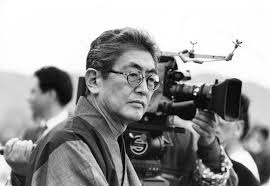
Nagisa Oshima

Nagisa Oshima

Ai no Corrida/ In the Realm of the Senses/ Empire of the Senses (1976) Oshima's erotic masterpiece which attracted attention for its hardcore elements, should be seen in the context of his other films. The central couple are archetypal Oshima outsiders turning their backs on the militaristic realities of 1935 and plunging into an erotic world of their own created and sustained by their own fantasies of hyper-virility and hyper-arousal. “The film celebrates their passion, confronting even its most alarming implications […] As ever, Oshima broaches taboos not in the spirit of adolescent daring, but in the knowledge that the most deep-rooted taboos are personal not social” (Tony Rayns ‘Time Out’ 2009)

Empire of Passion 

Empire of Passion 
(1978) while indebted thematically to Ai no Corrida, is given an unexpectedly studied, almost academic treatment as if Oshima is (arguably) uncharacteristically backing off rather than riding on the wake of scandal generated by his full-on return in Ai no Corrida to his recurring theme of the challenge to society embodied “not only in the “sexual crime” but the ability of human beings to expend their energy in the most complete and positive way” (Tessier 83). More conventionally dominant in Empire of Passion are guilt, repression and censorship set in rural Japan around the turn of the nineteenth century centred on the murder of an elderly rickshaw man by his wife and her lover, a soldier recently discharged from the army. The couple, literally haunted by the old man's ghost, cannot separate themselves from their society and finally pay for their crime at the hands of “a grotesquely cruel policeman.” While he made it, Oshima was undergoing a prosecution for publishing the script of his previous film. “His hatred of the authority figure here reaches heights not seen since Death by Hanging” ( Rayns).

Although continuing his outspoken focus on Japan's cultural history, these last two films were co-productions marking a shift to wider aspiration as an international filmmaker. The subsequent films were Merry Christmas Mr Lawrence (1982) and Max Mon Amour (1986).

Taboo

Oshima's final film, a return to Japan, 
Taboo/Gohatto (1999), set in the 1860s Tokugawa shogunate militia, “to produce one of his most bitter accounts of passion and individuality snuffed out” (Grossman).

Oshima's independence seemed to produce paradoxical positions in relation to form and content. This may be most apparent in Taboo which has been criticised for its “mellowed old age acceptance of the romanticised Mizoguchi aesthetic” (ibid).  Oshima's compulsion not to repeat took on a new complexion with In the Realm of the Senses. How much this shift to international co-productions reflected his disillusionment with the culture of Japanese society and politics and how much to the increasing difficulty in financing independent productions in Japan, Grossman finds difficult to conclude. Oshima went out of his way to claim that Max Mon Amour, the penultimate film of his five co-productions “was not a Japanese film at all.”

In his contribution to the BFI's Centenary of Cinema series in 1994, One Hundred Years of Japanese Cinema, Oshima speculated that during its second century Japanese cinema will cease to be Japanese, “blossoming as pure cinema.”  These internationalist aspirations were not inconsistent with a surrealism most overt in Diary of a Shinjuku Thief, Death by HangingEmpire of the Senses (his preferred title for In the Realm of the Senses) and Max Mon Amour.An affinity with surrealism marks all his work.

In 1979 Noël Burch saw Oshima as “functioning within several separate ideological frameworks: that of traditional Japan, which obviously both fascinates and repels him; that of a Western (cosmopolitan) bourgeoisie, still problematic for the Japanese Left, and which is complicated by the libertarianism so virulent and ambivalent in Japan. And somewhere in all that is Marxism. This is an extremely complicated task for one man” (344).

More than a decade later Max Tessier summed him up as “ an open, eclectic film-maker, never imprisoned by one ideology or one party, relentlessly questioning his country and the power which rules over it, Oshima remains a unique figure in the history of Japanese cinema, even in its contemporary phase” (84).

*******************************************

This bibliography provides references for all three parts of the entries on Japanese cinema in this series.

Hiroshi Komatsu “The Modernization of Japanese Film” essay World Cinema, ed. Nowell-Smith  714-21                                                                                        

Audie Bock  Japanese Film Directors   1978                                                                                                              

David Desser Eros plus Massacre An Introduction to the Japanese New Wave Cinema 1988                                                                                                                  

Geoffrey Nowell-Smith, Nagisa Oshima (1932-2013), a Tribute 

Film Studies for Free 22/1/13                                    https://filmstudiesforfree.blogspot.com/2013/01/nagisa-oshima-1932-2013-tribute-by.html                                                         

Arthur Nolletti & David Desser eds. Reframing Japanese Cinema  1992                                                                              

Max Tessier, “Oshima, Nagisa, or The Battered Energy of Desire” essay in N&D eds, (Ibid).                                                                        

Tony Rayns, review of The Ballad of Narayama, Monthly Film Bulletin May 1984                                                      

Andrew Grossman, “Gohatto or, the End of Oshima, Nagisa, Bright Lights, July 2001                                                  

Phillip Strick,  “Love, honour and obey” review of “Gohatto”, Sight and Sound, August 2001                                                                        

Noël Burch To the Distant Observer: Form and Meaning in the Japanese Cinema 1979                                                                

Tadao Sato  Currents in Japanese Cinema  1982                                                                                                                   

Joan Mellon  Voices from the Japanese Cinema 1975; The Waves at Genji’s Door 1976                                                                                                     

Simon Field, Tony Rayns  eds. Branded to Thrill The Delirious Cinema of Suzuki Seijun 1994                                                         

Freda Freiberg  “Japanese Cinema” Oxford Guide to Film Studies  Eds. John Hill & Paula C Gibson  1998                                               

Nelson Kim, Great Directors: Nagisa Oshima Senses of Cinema April 2004                                                                                          

Nelson Kim, Great Directors: Shoei Imamura Senses of Cinema July 2003                                                                                                       

Dan Harper, Great Directors: Hiroshi Teshigahara Senses of Cinema May 2003                                                                                         

Dan Harper, Great Directors: Akira Kurosawa Senses of Cinema July 2002                                                                                            

Andrea Grunet, Great Directors: Masaki Kobayashi  Senses of Cinema July 2016                                                                                  

Alexander Jacoby, Great Directors: Kon Ichikawa Senses of Cinema April 2004                                                                                        

Nick Wrigley, Great Directors: Yasijiro Ozu Senses of Cinema May 2003   

**********************


Friday, 13 June 2025

Sixty Years of Art Cinema 1960-2020 : Bruce Hodsdon continues his series - Asia - 6 (43) Japan - Part 2 - OSHIMA AND THE NEW WAVE


Nagisa Oshima
                                                                                                                                                                                                                                                

“Social critic, political agitator, and […] well-known television personality, Nagisa Oshima has always pursued a cultural strategy of which film-making is only a part. At the same time, Oshima’s cinema itself does not remain within the domain of classical film art. In his best films he shows an interest beyond illusionism designed for telling a story. This attitude pushed him into the foreground of the Japanese avant-garde in the 1960s, and made him one of the most influential film-makers in Japanese history.  (Hiroshi Komatsu, 718)                                                                       

The 60s modernist paradigm of the New Wave was centred on Oshima and Shohei Imamura,  As outlined above, it constituted “an avant-garde movement” initially born within the rigid structure of the commercial studios   Oshima took a politico-sociological approach, Masahiro Shinoda an historical, and Imamura a cultural-anthropological one, but all dealt with the problem of a new self-consciousness. Their cinematic form, like that of the French New Wave, was also influenced by a desire to overthrow the narrative and technical conventions established by the studio system. (Audie Bock, 266).

Although of the left, Nagisa Oshima (1932-2013) always distrusted party politics and remained fiercely independent and critical of the Old Left, this opposition given clearest expression in Night and Fog in Japan. “The greatest obstacle to the influence of art in present day Japan, and within it” he said “is the politicisation which enslaves art.”  One of Oshima’s predominant themes is the linkage of sex and revolution to represent the “positive energy” of human beings and their most overt defiance of societal conventions” (Max Tessier, 69).

Night and Fog in Japan

The title of
 Night and Fog in Japan/Rishon no you to kiri (1960), a homage to Alain Resnais' holocaust documentary Night and Fog (similarly “a narration, a memory and an argument”), in which Oshima’s historical, critical and theoretical concerns become clear in a form of post-mortem rather than a call to action per se, or perhaps only to rake over the implications of the failure of the violent demonstrations by the Left that ultimately failed to stop the signing of a new US-Japan Security Treaty in 1960 which was not supported by majority of public opinion. In the film, angry staged exchanges involving the past intruding upon the present as offscreen space intrudes upon onscreen space - flashbacks from the wedding of a former Japan Communist Party activist and a member of the student radical group (the New Left having split from the CP) the wedding meant to be a symbol of reconciliation. 

The multidimensional structure which Oshima would later return to in The Ceremony, juxtaposes two groups one in 1952 (the Old Left Communists must deal with a spy) and the wedding banquet in 1960 (the New Left must deal with the failure of the struggle against the Security Pact renewal) are shown focusing on their respective responses in a process of dialectical struggle on two levels - past and present.  The constantly panning camera refuses to allow the wedding proceedings to go unchallenged. Shedding light on the internal and external contradictions arising from the May-June 1960 events involves a complex tour-de-force of deliberately outrageous theatricalisation in 43 to 45 sequence shots as internal edits are replaced by lateral pans over the assembled wedding group, objective chronological narrative replaced with the highly subjective flashback structure in which the characters present their own experience of the events. “Out of this strategy a critical political discourse emerges that finally holds the CP members responsible for the failure of the action taken against the bid for power of the pro-American government.  After this Oshima calls on intellectuals (his audience) not to repeat this error.” (Tessier 73).

After going through an extremely difficult time in dispute with Shochiku over Night and Fog which they pulled out of release after only four days apparently for political reasons (‘the avant-garde film defied the entertainment demands of the company’). “It employed methods never before seen in Japanese cinema, and proved immensely influential on other young filmmakers “ (Komatsu 718). Oshima walked out with several colleagues to set up their own company in 1961.

One of Oshima’s favourite targets was the need for renewal. He wrote in 1963 about such a need in the form of a new subjective consciousness to replace the pseudo subjectivities - rigidity on the part of the old Left and naivety on the part of the New -  that needed to be eradicated and replaced with a single truly subjective movement;  pseudo subjectivity he argued was “the victim syndrome.” This, Oshima saw as being reflected in the majority of Japanese films: that fifteen years after the war's end the Japanese saw themselves as “victims of the war” while not attempting to go beyond for its profound causes (Tessier 74). As Komatsu emphasises “Oshima’s films are responses to actual events, changes and problems in Japanese society, and so each film inevitably holds a close connection to the time in which it was made [to be seen] “in form as well as content” (ibid).

The Catch

In 
The Catch/Shiiku (1962), a black American airman is held captive in a small village during the last summer of WW 2. He is used as a scapegoat for all the psychological ills of the villagers.  The war ends without them being able to turn him over to the authorities and they end up killing him. The mean hypocritical, deluded behaviour of the adults is highlighted by the reaction of the children. The situation with the villagers provided an opportunity for Oshima to attack the myth of the “victim syndrome,” the island a microcosm of postwar Japan

Max Tessier marks Violence at Noon/Hakuno torima (1966) as “a turning point both thematically and aesthetically in a greatly diversified life’s work that reached a zenith in The Ceremony and In the Realm of the Senses” (p.76). As in other of his films, in the story of a real life sexual psychopath, a rapist and murderer metaphorically characterised as “ Floating Ghost in Broad Daylight” - as the Japanese title translates - in contrast with the darkness enclosing Night and Fog in Japan. Oshima takes up the theme, as he explained, of the obsessed “demonic” criminal who feels inside himself a powerful urge to do evil without necessarily knowing why. He can only obtain sexual satisfaction through rape. The focus is not on a police man-hunt but on two women who knew him and, through them, the history of the village where he was born. Oshima reveals his real subject slowly in frequent flashbacks combined with fantasy scenes : an account of the decay of postwar idealism and the inexorable restoration of the old inequalities and injustices. (Tony Rayns, ‘Time Out’).  In place of any semblance of realism is a mosaic of around 2000 shots with constantly changing camera angles obscuring any possibility of a 'single truth’.  It is one of several films made by Oshima, 1965-9, with “the links between eroticism and violence, sex and politics, and the ambivalence about the sex roles, all coming together [most explicitly] in In the Realm of the Senses (1976)” (David Desser, 97).

Sexual and criminal obsession fuels A Treatise on Japanese Bawdy Song/Nihon s shunka-ko (1967) in which Oshima ridicules the symbols of the imperial state, identified by Tessier with the following four titles below as “essential titles” - five landmarks in the investigation of language that constitutes a radical break from the syntax of Japanese cinema (77).  

 Japanese Summer: Double Suicide/Muri shinto nihon no natsu (1967) is a study of traditional “double suicide” with a modern twist. A man is looking for someone who is willing to kill him, and a woman is looking for someone to make love to her. The two meet and get voluntarily involved in a gang war. Just before being shot by police they commit suicide. “Filled with anarchy and nihilism, and obsessed by destruction and nothingness Japanese Summer gets lost in Oshima’s fascination with his own structural elements […] it succeeds in communicating this fascination to the viewer” (Tessier 79).

Death by Hanging

Death by Hanging 
(1968), like all of Oshima's films, with the exception of Max Mon Amour, deals in a challenging way with specifically Japanese questions and problems. Here, in ”one of Oshima’s most sustained assaults on the Japanese state” (ibid 78) taking the form of an absurd comedy about the situation of Korean immigrants in Japan, centring on a state hanging that goes wrong mounted as a sort of witty Brechtian argument.  (Tony Rayns )

In Three Resurrected Drunkards/Kaette kite yopparai (1968) one of Oshima’s most clearly Godardian works in the manipulation of film language, returns to the serous topic of the Korean problem, comic conceptual games including playing with the structure of the film itself, involving illegal Korean immigrants who steal clothes to change their identities

Diary of a Shinjuku Thief/Shinjuku dorobo nikki (1968) is a teasing and provocative collage inspired by the student riots of’ ’68 and contemporary youth culture generally, Shinjuku being the entertainment centre for youth culture.  While centrally recognised as an exploration of the links between sex and politics, it is also recognised by Desser “as the most completely theatricalized of Oshima’s films” (188) The connecting thread in the themes subordinate to the idea of acting is a relationship between an aggressive and vaguely masculine young woman and a passive and vaguely effeminate young man. The pursuit of satisfactory orgasms with each other takes them through a dizzying mix of fact and fiction including an encounter with a real life sexologist and involvement in a 'fringe' performance of a neo-primitive kabuki show “stealing' roles from the neo-primitive group, the Situation Players. “Existing logical connections are deliberately obscured by contrasting moods, styles and lines of thought” (Tony Rayns).  Desser sees “the links between sex and revolution [as forming] the structuring basis of what is one of Oshima's most important films.”  His point seems to be [as he explained] that “sexual frustration is one of many sorts of frustration that go with the various forms of rebellion.” (Desser 93)

Boy

Boy/
Shōnen (1969) is based on a newspaper story: a down and out family make their young son fake road accidents in order to blackmail motorists for 'hospital fees’. “Starting with character studies of the family members,  Oshima develops this story into an open-ended question about the truth of appearances centring on the boy's own fantasies about his sci-fi hero[…] A key film in the struggle for a modern political cinema.” (Rayns). The father, a war veteran who claims war injuries prevent him from working is a cruel patriarch who robs his son of the pleasures of childhood. While classical in form, Oshima sharply turns away from any possibility of the emotion of sentimental family melodrama “by resorting to ellipses or by introducing imaginary scenes “forcing the spectator to reach the level of surreality required by the filmmaker“ (Tessier 78) to the extent of seeming to exonerate the parents.  Prior to In the Realm of the Senses, Boy was Oshima's most successful film in western art cinemas.

The Man Who Left His Will on Film/Secret Story of Postwar Tokyo/Tokyo senso sengo aiwa (1970) described by Tessier as “undoubtedly a rough draft of a film, unsatisfying but necessary to the development of the next film, The Ceremony, “which appears to be the summation of Oshima’s work to date” (81). It is a biting and cautionary film, Oshima's post-68 analysis of the failure and disillusionment of the student left. Motoki, a student, and members of the “Posi Posi” group act out their own parts. Motoki discovers that he is incapable of filming the street uprising named “the Tokyo War” at the time of the post -1968 demonstrations. He finally commits suicide, leaving his fantasies on film. Like Death by Hanging, it starts with a riddle (the real or imagined disappearance of a student militant) and then follows through all the implications with a remorseless logic. It's less a mystery thriller than a series of provocative questions. What is militancy? Does struggle mean violence? Is it really possible for an individual to identify with the interests of a group? And what part do sexual problems play in determining the feelings and actions of young people? (Rayns)

The Ceremony

The Ceremony/Gishiki 
(1971) is a thinly disguised commentary on Japan's post-war history using ceremonial family gatherings (mainly weddings and funerals) as a key to the changes in Japanese society: individual characters represent specific political factions, just as events in the narrative mirror the twists and turns in Japan's domestic and foreign policies. The nature of rituals recurring through Oshima’s work beginning with Night and Fog, their theatrical nature and “the way in which the Japanese ruling class ropes together religious and political ideology to naturalize its existence is deconstructed in The Ceremony” (Desser 187). Oshima “keeps the dense allegory accessible by stressing individuals' feelings – their dreams, aspirations, frustrations and agonies - as much as ceremonies” (Rayns). “ Oshima reveals that it is precisely the ceremonies that function to keep the family together, but when such ceremonies are revealed as hollow, meaningless (such as the “brideless” wedding sequence), as the structures which bind the family are unraveled” (Desser 188). “The director’s “flow of consciousness” is still active. Banquets interrupted, family contradictions, songs - military, romantic, bawdy, or political. Oshima, however, adds a few episodes of his invention sending the film over into fantasy and surrealism once again” (Tessier 82). In 1971 Oshima’s prognosis for the future was not optimistic, the Japanese in 25 years, he concluded, had undergone no basic change.

“Along with Death by Hanging, A Treatise on Japanese Bawdy Song and Night and Fog in JapanThe Ceremony ranks as one of Oshima’s own favourite films - the ones he feels that only he could have made […] It is the complexity of its commentary on the whole 25 years of Japanese postwar history that redeems the sentimentality for him […] the amount of himself he recognises in the main character of the film, Masuo” (Bock 324).  Oshima considered that during ceremonies Japanese are possessed of particularly delicate emotions often completely unrelated to their daily lives, a time when the special characteristics of the Japanese spirit are revealed. In a statement released at the time of the international release of The Ceremony, Oshima further explained that his own spirit wavered during such occasions. What worried him was that one might easily reject, both intellectually and emotionally, militarism and xenophobic nationalism in daily life, but that these forces are not so easily denied.

Dear Summer Sister

D
ear Summer Sister/Natsu no imoto (1972) is a parable about Japan's Okinawa problem beginning in present day Okinawa,  a holiday resort for the Japanese. The underlying thread of a girl's search for her long-missing brother begins to conjure up guilt-ridden memories of the island as the site of war-time atrocities. Continuing exploration of film language, the improvisation method proven in Shinjuku Thief and The Man Who Left His Will.. “without breathing new life into them or probing more deeply” (ibid).

As far back as his first film made at Shochiku's Ofuna studio, Yoshishige Yoshida (1933-2022) was “trying to achieve a new type of drama by deconstructing the traditional ideology of the company” (Komatsu 717). The height of his achievement is to be found in Eros + Massacre (1969). Desser writes that Yoshida's film, with two others, Hani's The Inferno of First Love (1968) and Oshima's The Man Who Left His Will on Film (1970),  “reveal the essence, the height, and the end of the New Wave...[They] encapsulate virtually all of the themes […] and portend the end of the movement. In some sense they stand as elegies not only to the New Wave of the cinema, but to the end of the era of the 60s in Japan […] which began with Ampo toso, the Anti-Security Treaty demonstrations  in 1959-60” (192), although, as Desser details, protest action against the US military (anti-nuclear, Vietnam) continued throughout the decade, actually peaking in intensity in 1969.

Yoshishige Yoshida

It is not clear that the three filmmakers - Hani, Yoshida and Oshima -  realised that they were witnessing the last phase of violent protest (195). 
The '69 demonstrations were far more violent and spectacular than those in 1960. Desser states that Oshima was saddened by the reappearance of Stalinism in small sects of student activists which he felt destroyed his generation. There was also the feeling of being unable to communicate with the student activists and with youth in general. This led the filmmakers to reexamine their politics and its relationship to cinema. (196)

Reflexivity in their above three films takes various forms. All three focus on filmmaking as diegetic ( fictional) activities. There is a focus on projecting and viewing films. The use of projectors is understood as a projection of desire, the desire to create cinema, the will to film. But this inevitably leads to death, in all three a protagonist dies : that there is nothing to film, that the will to film leads to the death of film, a function of failing political aspirations. The breakdown of narrative reflects the fragmentation of reality and of individual character, clearest in Hani's Inferno. The death of narrative is most overt in Oshima's The Man Who Left His Will on Film in which no story emerges because there is no character. The unresolved dialectical tension in the film between documentary and fictional modes “may be expressed as the struggle between Marx and Freud, documentary and fiction, exterior and interior, between, if you will, Lumière and Méliès.” (ibid 200).

Masahiro Shinoda

Of the New Wave directors 
Masahiro Shinoda (1931-2025) who directed his first three films in two years focussing on youth and youth gangs, was the most versatile and prolific directing more than 30 features, 1960-2003.  His approach was described by David Desser as “never as radical as Oshima nor as consistent as Yoshida and certainly not as satirical as Imamura” (138). He made films set in a variety of periods ranging from a standard Samurai film like Samurai Spy (Sarutobi ,1967) to the “extremely deconstructive” Assassination (Ansatsu, 1964). Shinoda’s particular contribution reached “a maturity of vision and style” to the politicised image of women in his ninth feature Pale Flower (Kawaita hana, 1963) in linking his female figures with youth images. While he did not feel part of “anything like a school,” Shinoda said that what they did share was antagonism to the older generation’s confidence in a settled humanism with conclusive characterisation and story according to a set script, instead being drawn to a more open, improvised approach, as in Pale Flower where “in the script […] one line ‘they are gambling’ […]  became 120 shots” (interview in ‘American Film’ May 1985).

Susumu Hani

Noel Burch saw Susumu Hani as standing somewhat apart from Oshima and Yoshida as perhaps the unwitting elegists of the New Wave when the decade of violent protest transpired to be a final surge. Burch finds Hani, in his films like The Inferno of First Love (1968), lacking in his grappling with “the theoretical aspects that make all of Oshima's films so important” although they do contain “some brilliantly impressive passages” (347). The main characters “are definitely first cousins of the “mad' young people in Diary of a Shinjuku Thief and Yoshida's Eros Plus Massacre but Burch considers that Hani “does not seem committed to them, and his eclecticism has nothing to do with Oshima's constant concern to renew himself” (ibid).  Burch also sees Hani as a figure apart in the New Wave, his films marked by a mix of the methods of fiction and non-fiction abounding in the subtle touches to be found in She and He (1963), seen to be equal to that of Antonioni at that time.

Yoshida in Eros + Massacre is similarly dialectical as Hani in juxtaposing documentary with fiction, but also additionally “Marx to Freud, history to myth, politics with sexuality.” Yoshida alternates two time-frames, the present (1969) and the past (1916-23) and compares the political/sexual struggle of an anarchist couple in the ‘past’, Osagi Sakae and Ito Noe, to fictional characters in the 'present', students Eiko and Wada.  Desser states “the past is both imagined and recreated. Past and present merge. Characters in the past emerge in the present.” Scenes are repeated and performance theatricalised in line with post-Shingeki theatre's rejection of Shingeki's modern realism and its accompanying ideology (Desser 173). Visually, the off-centre stark compositions in black and white on widescreen ratio, more than rival Antonioni's.

Self referentiality, reflexivity and a dialectical narrative structure characterise these three films (by Oshima, Hani and Yoshida) for the purpose of posing the question of the nature of political filmmaking in the face of political disappointment. The question of youth's search for identity is similarly present in all three films (Desser 200-1). As indicated, Eros juxtaposes and compares two generations of political and sexual radicals. What is lacking is information as to how the films, Oshima's and Yoshida's in particular, were received by critics and audiences. For Noël Burch Eros is “Yoshida's masterpiece...few films in western cinema are as freely disjunctive and as dialectical in their approach to space-time” (348).  However, except for Burch, David Desser and Keiko McDonald, Eros + Massacre is largely by-passed in analyses and discussions of the New Wave reflecting the degree of difficulty it presents for the uninitiated viewer. Originally running three and a half hours, a circulating version on DVD of Eros is 166 mins, however a recent Blu-ray release restores the film to 186 minutes.

The centrality of women to questions of identity and sexuality, translates into the above three films each with important female characters. Historically the short-lived left-leaning tendency films of the late 20s - early 30s, focused on the working class, the majority with women as central characters looking forward, as Desser notes, to the New Wave's finding of women as a powerful metaphor for the situation of alienated groups in the postwar era (109). The replacing stream of films, termed “feminisuto”  (from the Japanese pronunciation of feminist) were produced by directors who had a feminist viewpoint such as Mizoguchi, Shindo and Imamura.

Japanese critic Tadao Sato differentiates the nuances of feminisuto as a tendency to idolise women as uncomplainingly rich in endurance rather than as figures of pathos, “the worship of womanhood as a special Japanese brand of feminism […] having its roots in the moral consciousness of the ordinary people” (Sato 78). He also notes that in Mizoguchi’s postwar masterpieces the romantic and realistic approaches were combined harmoniously with the central theme of worship of womanhood. Writer- director Kaneto Shindo (1912-2012) who had studied scriptwriting under Mizoguchi, can be considered the inheritor of this theme in the dramas he directed himself, “all of which were centred on women that  were neither naively beautiful or awe-inspiring.” Desser sees his view of women “as almost a direct extension of Mizoguchi’s […] most specifically in the atmospheric horror film Onibaba (1964) ”which focusses on women as innocent victims of war yet with commitment to survival comparable to Imamura’s women forcing them into the role of spider women” (120).

********************************

Many of the films mentioned in  this post by Bruce may be viewed in high quality subtitled copies by searching The Internet Archive


Previous entries in this series can be found if you click the following links


Sixty Years of International Art Cinema: 1960-2020 - Tables and Directors Lists to Accompany Bruce Hodsdon's Series


Notes on canons, methods, national cinemas and more


Part One - Introduction

Part Two - Defining Art Cinema

Part Three - From Classicism to Modernism

Part Four - Authorship and Narrative

Part Five - International Film Guide Directors of the Year, The Sight and Sound World Poll, Art-Horror

Part Six (1) - The Sixties, the United States and Orson Welles

Part Six (2) - Hitchcock, Romero and Art Horror

Part Six (3) - New York Film-makers - Elia Kazan & Shirley Clarke  

Part Six (4) - New York Film-makers - Stanley Kubrick Creator of Forms

Part Six (5) ‘New Hollywood’ (1) - Arthur Penn, Warren Beatty, Pauline Kael and BONNIE AND CLYDE

Part Six (6) Francis Ford Coppola: Standing at the crossroads of art and industry

Part 6(7) Altman

6(8) Great Britain - Joseph Losey, Lindsay Anderson, Karel Reisz, Richard Lester, Peter Watkins, Barney Platts-Mills

6(9) France - Part One The New Wave and The Cahiers du Cinema Group

6(10) France - Part Two - The Left Bank/Rive Gauche Group and an Independent

6(11) France - Part Three - Young Godard

6(12) France - Part Four - Godard:Visionary and Rebel

6 (13) France Part 5 Godard with Gorin, Miéville : Searching for an activist voice

6(14) France Part 6 - Creator of Forms - Bresson 

6 (15) France Part 6 - Creator of Forms - Jacques Tati

6 (16) - Part 6 - Creator of Forms - Carl Th Dreyer

6 (17) - Italy and Luchino Visconti

6(18 - Italy and Roberto Rossellini - Part One

6(19) - Rossellini, INDIA and the new Historical realism

6(20) - Rossellini in Australia

6 (21) - Italy - Michelangelo Antonioni

6 (22) - Italy - Federico Fellini, Ermanno Olmi

6 (23) - Italy - Pasolini, Rosi

6 (24) - Interregnum - Director/Auteur/Autoren

6 (25) West Germany

6 (26) - Alexander Kluge Part One

6 (27) - Alexander Kluge Part Two

6 (28) - The Young German Cinema: Reitz, Schlondorff, von Trotta

6(29 ) West German Cinema - Fassbinder

6 (30) West German Cinema - Straub & Huillet

6(31) - New Spanish Cinema

6 (32) - Bunuel in the 60s

6 (33) Nordic Cinemas - Bergman and Widerberg

6 (34) - Scandinavia - Sjoman, Zetterling, Troell

6 (35) - East Germany - Konrad Wolf, Frank Beyer

6 (36) - East Central Europe - Poland

6(37) - East Central Europe - Hungary Part One

6 (38) East Central Europe - Miklos Jancso

6 (39) East Central Europe - Czechoslovakia

6 (40) East Central Europe - Yugoslavia

6 (41) - The Soviet Union

6 (42) - Asia - Japan - Part One