Showing posts with label Paris. Show all posts

Wednesday, 16 July 2025

PARIS ON FOOT - John Baxter's new book and an offer too good to refuse....


 Well, I suppose the best way is simply to come right out and say it. 

I’ve written another book. It’s called Paris On Foot and it’s out now.

Yes, I know what I said. After Untold Paris, no more celebrations of Paris.

Not even if it is the most beautiful and interesting city in the world.

Not even when my other books – The Most Beautiful Walk In the World and so on – have already covered it in….well, some might say exhausting detail.

Because, as some other scribbler put it, Paris is a moveable feast, and there is always something new to discover.

The twelve walks in Paris on Foot cover the greatest hits, naturally: Montparnasse and St. Germain and Montmartre (two walks in that case) and the Luxembourg Gardens.

But why did I never think before to plan a walk for people interested in the culinary history of Paris?

Or one inspired by all the single women who left their mark on the city?

Not to mention an itinerary that took in all the sites associated with haute couture – Dior and Chanel and St Laurent?

Well, Paris on Foot contains all those and a lot more in its 400 colour-illustrated pages, along with maps, special essays on the Paris of Hemingway and Scott Fitzgerald, the Opera and its Phantoms, the ghost cabarets of Montmartre… you get the idea.

Anyway, here’s the thing.

My publisher, out of the generosity of his heart [paid political announcement] is offering a free pdf download of Paris On Foot to anyone who agrees to post a review on Amazon.

Just send  your email address to filmalert101@gmail.com and it will be passed on. After that, we rely on you to hold up your end of the deal.

And don’t worry; your details won’t be shared, or used for any other purpose except to send the pdf.

And in return, I promise no more books about Paris. (Well, maybe just a little one….)


Tuesday, 9 January 2024

THE PARIS WRITERS' SALON - John Baxter and Samuel Lopez-Barrantes take a new look at one of the most complex districts of the city Montmartre.


John Baxter writes: For the first Paris Writers Salon of the new year, Samuel Lopez -Barrantes and I take a new look at one of the most complex districts of the city Montmartre. I hope you’ll join us. 

Salon No. 12: Montmartre from A to ? Every Sunday at 7pm CET 

One of Paris’s newest additions  – it only became part of the city in 1860 – Montmartre is, at the same time, among its most ancient districts and its most modern: the home of surrealists and prostitutes, drug dealers and visionaries, martyrs and miscreants. We’ve chosen three books that show different aspects of Montmartre’s numerous facets, delving into history and crime, love and politics, the sacred and the profane.

Sunday, January 21

Inspector Maigret & the Strangled Stripper by Georges Simenon (1950)

Simenon is among the great stylists of the roman policier and his Inspector Maigret one of the genre’s most durable creations. In this translation of Maigret au ‘Pikratt’s’, he investigates the murder of an “exotic dancer” and a mysterious Countess at the seedy Montmartre nightclub of the title. Expect a Montmartre very different from today’s tourist mecca.

Sunday, January 28

Last Words From Montmartre by Qiu Miaojin (1996) 

NY Review of Books: “When the pioneering Taiwanese novelist Qiu Miaojin committed suicide in 1995 at age twenty-six, she left behind her unpublished masterpiece, Last Words from Montmartre. Unfolding through a series of letters written by an unnamed narrator, Last Words tells the story of a passionate relationship between two young women—their sexual awakening, their gradual breakup, and the devastating aftermath of their broken love [….] The letters display wrenching insights into what it means to live between cultures, languages, and genders—until the genderless character Zoë appears, and the narrator’s spiritual and physical identity is transformed.”

Sunday, February 4

Montmartre: Paris’s Village of Art & Sin by John Baxter (2017)

Everyone knows about Pablo Picasso and Henri de Toulouse-Lautrec but who was Louise Michel, the Red Virgin of the Commune, after whom the square in front of the Sacre Coeur cathedral is named? Visit the Cabaret of Nothingness, where one drank at tables made from coffins under candelabra of human bones, and the Bal des Quatz’Arts where, once a year, artists and models let down their hair (and everything else). Harry Crosby turned up wearing a necklace of dead pigeons. Film director Luis Buñuel dressed as a nun, but a reporter was barred as over-dressed. A sympathetic student suggested he come back in his underpants.  Only in Montmartre…

Sunday, February 11

Open Forum Salon

As usual, the last session opens up to thoughts and suggestions. If earlier salons are any guide, the conversation will range far and wide and provide a lively discussion to bookend the seventh rendition of the Paris Writers’ Salon.

For bookings & inquiries: john@johnbaxterparis.com


John Baxter (above) 
is an Australian-born writer, scholar, critic and film-maker who has lived in Paris since 1989. The many books he has written include the first ever critical volume devoted to the Australian cinema as well as studies of Ken Russell, Josef von Sternberg, Stanley Kubrick, Woody Allen, Federico Fellini, George Lucas, Robert De Niro, Luis Bunuel and a number of studies of Paris. His most recent book is a biography of Charles Boyer: The French Lover  (University of Kentucky Press, 2021)

Saturday, 21 October 2023

THE PARIS WRITER'S SALON 11 - John Baxter and Samuel Lopez-Barrantes propose discussions on Romantic Love

 Bonjour everyone,

        Samuel Lopez-Barrantes and I are happy to announce the 11th Paris Writers Salon, this time discussing three books on the perennial topic of romantic love. Samuel and I look forward to welcoming you into the heart of literary Paris for another stimulating series of conversations.

Best, 

John

Salon No. 11: Paris, Love & Memory/

In the film An American Paris, Leslie Caron says “Paris has ways of making people forget” but Gene Kelly disagrees. “It's too real and too beautiful to ever let you forget anything. It reaches in and opens you wide and you stay that way.” The books in this Salon all deal with love and forgetting, and the impact of Paris on the emotional life of those who live here.

Every Sunday at 7pm CET

November 19 - December 10 2023.

The cost is 300 Euros or $300. For more details, see https://www.johnbaxterparis.com/paris-writers-salon.

Watson is a dedicated Salon member

Sunday, November 19.

Bonjour Tristesse/Hello Sadness by Françoise Sagan (1954)

Written when she was 18, this novel made Sagan a household name. People accustomed to dismissing teenagers as gossiping bubbleheads were shocked to discover they could experience grand passions and existential despair. Cecile, a sassy Parisienne holidaying on the Côte d'Azur with her widowed but womanizing father, all but drowns in the whirling currents of his love affairs and her attempts at defining her emotional needs.

Sunday, November 26

In the Café of Lost Youth by Patrick Modiano (2007) 

Nobel laureate Modiano is both jaded and hopeful, intellectual and romantic. Four lonely people congregate at the Café Conde in central Paris, their lives illustrating the precepts of philosopher Guy Debord, who re-defined our view of city life. “Ever-present through this story,” wrote onc critic,”is the city of Paris, almost another character in her own right. This is the Paris of 'no-man's-lands', of lonely journeys on the last metro, or nocturnal walks along empty boulevards; of cafés where the lost youth wander in, searching for meaning, and the older generation sift through the memories of their own long-gone adolescence.”

Sunday, December 3

Of Love and Paris: Historic, Romantic & Obsessive Liaisons by John Baxter (2023)

“She wanted to die,” wrote Gustave Flaubert of his doomed heroine Emma Bovary, “but she also wanted to live in Paris.” In 32 essays, John examines why the city has exercised such a potent influence on the romantic lives of those who live here. From Napoleon and Josephine to Rimbaud and Verlaine, Jane Birkin and Serge Gainsbourg to Henry Miller and Anais Nin, and the real-life lovers who inspired the novel and film Jules et Jim, he analyses why Paris inspires such extremes of emotion and attracts the people who wish to experience them. For a sample published earlier on this blog CLICK HERE

Sunday, December 10

Open Forum Salon

As usual, the last session opens up to thoughts and suggestions. If earlier salons are any guide, the conversation will range far and wide and provide a lively discussion to bookend the eleventh rendition of the Paris Writers’ Salon.


Sunday, 24 September 2023

STAR-CROSSED: JEAN SEBERG AND ROMAIN GARY - A Chapter from John Baxter's new book OF LOVE AND PARIS ... Historic, romantic and obsessive liaisons

Editor's Note: John Baxter is an Australian-born, writer, film-maker, critic and biographer. His published books range across fiction, biography, history and, on many occasions, volumes devoted to his adopted city Paris, where he has lived since 1989. OF LOVE AND PARIS is published by Museyon in New York. The book has an introduction followed by 32 chapters devoted to what the author  describes as 'some of the ways men and women have used their lives to define and enlarge the concept of Love. That all did so, at least in part, in Paris was no coincidence."_ Australian readers may obtain a copy from the online bookseller BOOKTOPIA

*************************


    Twenty-year-old actress Jean Seberg met author and diplomat Romain Gary in 1961. Twenty-four years her senior, he was the French Consul in Los Angeles. Within a few months, they were sharing an apartment on the Ile St Louis in Paris, where Seberg, after a false start in Hollywood, had just enjoyed her first success in Jean-Luc Godard’s À Bout de Souffle/Breathless. Her portrayal of the free-living American girl who sells copies of the Herald Tribune on the Champs-Élysées and becomes involved with gangster fantasist Jean-Paul Belmondo made her an icon overnight, inspiring François Truffaut to call her “the best actress in Europe.” 


    But Seberg’s confidence never recovered from her experience with the tyrannical Otto Preminger, who directed her first two films, Saint Joan and Bonjour Tristesse. Subsequent roles exploited her gamine charm but exposed a meagre talent.“I am the greatest example of a very real fact,” she confessed, “that all the publicity in the world will not make you a movie star if you are not also an actress.”


    Romain Gary, loud, bearded and glowering, trailing a reputation as resistance fighter and novelist, re-made himself repeatedly,  playing what one critic called a "picaresque game of multiple identities.” Writing at various times as Fosco Sinibaldi and Chatan Bogat, and claiming to be the son of Russian actor Ivan Mosjoukine, he was actually born Roman Kacew in Lithuania. “Fluent in six languages,” wrote cultural critic Adam Gopnik, “he passed punningly from one to the other in a dazzling display of instinctive interlineation.” 


    At the fall of France in 1940 he left the diplomatic service to join Charles de Gaulle’s  exile government in London, and flew in bombers with the Free French. While in Britain, he changed his surname to Gary. “ ‘Gari’  in Russian means ‘burn!’,”  he explained. “I want to test myself, a trial by fire.” After the war he resumed his career as a novelist. His 1956 Les Racines du Ciel/The Roots of Heaven articulated a compulsion to live always on his own terms. Its main character, confined in a German prison camp, hallucinates about the elephant as a symbol of freedom and, on his release, devotes himself to saving them from extinction. “Think about elephants riding free through Africa,” he says.  “Hundreds and hundreds of wonderful animals that no walls nor barbed wire can contain, crossing vast spaces and crushing everything in their path, with nothing able to stop them. What freedom!”  The Roots of Heaven was awarded France’s most prestigious literary prize, the Prix Goncourt, which no writer can win more than once, a rule Gary took as a challenge. In 1975, when Émile Ajar won for La Vie Avant Soi/The Life Ahead, Gary revealed with glee that the book was his, and the man giving interviews as Ajar his cousin.

            In Paris, Gary held court in fashionable Brasserie Lipp and was a familiar face on television, often in spirited defence of President de Gaulle, whom he continued to admire once he became president. When the Quai d’Orsay handed him the plum posting to Los Angeles, perhaps in recognition of that support, his wife, writer Lesley Blanch, declined to join him, so Gary, abandoning both her and his “official mistress,” British novelist Elizabeth Jane Howard, went alone. Once installed in the consulate, with his secretary as paramour, he rented a separate apartment as a writing retreat and love nest for his many affairs, culminating in that with Seberg.

            Gary and Seberg became a golden couple. They dined with the Kennedys and lunched with de Gaulle. Seberg used her celebrity to campaign for social causes. On a flight from Paris to Los Angeles in 1968, she met Allan Donaldson who, as Hakim Jamal, led the Organization of African-American Unity, a splinter group of the Black Panthers. As they parted, Seberg created a furore by giving the Panthers’ raised-fist salute in full view of the press. In 1969 she hosted a Hollywood fund-raiser for the group, attended by Jane Fonda, Vanessa Redgrave, Paul Newman and other engagé personalities. She and Donaldson also became lovers.        
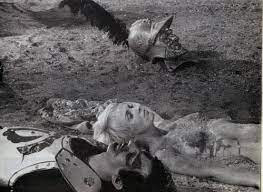


    Dissatisfied with the films made from his books, Gary decided to direct one himself, and shot Birds in Peru  with Seberg in the starring role (above). “Oh yes, she has a lovely face,” critic Roger Ebert wrote of her less-than-inspired performance. “We see it for minutes on end in Birds in Peru. Looking up at us, down at us, away, in profile, turning toward, blank, fearful, seductive, nihilistic. It would almost seem that the face was Romain Gary's reason for making the movie.”  While on location, Seberg began an affair with Carlos Navarra, described as “a Third World adventurer”. Shortly after, on the musical Paint Your Wagon,  she also shared the bed of co-star Clint Eastwood. Furious and humiliated at this news, Gary challenged Eastwood to a duel and booked a flight to the film’s location in Baker, Oregon. The actor fled back to Los Angeles and Gary sued for divorce. 

            Seberg became pregnant by Navarra following Paint Your Wagon. Meanwhile, her political activism attracted the attention of the FBI which targeted her in a smear campaign, leaking news of her pregnancy to the Los Angeles Times and implying that a Black Panther was the father. Seberg attempted suicide, inducing the premature birth of a daughter, who died two days later. Gary loyally announced the child was his, and arranged for the body to be displayed in an open coffin, showing she was white.

             Seberg would never recover from the death of her child. Abusing alcohol and amphetamines, she suffered periods of depression, and made a number of suicide attempts, often on the anniversary of her daughter’s death. In response, Gary wrote Chien Blanc/White Dog, parodying Hollywood personalities who embraced fashionable political causes and attacking the cynical activists who exploited them. 

            In 1972, Seberg married Dennis Berry, film-maker and son of blacklisted director John Berry, with whom she became further involved in radical politics. François Truffaut tried to cast her to type as the troubled English actress in La Nuit Americain/Day For Night, his celebration of film-making, but she ignored his approaches, and the role went to Jacqueline Bisset. Her downward spiral continued. She started divorce proceedings against Berry but before they were complete entered a bigamous marriage with Ahmed Hasni, described as “an Algerian mythomaniac linked to drug trafficking.” 

            In 1979, Seberg went to Guyana to shoot La Légion saute sur Kolwezi but was too strung out to work and had to be replaced by Mimsy Farmer. It was the last hope of reviving her film career. On her return to Paris, she once more attempted suicide, this time by throwing herself in front of a Metro train. In August of that year, Hasni reported that she had wandered away from their home, drugged and dazed by the heat, carrying a bottle of water, and naked except for a blanket. Police found her nearby ten days later, dead from an amphetamine overdose in the back of her car. 

            Her death left Romain Gary profoundly depressed. The following December, he lunched with his publisher, then returned to the apartment on rue du Bac he had shared with Seberg, and shot himself. His suicide note, headed "For the press",  began “D-Day. Nothing to do with Jean Seberg. Devotees of the broken heart are requested to look elsewhere...So why?... I have at last said all I have to say.” Few were convinced.  “Both died by their own hands,” wrote Adam Gopnik of this star-crossed couple, “though in a way each died by the other’s.”

Saturday, 19 August 2023

John Baxer and Samuel Lopez Barrantes request your attendance at the next Paris Writers Salon - Links and contents provided


John Baxter writes:


Dear Everyone,


We’re happy to announce the next Paris Writers Salon.  Details can be found here.

https://www.johnbaxterparis.com/paris-writers-salon


Hope to see and talk with you from our apartment in the heart of literary Paris.


A bientot,


John


The books are

Anthony Doerr’s All the Light We Cannot See (2014)

In this Pulitzer Prize-winning novel, the stories of an imaginatively gifted blind girl in France and a technically precocious young man in Germany intersect in a crucial battle taking place in the Channel coastal city of Saint-Malo. 

Albert Camus’ The Fall (1956)

The Fall was the last completed novel by one of the giants of modern French literature and thought, Albert Camus. (He died in 1960 in an auto accident, aged only 47, three years after winning the Nobel Prize.) Clamence, the Parisian jurist through whose eyes Camus sees the war and its aftermath, struggles with the same sense of futility that motivated Sartre, originally Camus's closest friend (then his rival) to develop existentialism.


John Baxter’s Five Nights in Paris (2015)

John Baxter's Five Nights in Paris explores some of the ways in which Paris after dark becomes a very different city. Using examples ranging from Woody Allen to the surrealist Philippe Soupault, he shows how the certainties of a tourist Paris give way after dark to something more fantastic and dream-like, ruled by the unlikely and improbable.

*****************

John Baxter (above left with Samuel Lopez Barrantes) is an Australian-born writer, scholar, critic and film-maker who has lived in Paris since 1989. The many books he has written include the first ever critical volume devoted to the Australian cinema as well as studies of Ken Russell, Josef von Sternberg, Stanley Kubrick, Woody Allen, Federico Fellini, George Lucas, Robert De Niro, Luis Bunuel and a number of studies of Paris. His most recent book is a biography of Charles Boyer: The French Lover  (University of Kentucky Press, 2021)


Monday, 7 August 2023

Streaming on Netflix - Rod Bishop is impressed by THE EDDY (Glen Ballard, Damien Chazelle, Randy Kerber, Alan Poul, Jack Thorne, UK, Germany, USA, France, 2020)


When Jack Thorne was given a writer’s brief for the The Eddy, the series was to be set in “a multi-cultural, multi-lingual, multi-faith Parisian jazz club”. 

Years before, however, the series had started life as a jazz club in the mind of the Grammy Award winning music producer Glen Ballard: “I have lived in Paris a long-time and have been to every jazz club multiple times”.

Ballard’s career includes recording and writing for Michael Jackson’s albums ThrillerBadand Dangerous, but his ultimate aim for The Eddy was a television series. By the time production started he’d written over 40 songs with his collaborator Randy Kerber whose own career includes piano work for a vast number of films and who has worked with an awe-inspiring list of artists from Frank Sinatra to Leonard Cohen.

Kerber also plays the brilliant pianist in The Eddy alongside the other musicians in the band. They were all chosen for their musical talents, not their acting skills.

With producer Alan Poul, Ballard and Kerber enlisted the help of French-American film director Damien Chazelle (below, before he directed Whiplash and La La Land) and also the prolific hit-and-miss British screenwriter Jack Thorne.


Thorne wrote what was asked: a struggling jazz club in a gritty part of Paris run by renowned former jazz pianist Elliot Udo (André Holland), an African-American from New York, who is in an on-again-off-again relationship with the band’s Polish singer Maja (Joanna Kulig), while also struggling with his wayward 16-year-old daughter Julie (Amandla Stenberg, below). 


Elliot’s partner in the jazz club is Farid (Tahar Rahim) and he has become secretly involved with violent local criminal gangs in an effort to keep The Eddy from going under.

Other band members are from Eastern Europe, Haiti, North Africa, Cuba and Croatia. There are also local Moroccan musicians fusing hip-hop with traditional Islamic music; and they’d also like time on The Eddy’s stage. 

There are many references to the history of Parisian jazz, home for a time to the likes of African-Americans Sidney Bechet, Dexter Gordon, Kenny Clarke and Miles Davis. Glen Ballard has said; “The mission for me was to connect young listeners and viewers to what jazz really could be…Paris never gave up on jazz.

Spoken in French, Arabic, English and Polish and shot on 16mm with camera movements inspired by John Cassavetes, it retains its uniqueness through all eight episodes.

And there’s lashings of jazz - all exemplary. 

Thursday, 22 June 2023

A Diary (1) - The Road to Bologna and IL CINEMA RITROVATO 2023 - Paris and Lyon

Pierfrancesco Favino (The Last Night of Amore,
Mario Martone, Italy, 2023)

Not enough time to explore the continuous film festival that is Paris so one film only, a sure fire likely contender for prime spots whenever the next Italian Film Festival takes up all the screens at Palace Cinemas everywhere. The Last Night of Amore (L'ultima notte di Amore) has a ring to it but you quickly learn that "Amore" is the name of the detective whose last day on the job goes very badly indeed. Pierfrancesco Favino (last seen in Nostalgia (Mario Martone, 2022 and earlier in Bellocchio's The Traitor, 2019) is a cop who, on his last day on the job, is offered some easy money to protect a visiting Chinese drug/crime figure. But it's a set up and goes horribly wrong and his cop buddy, a younger man with a young family, is killed in an ambush. Very fraught story line but Favino stands tall as a ...well..almost  honest man of integrity when all about are on the take...


A week later in Lyon I caught up with just one of a parcel of five restored Mexican films from the 1940s doing the art house circuit around France, inevitably with the tag line of Mexican noir (Leaflet cover above). Which means pot boilers and melodramas. Salon Mexico is directed by the pre-eminent director of his day Emilio Fernandez and photographed by Gabriel Figueroa. The French title "Les Bas-Fonds de Mexique" might be an attempt to give it gravitas which it doesn't warrant. Wikipedia tells me it is cited as a classic example of the Mexican genre of Cabaretera (Dance Hall film) about "a sympathetic character, a good woman forced into a bad life by circumstances beyond her control." 


Mercedes (Marga Lopez) is a dance hall girl, presumably a cover for a prostitute and we first meet her when she and her pimp played by Rodolfo Acosta are in a dance competition and he asks the judges to make sure he wins. They do and he refuses to share the winnings telling her she's looking for a slap. He crosses the street and picks up a prostitute and heads indoors. She later robs him and we learn she badly needs the money to support her sister's education in a refined school for young ladies. Much goes horribly wrong but the young sister finds true love... On the way there are at least six band and dance numbers performed by some very enthusiastic musicians and one especially attractive dancer who gets to do a very sexy solo routine.


Entrance to the Institut Lumiere cinema
with a photo of the late Bertrand Tavernier prominent

Of all the changes in Lyon since I was last there about five years ago the most noticeable is that the activities of the Institut Lumiere, situated on the site of the Lumiere Bros factory and the place in the photo above where the first ever film  was shot and screened, has now spread by establishing a small chain of art house cinemas in the town itself. That's where I, and one other punter, saw Salon Mexico.


Finally Lyon is home to the rather amazing Museum of Cinema and Miniatures (above). It's a five story warren of rooms devoted to miniature sets like that for Wes Anderson's The Fantastic Mr Fox (below), several rooms of completely recreated sets for Tom Tykwer's Perfume, poster art,  a Batman room and even a room devoted to the special effects involved in creating mutilated bodies where the sign on the door says Children should not Enter. When you enter any number of children are inside taking selfies next to severed arms and exploded heads.


Tuesday, 19 October 2021

Australian writer, critic and film-maker John Baxter proposes you join him (for a fee) for 5 virtual seminars about literature and writing in Paris


THE PARIS WRITERS’ SALON 
 

            * 5 virtual seminars (2 hours each week) about literature and writing in the City of Light        

 * A new way to experience literary Paris from the comfort of your own home

            * Each week, a two-hour virtual discussion about art, literature, and the most famous authors to set foot in Paris

* Each week includes a deep dive into an assigned short reading of some of the most important books to ever be written about Paris (A Moveable FeastGiovanni’s Room, and others)

            * Chaired by Paris-based writers Samuél Lopez-Barrantes and John Baxter (pictured above in Baxter's Paris apartment).            

            The Paris Writers’ Salon takes place high above the sixth arrondissement, in the building where Sylvia Beach lived when she ran the original Shakespeare and Company bookstore. 18 rue de l’Odéon has welcomed the greatest names in modern literature: James Joyce, Ernest Hemingway, F. Scott Fitzgerald, Gertrude Stein, Djuna Barnes, Anais Nin and Henry Miller, all of whom left their mark on the street, as it left its mark on them.                                             

                                                WHAT’S A SALON?

In a French home, the salon is the living room: a place to relax, to socialize, to talk and to listen.

In the 19thcentury, certain homes became famous for their conversation, as hostesses competed for the most amusing talkers and story tellers. 

During the twenties and thirties, the Saturday evening salon of Gertrude Stein and Alice Toklas became a focus of the city’s intellectual and social life. 

The Paris Writers’ Salon aims to recapture some of the excitement that characterized the great salons of the past while also opening a window onto one of the world’s most creative capitals. 

            Each week, Samuél and John will discuss a short but influential work of literature written by American ex-pats in Paris: Hemingway’s A Moveable Feast, Baldwin’s Giovanni’s Room, Stein’s Paris France, and John Baxter’s own The Most Beautiful Walk in the World.

            As avid readers, writers, and conversationalists, the goal of the Paris Writers’ Salon is to learn through discussion. A substantial part of each session, as well as the entirety of the fifth session, will be devoted to an open discussion with John, Samuél and Salon subscribers about life, literature, and the writer’s life in Paris.  

                                                            PROGRAM ONE


1.   Ernest Hemingway. 
 A MOVEABLE FEAST 

            Hemingway romanticized his reminiscences of Paris in the ‘twenties, but how well do they square with real events and individuals? This first course is a considered look at a modern classic, with a focus on modernism, Hemingway’s distinct literary style, and the particularly “Parisian” structure of A Moveable Feastin relation to the French concept of the flâneur.   


2.  James Baldwin. GIOVANNI’S ROOM

            James Baldwin felt a “dreadful abyss” between his native culture in the USA and that of Europe. His reflections on how to bridge that gap are both poignant and inspirational, but far too often his literary work is overshadowed by his political activism. In this course, we will look at and discuss James Baldwin, The Author. Set during a summertime romance in the Latin Quarter, Giovanni’s Room is a masterpiece and a case study in concise, effective narrative, but it is also a meditation on that uniquely American form of loneliness that comes from alienation and prejudice.  


3.   Gertrude Stein. 
PARIS FRANCE 

            Stein and her companion Alice B. Toklas spent the years of the Nazi Occupation in a French villageHer reactions to Paris upon their return provide a vivid picture of a city where, as she said, “the future happened.” With a nod to Stein’sThe Autobiography of Alice B. Toklas, we will also discuss Stein’s world-famous salon, discussing her contributions to modernism and her important if oft-forgotten belief that insistence in prose is not the same as repetition.  

0

4.  John Baxter. THE MOST BEAUTIFUL WALK IN THE WORLD

            After thirty years living and writing in the City of Lights, John has become a seasoned flâneur. His award-winning account of giving literary walking tours throughout Paris is a unique approach to memoir, storytelling, and history. In this course, we will discuss the art of memoir with one of the most prolific memoirists in Europe, and we will also discover Paris through the lens of its history, retracing the footsteps of Hemingway, Fitzgerald, Picasso, Proust, and others. 

5. The Paris Writers Salon. THE WRITER’S LIFE IN PARIS

            Our final week will be devoted to a general discussion of life, literature, and art in the city of lights. The goal of the Paris Writers Salon is to bring like-minded souls together, people who are not only interested in experiencing art, but who are also interested in cultivating it. This discussion will include a special guest, a working artist who lives and breathes the Bohemian lifestyle that for centuries has come to epitomize this wonderful city.                                                             

                                    WHERE DOES IT TAKE PLACE?

For the time being, the Paris Writers Salon remains virtual. John and Samuél will be tuning in from the sixth-floor terrace of an 18thcentury building on the Rue de l’Odeon, just above the former home of legendary bookseller Sylvia Beach (publisher of James Joyce’s Ulysses). John’s buildinghas welcomed every great name in the history of modern literature—James Joyce, Ernest Hemingway, F. Scott Fitzgerald, Gertrude Stein, Djuna Barnes, Anais Nin, Henry Miller, and scores of others—and for lively literary discussion, it is as fitting a place as any. 00


                                    HOW CAN I PARTICIPATE?

            The five-week program costs US$500. This price includes access to all lectures (as well as their recordings), plus a digital “packet” of pertinent literary and historical information as well as recommendations to help guests on their 5-week virtual journey to the City of Light. 

For further details, please visit www.johnbaxterparis.com. Enrollment is limited to 20 guests. 


Thursday, 9 September 2021

An Online Talk for all those who think of Paris as the true heart of Cinephilia - John Baxter and Samuél Lopez-Barrantes converse on The Golden Age of French Cinema


More than a century after the Lumiérè brothers presented the first public screening of motion pictures In 1895, Paris remains a center for the production and appreciation of cinema. John Baxter has accumulated an unrivaled wealth of anecdotal and insider lore about the film on both sides of the Atlantic, and Australia as well. During this discussion with writer and literature professor Samuél Lopez-Barrantes, John talks about his life in French cinema and Paris, including tales of encounters with such actors as Jeanne Moreau and Catherine Deneuve, nouvelle vague directors Jean-Luc Godard and Claude Chabrol, as well as meetings with Federico Fellini, horror film master Mario Bava, and “scream queen” Barbara Steele. 

Of course, the history of French cinema is not limited to the confines of Paris. John may also recall some bizarre and occasionally disastrous experiences as a journalist covering the European film scene, including being forced to watch a movie at gunpoint. Dim the lights, open the curtains, and prepare to be amused and surprised at a vision of the movies few outsiders ever glimpse. 

Led by Samuél Lopez-Barrantes, an expert in literature, and John Baxter, one of the world's most prolific film biographers (Kubrick, Spielberg, Fellini, to name a few), this conversation is an introductory course to the history of French cinema in the 20th century. Designed to inform curiosity as well as future travels, participants will come away with insider knowledge of the glamorous worlds of American and European cinema in the 20th century. 

A charge applies. Details and bookings JUST CLICK HERE

******************

Editor's Note: John Baxter advises that the cinema pictured above, the Gaumont Palace, was demolished in 1972. Towards the end of its life it was a Cinerama venue, but once that contract lapsed it was just too big. You can see it briefly in Francois Truffaut's  The Four Hundred Blows, when the Doinel family go there.  


Sunday, 23 May 2021

John Baxter invites you to join him online for a discussion the life of a writer in Paris in these “interesting times”


Editor's Note:John Baxter (pictured above) is an Australian-born all-round writer, scholar, critic and film-maker who has lived in Paris since 1989 with his wife Marie-Dominque Montel and daughter Louise. His Wikipedia entry  details the many books he has written which include the first  ever critical volume devoted to the Australian cinema as well as studies of Ken Russell, Josef von Sternberg, Stanley Kubrick, Woody Allen, Federico Fellini, George Lucas, Robert De Niro and Luis Bunuel. His most recent book, one of a number of studies of Paris is A Year in Paris, described by the New York Times thus "In “A Year in Paris,” (Baxter) strings together the beautiful beads of the French everyday, all held together by the invisible act of imagination that makes a country cohere and endure." 


 Dear Friends, 

During the current unpleasantness, I’ve been keeping my hand in with virtual walks, “webinars” (dreadful word) etc, some in association with the Context group.

The next takes place in June. I’ll be in conversation with my friend Samuel Lopez-Barrantes and we’ll be talking about the life of a writer in Paris in these “interesting times”. If you wish to sign up to participate, here is the link. 

https://www.contextlearning.com/products/writers-life-paris-online-course


            We’ll be talking in the apartment shared by myself, Marie Dominique and Louise (not to mention Watson, the cat) in rue de l’Odéon. For those of you who haven’t visited us there, it is in the building where Sylvia Beach lived when she ran the original Shakespeare and Company bookshop, and where she and her companion Adrienne Monnier were visited by all the literary greats of the day. 

            Many of you will have heard my stories but it’s possible they have improved with age. And there will no doubt be a few new ones. I hope you can join us to hear them.

As ever,

John