Showing posts with label Marlene Dietrich. Show all posts

Thursday, 27 June 2024

The Road to Bologna (7) - Double Acts - Jean Arthur, Cary Grant, Marlene Dietrich, Frederick Hollander

Who could have predicted....The hottest ticket in town has proven to be a seat for passholders among the 8000 or so who turned out last night for The Wind, Victor Sjostrom's 1928 silent. Part of the attraction was the orchestra conducted by Timothy Brock which played Carl Davis's score, composed way back in 1983. That Lillian Gish can sure sell tickets....

I was not among the 8000 but Angelica Waite sent through some photos....


As Norman May once said..."I dont want to sound incredulous...but I cant believe it."

But back indoors in real cinemas there was the well-known sight of Jean Arthur as the zipped up Congresswoman in Billy Wilder's achingly brilliant A Foreign Affair and there was Jean Arthur in the until now very hard to see The Talk of the Town. George Stevens was still trying to make pictures with a little drollery back in 1942 and Talk of the Town hits that spot sweetly. Cary Grant is also in it along with Ronald Colman whom Arthur's character finally rejects in favour of Grant. On the strength of the story her decision was ridiculous. Colman's law professor was clearly a far more desirable object.... Music for both of these movies was supplied by the great Frederick Hollander...Grant also pursued Marlene Dietrich in Blonde Venus, one of the four Sternberg pictures on show in the Marlene strand. And for the completists, David Hare take note, the little cut David was the first to notice years ago in Shanghai Express remained in the copy screened here on DCP.

Sunday, 23 June 2024

The Road to Bologna (5) - CAFE ELECTRIC (Gustav Ucicky, Austria, 1927), THE AMAZING DR CLITTERHOUSE (Anatole Litvak, USA, 1938), BONA (Lino Brocka, Phillipines, 1981) and ITSUWARERU SEISO (Kozaburo Yoshimura, Japan, 1951)

Marlene Dietrich, Willi Forst, Cafe Electric

There was prolonged applause at the end of Cafe Electric but it may have had something to do with the crowd's acknowledgement of the virtuoso accompaniment on piano, piano accordion and flute by Stephen Horne and less to do the morality movie included in the Marlene Dietrich strand. The programme notes focussed on Dietrich's turn, a rather minor and far from compelling contribution. The notes also failed to mention in any way that the film was missing its last reel and the abrupt ending with some words describing what happened caused more than a bit of "Whaaat!" throughout the Arlecchino Cinema. Superb digital restoration of the remaining seven eights of the film by the Austrian Film Museum

Edward G Robinson, Humphrey Bogart
The Amazing Dr Clitterhouse

But on to better things and a smart move by the programmers not to do Anatole Litvak chronologically but to start with one of his best American films The Amazing Dr Clitterhouse  with Edward G Robinson as a pyschiatrist study the criminal mind whose research takes him into the heart of gang where he orchestrates a brilliant series of robberies. "A film and three quarters" said a companion. John Huston's name as the second scriptwriter suggests he was brought in to put the polish on an adaptation of a play by Barre Lyndon. A packed house watched a very good 35mm print.

Nora Aunor, Bona

Bona
by Lino Brocka is almost unknown outside the Phillipines but Carlotta Films in Paris have managed to retrieve the materials that were in France after Pierre Rissient placed the film in the Quinzaine back in 1981. The driving force may have been the lead actress Nora Aunor who plays the title role and produced the picture. She is the quintessential oppressed young woman in a Catholic patriarchal society where fathers and brothers whip and beat women who step out of line. Bona has made the mistake of becoming infatuated with Gardo, a preening philandering film extra, and she runs away from home and moves herself into his 'house' as a servant prepared to suffer all manner of indignity just to be near her idol. The applause at the ending was seriously well-deserved and you felt it wan't just the movie itself but Bona's final violent action which abruptly concludes proceedings that was being strongly endorsed. Superb 4K restoration.

Machiko Kyo, Clothes of Deception

Kozaburo Yoshimura is almost unknown outside Japan and curator Alex Jacoby suggested some of the titles in the strand will literally be having their first ever screenings outside Japan. The Kyoto set story , variously titled Clothes of Deception, Under Silk Garments  and on the 35 mm print itself The Disguised. The story of rival families who operate  geisha houses tips into modernity as the youngest children of the families fall in love with each other and run into snobbery before things are settled. Standout is Machiko Kyo as Kimicho, the smartest and most cynical of the young geisha women and her increasing efforts at keeping ridiculous male admirers at bay.

Thursday, 26 January 2023

On Warner Archive Blu-ray - David Hare is thrilled by the new edition of Fritz Lang's RANCHO NOTORIOUS (USA, 1952)


This great montage above from Rancho Notorious, including the faces of Arthur Kennedy, George Reeves and Mel Ferrer among others, invokes Lang’s great angry mob sequence from M and the montage from that masterpiece. Indeed the last four shots in this Technicolor sequence are, like the M “j’accuse” montage barely half a dozen frames each. (Try getting screen captures from this piece of film!)


Indeed, the structure of Rancho Notorious, now released in a staggering new three strip restoration from Warner Archive to revive the glorious new year, salutes every great director who’s taken advantage of the pointed montage as a full-blooded caesura in the narrative to bring it to a momentous dramatic halt. 


So any one of these faces might be a rapist and killer, or none of them, despite the privilege of us as audience who witnessed the original crime. Which face is less “human” than the other, which if any is “not guilty”, but of what? Cinema is never purer than this.


Marlene Dietrich

Arthur Kennedy’s consuming need for revenge at any expense will of course lead to a confrontation in which the remaining woman in the narrative takes the hit for his anger. Just as Jocelyn Brando and Gloria Graham take a hit for Glenn Ford in The Big Heat. And Joan Bennett takes a hit for Walter Pidgeon, and so on in Lang. 


The sheer classicism of the sacrificial female is beyond biblical in Lang’s world and perhaps it’s that sheer outrageousness that now compels us to understand more fully the destructive futility of leading man after leading man in a world no longer making sense. Only the sheer supreme mythologies of the Indian temple, or the need for balance in a contemporary 1928 world gone mad like my favorite Lang, Spione (Spies) can save us. 


Rancho Notorious, like Moonfleet three years later, is another of Lang’s morality tales dressed in period costume with a mixture of sublimely photographed exteriors and even more studio and backdrop artifice shots (like the one I’ve printed above in deference to Ms Joyce Carol Oates’ dislike of Hitchcock’s similar tendency to such cinematic primitivism.) I think with Rancho Lang begins a final period in which he returns to the past for context, either as legend like the West and its codes of violence, or the child’s nightmare, missing father tale of Moonfleet with its tireless search through caves, tunnels and the underworld to reconcile both the lost father and the glittering spoils of the pirate overworld. 


Ultimately Lang will return sublimely in color and with Debra Paget to his own mythology with the completely wonderful Von Harbou written Indian Tomb/Eschnapur Tiger pictures which play in episodic style like a Feuillade serial, but one originally written by his then spouse, and directed by another, only to be finally realized by Lang himself, one of the first colony of auteurs on earth fifty years earlier. Lang has ridden full circle and just a few years later Godard imagines and directs him as himself directing the Odyssey in Le Mepris in which he addresses us for eternity through Raoul Coutard's camera. 


Rancho Notorious, with its many alternating styles, high montage mode with unexpected tracking shots and its tight clipped narrative, and meditation on the obsession of a wounded man who's lost his future is the beginning of Lang’s very last act. 


These are the last two shots from Rancho,  bridged with one of Lang's very rare cross dissolve opticals.


From legend to camera to "reality".


Not something recognized by the distinguished Ms Oates.


This new disc from Warner Archive is a tribute to that great outfit who after a year in hiatus is mercifully back on the boards, with a commitment to five titles of restored deep archive cinema a month. Long may the Archive, and oneself live.

Monday, 24 January 2022

On Blu-ray - David Hare welcomes new editions of Hitchcock's STAGE FRIGHT (1949) and RICH AND STRANGE (1931)


The opening credits (above) and first sequence of Hitchcock's long missing 1949 picture, Stage Fright, (below, click on any image for a slide show) now released in a stunningly good restoration from the O-Neg by Warner Archive Blu-ray to kick off the year.


The credits open and roll over a proscenium safety curtain to reveal the devastation of the St Paul's Cathedral precinct of London as it still was in 1949 after being bombed during the blitz. A speeding sports car comes into the centre of the wide shot just on the director's own credit and then in exactly the same frame position four more purely frontal shots later, edited with machine gun precision to two closer shots of the car and then the two occupants, and leading players. Thus Hitch signals a full on confrontation with the audience and a total return to the world of montage and in-the-camera editing that harkens his retreat from the ultra long takes of the previous two pictures, Rope and Under Capricorn


Stage Fright re-announces itself in this gorgeous transfer as a major, major Hitchcock, and it arrives just after an equally rare and underrated 30's picture from the master, Rich and Strange from 1931 which has also been released in another gorgeous transfer and restoration by Studio Canal, licensed to Kino Lorber.
There's something about seeing movies you've forgotten or long ignored because the existing DVD's of both these movies were less than pleasurable viewing experiences. The return of Rich and Strange for instance now reminds me the only outstanding 30s Hitch not yet on Blu-ray is Secret Agent, a superb movie with one of HItch's first major extensions of the transfer of guilt theme, and it makes a fine partner in genre related mood to the first Man Who Knew too Much and Sabotage with Sylvia Sidney and Oscar Homolka.
The only less than effusive note I can signal about Stage Fright is the leading lady, a diffident Jane Wyman who seems to have fought the director's every effort to control her persona by ignoring his directions for wardrobe and hair, and her insistence on more close ups than usual in a movie in which she's competing with a late era but still sublime Dietrich. Every other player is note perfect but Wyman is just plain bad. Still, there's so much greatness going on around her, in mood, mise-en-scene and sharp, nuanced performances by every other cast member down to a completely nuts Alistair Sim and all the bit players.
Stage Fright and Rich and Strange are essential purchases for the New Year.

Friday, 9 April 2021

CINEMA REBORN - Countdown - Opening Film - David Hare writes on DESTRY RIDES AGAIN (George Marshall, USA, 1939) - Thursday 29 April at 6.30 pm


These notes also appear on the CINEMA REBORN WEBSITE 

BOOKINGS ON THE RANDWICK RITZ WEBSITE

George Marshall was born December 29, 1891 in Chicago and died February 17 1975 in Los Angeles.  His may not be a household name in auteurist circles these days but he landed in Hollywood close to the dawn of cinema, and made his first one reel short, Across the Rio Grandein 1916. His beginnings in the movies are almost accidental, like a number of other men (and a few women) who drifted into the business during and after The Great War with seemingly nowhere else to go.


George Marshall (left)


Marshall’s career then took a not atypical course for those directors whose careers ran parallel with the growth of the burgeoning studio system, and after beginning with one and two reel independent comedy shorts, he drifted into the best of the comedy production outfits, the Hal Roach studio where he honed his directorial skills with Laurel and Hardy and Fatty Arbuckle movies. Over the next few decades he shifted across the studio system from Fox to Universal to Paramount and then back again. His work, like so many journeyman directors itself covers and even defines a representative spectrum of genre based American cinema. To me his specialities were two (of the three) greatest American modes, the western and comedy. His early training in shorts and then feature length action pictures gave him a mastery of control and high-precision script-shaping to concentrate and expand the narrative to pace and stage the material to maximum dramatic effect. Among his very best films are also some of the best pictures of their respective genres. 

Destry Rides Again is one of the earliest major American western feature films. The Ghost Breakers, made when he moved to Paramount the following year in 1940, is the best Bob Hope comedy, with support from Paulette Godard and may be his most entertaining film. Its appeal as pure entertainment is mysteriously timeless.  His post-war 1946 The Blue Dahlia again at Paramount is the best of the Alan Ladd Noirs.  By the time his career was winding up in the mid sixties he was hooked into the big 1962 Cinerama project, How the West was Wonwhich would be the first feature film made in that cumbersome ultra-widescreen three camera process. Henry Hathaway and Ford were the other directors in the holy trinity, with Hathaway as wrangler for the project. Ford directed the two sublime Civil War sequences, and Marshall had been assigned to the “Railway” segment as the picture’s big action specialist. The rumour mill has it that by now Marshall was unwell for much of the shooting and, like Ford, he completely loathed the three camera process with its limitations of fixed focal lenses and technical intricacies which created ludicrous limitations on staging and blocking of the actors. In any case Hathaway ended up directing most if not all of Marshall’s assigned material but generously left him the screen credit. 


Destry Rides Again
 made in early 1939 was a project from producer Joe Pasternak, one of the great Hollywood “system” producers with a hard eye for talent and innovation.  The screenplay was heavily adapted from a Max Brand novel and with it Pasternak intended to rescue Marlene Dietrich from the obscurity of the “Box Office Poison” status she had labored under after her last two Paramount films with Sternberg in 1934 and 35. It’s one of several films that seals Marshall’s reputation as a key director of the reborn western and a master of narrative control and precision, especially here in Destry in balancing the limited doses of light hearted self parody of old Western stereotypes with quite sudden turns to deadly serious dramatic intentions.   The film’s relentless juggling of tone is almost shocking now to modern audiences who are more accustomed to the one dimensional mood plays of so many contemporary movies.  

Thus a convergence of high period Studio system talent, notably Pasternak as producer, Marshall as master director of multiple genres (including the musical numbers composed by Friedrich Hollaender for Dietrich in the picture) and the sheer tonal sophistication of the screenplay mark Destry as a both an innovator and a “classic” 

To understand Marshall further I think is to understand Destry itself, and its place in the magic firmament year of 1939, so beloved of cinephiles. This was the year the Depression was well and truly over, the “Big Four” studios (Paramount, Fox, Warners and MGM) had all pulled back from bankruptcy and technically the talking picture was at its technical and artistic peak. Among the cinephile games to play is the dreaded “1939 lists”so here goes. Internationally 1939 yielded Renoir’s La Règle du Jeu, Mizoguchi’s Zangiku Monogatari/Tale of the Last Chrysanthemum, Korda’s The Four Feathers, Carne’s Quai des Brumes, Ophuls’ Sans Lendemainand Duvivier’s La Fin du Jour.   In the USA the list is seemingly endless and includes Ford’s Stagecoach, Lubitsch’s Ninotchka, Cukor’s Zaza, Hawks’ Only Angels Have Wings, Leisen’s (sublime) Midnight, McCarey’s Love Affair, Walsh’s The Roaring Twenties and Marshall’s Destry Rides Again

So the year 1939 itself has much to do with what makes Destry a landmark picture in the Hollywood studio system. Prior to 1939, the western had been jointly invented by the Americans and the French, the latter in great part by the surrealist filmmaker Jean Durand in the first decades of the 20th century.  After the arrival of the early sound film, notwithstanding Raoul Walsh’s fascinating early widescreen talkie for Fox in 1930, The Big Trail, the genre fell out of favour for a variety of reasons, and ended up relegated usually to the “B” units of mostly second string studios who churned them out, serial-style for filler.  During the decade it remained for King Vidor, with The Texas Rangers in 1936, and de Mille with The Plainsman from the same year to take the genre seriously enough to reboot it, giving their movies leading actor casts and crews, including Fred MacMurray and Jack Oakie for Vidor, and Gary Cooper with Jean Arthur for de Mille. 

Both these movies re-opened the door to the western as a major American genre. And so it was in 1939 that two major directors made two key westerns which altered the direction of both their own careers and the future of the genre itself. Ford, first with his staggering, metaphysical morality play made in homage to Murnau, Stagecoach which finally revealed John Wayne as a star performer, and Marshall’s Destry Rides Again which not only re-established the immense range and appeal of the form, but also broke Dietrich’s deadly ”Box Office Poison” curse.  Destry, like Stagecoach was so commercially successful it broke BO records for Universal that year, and catapulted Dietrich back into the Hollywood system.

Watching it today in this gorgeous 35mm to 4K restoration from Universal, I hope you find Destry Rides Again as irresistible an entertainment as I do. 

Wednesday, 16 December 2020

Defending Cinephilia 2020 (5) - Co-curator of the Melbourne Cinematheque Adrian Danks reports on his lockdown year


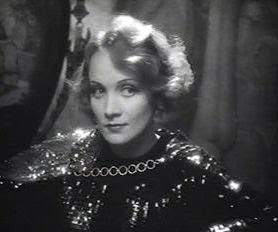
Marlene Dietrich, Dishonored

1.    Dietrich Returns to the Capitol

2020 will be remembered for many things, including as the year many people stopped going to the cinema. In Melbourne, for large parts of the year, you simply had no choice. But in my first entry here I want to remember the first few months before lockdown and, in particular, the stellar opening of the Melbourne Cinémathèque’s second and unexpectedly last season of the year: “Light and Shadow: The Mercurial Stardom of Marlene Dietrich”. This season played to very large audiences in the week’s leading up to the first lockdown in Melbourne, the attendances a barometer of the hunger for film screenings in this city (let’s hope it returns on the other side of the pandemic). Audiences of over 400 watched imported 35mm prints of three films that first screened in Melbourne (and as research has revealed, in Australia) at the same cinema – the Walter Burley and Marion Mahony Griffin-designed Capitol in Swanston Street; decreased in size but refitted by RMIT University – over 80 years ago. This was a wonderful and truly serendipitous occurrence – as the co-curator of the Cinémathèque, I hadn’t realised that the Capitol was the first-release cinema for Paramount, Dietrich’s home studio (though she worked for Universal on 1939’s Destry Rides Again [George Marshall], the vastly enjoyable movie that concluded our final screening) – that underlines the occasional continuity of cinephilia over vast tracts of time. Screening prints of Sternberg’s Dishonored almost 90 years after its first showing on the 27thof May 1931, and Lubitsch’s extraordinary Angel 83 years after its initial release were my absolute highlights of 2020. Those rare screenings – and by then we knew we would need to close down in the coming weeks – now seem almost as far away as those Dietrich premieres of the 1930s.
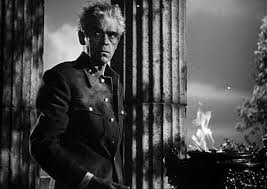
Boris Karloff, Isle of the Dead

2.    Lockdown Begins: Isle of the Dead vs. The Lighthouse

Despite the thousands of choices I have at my fingertips, I haven’t found lockdown particularly conducive to film viewing. I’ve spend much of the last nine months reading and listening to music. This has been a somewhat surprising development, but it has revealed that my film viewing is closely related to a broader sense of mobility, even if this is merely a matter of just travelling to a local cinema. The last two years have been marked by my trips to Il Cinema Ritrovato in Bologna as well as other places and are certainly amongst the richest of my film-going life. But this could also be a matter of the choices I’ve made along the way. The start of lockdown was marked by my decision to watch the recent release The Lighthouse (Robert Eggers, 2019) and the Val Lewton-produced Isle of the Dead (Mark Robson, 1945) back-to-back over two nights. Isle of the Deadwhich starts with Boris Karloff’s character vigorously washing his hands (a model of it, really) before warning of an approaching plague (which catches up with him, inevitably, on the Isle of the Dead), is one of the most intriguing and melancholy of the extraordinary run of “horror” films Lewton produced at RKO in the 1940s. It is a strange and poetic film, which features many images of characters in white masks, copious discussions of the encroaching disease, and moments that pinpoint social and physical isolation. Although it was a bit too close to the bone, it certainly had much to recommend it at this moment in time, even a Karloff-calm way of facing approaching calamity. Nevertheless, I’m not so sure how wise it was to follow this up with The Lighthouse, an isolationist nightmare and surreal dream that presents the utter madness of two characters “quarantined” together in the freezing cold “hothouse” atmosphere of the titular lighthouse. For some reason, over the next month or so I placed myself on a strict diet of Jean Grémillon and Joseph Losey movies – gaining a new appreciation for Stanley Baker and Madeleine Renaud, and realising that Losey is also a master of spatial isolation and claustrophobia (I guess I was starting to see it everywhere) – though I never quite got over the clammy, fetid, ghostly calm and nightmarish anxiety of Isle of the Dead and The Lighthouse. Both films are testament to the power of context – of the time and the place in which we experience things – in shaping our response to a particular film. Along with the Dietrich movies above, this was my double bill of 2020.
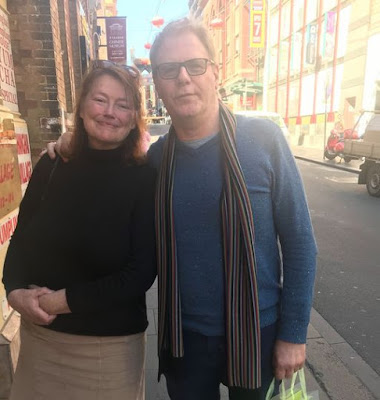
Amree Hewitt with Tait Brady

Tom O'Regan

3.    
Lest We Forget: Amree and Tom

In the general blur of 2020 it is easy to forget that many key figures of world cinema died across the year: Ennio Morricone; Bruce Baillie; Ivan Passer (whose Cutter’s Wayis one of the great post-classical US films); Lucia Bosè; Nelly Kaplan; Honor Blackman and Diana Rigg (always and again joined together by their iconic roles in TV’s The Avengers); Jirí Menzel; the extraordinary Linda Manz (just watch her startling unvarnished performances in Malick’s Days of Heaven[1978] and Kaufman’s The Wanderers[1979]); Max von Sydow; Michel Piccoli (quietly accumulating one of the great filmographies over almost 70 years); Fernando E. Solanas; the last two surviving major stars of classical Hollywood: Olivia de Havilland and Kirk Douglas (just watch them, respectively, in Walsh’s The Strawberry Blonde[1941] and Wilder’s Ace in the Hole[1950], to get a sense of their legacy); and many others. But 2020 also marked the passing of two major figures of Australian screen culture: Tom O’Regan and Amree Hewitt. Both Tom and Amree were models of collegiality and I’ve never heard anyone say a bad word about either of them. Tom, of course, is one of the defining figures of screen studies in Australia, and his outstanding and seminal work on Australian cinema is something that anyone working in the field has to contend with. Amree was one of Australia’s great film curators – her extensive Ida Lupino season at the Melbourne Film Festival in 1996 is one of the defining moments for many local cinephiles. Both are irreplaceable and leave a large hole in the fabric of screen culture in Australia.

Penrod and Sam

4.    
Pordenone: “COVID Normal”

As the year went on and I got used to “COVID normal” during Melbourne’s 100-day or so second lockdown, I started to return more productively and extensively to movies and television. Film festivals started to offer more substantial programs online, often at very reasonable prices (not so true of the Melbourne and Sydney International Film Festivals, though). The pick of these was the Pordenone Silent Film Festival. It offered a couple of programs a day for the extremely cheap price of 10 euros for the lot. First up, was a lovely restoration of Penrod and Sam (1923), based on Booth Tarkington’s light-hearted novel. I wouldn’t want to claim it as any kind of masterpiece, but it had a lot of lovely observational detail. It obviously bears some comparison with the Our Gang series (but better), the Australian late silent The Kid Stakes(Tal Ordell, 1927), and Frank Borzage’s far more serious allegory, No Greater Glory(1934). It also has a refreshing range of characters, including three or four substantive and not overly stereotypical African American kids. It’s directed by William Beaudine, who made an extraordinary number of films and TV episodes between 1915 and 1969 and is probably due for a little more attention (though seeing the trees for the wood here would be very challenging). Overall, this was a fantastic and thought-provoking online event – with often stellar restorations – though I think it made me realise that I most like my silent movies leavened with some sound ones. Watching one to two programs each day while working full-time was a bit of challenge – though it did allow me to make it the full festival experience by dozing through a few of the less enticing titles. Aside from the great attraction of seeing Sessue Hayakawa, I found Where Lights are Low (Colin Campbell, 1921) an aptly titled film; the Italian “surrealist” comedy La tempesta in un cranio(Carlo Campogalliani, 1921) tedious; and the last program of Laurel or Hardy movies (note the careful substitution of “or” for “and” there) a clear illustration of who carried the “weight” in that duo (though Laurel’s pretty dire directorial effort, partly rediscovered in the National Film and Sound Archive of Australia, made it 2 out 3 for his contributions). The film starring Larry Semon also reminded me of what a charmless comedian he was (I certainly won’t be leading the Semon revival). But aside from this, and the too long but intermittently striking early cinema programs, there was a lot of excellent, often fascinating stuff on offer. My picks aside from Penrod and Samwere Dimitris Gaziadis’Oi apahides ton Athinon(Apaches of Athens, 1930; particularly in its more observational, neorealist moments), Cecil B. De Mille’s A Romance of the Redwoods, and G. W. Pabst’s Abwege(1928) – I’m generally less keen on Brigitte Helm but this had several startling moments including an extraordinary bedroom scene between the husband and wife (isolating spaces, again) as well as characteristically stunning production design. Although I only watched a few of the discussions around the films, they were also expertly done (and you can’t always say that). I hope I can get to the festival one day, but this sure made a worthwhile replacement and suggests some rich possibilities for the future of hybrid events that fuse the local with the global, physical presence with the virtual.


The Beach (top)
I Want to Make a Film About Women

5.    
From 1923-2020 – The Year that Was

Any overview would be remiss without a list of terrific and/or intriguing films and TV shows I encountered for the first time in 2020 (some of these, like the Sautet, Savoca and Walsh, had been sitting on my shelves for years). I’ve decided not to comment on films and shows I found particularly lacking, but if I was you I’d go nowhere near Spike Lee’s Da 5 Bloods (2020), Sofia Coppola’s On the Rocks (2020) or Ian Brennan and Ryan Murphy’s Hollywood (2020; not so bad for the few couple of episodes and then…). Here’s the list of my 20 favourites of 2020, making no distinction between whether a film was first made available over the last 12 months or in 1920. For whatever reason, these are the ones that have stayed with me over this challenging time. It’s been that kind of year.

L’année dernier à Dachau (Mark Rappaport, 2020)

Dogfight (Nancy Savoca, 1991)

Small Axe: Lover’s Rock( Steve McQueen, 2020)

The Criminal (Joseph Losey, 1960)

Gueule d’amour (Jean Grémillon, 1937)

Opfergang (Veit Harlan, 1944)

The Plot Against America (Ed Burns and David Simon, 2020)

Country Music (Ken Burns, 2019) – full-length version, not that screened by SBS

To Each His Own (Mitchell Leisen, 1946)

Penrod and Sam (William Beaudine, 1923)

Un couer en hiver (Claude Sautet, 1992)

The Tall Men (Raoul Walsh, 1955)

The Beach (Warwick Thornton, 2020)

Mustang (Deniz Gamze Ergüven, 2015)

Krakatit (Otakar Vávra, 1948)

Il traditore (The Traitor, Marco Bellocchio, 2019)

The Queen’s Gambit (Scott Frank and Allan Scott, 2020)

The Spook Who Sat by the Door (Ivan Dixon, 1973)

I Want to Make a Film About Women(Karen Pearlman, 2019)

Robbery (Peter Yates,1967)