Showing posts with label Warwick Thornton. Show all posts

Sunday, 3 March 2024

FILM CRITICS CIRCLE OF AUSTRALIA - NOMINATIONS FOR THE FCCA ANNUAL AWARDS FOR AUSTRALIAN FILM FOR 2023


NOMINATIONS FOR THE FILM CRITICS CIRCLE OF AUSTRALIA ANNUAL AWARDS FOR AUSTRALIAN FILM

THE FILMS OF 2023


BEST FILM

LIMBO                                                                               

PRODUCERS: RACHEL HIGGINS, DAVID JOWSEY, GREER SIMPKIN, IVAN SEN

THE NEW BOY                                                         

PRODUCERS: CATE BLANCHETT, LORENZO DE MAIO, GEORGIE PYM, KATH SHELPER, ANDREW UPTON

OF AN AGE                                                                       

PRODUCERS: KRISTINA CEYTON, SAMANTHA JENNINGS

THE ROYAL HOTEL                                                         

PRODUCERS: IAIN CANNING, KATH SHELPER, EMILE SHERMAN, LIZ WATTS

SHAYDA                                                                   

PRODUCERS: NOORA NIASARI, VINCENT SHEEHAN


BEST DIRECTOR

ROLF DE HEER                                                       

THE SURVIVAL OF KINDNESS

NOORA NIASARI                                                              

SHAYDA

IVAN SEN                                                        

LIMBO

WARWICK THORNTON                                                    

THE NEW BOY


BEST ACTOR     

ELIAS ANTON                                                                   

OF AN AGE                           

SIMON BAKER                                                        

LIMBO

THOM GREEN                                                                  

OF AN AGE

ASWAN REID                                                                    

THE NEW BOY


BEST SCREENPLAY

KITTY GREEN and OSCAR REDDING                             

THE ROYAL HOTEL

NOORA NIASARI                                                              

SHAYDA

IVAN SEN                                                                 

LIMBO

WARWICK THORNTON                                                    

THE NEW BOY


BEST ACTOR IN A SUPPORTING ROLE

WAYNE BLAIR                                                                  

THE NEW BOY

ROB COLLINS                                                                  

LIMBO

NICHOLAS HOPE                                                             

LIMBO

HUGO WEAVING                                                              

THE ROYAL HOTEL


BEST CINEMATOGRAPHY

ANDREW COMMIS/RICK RIFICI (UNDERWATER CINEMATOGRAPHY)   

BLUEBACK 

MAXX CORKINDALE                                                        

THE SURVIVAL OF KINDNESS

IVAN SEN                                                                 

LIMBO

WARWICK THORNTON                                                    

THE NEW BOY            


BEST ACTRESS

CATE BLANCHETT                                                          

THE NEW BOY

ZAR AMIR EBRAHIMI                                                       

SHAYDA

MWAJEMI HUSSEIN                                                         

THE SURVIVAL OF KINDNESS

SOPHIE WILDE                                                        

TALK TO ME


ACTRESS IN A SUPPORTING ROLE

DEBORAH MAILMAN                                                       

THE NEW BOY

LEAH PURCELL                                                               

SHAYDA

NATASHA WANGANEEN                                                  

LIMBO

URSULA YOVICH                                                              

THE ROYAL HOTEL


BEST FEATURE DOCUMENTARY

THE CARNIVAL                                                       

DIRECTOR: ISABEL DARLING PRODUCERS: TOM ZUBRYCKI, ISABEL DARLING

THE DEFENDERS                                                             

DIRECTOR: MATTHEW BATE PRODUCERS: ALICE BURGIN, GAL GREENSPAN

THE GIANTS                                                                     

DIRECTORS: LAURENCE  BILLIET, RACHAEL ANTONY PRODUCER: RACHAEL ANTONY

RACHEL’S FARM                                                              

DIRECTOR: RACHEL WARD, PRODUCER: BETTINA DALTON, RACEL WARD

SHACKLETON: THE GREATEST STORY OF SURVIVAL         

DIRECTORS:  BOBBI HANSEL, CASPAR MAZZOTTI 

PRODUCERS: DAVID GROSS, ELECTRA MANIKAKIS, NICK ROBINSON


FCCA IS GRATEFUL TO OUR SUPPORTERS AND SPONSORS


SPECTRUM FILMS, BUNYA PRODUCTIONS, ALLEN & UNWIN 

& GABRIEL COFFEE


RODNEY MARKS AND BENJAMIN MARKS

Monday, 10 July 2023

The Current Cinema - Thoughts on THE NEW BOY (Warwick Thornton, Australia, 2023)


'When I grow up I want to be just like Jesus.' 
(Warwick Thornton, aged 6, quoted on the website for Stills Gallery at the time of his exhibition titled "Stranded"

Warwick Thornton's Bible studies seem to have left deep impressions. The title of his first film Samson and Delilah evokes the biblical story even if the film doesn't  seem to grapple with it. Not long after the film was made Thornton produced a video and an accompanying  photographic exhibition called "Stranded". This premiered at the 2011 Adelaide Film Festival as part of Stop(the)Gap, described as a major international Indigenous moving image project curated by Brenda L Croft for the Samstag Museum of Art.  In Sydney Stills Gallery in Paddington presented the 3D screening of Stranded and the series of photographic works inspired by the video. 

According to Brenda L Croft 2011 writing  the Stop (the) Gap catalogue essay the video features Thornton “as the central Christ-like figure – dead centre, if you like – with the unexpected addition of a skull and crossbones. Thornton’s figure revolves in space above a mirrored waterhole in the brilliant harshness of the broken heartland, heightened by the unnerving sounds of wide open spaces – the chirruping of native birds, the ubiquitous blowfly buzz, the whoomp-ing sensation of windmill...or wind turbine? Dream(ing) or nightmare, or both?”

The Stills Gallery website notes that the depiction of Thornton as Christ "is at once melodramatic and subversive. He draws on certain cinematic conventions — the epic desert landscape as setting, the use of sound to heighten an emotional response, the high-tech 3D technology usually prevalent in blockbuster films — but provides no narrative resolution. In the similarly cinematic still images that accompany the video his crucified figure appears over desert, lake and city-scapes suggesting a Christ-like ubiquity, however in both video and photographic works, his deliberate open-endedness asks viewers to form their own assumptions. At one point in Stranded, for example, Thornton yawns on his cross. What are we to make of his boredom?"

“We are (also) possibly witnessing a representation of a ‘lost’ Aboriginal generation, Thornton’s own, no longer under missionary control, yet still nailed to the cross, detached and hovering above the Land (see still at the top). Perhaps in Stranded we encounter another ‘muddying of the waters:’ art that worries at the line between Indigenous and non-indigenous, elusively pushing beyond established concepts.”
Tom Redwood – RealTime issue #102 April-May 2011 pg.23

All of this trickled back as I watched The New Boy, Thornton's new  film in which a feral child, some descendant of Kipling's Mowgli and Truffaut's L'Enfant Sauvage, is dumped in some outback foster home for blackfella kids presided over by an alcoholic white nun (Cate Blanchett) and a friendly black nun (Deborah Mailman). The new kid cant speak but has magical powers which later include an ability to handle snakes in a way which sends terror through the rest of the handful of people living in the mission. Absent from the mission is the dead head brother, whose demise has been kept secret from the authorities, likely for fear that the place will be closed down.

For a decade or so now we've had our heads filled with grim tales of institutional abuse, violence, sexual assault even murder and suicide. Apart from Thornton making sure we appreciate how kids designated as leaders quickly assume the violent and authoritarian traits of their elders, the place is remarkably benign. John McDonald writing in the Australian Financial Review and reprinted on his personal website if you dont want to buy the paper got some words together that expressed things better than I : "We’re left wondering if our young hero is being irredeemably warped by Catholicism, or whether he is exposing its flaws and hypocrisies. The nuns are equally ambiguous, being kind-hearted and all-too-human in their failings. Are they supposed to be agents of an oppressive ideology?"

Like John  I'm not sure if Thornton is trying to shake the Catholicism out of himself or tell you how much he loves it and how fondly he remembers it.

Wednesday, 16 December 2020

Defending Cinephilia 2020 (5) - Co-curator of the Melbourne Cinematheque Adrian Danks reports on his lockdown year


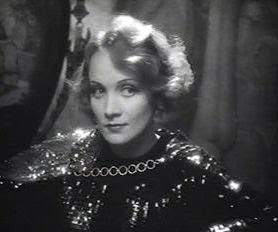
Marlene Dietrich, Dishonored

1.    Dietrich Returns to the Capitol

2020 will be remembered for many things, including as the year many people stopped going to the cinema. In Melbourne, for large parts of the year, you simply had no choice. But in my first entry here I want to remember the first few months before lockdown and, in particular, the stellar opening of the Melbourne Cinémathèque’s second and unexpectedly last season of the year: “Light and Shadow: The Mercurial Stardom of Marlene Dietrich”. This season played to very large audiences in the week’s leading up to the first lockdown in Melbourne, the attendances a barometer of the hunger for film screenings in this city (let’s hope it returns on the other side of the pandemic). Audiences of over 400 watched imported 35mm prints of three films that first screened in Melbourne (and as research has revealed, in Australia) at the same cinema – the Walter Burley and Marion Mahony Griffin-designed Capitol in Swanston Street; decreased in size but refitted by RMIT University – over 80 years ago. This was a wonderful and truly serendipitous occurrence – as the co-curator of the Cinémathèque, I hadn’t realised that the Capitol was the first-release cinema for Paramount, Dietrich’s home studio (though she worked for Universal on 1939’s Destry Rides Again [George Marshall], the vastly enjoyable movie that concluded our final screening) – that underlines the occasional continuity of cinephilia over vast tracts of time. Screening prints of Sternberg’s Dishonored almost 90 years after its first showing on the 27thof May 1931, and Lubitsch’s extraordinary Angel 83 years after its initial release were my absolute highlights of 2020. Those rare screenings – and by then we knew we would need to close down in the coming weeks – now seem almost as far away as those Dietrich premieres of the 1930s.
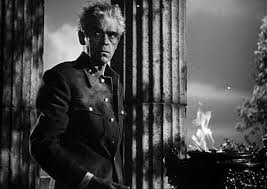
Boris Karloff, Isle of the Dead

2.    Lockdown Begins: Isle of the Dead vs. The Lighthouse

Despite the thousands of choices I have at my fingertips, I haven’t found lockdown particularly conducive to film viewing. I’ve spend much of the last nine months reading and listening to music. This has been a somewhat surprising development, but it has revealed that my film viewing is closely related to a broader sense of mobility, even if this is merely a matter of just travelling to a local cinema. The last two years have been marked by my trips to Il Cinema Ritrovato in Bologna as well as other places and are certainly amongst the richest of my film-going life. But this could also be a matter of the choices I’ve made along the way. The start of lockdown was marked by my decision to watch the recent release The Lighthouse (Robert Eggers, 2019) and the Val Lewton-produced Isle of the Dead (Mark Robson, 1945) back-to-back over two nights. Isle of the Deadwhich starts with Boris Karloff’s character vigorously washing his hands (a model of it, really) before warning of an approaching plague (which catches up with him, inevitably, on the Isle of the Dead), is one of the most intriguing and melancholy of the extraordinary run of “horror” films Lewton produced at RKO in the 1940s. It is a strange and poetic film, which features many images of characters in white masks, copious discussions of the encroaching disease, and moments that pinpoint social and physical isolation. Although it was a bit too close to the bone, it certainly had much to recommend it at this moment in time, even a Karloff-calm way of facing approaching calamity. Nevertheless, I’m not so sure how wise it was to follow this up with The Lighthouse, an isolationist nightmare and surreal dream that presents the utter madness of two characters “quarantined” together in the freezing cold “hothouse” atmosphere of the titular lighthouse. For some reason, over the next month or so I placed myself on a strict diet of Jean Grémillon and Joseph Losey movies – gaining a new appreciation for Stanley Baker and Madeleine Renaud, and realising that Losey is also a master of spatial isolation and claustrophobia (I guess I was starting to see it everywhere) – though I never quite got over the clammy, fetid, ghostly calm and nightmarish anxiety of Isle of the Dead and The Lighthouse. Both films are testament to the power of context – of the time and the place in which we experience things – in shaping our response to a particular film. Along with the Dietrich movies above, this was my double bill of 2020.
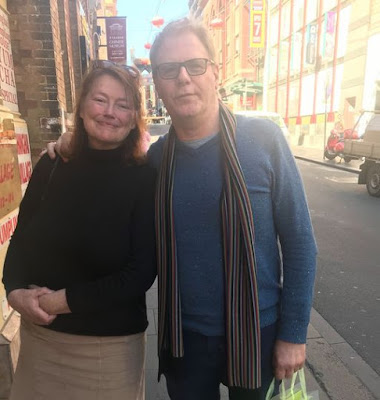
Amree Hewitt with Tait Brady

Tom O'Regan

3.    
Lest We Forget: Amree and Tom

In the general blur of 2020 it is easy to forget that many key figures of world cinema died across the year: Ennio Morricone; Bruce Baillie; Ivan Passer (whose Cutter’s Wayis one of the great post-classical US films); Lucia Bosè; Nelly Kaplan; Honor Blackman and Diana Rigg (always and again joined together by their iconic roles in TV’s The Avengers); Jirí Menzel; the extraordinary Linda Manz (just watch her startling unvarnished performances in Malick’s Days of Heaven[1978] and Kaufman’s The Wanderers[1979]); Max von Sydow; Michel Piccoli (quietly accumulating one of the great filmographies over almost 70 years); Fernando E. Solanas; the last two surviving major stars of classical Hollywood: Olivia de Havilland and Kirk Douglas (just watch them, respectively, in Walsh’s The Strawberry Blonde[1941] and Wilder’s Ace in the Hole[1950], to get a sense of their legacy); and many others. But 2020 also marked the passing of two major figures of Australian screen culture: Tom O’Regan and Amree Hewitt. Both Tom and Amree were models of collegiality and I’ve never heard anyone say a bad word about either of them. Tom, of course, is one of the defining figures of screen studies in Australia, and his outstanding and seminal work on Australian cinema is something that anyone working in the field has to contend with. Amree was one of Australia’s great film curators – her extensive Ida Lupino season at the Melbourne Film Festival in 1996 is one of the defining moments for many local cinephiles. Both are irreplaceable and leave a large hole in the fabric of screen culture in Australia.

Penrod and Sam

4.    
Pordenone: “COVID Normal”

As the year went on and I got used to “COVID normal” during Melbourne’s 100-day or so second lockdown, I started to return more productively and extensively to movies and television. Film festivals started to offer more substantial programs online, often at very reasonable prices (not so true of the Melbourne and Sydney International Film Festivals, though). The pick of these was the Pordenone Silent Film Festival. It offered a couple of programs a day for the extremely cheap price of 10 euros for the lot. First up, was a lovely restoration of Penrod and Sam (1923), based on Booth Tarkington’s light-hearted novel. I wouldn’t want to claim it as any kind of masterpiece, but it had a lot of lovely observational detail. It obviously bears some comparison with the Our Gang series (but better), the Australian late silent The Kid Stakes(Tal Ordell, 1927), and Frank Borzage’s far more serious allegory, No Greater Glory(1934). It also has a refreshing range of characters, including three or four substantive and not overly stereotypical African American kids. It’s directed by William Beaudine, who made an extraordinary number of films and TV episodes between 1915 and 1969 and is probably due for a little more attention (though seeing the trees for the wood here would be very challenging). Overall, this was a fantastic and thought-provoking online event – with often stellar restorations – though I think it made me realise that I most like my silent movies leavened with some sound ones. Watching one to two programs each day while working full-time was a bit of challenge – though it did allow me to make it the full festival experience by dozing through a few of the less enticing titles. Aside from the great attraction of seeing Sessue Hayakawa, I found Where Lights are Low (Colin Campbell, 1921) an aptly titled film; the Italian “surrealist” comedy La tempesta in un cranio(Carlo Campogalliani, 1921) tedious; and the last program of Laurel or Hardy movies (note the careful substitution of “or” for “and” there) a clear illustration of who carried the “weight” in that duo (though Laurel’s pretty dire directorial effort, partly rediscovered in the National Film and Sound Archive of Australia, made it 2 out 3 for his contributions). The film starring Larry Semon also reminded me of what a charmless comedian he was (I certainly won’t be leading the Semon revival). But aside from this, and the too long but intermittently striking early cinema programs, there was a lot of excellent, often fascinating stuff on offer. My picks aside from Penrod and Samwere Dimitris Gaziadis’Oi apahides ton Athinon(Apaches of Athens, 1930; particularly in its more observational, neorealist moments), Cecil B. De Mille’s A Romance of the Redwoods, and G. W. Pabst’s Abwege(1928) – I’m generally less keen on Brigitte Helm but this had several startling moments including an extraordinary bedroom scene between the husband and wife (isolating spaces, again) as well as characteristically stunning production design. Although I only watched a few of the discussions around the films, they were also expertly done (and you can’t always say that). I hope I can get to the festival one day, but this sure made a worthwhile replacement and suggests some rich possibilities for the future of hybrid events that fuse the local with the global, physical presence with the virtual.


The Beach (top)
I Want to Make a Film About Women

5.    
From 1923-2020 – The Year that Was

Any overview would be remiss without a list of terrific and/or intriguing films and TV shows I encountered for the first time in 2020 (some of these, like the Sautet, Savoca and Walsh, had been sitting on my shelves for years). I’ve decided not to comment on films and shows I found particularly lacking, but if I was you I’d go nowhere near Spike Lee’s Da 5 Bloods (2020), Sofia Coppola’s On the Rocks (2020) or Ian Brennan and Ryan Murphy’s Hollywood (2020; not so bad for the few couple of episodes and then…). Here’s the list of my 20 favourites of 2020, making no distinction between whether a film was first made available over the last 12 months or in 1920. For whatever reason, these are the ones that have stayed with me over this challenging time. It’s been that kind of year.

L’année dernier à Dachau (Mark Rappaport, 2020)

Dogfight (Nancy Savoca, 1991)

Small Axe: Lover’s Rock( Steve McQueen, 2020)

The Criminal (Joseph Losey, 1960)

Gueule d’amour (Jean Grémillon, 1937)

Opfergang (Veit Harlan, 1944)

The Plot Against America (Ed Burns and David Simon, 2020)

Country Music (Ken Burns, 2019) – full-length version, not that screened by SBS

To Each His Own (Mitchell Leisen, 1946)

Penrod and Sam (William Beaudine, 1923)

Un couer en hiver (Claude Sautet, 1992)

The Tall Men (Raoul Walsh, 1955)

The Beach (Warwick Thornton, 2020)

Mustang (Deniz Gamze Ergüven, 2015)

Krakatit (Otakar Vávra, 1948)

Il traditore (The Traitor, Marco Bellocchio, 2019)

The Queen’s Gambit (Scott Frank and Allan Scott, 2020)

The Spook Who Sat by the Door (Ivan Dixon, 1973)

I Want to Make a Film About Women(Karen Pearlman, 2019)

Robbery (Peter Yates,1967)

Wednesday, 9 December 2020

Defending Cinephila 2020 (3) - Trump, Melville, Thornton...more


The Trump Taxonomy

It is a bit creepy to think that it took a pandemic to dislodge Trump from the Whitehouse – a quarter of a million dead, intensive care overrun, more to come - and still 75 million people voted for him. Back in December 2016 Rod Bishop took to analyzing movies according to their Trumpian voter taxonomy. 


“Is there a single character in Hell or High Water who would have voted for Clinton? Or a single character in Master of None who would have voted for Trump? How about the cast of Maggie’s Plan? Surely all for Hillary. Show Me A Hero? Most likely anyone but Trump. Making of a Murderer– all Trump?


“If they were forcibly led to a polling station, the black football students in Last Chance U are likely to all be Democrat. But what about the teaching staff and that white boy who could throw the football like a homing torpedo? No doubt about the entire cast of Preacher. all Trumpers, through and through.


“The border guards in the doco Cartel Land are no brainers. As are the white supremacists in the doco Welcome to Leith. Ironically, even the good townsfolk who tackled the bad guys in depressed rural Leith would most likely have voted for The Donald as well.


“The Night Of? Hard to see any of that crowd voting for Trump, but things break down with Mr. Robot(series two). Loaded up with fsocietyanarchism, can you imagine any of them in a voting booth, let alone discussing party politics? Bad for the image.”


Film Alert 101 as prescience. By 2020 we could contemplate whether the sassy women in Lorene Scafaria’s Hustlers, notwithstanding their race and colour, Trumpistas? Maybe they didn’t vote at all, having far more on their mind. Certainly the entire onscreen cast of The Loudest Whisper, notwithstanding the indignities inflicted on them by Roger Ailes and others, were likely Trump fans to the end. The workers in Steven Bognar & Julia Reichert’s doco American Factory would have got the Trump message loud and clear. The community in Phillip Noyce’s Above Suspicion would follow the Donald to the ends of the Earth…and so it goes. Hopefully the nightmare is over…


The Pandemic

Cinema going as we know it may be either over, for good, or we may be merely in the sort of shock phase once induced by the arrival of VHS (and Betamax). Such a shock can be recovered from but streaming services seem to be way beyond home video as a threat. What was never stated back in the pre-DVD days was the absolutely crap quality of VHS – full frame, murky pictures that served as a reminder that going to the movies was qualitatively better. No more. Massive screens and 1080 and HD pictures are now as good or better than what you see in a cinema and the shock of discovery that the pandemic caused may well last beyond our lifetimes.


Jean-Pierre Melville

Not on Netflix or Stan or Binge or anything, at least down here. StudioCanal’s back catalogue of six of the master’s best, of the 13 features he made, screened at the Randwick Ritz. You can buy them in a box set in the UK but the big screens (including two shows in the 700 seat Cinema 1) showed them off to perfection. Not that the selection pleased all. “Where is Le Samourai? asked Bruce Beresford’s 13 year old grandson. 


Warwick Thornton

In yet another otherwise generally dismal year for Australian cinema, notwithstanding the ever-increasing expenditure of hundreds of millions of taxpayer dollars, with near twelve hours of television Warwick Thornton set the gold standard. The Beach screened on SBS and later on the BBC, and series two of Mystery Road, screened on the ABC and also on the BBC. Mystery Road won the AACTA for best TV drama and was nominated in a lot of other categories. The Beach wasn’t nominated for anything, though Selling Houses Australia was in the “Best Lifestyle Program” section.


Things which took me by pleasant surprise

Adam (Maryam Touzani)

The Assignment (Walter Hill)

The Assistant (Kitty Green)

Bait (Mark Jenkins)

Blow the Man Down (Danielle Krudy & Bridget Savage-Cole)

Chess in the Wind (Mohammad Reza Aslani)

Corpus Cristi (Jan Komasa)

Just Imagine (David Butler)

The Mad Fox (Tomu Uchida)

Max and the Junkmen (Claude Sautet)

Suzaki Paradisu (Yuzo Kawashima)

Trapped (Vikramaditya Motwani)

White, White Day (Hylnur Palmason)


Donne e Soldati

Festivals Online

Not my idea of fun. Paying regular cinema prices to watch something on a computer isn’t my bag but I did succumb to Il Cinema Ritrovato’s offering (paid for as part of a subscription that never got to be used). I was grateful to see Melville: The Last Samourai, Donne e Soldati, I Cento Cavalieri, Ladies Should Listen, Liebling der Gotter, Let us Live, Chess in the Wind, Monangambee, Aime Cesaire: Le Masque des Mots  and Att Doda ett Barn/To Kill a Child. Lockdowns or no I’m not up for much of this.