Wednesday, 13 September 2023

Recommended Reading for all fans of Pre-code movies - ARABIAN NIGHTS OF 1934 by Geoffrey O'Brien


Geoffrey O’Brien’s Arabian Nights of 1934 is a remarkable book by an author whose previous works of criticism and poetry now seem to have melded into one volume – a book devoted to memory traces, and no-doubt reviewing, of a host (226 are listed) of Pre-Code movies. The Hurlstone Park Pre-Code Movie Club should be all over it.

The book consists of seventy six short essays, notes, memories (hard to describe) each around a page long, bookended by two essays Dorothy at 17 and Aloysius at 18. These latter are intended to be homages to O’Brien’s parents who were brought up in the short Pre-Code era between the end of silents and the imposition of hard line censorship. The Hollywood studios made wild movies back then and scholars still study them endlessly to discover what the ‘real’ world of the time was all about. O’Brien’s chapter headings give you a quick entrance “This Modern Age”, “City Streets”, “Loose Ankles”, “Fast Life”, “Blood Money”, “Doorway to Hell”, “Turn Back the Clock”, “The Crash”, “Laughing Sinners”, “Bright Lights”, “The Code” and “After Tomorrow”.


Scattered throughout are lines in italics most of them taken from movies but an occasional one of the author’s own invention. They fill you with the pleasure of recall. My favourite, and I have no idea of the movie it came from: Any mug that don’t think so will be treated to the swellest funeral that ever stopped traffic.* Wont think it’s so funny then. 


As is the wont of modern publishing the back cover provides some appreciative quotes to assist possible purchasers. There are thoughts from Stuart Klawans and Albert Mobilio and this from Henry Bean “Shares with Marclay’s The Clock and Godard’s Histoire(s) du Cinema a total rapturous, insatiable cinephilia. What you feel, finally, is that you have been stuffed to the gills with so much story you will die if you take another bite. And all you want is more.”


A very handsome and beautifully printed volume published by Terra Nova Press in New Jersey, I bought my copy from Booktopia


*Underlined section spoken by Lew Ayres in The Doorway to Hell (Archie Mayo, 1930)


Friday, 8 September 2023

The Current Cinema - Happy Families - SCRAPPER (Charlotte Regan, UK, 2022), SHAYDA (Noora Niasari, Australia, 2023)

Shayda (Zar Amir Ebrahimi) and Mona (Selina Zahednia)
Shayda

You suspect from the start, maybe you even know from the start, that things will eventually work out OK. Some semblance of peace, tranquillity or acceptance will ensue. These are just movies and film-makers don’t want to send their audience home unhappy or believing the world is an utterly grim place where the bad guys always win. 

In Charlotte Regan’s Scrapper, the ragged and rough girl whose only outfit is a West Ham soccer shirt has been missing a father since birth. Then he hops over the back fence and takes control. Up to then she’s been OK living on her own, pretending to the authorities she has a carer and stealing bikes for a living. 


In  Shayda a little Iranian girl is being cared for in a women’s shelter by a mother on the run from a violent husband, and by a fiercely determined house mother who knows all the tricks that errant fathers get up to try and regain ownership of their children.


There you have it two stories made by first time directors that start from simple beginnings and build until they grip and don’t let go.


Jason (Harris Dickinson), Georgie (Lola Campbell), Scrapper

In order, Charlotte Regan’s Scrapper had me a bit nostalgic from the beginning. If you were brought up in the fifties and your mother much preferred genteel English comics like The Beano, The Dandy and Film Fun to the likes of The Phantom and Superman,  you might remember Scrapper from the day. He was part of the Ash Can Alley Gang which was a regular in The Beano. Their sworn enemies were the Gasworks Gang. I didn’t get that all from memory. A quick Google search uncovered the info and also the more amazing info that The Beano only ceased publication a decade or so ago.


Scrapper was the go to guy when there was a fist fight to be won by the Ash Can Alley Gang. Regan doesn’t give any clue, beyond the film’s title, now a generic term, that she’s a Beano fan. Her approach is much more MTV with shape-changing screens and flashbacks direct to camera that tell the backstory of teenage lovers, accidental pregnancy, irresponsible fathers, sentimental re-bonding. (Maybe that's what PR leaflet was referring to in bold type when it mentioned the film is full of "aesthetic energy".) There is a classic story arc made good by its telling, the authentic detail and the ability of otherwise inarticulate people to bounce one line zingers around the room. Totally captivating.


Shayda  is a much more serious movie. Noora Niasari’s debut is autobiographical in the extreme – a memory trace of early life in a women’s shelter escaping violent men and incorporating lots of documentary detail about the court process, possible abduction techniques, access arrangements. It is particularly good in establishing the general unsettling sense of continuous dread that such women and children experience. It is also very good in portraying the way men/a man can turn from apparently sweet-natured and kind to instantly violent and threatening. There is no flashy disco-like cutting, no attempts at alleviating humour. The subject itself is a constant story today, unlike Scrapper's story of a kid who can look after herself quite well and has more street smarts at nine or so than most of us ever have. (And yes I know Hirokazu Koreeda did a movie on the theme as well..).


These are both terrific movies and I urge you to see them. Shayda  in particular adds to what seems a rather good year for  independently spirited Australian films – Limbo, The Survival of Kindness, Petrol, Sweet As  and The New Boy spring to mind. (Three of those by established male film-makers and the other three by smart young and very talented women directors…just saying.)

Tuesday, 29 August 2023

Vale William Friedkin - Tom Ryan pays tribute to the great American director - PART THREE: “I often get better ideas about my films after I’ve finished them.”

 Editor's Note. This is the third part of a conversation that took place in Melbourne in 2002 when William Friedkin was visiting to promote the revival of his film Sorcerer. The first part can be accessed IF YOU CLICK HERE. The second part can be found IF YOU CLICK HERE

*****************************


There’s an extremely visceral quality to all of your films: the way you get in close, the cutting, the intensity of the action. There’s no better example of this than the extraordinary sequence in Sorcerer of the two trucks crossing the bridge. When you were planning it, did you have an inkling about how it was going to look?


No. I just had a general idea. I knew what the goal was, what these guys had to do, how they had to get these two trucks across the river. And while it appears to be something that’s actually happening, it is of course impossible, except in the world of cinema. My films are often called realistic, but the last thing I’m looking for is realism. 


We ran into nothing but problems. This scene was shot in a place called Tuxtepek, Mexico, in the deepest part of the Mohave jungle, below Vera Cruz. But it was originally supposed to be shot in the Dominican Republic. We’d found a great rushing river there. It was about twelve feet high and it had never run dry. ‘The memory of man runneth not to the contrary.’ We started building this bridge there, and as we were building it the river began to recede. It became a dry bed. So we had a scene of a bridge across a dry river bed. So we took down the bridge and had to find somewhere else.


We found this place in Mohave, shut down the production, moved the company there, and built the bridge again over a rushing river about twelve feet high that had never run dry. 


‘The memory of man…’ And it went down during the scene to about two feet. I then decided to obscure that fact by adding the rain. We had enormous hoses to make all that rain because the river bed had become virtually dry… again.


That was a mess of a shoot. Someone was trying to tell me something while I was making this film. There were a lot of things that just went wrong. 


The magic of cinema! It convinced me…


Well we had to do everything you see. There were no digital opticals then or any opticals that would be convincing at all. As in The Exorcist, everything had to be done mechanically.
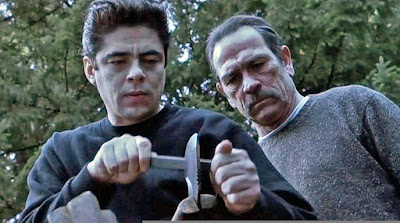
Benicio del Toro, Tommy Lee Jones, The Hunted

If you had to do it today, would you use CGI?


[Long pause] That’s a very difficult question. I’ve just finished a new film called The Hunted, with Tommy Lee Jones and Benicio del Toro, and it contains some very hair-raising sequences. And we did them all mechanically. You know, part of what I love about film is creating things on the spot. Digital opticals is another world, another discipline, another skill. I think it has an important place in cinema, certainly in creating backgrounds that are otherwise unattainable. 


But I’m not keen on using digital opticals to create an action scene, although the chase scene in the first Mission Impossible is all digital opticals. Tom Cruise is on this train with a helicopter over him that’s trying to kill him. No train, no helicopter, no landscape. It was done on a sound stage with the crew riding around on something. And then they put in the train and the helicopter and bridge and the countryside passing by. And it’s totally convincing. 


To do it that way is much more expensive, but it’s much less dangerous. So I would probably opt today for the opticals and not put people in danger. I mean, these people and the crew and I were all in danger in this scene. There’s no question about it: I used to do that when I was younger. Then, by the grace of God, I got a little older.


I did a lot of things that I’m not all that proud of. It came from a single-mindedness.
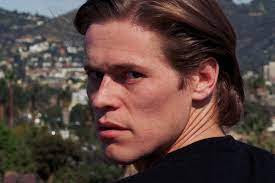

Willem Dafoe


There’s an alternative ending to To Live and Die in LA, isn’t there?


Bill Petersen gets killed in To Live and Die in LA. He was the star of the movie. And the producers of the film said, ‘What do you mean, you’re going to kill the star of the movie, the hero?’ They tested the picture. So I shot another ending in which he lives. He just got shot in the head and he lives! And it tested better than when he dies ’cause people didn’t want him to die. But I thought, ‘No, this is just jive! Forget it.’


There’s a new DVD of the film coming out next spring in the US, a perfect print, and they asked me to put the alternate ending on as an extra, and I said, ‘No. Why should people see it? It’s terrible. It’s stupid.’


I understand that there was also an alternative ending for The French Connection? With tramps seeing dumped heroin in the East River.


I often get better ideas about my films after I’ve finished them. I’ll be taking a shower or something and it’ll occur to me how I should have ended the picture. Years after I’d finished The French Connection, I was thinking about an ending where two junkies are sitting by the East River stoned and this barge goes by. 


What they did in those days was take all these packages of heroin which they’d confiscated and put them into their inventory. And then, when the case was closed, they’d cut them up and dump them in the East River. 


And so I had this image of two guys, stoned, by the river, while $15 million of heroin is cut up and thrown into the river in front of them. And thought that would be a really wonderful ironic ending. But unfortunately it never occurred to me while I was making the film. 


I understand there were problems getting The French Connection off the ground?


When the producer and I took The French Connection around to the studios, every one turned it down, some of them twice. No-one was gonna make the picture and then finally the head of 20th Century Fox, Dick Zanuck, the son of Darryl F. Zanuck, called us back months after he had passed on the film. He said, ‘You know, I got a hunch about that film. I don’t know exactly what the hell it is that you guys wanna do, but I’m gonna get fired in about six months. And I’ve got about a billion and a half dollars hidden away in a drawer. If you can make that film for a million and a half, go ahead. I won’t be around when it’s done.’ He was right. He was fired before we finished it.
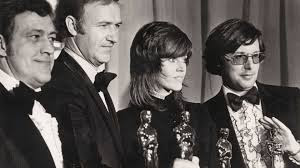

Oscar Night, William Friedkin (far right) and the Oscar for
The French Connection

We had a budget close to $3 million at the time and it included stars like Paul Newman and Jackie Gleason. We told Dick Zanuck and he said, ‘You’re not gonna get Paul Newman. He costs too much, at least half a million.’ Today that amount’s called ‘chump change’ in America. Now $20 million is scale. 


So he said, ‘You don’t need a star. Just get the right guy.’ 


I got the original cops and tested them, but they couldn’t do it. They couldn’t act. And they had a different view of them than I did, getting girls and beating up all these guys on the street. 


I had this friend, a journalist at the New York Daily News: Jimmy Breslin, what we call a two-fisted journalist, a muck-raker, a blue collar guy who’d expose all these slum landlords, and so on, a big heavy-set Irish guy with a dark mop of hair. And he was my image for the lead role. So I said to Zanuck, ‘How about Jimmy Breslin.’ He knew who he was and he said, ‘You know what. That’s a great idea. Why don’t you go back to New York, see if he’s interested and shoot a test?’


We had cast Roy Scheider before I did this, and the young black actor who’s chased by him in the first scene. And I went to Breslin and said, ‘Let’s work on this for about a week or so and then we’ll shoot a test.’ He said, ‘Great.’ He’d never acted. He was a newspaper reporter! We’d go out on a Monday, and he’d be absolutely brilliant. Tuesday, he didn’t show up. He was drunk. He’d come in Wednesday and forget everything he did Monday, didn’t know what he was doing there. On Thursday, he would blow every line. Then we’d come to Friday and I’m thinkin’, ‘This isn’t gonna work.’ But he says to me, ‘Don’t you have a car chase in this picture?’  I said, ‘Yeah.’ Then he said, ‘I gotta tell you. I told my mother on her death-bed that I would never drive a car. I don’t know how to drive.’ I said, ‘You’re fired.’ And that was the end of him for that role.


Then we offered it to Peter Boyle. He did a movie called Joe, which was an interesting picture that was very indicative of what was happening in many American cities. He was an awkward guy with a bald head and he said, ‘Nah. I wanna do romantic roles.’ So he turned it down. Then there were a few other people who turned it down too. 


Gene Hackman was the last man standing. I didn’t want to do the film with Hackman. I thought he was too soft, too laidback, no energy. But he did a great job. There’s such a thing as the Movie God that watches over films, and the casting of The French Connection was presided over by the Movie God.


Then we came to the casting of the French guy. I went to the casting director, who wasn’t really a casting director: he wrote for The Village Voice. But he knew every actor in the country and I said to him, ‘Let’s get that French guy who was in Belle de Jour.’ I didn’t know his name. He said, ‘Oh, that guy. I know him. He’s good. His name is Fernando Rey.’
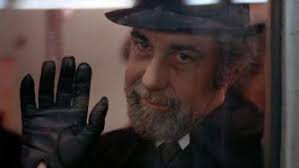

Fernando Rey, The French Connection

So now I go down to the airport to meet his plane and I see him and it’s not the guy I was talking about. He’s got this little goatee and he’s very dignified and I recognized him. But he was not the actor from Belle de Jour. So I’m driving him to his hotel from the airport and I said, ‘You know, this guy you’re playing is a rough Corsican guy. That little goatee you have is all wrong. He said, ‘You don’t want me to shave my goatee because I have pimples all over my face and this covers them.’ 


In any case, he was not my image of the character at all. We get to the hotel and I go to the hotel pay phone and call the casting director. ‘You imbecile! This is the wrong guy. This is not the guy from Belle de Jour.’ So he says, ‘What do you want me to do?’ I said, ‘We’ve got to fire him.’ Then by the time I get back to the office I’ve found out at the guy in Belle de Jour was Francisco Rabal, who’s in Sorcerer. And he wasn’t available anyway. So we stayed with Rey. 


Gene Hackman, The French Connection

He was not my choice. Hackman was not my choice. So there is a Movie God.


I want to ask you about your style as a filmmaker. With some filmmakers, you often get the sense that they’re really just shooting dialogue. With most of your films, there’s the impression that your starting-point is an image and that the rest comes later.


The camera moves that I use are never in the script. What I believe – I’m not always successful in doing it – is that a camera should only move to follow an actor, not on its own. Though occasionally I will push it in slowly to somebody’s face to try to draw us more into his thoughts. 


The real influence on the way I move the camera is Michelangelo Antonioni. My films don’t look anything like his, nor are they paced like them. He’d never repeat a shot. He’d get 70 or 80 shots without repeating one, while with most filmmakers, as you know, the shots are repeated all the time. 


So I try never to repeat a shot to ensure that there’s always something and only to move the camera with an actor. 


What did you think of Exorcist II?


When they made it, the people at Warner Bros. told me, ‘This film’s great. You’re a grandfather.’ And then they previewed it for the first time in Pasadena. And at this preview the Warner Bros. executives pulled up in limousines and they went into the theatre and, after about five minutes, there was a stirring in the audience and they knew something was wrong. But they had let their limousines go. They’d told their driver, ‘The film’s two hours long. Why don’t you guys go at get something to eat at MacDonald’s or wherever, down the block.’


Then after about ten minutes, a guy stood up in the middle of the audience and yelled out, ‘The people who made this piece of shit are in this room.’ And this other guy yelled out, ‘Where?’ The first guy turned to the back of the theatre and said, ‘There they are.’ The executives stood up and ran out of the theatre being chased by a handful of people from the audience. They got outside and their cars were gone, and so they had to run down the block to escape the audience. It’s distinguished by being the biggest money-back movie ever made: where people went and asked for their money back. 


To me, it’s like a horrible accident in the street. I don’t need to see it to understand.


You’ve become the go-to guy for car chases. Are you happy about that?


They’re not too easy to come up with. I can’t think of too many great car chases in films. There are a handful that appeal to me. One is in a Buster Keaton silent: it’s a brilliant chase. But they’re hard for me to think up and they’re very difficult to shoot. Critics often deprecate a film by saying, ‘Oh, it’s got a lot of car chases.’ But a car chase is pure cinema. It cannot be done in any other medium. You can’t see it on the stage; you can’t read it in a book; you can’t see it in a still photograph. It can only be done in film, or in reality. 

A lot of early cinema was just recordings of recording productions. But two people talking in a room is not pure cinema.
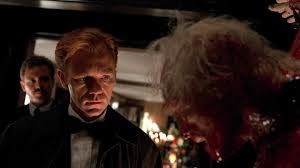

David Caruso, Jade

I find car chases a big challenge to put in a film and I’ve actually only done three of them – in The French ConnectionTo Live and Die in LA and Jade. But I’d like to do more. Now, of course, they can do them with digital photography and there’s not even any action going on. But I enjoy shooting them because I love cinema and that’s about as pure as it gets. 

Scenes like them and the one on the bridge in Sorcerer are, to me, pure cinema. No-one’s saying anything: it’s just stuff happening in front of the camera. You’re not gonna see that on the stage, except maybe in a Baz Luhrmann show.


What’re your feelings about cinemas like the one we’re standing in [the Astor]?


There is hope. For the most part, films have become the products of giant corporations. When I started making films, they were owned by individuals, men and women who loved movies. Now they’re owned by people who love profits more. But a cinema like this, and a few others in the world, they’re what keep the dream alive.


Wednesday, 23 August 2023

Sixty Years of International Art Cinema 1960-2020 the Sixties part 6 (17), Italy and Luchino Visconti - Bruce Hodsdon's series continues.


ITALY

Vittorio De Sica b.02    Roberto Rossellini b.06    Luchino Visconti b.06    Michelangelo Antonioni b.12    Gillo Pontecorvo b.19    Federico Fellini b.20    Francesco Rosi b.22   Pier Paolo Pasolini (70) b.22   Mauro Bolognini b.22   Vittorio De Seta b.23   Valerio Zurlini b.26    Elio Petri b.29 Ermanno Olmi b.31, Marco Bellocchio b.39   Bernardo Bertolucci (72) b.40    

NB Luchino Visconti (1965), Federico Fellini (1966),  Michelangelo Antonioni (1968)  Francesco Rosi (1968), Pier Paolo Pasolini (1970) and Bernardo Bertolucci (1972) were chosen among the five directors of the year selected by International Film Guide in the years listed after their name. For further explanation of IFG’s role in promoting international art cinema CLICK ON THIS LINK to read the first essay in this series.

**********************************

Luchino Visconti

The Italian neo-realists were the first to confront the form and content of the Hollywood style that, with a few exceptions, was the universal film-making style in the 30s and early 40s. For them this style was part of the burden of history and culture they needed to cast off at the end of World War II. 

The initial post-war phase in the growth of an art cinema was initiated by Italian neo-realism spanning a decade or so beginning in 1942, seminal films being Rome Open City (1946), Paisà (1946) and Bicycle Thieves (1948) in the international influence of this outbreak in the precipitousness conditions of war. 

The neo-realists, in theory at least, would develop a new relationship between camera and subject, and so between audience and film. Their success was only partial, because the one element that needed to be expunged from the text, sentimentality – the unwarranted, unfulfillable, irresolvable attachment of viewer to fictional presence – remained […] Nevertheless, the neo-realists  drew attention to the figure in the environment in such a way as to affect all cinema to come.” (Kolker Introduction ‘Bernado Bertolucci’ 1-14)

They drew on the otherness of the world they were filming (Visconti, amidst the social and economic complexity of Sicily, Rossellini in Nazi occupied Rome) developing expressive narrative strategies in what André Bazin identified as a break with conventional realism (“a new moral attitude”) from which a modernist cinema arose. From this flowed the various new waves of the 1960s and of the 1980s. Like the neo-realists, filmmakers in Europe, Japan, Taiwan and the Americas “worked out solutions to problems in representation posed by the local (historical) situation.”  (D.Andrews  Film in the Aura of Art p.viii) 

The continuing interest in neo-realism lies in that it was neither a straightforwardly homogeneous nor unitary phenomenon but successfully crossed the boundaries between highbrow and lowbrow, tradition and modernity, engagement and pleasure” (Simona Monticelli). 

Rome Open City

While Roy Armes endorses the historian’s perspective of neo-realism as a movement he contends that ;

 “the filmmakers themselves lacked any sense of intense participation in a collective enterprise - they remained individuals with their own personal styles and concerns - and from their point of view neo-realism was in fact a discipline. It imposed on them an obligation to confront the immediate problems of postwar Italy, and while social reality does provide a rich terrain for the artist to explore, it can equally prove eventually to be something of a strait jacket “(195) .

After what Mira Liehm refers to as the inertia in the 1950s, in the sixties art films not only brought prestige to Italian cinema internationally but were also often commercially successful. Four master auteurs -Visconti, Fellini, Antonioni and Rossellini - in the words of Peter Bondanello, “transcended their neo-realist origins to develop highly personal cinematic styles” (196), in the process showing that great art and profits were not incompatible.   

P. Adams Sitney nominates 1960 as annus mirabilis “the most remarkable for film premieres in the history of Italian cinema.” In February La dolce vita created immediate controversy concerning its alleged ‘immorality” to become “the most successful film in the then 65 year history of the native industry.” At Cannes in April L’Avventura “scandalised traditionalists and mobilised support of an international core of emergent modernists.”  In September Rocco e i suoi fratelli signalled the return of Visconti to pre-eminence and ignited further heated debate over censorship. Finally in January 1961 La Notte “confirmed the artistic triumph of Italian cinema” (109). 

The legacy of neo-realism: social, and ultimately, psychological realism destined to merge into an “indecomposable whole” in modernist art cinema, a term proposed by Antonioni in his preface to the published screenplays of his path-breaking trilogy. (1963)  See Part 6 (20) of this series to follow.


Part 1 Luchino Visconti : forging a new style  

Born into a wealthy aristocratic family Luchino Visconti (1906-76) became involved early in left wing politics.  After being introduced to Jean Renoir in the mid 30s at the time of the emergent left-wing Popular Front, Visconti assisted him on Partie de Campagne.  As a young man coming from a Fascist country Visconti acknowledged that this contact had a profound influence on his political and aesthetic ideas. 

Ossessione

Returning to Italy Visconti made Ossessione/Obsession (1942) adapted from an American thriller ‘The Postman Always Rings Twice’ written in hard-boiled naturalist style in a subjective first person narrative by James M Cain that is discarded in the film.  It was first suggested to Visconti by Renoir as a possible source, re-conceived and filmed by Visconti in Po Valley locations. It occupies a pivotal place in the history of Italian cinema “because it simultaneously reflects the convergence of so many […] different cultural and intellectual experiences, and establishes itself as great art rather than as an ideological manifesto” (Bondanella 26) as it was originally conceived at the script stage signed by Visconti and four others and revised by Alberto Moravia in keeping with the left wing “Cinema group.” The original title was Palude (Marsh). The group members were all active in the underground anti-fascist movement (Liehm 52). 

The choice of the source for Visconti’s first feature also reflected the influence of American fiction on Italian culture at the time recognised as an important external stimulus to the rise of neo-realism (Bondanella  25). In the process of placing it in an Italian ambience Visconti delivered an interpretation much superior to the 1946 American version and two French adaptations, the irony verging at times on the absurd in the novel, in the film the Italian landscape is “transformed into a stage for violent passions and burning sensuality presented with a tragic intensity that had almost been forgotten on the Italian screen” (ibid 29).

Visconti thus directly challenged then Italian culture under Fascism; Ossessione was severely mutilated and shortened after being threatened with an outright ban (the censorship involving the Church) to be released in its intended form only after the war. Although then lacking political and historical perspective, as Nowell-Smith points out, it is often seen in unqualified terms as a precursor to neo-realism. “This in itself is sufficient to mark it off from all Visconti’s later films on the one hand, and the bulk of neo-realist production on the other “ (30 Visconti ‘Cinema One’). Visconti maintained that the term neo-realism was first coined simply to describe his first feature, connecting it to the realist stream in French 30s cinema and exemplified in the work of Renoir by films such as La Chienne (1931) and Toni (1935). Ossessione is pre-neo-realist in anticipating certain of the themes and styles but for good historical reasons, Nowell-Smith suggests, misses out on others. It is, one might say, neo-realism without the neo” (ibid 32). 

Ossessione

Nowell-Smith further points out that “political content and unequivocal commitment imposed themselves naturally in the years 1943-50, even on Rossellini with his waywardness with respect to what he saw as the constrictions of fictional narrative.  “Without this impetus neo-realism would not have acquired its specific character” (ibid). The connection for Rossellini between realism and political commitment was contingent on certain unrepeatable events, “a realistic and immediate treatment of something which he felt of direct interest uneasily masked a set of fairly constant  moral imperatives.” He remained a realist but the focus of interest changed over time. 

Visconti also changed over time but in a different direction. He stands at the opposite end of the spectrum to Rossellini who at this stage was always an immediate witness to contemporary events even to the point of stylistically establishing a ‘presentness’ in the realistic evocation of the past.  From the beginning, “unlike Rossellini, Visconti believed in a shaped narrative that shows development of plot and character over a period of time” (Armes 120). For him “realism appears as incidental and direct interest expressing itself only in the form of certain recurring themes and motifs.” So Nowell-Smith concludes that “their paths coincided very little; first in the general concern of any artist for the truth of the situation, real or imagined; and secondly in their brief association with a moment of social realism in the Italian cinema […] Visconti [became] more profoundly political but stylistically less of a realist, and Rossellini [became] an apparent political opportunist but morally and aesthetically consistent with what he [had] always been (ibid 30).”  

La Terra Trema

Visconti f
ollowed Ossessione with La terra trema/The Earth Trembles (1948) closely adapted from a realist novel ‘I Malavoglia’  by Giovanni Verga whose writing had long engaged him as a Marxist and follower of Antonio Gramsci. What synthesised for him was the way the apolitical Verga, writing c1880, captured the continuing intricate self-contradictions of Sicily. Initially the film, technically backed by a private short lived production company, La terra trema was initially funded by the Communist Party. It was originally planned as three short self-contained episodes each with revolutionary content dealing with social problem industries - fishing, mining and agriculture - confronting post-war Sicily. According to Roy Armes Visconti returned the money to the CP and financed it himself. 

Only the first story, Episodio del mare, retitled La terra trema as Armes describes it in part a documentary on crafts and faces […] with a plot development that takes more than two and a half hours to run,” an epic family based drama resembling Greek tragedy. Visconti achieves a remarkable formal cohesion drawing inspiration from the novelist without showing discernible theatrical influence, “a study of defeat and not an affirmation of victory through class solidarity” in the context of the struggles of a Sicilian fishing community stressed by economic exploitation but lacking the collective will to deal with it. With his next film, six years later, “the trajectory of Visconti’s career sweeps in a wide arc round the area generally known as neo-realism.”  Although seen as a founding neo-realist film, in the perspective of his emerging career La terra trema set Visconti on a new path.

La Terra Trema

In Ossessione “a film about the destructive power of passion” Visconti modified the crude ironies of poetic justice in the novel, forging a totally new narrative style. This heightened his concern with the formal visual aspects in his first post war film matched by a sparse score of natural and informal music-making that gave the Italian cinema one of its masterpieces with La terra trema” 
(Armes).  In the other stream of his work in the theatre which ran side by side with that in the cinema, Visconti fused the two streams together with a realistic production of Chekhov’s Three Sisters in 1952 on the stage and in the cinema with the infusion of the operatic in Senso in 1954.  “This new and enriched style took Visconti beyond the bounds of neo-realism, though his characteristic themes and obsessions and the chosen means of expression were still realistic in the wider sense of the word” (Armes 119). 

Senso

In Senso Visconti’s
 operatic sense of style is synthesised with an external historical world here adapted from an ‘undistinguished’ novel by Camillo Biotto as a point of departure. Visconti preferred to work from a literary source with maximum freedom to develop a critical realism set in a time of historical upheaval marked by major shifts in cultural values usually in Visconti’s films within the confines of the dissolution and destruction of a single family, as previously noted. “In this way he achieves “a certain economy of historical explanation” (Bondanella 197) dramatically evoking the clash of value systems in vanished eras. 

Senso begins in 1863 in the last months of the Austrian occupation of Venetian provinces. The affair between Franz, a corrupt and cowardly Austrian officer ultimately destroyed by his self-deceit, and an older woman, an Italian countess married to a high dignitary but loyal to the Garibaldian partisans through her cousin Ussoni. Their affair is a personal melodrama interwoven with historical forces. Her masochistic submission verging on madness, ends in guilt, betrayal and seeming moral annihilation. The film ends with the Italian government forces, after rejecting the involvement of the partisans, defeated by the otherwise retreating Austrians at the battle of Custoza in 1866. The Italian government that emerged from the upheaval was not substantially different from what it had been before, one elite replacing another, the two suspiciously alike. While Franz is “representative of a dying class, what Livia represents is not so simple. Her character is all her own, the conflicting external determinations are not sufficient to fit her into any mould. At least she has the freedom to abuse, which Franz never has.” (Nowell-Smith ‘Visconti' Cinema One 87). Encountering production problems (several scenes were cut at an early stage), and censorship and distribution difficulties resulting in further cuts, Senso was not released in the form Visconti intended.

He brings to the fore a tendency in his films for the dialogue to generate violent emotions that even his operatic vision can barely contain.  Visconti revealed his ambivalence about the attempts to define neo-realism, insisting that it was “first and foremost a question of content” and not of form.  However, Mira Liehm notes that Senso (1954) was the first Italian film in which colour is used to convey characters’ emotions, Visconti anticipating Antonioni in The Red Desert by a decade.  Music (Bruckner’s ‘Seventh Symphony’ and Verdi’s ‘Il Trovatore’) also plays an integral part. A central characteristic of Visconti’s films, as Bondanella notes, is the distinctive style of set design, costuming and photography.

In an interview with Cahiers critics Jacques Doniol-Valcroze and Jean Domarchi (republished Sight and Sound, Summer 1959) Visconti said he “tried to make [Senso] with maximum realism, at the same time giving it an element of Italian melodrama." Liehm sees this as “not an exact image of reality but a staged hallucination of this world and its most devastating passions, creating a powerful impression of reality through overt melodramatic imagery and an operatic character. Avoiding any attempt to reconstruct the phenomena of a historical epoch, he captured its spirit” (148). 

The Leopard

In contrast, Visconti in The Leopard (1963) is set in Sicily at the same historical time of the Risorgimento - the political unification of Italy. The treatment of a similar theme to that of Senso is elegiac in mood - sexual and political betrayal with an ambiguous underlying thematic of the survival or otherwise of class or family groupings in the context of historical change.  As Nowell-Smith points out, uniquely in Visconti’s films, the Prince in The Leopard is the only character to remain permanently above the action. Visconti’s own position in seemingly identifying with the Prince, remains equivocal while viewing the Risorgimento as a revolution that failed.  

 The social concerns of La Terra Trema are transmuted into episodic family melodrama against the background of Italy's Southern problem in Rocco & His Brothers (1960) with a more optimistic short epilogue, the children surviving to make their own lives.  White Nights (1957) and Vaghe stella dell'Orsa/Sandra (1966), in contrast to Rocco, are both aesthetically and emotively confined to more intimate canvases, one based on Dostoevsky's short story (also forming the basis of films by Ivan Pyryev and Robert Bresson) in Visconti’s film “hovering between reality and dreams” (David Melville, Senses of Cinema). Sandra, a family melodrama in a modern setting, is densely psychoanalytic, the family destroyed by internal forces. However, as with the children in Rocco,the daughter Sandra does survive with the suggestion that there is a future for her and other family members. 

In Visconti’s later films such as his self-described German trilogy - The Damned (1969), Death in Venice (1971) and Ludwig (1972) - baroque melodrama is sustained only by each being set in their own present with no sense of a past or future, reflecting what Nowell-Smith identifies as Visconti’s increasing scepticism “about history as a progressive development.” Mark Cousins notes Pasolini’s ultimately tragic attempt “to live outside modern Italy’s sexual and moral norms by focussing on times and people whom he felt were untouched by sexually (sic) repression, his aristocratic fellow-director did the opposite.” In the trilogy, in each film Visconti uses “a German theme or source material to find something fatal in repressed homosexuality.” (The Story of Film 331). 

“Despite his pessimism and his fascination with decadence Visconti never abandoned the Marxist convictions he had formed in his youth” (Nowell-Smith in ‘History of World Cinema’). The aesthetic effect, as noted, can be politically equivocal.

************************

Previous entries in this series can be found if you click the following links


Sixty Years of International Art Cinema: 1960-2020 - Tables and Directors Lists to Accompany Bruce Hodsdon's Series


Notes on canons, methods, national cinemas and more


Part One - Introduction

Part Two - Defining Art Cinema

Part Three - From Classicism to Modernism

Part Four - Authorship and Narrative

Part Five - International Film Guide Directors of the Year, The Sight and Sound World Poll, Art-Horror

Part Six (1) - The Sixties, the United States and Orson Welles

Part Six (2) - Hitchcock, Romero and Art Horror

Part Six (3) - New York Film-makers - Elia Kazan & Shirley Clarke  

Part Six (4) - New York Film-makers - Stanley Kubrick Creator of Forms

Part Six (5) ‘New Hollywood’ (1) - Arthur Penn, Warren Beatty, Pauline Kael and BONNIE AND CLYDE

Part Six (6) Francis Ford Coppola: Standing at the crossroads of art and industry

Part 6(7) Altman

6(8) Great Britain - Joseph Losey, Lindsay Anderson, Karel Reisz, Richard Lester, Peter Watkins, Barney Platts-Mills

6(9) France - Part One The New Wave and The Cahiers du Cinema Group

6(10) France - Part Two - The Left Bank/Rive Gauche Group and an Independent

6(11) France - Part Three - Young Godard

6(12) France - Part Four - Godard:Visionary and Rebel

6 (13) France Part 5 Godard with Gorin, Miéville : Searching for an activist voice

6(14) France Part 6 - Creator of Forms - Bresson 

6 (15) France Part 6 - Creator of Forms - Jacques Tati

 6 (16) - Part 6 - Creator of Forms - Carl Th Dreyer