Showing posts with label Lina Wertmuller. Show all posts

Thursday, 9 December 2021

Vale Lina Wertmuller (1928-2021)


News has just arrived that Italian director Lina Wertmuller has died. You can read about it here in The Guardian.

Wertmuller was a living force of nature and her films have endured. Cinema Reborn was a partner  with the Italian Cultural Institute in a seriously good and very well received season of Wertmuller's films at the Randwick Ritz earlier this year. Critics, scholars and cinephiles Jane Mills and Blythe Worthy did a whole host of work to get the show on the road, including arranging for speakers at each of the seven sessions.

A number of the introductions were also published on the Film Alert blog and you can find them if you click on these links below

Jane Mills introduces the season

Blythe Worthy introduces THE SEDUCTION OF MIMI

Danielle McGrane introduces ALL SCREWED UP

Bruce Isaacs introduces LOVE AND ANARCHY

Thursday, 22 April 2021

SEVEN BEAUTIES: Lina Wertmuller at the Randwick Ritz (4) - Bruce Isaacs introduces LOVE AND ANARCHY (Italy, 1973)


ACKNOWLEDGMENT

Before I start, I want to acknowledge the Bidgigal people of the Eora nation, the traditional owners of the land on which the Ritz Cinema is on and pay my respects to their Elders, past, present and emerging. 


INTRODUCTION AND CONTEXT


I’ve so greatly enjoyed thinking about Wertmüller’s Love and Anarchy for this event, and so I want to thank Jane Mills for her invitation, and for allowing me to be part of all of this. I also want to commend the Ritz and Cinema Reborn for supporting these retrospectives, which are just such an important part of making film histories visible and meaningful.


Lina Wertmüller’s Love and Anarchy


The film has a very long and playful subtitle, which is a hallmark of Wertmüller’s cinema – and I’ll leave you to discover that in the opening credits. Like the best auteur cinema, Love and Anarchy is inextricably connected to its filmmaker. And Wertmüller has a special place in cinema because she’s part of that astonishing wave of great Italian art cinema of the 70s – consider Luchino Visconti’s The Leopard (1963) or Federico Fellini’s Amarcord (1973), two of my favourite films. But alongside these grand auteurs, Wertmüller has been called iconoclastic, radical, a radical feminist – a subversive stylist – and an all-round prickly filmmaker. There’s a lovely moment at the 2019 Oscars during which she received an Honorary Award. In her acceptance, again, playfully, but with some meaning, I think, in light of the fullness of her career, she suggests that she wishes to change the name “Oscar’ to a feminine name. And the audience laughs. But it’s a powerful moment and declaration, particularly at the point of commemorating an entire career.


Love and Anarchy was released in 1973, and at the height of Wertmüller’s stature as a director. It also returned to themes that had been central to her earlier works. The film is set just before the start of World War II, during the fascist reign of Mussolini. And that time period is crucial, because setting the film in this time and place establishes a lineage to other great Italian films, such as, for example, Roberto Rossellini’s Open City (1945), or in fact the entire canon of Italian neo-realist films that had influenced Wertmüller. You could also situate a film like Pasolini’s Salo (1975), released only a couple of years after Love and Anarchy, within this Italian cinematic tradition. So from the outset of Love and Anarchy, there is an explicit identification with an Italian political cinema of the 1940s and onward, and the fascist-era setting (and the tragi-comedy of the political hijinks), marks the enormous ambition of this film.


Giancarlo Giannini (3rd from left), Love and Anarchy


Wertmüller has been described by critics and theorists as a “knee-jerk” or unsubtle feminist and political commentator. Her movies are melodramatic, excessive, broad, often “messy” – which is Jane Mills’s fantastic term (one of the curators of this festival) that so aptly describes Wertmüller’s body of work. It is true that Love and Anarchy is largely set in a brothel, that its main characters are, in some sense, caricatures or larger than life figures. There is a fantastically playful sequence in which Wertmüller’s camera captures the energy of the brothel in a dazzling array of shots, frenetic cuts, weirdly subversive framings, and so on. Even the film’s style is excessive, or exaggerated, at times messy. 


Mariangela Melato, Eros Pagni, Love and Anarchy
 

And yet what remains resonant about Love and Anarchy is that Wertmüller seems as interested in the ribald discussion of the goings-on in the brothel as she is in the anti-fascist resistance to Mussolini as she is in the broad satirizing of the hyper-masculinity of Patoletti (played by Eros Pagni) – in a gloriously excessive performance. My sense, therefore, of the achievement of Love and Anarchy, and the real pleasure of spending some time with it, is that, despite what many critics view as its crudeness as a political statement (with which I disagree), or a genre film, or a melodramatic farce, or a feminist treatise – that there remains such a poignancy and passion in the drama itself. And what I love about the film is that Wertmüller never sacrifices the elegance and beauty of this drama for the clarity of an overarching political message.  In my opinion, such an emphasis on a transparent political agenda would severely diminish the film. And Love and Anarchy is a very rich film indeed. 


Bruce Isaacs is Associate Professor  of Film Studies, Department of Art History | Faculty of Arts and Social Sciences


The next film in the Lina Wertmuller season  at the Randwick Ritz is Swept Away (1974)  AT 4.00 PM ON SUNDAY 25 APRIL


For bookings JUST CLICK HERE


Wednesday, 21 April 2021

SEVEN BEAUTIES: Lina Wertmuller at the Randwick Ritz (2) - Danielle McGrane introduces ALL SCREWED UP (Italy, 1974)


I acknowledge the Bidgigal people of the Eora nation, the traditional owners of the land on which the Ritz Cinema is on and pay my respects to their Elders, past, present and emerging. Their lands were never ceded. Always was, always will be, Aboriginal land.


Hi, my name is Danielle McGrane.


I’m a film and TV critic and pop culture reporter for ABC Radio Sydney and a presenter on ABC Classic, and it’s a real pleasure to be here today to introduce this film, All Screwed Up, from Lina Wertmüller.


I’d like to thank Jane Mills, Associate Professor at UNSW for asking me to be a part of this retrospective. I’ve had an interesting few months digesting Wertmüller’s work and learning more about her.


When Jane pitched Wertmüller’s films to me she didn’t shy away from the fact that she can be a divisive character - interestingly to people from both sides of an argument. She’s been accused of misandry and misogyny but Jane also promised me she was outrageously sparky, funny and over the top - so really how could I resist?


She wasn't wrong.  In fact, when I first started watching her films I was struck by her utterly unique characters. These were people who weren’t afraid to show their emotions - they could display a wide-eyed innocence in one scene and an utter cunning in the next.


It’s no surprise that when Wertmüller worked with Fellini on 8 ½  he asked her to find the extras - he wanted the faces of real Italian people - and she obliged. And I think she’s managed too to find those real characters for her own films.


Lina Polito, All Screwed Up


I also love how she frequently and unapologetically looks at things from the male perspective - men are often the protagonists while women are more like satellite characters. But at the same time, the women never seem like adornments - and as you follow her films on a timeline you catch these glimpses of how women are beginning to change and forge their way out of the kitchen and home, and into the workplace and more emancipated world - even in the most patriarchal of Italian societies.


I’m excited that we’re watching All Screwed Up today because it’s in this film that I really feel women are starting to take back some of the power - sure there are some triggering moments, but there’s a real sense of change in the air; the women in this movie are using their domestic prowess and even their sexuality as a commodity that they’re in control of for a change.


It’s Milan in 1974 - this is the year Italy held its first referendum on divorce and the people voted heavily in favour to keep the law which had come into effect in 1970. This referendum was heavily supported by the Catholic church and the Vatican - and take it from someone who comes from a Catholic country, the fact that divorce was allowed to remain was a big deal.


Luigi Diberti (Gigi), Nino Bergamini (Carletto), All Screwed Up


So a synopsis of this film will tell you it’s about two country boys, Gigi and Carletto, who come to the city to make their fortune. But I think it’s really about a society in flux, one that’s moving into a more emancipated way of life.


These young men end up living in a sort of commune with other young workers from the country, most of whom happen to be women. Watch, as I mentioned earlier, how the women maintain control over the men as much as possible by using their domestic and sexual skills. It's amusing, but also ingenious, how they do it. 


I like to think that a lot of their ingenuity and agency is an extension of Wertmüller’s. In a recent interview, she said that when she started making movies women had only just started working - and there were social rules that said the husband brought home

his salary, and the wife took care of educating the children and running the household. 


But she refused these bourgeois rules, and so too do a lot of her characters. They find different ways to forge their own path, much like Wertmüller. She’s also not afraid to be political - when it comes to the terrorism that was being waged in Italy at the time between the far left and the far right, Wertmüller’s characters are all too aware of it and even get involved. The workers march, they argue, they take sides.


In this film, this commune is in a fight to exist against developers who want to turn it into another skyscraper - Wertmüller is always telling us what’s going on in society, and how it affects the working classes.


So as a director she's a trailblazer with a keen eye. She’s unafraid to be completely herself. She doesn’t care if she pisses off one side or the other, and I have to agree with Jane - she’s gloriously funny, sparky and over-the-top.


It also feels like the right time to be celebrating her particularly as the first woman to have been nominated for a best directing Oscar back in 1977. Because this year two women have been nominated in that category - Chloé Zhao for Nomadland and Emerald Fennell for Promising Young Woman, and I’d be very surprised if Zhao doesn’t win it. It’s taken a while but it does feel like we’re finally making progress when it comes to recognising women in filmmaking.


So, if we’re to take our lead from Wertmüller and continue to blaze a trail, the message here for everyone is to be authentic - and don’t worry about trying to keep everyone happy. 


Every character in this film is flawed and loveable, inspiring and disappointing - I guess you could say human.


Enjoy All Screwed Up after a little message from Wertmüller herself.

Thursday, 15 April 2021

SEVEN BEAUTIES: Lina Wertmuller at the Randwick Ritz (2) - Blythe S Worthy introduces THE SEDUCTION OF MIMI (Italy, 1972)

Before we get started, I would like to acknowledge the Bidjigal people of the Eora nation, the traditional owners of the land on which the Ritz Cinema stands, and pay my respects to their Elders, past, present and emerging. I would like to extend this respect to any First Nations people in the theatre today. This land was never ceded, and will always remain Aboriginal land.

Hello everyone and welcome to our second screening for the Seven Beauties retrospective, where we dive deep into the work of Italian auteur Lina Wertmüller. 


So, The Seduction of Mimi, at least this is the title under which the film you are about to seewas released in the United States in 1972, although a literal translation of the Italian-language title would be “Mimi the metalworker, wounded in honour.” Considering this film is about politicking among the little fish, much like last week’s film The Lizards, I am intrigued by this rebranding—perhaps the American audience attended in 1972, anticipated an Italian romp—and were rewarded with… something different…


The Seduction of Mimí was released towards the beginning of what was a furiously productive decade for the young Wertmüller after a period as assistant director to veteran Italian auteur Frederico Fellini on his film 8 ½(1963). Wertmüller’s debut, The Lizards, was adored by Italian critics for paying tribute to neorealism and to Fellini himself, and yet, it struck at an intellectual, haute-cinema audience, an audience Wertmüller quickly discarded as “conventional.” [1]


Seeing the limited circulation of auteurist cinema, Wertmüller made a critical decision to change her politics and approach, searching for what she called “a popular cinema,” embracing anything, she said that “might enable me to communicate with the people.” 

… And so she made this film.


Giancarlo Giannini, The Seduction of Mimi


Celebrating the bawdy, tits-ass-and-the-toilet-seat humour of the Commedia all'Italiana genre, The Seduction of Mimí was the first film to translate into international success for Wertmüller, its distinct style reproducing echoes of her work for the Italian state television company RAI in the mid ‘60s, where she directed, among other things, the first musicarello, or “musical-comedy” ever broadcast on Italian TVThe Seduction of Mimí is full of mass-appeal gags, crass humour and a vibrant visual style suited to television, far from the restrained realist aesthetic of her first film. 


                 As a TV scholar, I am transfixed byWertmüller’s juggling act with a host of Cold War ideologies, including communism, feminism, and Trotskyism, knitted together in a vibrant explosion not unlike a musicarello (without the dance breaks). Wertmüller, a staunch socialist and provocateur, is clearly working within the remit of a specifically Italian Socialism here, where notions of comradery include both the family and The Mob, an adherence to Omertàthat slowly but surely irritates Mimí the metalworker’s “wound of honour.” 


As Sergio Rigoletto notes, Wertmüller’s films are “very much in the Italian film tradition of post-war populism going back to Luigi Zampa and Giuseppe De Santis,” Wertmüller’s films “aim to raise the consciousness of vast masses of ordinary spectators around particular social and political issues.” [2] 


Mariangela Melato, The Seduction of Mimi


This objective is pursued through the use of standard televisual humour, where comedy is easy, with mass appeal. In The Seduction of Mimí, an overweight woman’s ass wobbles comically in front of a wide-angled shot to antagonise the conventions of appropriately sexualisedfemininity, and a generation of related mafiosos often hover just out of frame, their three familial facial moles representing Mimí’s expected devotion to his country, church and “family.”


The film you are about to see is a desperately risky move on the part of Wertmüller, as she alienated critics in her home country. These critics saw The Seduction of Mimí as a degradation or regression, ignoring Wertmüller’s attempt to try and connect with Italy’s working class, people just like Mimí, who she saw as key to progressing society forward, though they were trapped between esoteric ideologies. In making this sacrifice, Wertmüller, according to Rigoletto) brings into “critical focus” the “limitations of the categories” normally invoked in the study of popular and art cinemas whilst complicating the “often taken-for-granted assumption about the spontaneity and the lack of artistry of popular cinema.” [3] 


I wholeheartedly agree, and am so excited for you to watch what I think is Wertmüller’s most ambitious and original film. Enjoy. 


************

Dr Blythe S Worthy is a postdoctoral researcher and tutor at the University of Sydney. She is Documentary, Film and Television Editor at the Australian Journal of American Studies and Coordinator of the Sydney Literature and Cinema Network. Blythe will also be introducing Lina Wertmuller’s SWEPT AWAYwhen it screens at the Randwick Ritz at 4.00 pm on Sunday 25 April.

BOOK TICKETS HERE


[1]Rigoletto, Sergio. “Laughter and the Popular in Lina Wertmüller’s The Seduction of Mimí”, L. Bayman et al. (eds.), Popular Italian Cinema, (Palgrave Macmillan: 2013).

[2]Rigoletto, Sergio. “Laughter and the Popular in Lina Wertmüller’s The Seduction of Mimí”, L. Bayman et al. (eds.), Popular Italian Cinema, (Palgrave Macmillan: 2013).

[3]Ibid.


Monday, 29 March 2021

Lina Wertmuller at the Randwick Ritz - Jane Mills introduces Seven Beauties: The Films of Lina Wertmüller, a retrospective of seven films at the Ritz at Randwick, Sunday 28 March – Sunday 9 May, 4:00 pm.


This season of films is presented in collaboration with Cinema Reborn, the Istituto Italiano di Cultura, Sydney, and the Italian Ministry of Cultural Heritage and Activities. For tickets 
CLICK HERE

Introduction by Associate Professor Jane Mills, UNSW

I acknowledge the Bidgigal people of the Eora nation, the traditional owners of the land on which the Ritz Cinema is on and pay by respects to their Elders, past, present and emerging. Their lands were never ceded. Always was, always will be, Aboriginal land.

On a personal note, my thanks to Blythe Worthy who worked with me to wrangle the speakers. 

Lina Wertmüller’s films were hugely popular in the 1970s. Especially in America although also in Italy where her ‘commedia all’italiana, a film comedy style deriving its name from the title of Pietro Germi's film, Divorzio all'italiana (Divorce Italian Style, 1961), gave her a big following.

In 1975, she was the first woman ever nominated for an Oscar for best director for her film  Seven Beauties.And then “pouf!” She seemed to disappear although, in fact, she continued making films until 2014. 

Wertmüller re-emerged triumphantly in 2019 when – at last - she was awarded an honorary Oscar (below). At the ceremony, at which Greta Gerwig and Jane Campion declared they were huge fans, rather than humbly thanking the Academy, Wertmüller boldly reprimanded it for its sexism , insisting that Oscar should be renamed Anna. How very Wertmüller! 


A brief portrait. 

She was born in Rome to a devoutly Catholic middle class family. Her full name, incidentally, is Arcangela Felice Assunta Wertmüller von Elgg Spañol von Braueich. This might explain Wertmüller’s penchant for absurdly long film titles: she once made it into the Guinness Book of Records for a film’s longest title. But as she said: "It is not so terrible to be ridiculous - I am living proof of this point!"

Her provocative, rebellious character made itself apparent early: as a teenager, she was expelled from at least 11 schools,  the last for challenging Christian dogma that she objected to being taught as “the Truth.”. Doubtless, the nuns didn't much like her teenage passion for comic books, especially the Flash Gordon comic strip. She later cited this as an influence, explaining she found the framing “rather cinematic, more cinematic than most films.” (We'll see a character in this afternoon’s film, I basilischi, reading a Flash Gordon comic.) Upon leaving school at 17, she  began working in the theatre and directing avant-garde puppet theatre – two more influences that can be seen in several of her films. 

Wertmüller was like her films: over-the-top, in-your-face, emotional (often exhaustingly so), provocative and defiantly incorrect long before the term “politically correct” had been invented. She and her films were also perverse, funny and political. However, not everyone got or enjoyed her jokes: her satirical approach to gender and class politics often angered feminists and Marxists.  Leaving the Communist Party in 1959 and becoming an ardent, although never uncritical, socialist, Wertmüller was a socialist-feminist who could take a joke. She could dish them out too.There was probably no nose she didn't enjoy getting up. And no-one of any political persuasion she didn't enjoy sticking up her middle finger at. Which might make her and her films sound rather vulgar.  As,  gloriously, they often were.

Films in this retrospective
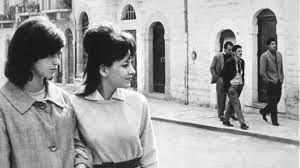
I Basilischi/The Lizards

Wertmüller’s film career didn't start exactly by chance. Although she did have the good fortune to have a girl friend whose husband happened to be Marcello Mastroianni. Who, of course, knew Fellini. What do you do if you want to learn how to make films? If you're Lina Wertmuller, you don't hang around hoping to get a job as a tea-maker or, if you're really lucky, a runner. You knock on Fellini’s door and demand to be his Assistant Director. She got the job on 8 ½ (1963) This led to her first film I Basilischi which she made in the same year.  Before introducing this film that we’re seeing today, let me briefly outline the films and speakers in store for us over the next six Sundays.
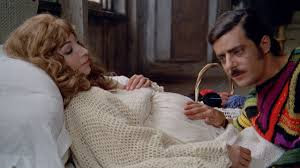

The Seduction of Mimi

On Sunday 4 April,in The Seduction of Mimi (Mimi’ metallurgico ferito nell’onore1972) you’ll meet the devilishly handsome Giancarlo Giannini (who I think of as Wertmuller’s muse) playing a Sicilian dockworker fighting Mafia corruption and the wiles of a beautiful young Communist organiser - with lack of success in both cases. This ferocious farce that won Wertmuller best-director award at Cannes will be introduced by Dr Blythe Worthy,researcher and adjunct academic at the University of Sydney and Film Reviews Editor for the Australian Journal of American Studies.
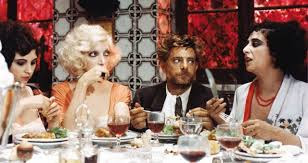

Love and Anarchy

On Sunday 11 April,we have Love and Anarchy (long title coming up: Film d'amore e d'anarchia, ovvero: stamattina alle 10, in via dei Fiori, nella nota casa di tolleranza…1973). Set in fascist Italy just before the outbreak of World War II, Giannini plays a farmer turned anarchist who stays in a brothel while planning to kill Mussolini and, inevitably, falls in love with one of the whores. As you do - if, that is, you’re in a Wertmüller satire. It will be introduced by Associate Professor Bruce Isaacswho teaches Film Studies at the University of Sydney;  read his ‘Great Movie Scenes’ column in The Conversation https://theconversation.com/au/topics/the-great-movie-scenes-61548). I confess I asked Bruce – also another male colleague – partly because I wanted their response to what has been described at times as Wertmüller’s man-hating, knee-jerk feminism. 


All Screwed Up

Next, on Sunday Sunday 18 April, ABC Radio entertainment reporter/ producer and critic specialising in music, film and TV Danielle McGrane introduces All Screwed Up (Tutto a posto e niente in ordine1974). In this, a group of immigrants try to adjust to city life but quickly find that everything is in its place, but nothing is in order.  Rape, unwanted pregnancy, prostitution, poverty, and gender politics  are all subject to Wertmüller’s own anarchic sense of humour:  “Man(kind) in disorder” is a theme that Wertmüller has often said sums up her films. One of the reasons I asked Danielle is because I’m fascinated to know what a younger feminist today thinks of Wertmüller’s provocative brand of feminism.
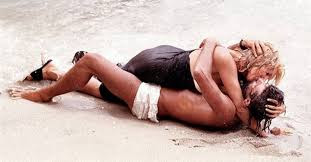

Swept Away

On  Sunday 25 April, Swept Away (Travolti da un insolito destino nell'azzurro mare d'agosto, 1974) will be introduced by Associate Professor Francesco Borghesi who chairs the Department of Italian Studies, University of Sydney and whose teaching includes “Passions in Italian Culture.” This film gives us a mischievous contest of wills between a beautiful, rich, bourgeois woman and a smelly (according to her) communist sailor (who find themselves shipwrecked on a deserted beach. One of Wertmüller’s better known films in Australia, it has stunning performances from the two leads, Giannini again (in a Cannes Festival Best Actor award winning role) and also the delicious Mariangela Melato. 
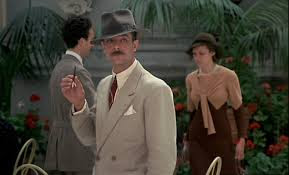

Seven Beauties

The last two films of this retrospective on the first two Sundays in May areboth introduced by Associate Professor Giorgia Alù who teaches Italian Studies at the University of Sydney and whose research interests include Italian cultural history and visual studies. On Sunday 2 May, there is Seven Beauties (Pasqualino, Settebellezze, 1975), the film for which Wertmüller was nominated for an Oscar and Giannini was nominated for best actor. This is undoubtedly her most outrageous film. Most audiences find it confronting: when Wertmuller decides to explore not only gender and class but also the sexual politics of a Nazi concentration camp … words fail me…but they didn't fail Wertmüller, that’s for sure!
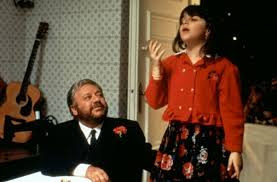

Ciao Professore

On Sunday Sunday 9 May, Giorgia farewells Wertmüller with her last film, Ciao, Professore! (1992). Critic Roger Ebert called this film about a strict teacher and his (much smarter) young students “a sweet movie.” But Wertmuller doesn't hesitate to expose the Italian political system which fails to address (let alone redress) the imbalance between wealthy northern Italy and poverty-stricken south.

So that’s the season. Leaving me with just a a small space in which to introduce her very first film:

I BASILISCHI ( The Lizards, 1963) 

I’ll start by saying something about some members of her crew which would be any debut director’s dream. Actually, any experienced director’s dream too.

Cinematographer Gianni Di Venanzo  shot  Fellini’s   and Juliet of the Spirits, and several films for Antonioni – including, incidentally, Antonioni’s Le Amiche (The Girlfriends, 1955) which screens at the Ritz on Friday 30 April at 6:30 in Cinema Reborn’s festival of restored films over the last weekend in April, see https://cinemareborn.org.au/2021-Program

The editor was Ruggero Mastroianni, Marcello’s  younger brother, a prolific editor with 189 films to his credit including Fellini’s Amarcord,Juliet of the Spirits and Ginger and Fred. 

Music:this was an early film of a little-known composer who the following year wrote the music forA Fistful of DollarsEnnio Morricone! (The Morricone whistle starts here!)


The title.

I believe the title has been poorly translated as The Lizards and lazily compared (sometimes unfavourably) to Fellini’s Vitelloni(1953). It’s true that both films portray a small group of aimless young men who loaf around in a rural Italian town all day, eyeing the young women and achieving nothing. But whereas vitellonitranslates as “calves” and Fellini portrays rather lovable, even frolicsome young bulls, Wertmüller deliberately calls her film basilischi meaning ‘basilisks’ rather than lucertola meaning ‘lizards’: a basilisk is a legendary deadly poisonous serpent.  There is a sharper political edge to how Wertmüller depicts her young men: she shows that the poisonous ineffectual lethargy has seeped into their souls from the societal, cultural and political order from which they cannot escape. The people in her sleepy southern town (Fellini’s film was shot in central Italy) simply don't have what it takes to challenge a society that encourages them to take a pride in “putting up with their lot.” As the commentary – the detached voice of the place – puts it: “their history and surroundings makes them so.”  Wertmüller captures the devastating effects of the economic imbalance between the wealthy north and the poverty-stricken south in ways that Fellini doesn't. 

Critics love pointing out the influences on directors and in Wertmuller’s case, Fellini, neorealism and Pietro Germi’s comedy Italian-style are often cited.  Fellini was undoubtedly an influence. Describing him, Wertmüller once said: “Meeting Fellini is like discovering a wonderful unknown panorama. He opened my mind when he said something that I will never forget: 'If you are not a good storyteller, all the techniques in the world will never save you.'” 

And certainly, her films display a strong love for her locations – prosperous northern cities and also the poor southern villages and countryside – and at time, a neorealist documentary style. You’d be forgiven for thinking I basilischi’s wonderful opening sequence as the camera slowly pans round the  ritual of family lunch followed by a siesta was pure documentary. But elements of stage theatre and comedy are too strong in this and i all her films for her to be considered a neorealist.  As for comedy, this was one of her great strengths – it may also explain why she fell out of favour  as comedy is notoriously subject to time and place.

I’ll end by sharing my favourite sequence in I basilischi, one that I think combines realism, location, sly comedy and something of the tone of puppet theatre. When Francesco (one of the basilisks) is making furtive advances on a young woman, we see her parading through the town streets, her bottom swaying – provocatively, it must be said - this way and that (she’s too bony to be jello on springs - but she’s trying), the pleats in her skirt swinging - alluringly - in and out, and her high heels going click, click click.  For me it’s – I was going to say: “pure Jacques Tati”. Actually, it’s pure Wertmüller.

Enjoy the film! 


Jane Mills. 

This is an extended version of her introduction to the Lina Wertmüller retrospective  at the Ritz, Cinema, NSW on 28 March 2021. 

Saturday, 20 February 2021

Seven Beauties:The Films of Lina Wertmüller - The Ritz at Randwick. Sunday 28 March – Sunday 9 May, 4:00 pm.


In collaboration with  the Istituto Italiano di Cultura, Sydney,
 the Italian Ministry of Cultural Heritage and Activities and Cinema Reborn

 
Wertmüller was the first woman to be nominated for a Best Director Oscar. 
“Her films were funny and frighteningly harrowing and big and emotional and over-the-top and popular…. 
she was able to do things that nobody else was doing… 
This was a very special artistic vision.”

Martin Scorsese.


Book tickets herehttps://www.ritzcinemas.com.au/events/seven-beauties-by-lina-wertmller


Sunday 28 March. The Lizards (I basilischi), 1963. 
With a wicked eye, Wertmüller’s first film follows three young male loafers who constantly hatch half-hearted plans but are hopelessly trapped in their own small-town lethargy. 

Introduced byA/Professor Jane Millswho teaches film at UNSW, isa member of the Sydney Film Festival’s Advisory Panel, and Associate Programmer for the Antenna Documentary Festival.


Sunday 4 April. The Seduction of Mimi(Mimi’ metallurgico ferito nell’onore), 1972.The devilishly handsome Giancarlo Giannini plays a Sicilian dockworker who fights Mafia corruption and the wiles of a beautiful Communist organiser. Aferocious farce that won Wertmuller best-director award at Cannes.  

Introduced by Dr Blythe Worthy, researcher and adjunct academic at the University of Sydney and Film Reviews Editor, Australian Journal of American Studies.


Sunday 11 April. Love and Anarchy(Film d'amore e d'anarchia, ovvero: stamattina alle 10, in via dei Fiori, nella nota casa di tolleranza…) 1973. Fascist Italy before the outbreak of World War II: Giannini plays a farmer turned anarchist who stays in a brothel while planning to kill Mussolini and, inevitably, falls in love with one of the whores. As you do. The director’s unique brand of feminism and Marxism is played to the hilt. .

Introduced by A/Professor Bruce Isaacswho teaches Film Studies at the University of Sydney and is currently working on a research project, ‘The Making of the Modern Action Film.’ Read Bruce’s ‘Great Movie Scenes’ column in The Conversation


Sunday 16 April. All Screwed Up(Tutto a posto e niente in ordine)1974.An outrageous, anarchic comedyin whicha group of immigrants try to adjust to city life; they soon find that everything is in its place, but nothing is in order. 

Introduced byDanielle McGraneentertainment reporter/producer and critic specialising in music, film and TV who regularly appears on several ABC Radio 702 shows talking film and music.


Sunday 25 April. Swept Away (Travolti da un insolito destino nell'azzurro mare d'agosto), 1974. A mischievous contest of wills between a beautiful, rich, bourgeois woman and a smelly (according to her) communist sailor (Giannino in a Cannes Festival Best Actor award winning role) who find themselves shipwrecked on a deserted beach.

Introduced byJane Mills.


Sunday 2 May. Seven Beauties (Pasqualino, Settebellezze), 1975. In fascist Italy, a macho, small-time criminal (Giannini in an Oscar-nominated performance) triggers his downfall when he vows revenge on a rival, and ultimately gets his will to survive tested to its limits when he is sent to a concentration camp. Nominated for a Best Film Oscar. 

Introduced by A/Professor Giorgia Alùwho teaches Italian Studies at the University of Sydney. Her research interests include modern and contemporary Italian literature, Italian cultural and social history, and visual studies.


Sunday 9 May, Ciao, Professore!1992. American critic Roger Ebert called this film about a strict teacher and his much smarter) young students “a sweet movie.” But lurking in the shadows is Wertmüller’s social conscience which exposes the ideological conflict between wealthy Northern Italy and poverty stricken south. 

Introduced by Giorgia Alù.


Notes by Jane Mills