Tuesday, 16 July 2019

John Baxter's Adventures in the Movie Trade (1) - An Aussie on the Venice Lido, August 1971

The Lido di Venezia, that former sandbank which for centuries has sheltered Venice from the worst surges of the Adriatic, is now so built up with hotels and villas, tennis courts and promenades that its lush plantings and stone walls constitute, like so much else in Venice, a kind of fashion statement. It’s a doormat on the city’s front step, tinted, appropriately, in the ochre and green of Gucci. Where better, then, to hold the annual Mostra del Cinema, aka the Venice Film Festival?  

Epicenter of the event is the Palazzo del Cinema (left), a slab of Mussolini Modern in grey/white marble which can’t help reminding visitors of something the organizers would prefer to forget - that the world’s oldest film festival was launched by Il Duce for the greater glory of Fascism. 

Not that politics was on the mind of the journalists assembled in the bar of the Hotel Excelsior, a little further up the island, in August 1971. Over inky espressos, each slurp delivering a caffeine hit as potent as CPR, we were debating how most fittingly to put John Ford, an elite guest of that year’s festival, in the ground. 

John Ford
In point of fact, he wasn’t dead. But from the glimpses we’d caught of him, hunched in a wheelchair, one eye obscured by a patch, he looked unlikely to last the week. To arrange a funeral in the style so often celebrated in his films was no more than courteous. 

A lanky Nebraskan had already been selected as the only suitable person to stand by the grave, sweep off his Stetson a la Duke Wayne, place it over his heart, look skywards and say, “Sir, we commend to your keeping the soul of John Martin Feeney, known to all present as John Ford.” After that, we debated who could play the harmonica well enough to provide a mournful musical accompaniment, and which tune would be more appropriate, Red River Valley or Taps.

Even as we plotted his funeral, however, Ford was showing unexpected signs of life. Electing to conduct his first interview from bed, he’d mortified the journalist by throwing off the covers to reveal he wore nothing below the waist. Ambling bare-assed across the room, he then pissed in the sink.  

Then news arrived of an incident while he was being transferred to a vaporetto  water taxi for the trip across the lagoon to the Lido. A festival functionary, fearing rough water, placed something in his lap. Ford glared at the object, rose shakily to his feet and roared in Cyclopean fury, “An officer whose last rank in the US Navy was Rear Admiral – and you offer him a barf bag?!”  

None of what was taking place around me felt entirely real. Six months ago, I’d been holding down a dull job at the Commonwealth Film Unit in Sydney. Deciding I could do better than composing press releases about films on the diseases of sheep, I wrote on CFU stationery to every European film festival, informing them of my imminent arrival on a fact-finding tour, and asking what they could offer in the way of hospitality.      Some never responded.  Others in Ireland and Finland, keen to justify their label “international,” invited me to serve on their juries.  None offered to pay my fare, but a few guaranteed room and board, providing I got there under my own steam.  The most prestigious of these was Venice.  

Through the spring and early summer, my companion Monica and I scraped together enough money to buy a battered VW and a tent. In July, we took the ferry to Calais, and started to experience Europe from the underside; camp-sites, not hotels; coffee, beer, bread and cheese rather than haute cuisine. We learned to recognize those cafés which, for the price of a cappuccino, would let us sponge off the worst of the sweat and grime in their washrooms.  

Occasionally we caught a movie. In Australia, a night at “the pictures” was a rite, celebrated in purpose-built Palaces, Plazas and Boomerangs. The cities of France, Germany and Italy still had such places, but once you left the bright lights behind, film-going had as much sense of occasion as a trip to the supermarket.  

Invariably dubbed into the local language, a movie might be projected in the town square or on a white wall in the cement-floored yard behind a bar. You sat on stackable chairs, and naturally  you took your beer with you. Frequent breaks, usually in mid-scene, permitted toilet visits, and the purchase of more beer. 

Cinema here was just another thread in the fabric of daily life; not  Cinema as Event but Cinema as Staple. Which did I prefer? Swept along by a Belgian horror movie already incomprehensible before being dubbed into Italian, I no longer cared. Lush dark female vampires threw off their clothes and sank their fangs into chill Nordic virgins.  In Australia, the mere glimpse of a nipple had the censor reaching for his scissors. Here, the locals just nudged one another and took another gulp of Stella Artois.  

Arriving outside Venice, we shook the wrinkles from our best clothes and took the car ferry to the Lido. The suave functionaries in the festival office weren’t fooled, but they were tolerant, barely smirking as they handed over the vouchers that gave us two weeks’ board and lodging. 

The elite stayed in hotels. We were allocated a pensione. It turned out to be the run-down mansion of a languid ex-actress, forced to rent the bedrooms where, she hinted broadly, stars had once vied for her body. 

About twenty metres from the bottom of her overgrown garden was one of the open-air cinemas to which we’d become accustomed. It shouldn’t trouble us, she said, casually closing the shutters; screenings seldom went later than 1am.  Fortunately, its sound system was too feeble to register as more than a mumble, but this just made the looming screen images that much more omnipresent. Posses of riders, ominously silent, stampeded through our dreams, and giant lovers - the phantoms of our landlady’s suitors? - murmured inaudible endearments. 

Johnnie Ray
Getting in with the other journalists proved easier than expected. Screenwriter John Gregory Dunne once summarized film industry chat as “all context, shared references, and coded knowledge of the private idiosyncrasies of very public people.” Newbies were welcome so long as they could contribute to the conversation.  Fortunately, I’d used my time in England to catch up on the latest scandals.  Better still, I could sweeten the pot with stories of bad behaviour by Hollywood personalities visiting Australia, news of which, they were convinced, would never get back to the real world.  After I’d described Johnnie Ray, now-forgotten singer of the lachrymose hit Cry, roaming the corridors of his hotel in the small hours, high on cocaine and dressed like Mrs. Bates in Psycho, my membership was assured.  

Monica found most of this group too movie-obsessed, but discovered a kindred soul in John Coleman, long-time film critic of the New Statesman.
       “I think I reviewed one of your books,” John said when we first met. 
        “You did,” I replied. ‘You said ‘Baxter’s book surfs on a wave of clichés.’ ” 
        “Did I really?” he said, unfazed. “Let me top up your glass.”  

John Coleman 
John was far too urbane and charming to dislike for long.  We sat in the gardens around the casino, watching his cigar smoke rising into the soft evening air, and listening to his stories of how, as a young man, he’d lived in Paris, supporting himself by writing pornographic novels for Maurice Girodias’s Olympia Press.   I could only think of James Thurber’s description of working on the Riviera edition of the Chicago Tribune during 1925/6. “Nice, in that indolent winter, was full of knaves and rascals, adventurers and imposters,pochards and indiscrets, whose ingenious exploits, sometimes in full masquerade costume, sometimes in the nude, were easy and pleasant to report.”  

John never met a malt he didn’t like. Scotch was his downfall – literally. One night, we arrived at the casino to see him poised unsteadily at the top of its wide stone steps. Slowly, majestically, he toppled, tumbling down the first flight to come to rest on the landing, dusty, but, with the luck of the very drunk, unhurt.  

During our sessions at the Excelsior and in the Venice cafés, the Anglophones had time to size me up. On the last day, the tall guy from Nebraska who so effectively impersonated John Wayne, asked “Are you thinking of settling in London?”
        “Depends on whether I can find work,” I said.

He handed me a card.  “Maybe I could help you there.” 

I read it in disbelief. He was Ken Wlaschin, director of the London Film Festival and the National Film Theatre. 

Ken Wlaschin (l) with Roger Corman and Derek Malcolm
A BBC radio producer added his card. It turned out he ran Kaleidoscope, the prestigious nightly arts review programme.

Another American, better dressed than the rest, and with some vague connection to the US Embassy, also proposed a lunch once we returned to London.  A year later, when I found myself lecturing on American cinema in Bucharest, the Embassy’s Second Secretary,  over a bottle of the potent local slivovitz,  explained that my new friend’s title of Student Affairs Officer disguised his role as a CIA spook whose job it was to filter sympathetic academics into unsympathetic regimes such as that of Ceausescu. 
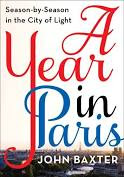


John Baxter is an Australian-born all-round writer, scholar, critic and film-maker who has lived in Paris since 1989 with his wife Marie-Dominque Montel and daughter Louise. His Wikipedia entry  details the many books he has written which include the first  ever critical volume devoted to the Australian cinema as well as studies of Ken Russell, Josef von Sternberg, Stanley Kubrick, Woody Allen, Federico Fellini, George Lucas, Robert De Niro and Luis Bunuel. His most recent book, one of a number of studies of Paris is A Year in Paris, described by the New York Times thus "In “A Year in Paris,” (Baxter) strings together the beautiful beads of the French everyday, all held together by the invisible act of imagination that makes a country cohere and endure." 

Monday, 15 July 2019

On SBS World Movies channel - Barrie Pattison checks out some of the initial offering L'EMPEREUR DE PARIS (Jean-François Richet, France, 2018) and SKY HUNTER (Chen Li, China, 2017)

Well we’ve now got the long awaited SBS 24/7 movie channel which so far is a mix of recent films that missed out on local theatrical distribution (that could be interesting) and the Studio Ghibli catalogue in their awful English language versions. 

Unless I blinked this is an outlet free from black & white  and one that doesn’t reach back further than 1979. It kind of leaves you longing for Channel 44 but Malcolm Turnbull wiped that off in lockstep with Trumpy’s closing PBS.

I’ve had a look at their 2018L'Empereur de Paris/The Emperor of Paris from the Vincent Cassel-Jean-François Richet team who did the Mesrine films. Not a good choice as it’s dim, detailed images call out for big screen presentation.

This one is another run through on Eugène-François Vidocq, the arrested criminal, and serial escaper who established himself as a law enforcer innovating many still continuing procedures and becoming the first head of the French Sureté. 

Vidocq turns up as a character in pieces by the elder Dumas, Honoré de Balzac and Edgar Allen Poe along with plays and video games. He figures in films including a pre-WW1 series with a young Harry Baur, Depardieu in the 2001 Pitof film and George Sanders in the 1946 Scandal in Paris, Douglas Sirk’s best movie, not that that’s much of a recommendation.

All this is an intimidating history for anyone to take on. L'Empereur de Paris, which starts with a character clubbing a live rat to death, has Cassel/Vidocq cautioned by fellow 1810 prison hulk prisoner August Diehl about boss Denis Lavant “He’s dangerous - like you.” Vincent spits on Lavant and is dropped overboard chained to a cannon ball from which he escapes.

The antagonism continues in Paris with Lavant, who is doing his Fagin act training kids to pick the pocket of a harlequin dummy without disturbing the bells hanging on it. Vincent convinces prefect Patrick Chesnais his insider knowledge can be used to apprehend the heavies who denounced him and a whole lot more and forms his own cut throat enforcement band. He also alternates the appealing duo of young pickpocket Freya Mavor (the new Lady in the Car With the Glasses and the Gun) and murderous Baronne Olga Kurylenko. 

The final fight with Diehl occurs in the Saint Maclou cathedral in Pontoise where Vincent attempts to drown him in the Baptismal fount. Napoleon has a walk on. Not unsurprisingly the most attention-getting character is Fabrice Luchini’s prosecutor Fouché who keeps Vidocq in suspense over his Lettre de Grace pardon. 

Handsomely mounted, there are hints of something more substantial in Cassel being locked in the cell with desperates, who his action is sending to the dreaded Toulon prison, hissing “Balance” at him though no one is game to raise a hand, or the “Do not confuse the people with the mob” exchange. However, these don’t cohere.
    
Also watched Chen Li’s 2017 Chinese Kong tian lie/Sky Hunter, an airborne Wolf Warriors with the fliers winging in to defeat terrorists who have taken their nationals hostage in a border state. 

In the best Billy Haines/Jimmy Cagney tradition, cocky pilot Chen Li (“I regard every second I spend on the ground as a waste of time”) ignores orders and comes onto forever glamorous Bin Bin Fan in trim uniform and mirror shades. She doesn’t have all that much to do other than revise her scornful attitude and climb into cockpits.

A retiring former ace gives a stirring speech to the trainee pilots on his mustering out day. An (English speaking, bearded) local observer is dismissive. “Your country hasn’t fought a war for 20 years.” Chen Li gets to fire off red flares in the desert, acing the manoeuvres and to talk down a wounded associate. When the locals take the hostages and make demands, he heads up the attack, despite fears that having his wingman among the captured might cloud his judgement.  

No need to fear, the combination of his dazzling aerobatics and the skill of the Chinese troops loaded into the wide belly aircraft at night, wins out.

OK shots changing into slowed movement of planes over ground level action like motor bikes jumping in the dunes and a mildly exciting shoot up finale. Polished but simpleminded.


Sunday, 14 July 2019

Adam Bowen's Talkie Talk #67 - New movies, Alec Guinness, Cary Grant Rosalind Russell and Danny Kaye on TV + Vale Rip Torn and Valentina Cortese

NEW IN CINEMAS THIS WEEK

The White Crow (2018) – biopic of ballet dancer Rudolf Nureyev, directed by and co-starring Ralph Fiennes. For some gossip about the film’s screening at the Sydney Film Festival click here
                                                                                                                                                                                                                                                                                                                                                                                                                                                                                                                                                                                                                                                                                                                                                                                                                                                                                                                                                                                                                                                                                                                                                                                                                                                                                                                                                                                                                                                                                                                                                                                                                                                                                                                                                                                                                                                              

The Lion King– again! Director Jon Favreau’s take on the furry version of Hamlet.

Armstrong– unfortunately not Louis but almost as interesting – a doco about Neil, the astronaut, narrated by Harrison Ford.

Apollo 11 – doco about that mission to land on the moon.


Ardas Karaan -Punjabi domestic drama.

Kadaram Kondan – Tamil-language thriller, set in Kuala Lumpur.


VOLVO SCANDINAVIAN FILM FESTIVAL – a programme of 21 films screening in cinemas nationally. Go North! Much Scandi Noir on view including The Purity of Vengeance.


ON THE TELLY

Tuesday 10.15pm Fox Classics: Ride the High Country (1962) – Director Sam Peckinpah, at his most laid-back, had his first cinema success with this wry western about two ageing, former lawmen (Joel McCrea & Randolph Scott), who chaperone a shipment of gold to a mining camp. Also features Warren Oates and Mariette Hartley.

Saturday 11am 9Gem: Number Seventeen (1932) – Early Alfred Hitchcock talkie about a jewel thief (Anne Grey), who reforms and helps the cops nab her former colleagues. Stagey until a final chase.

Saturday 12.15pm 9Gem: Seven Days to Noon (1950) John Boulting directed, and his brother Roy produced this thriller about an atomic research professor who threatens to blow up London. The story has been copied many times since, but seldom with the subtlety of the original. 

Saturday 8.30pm Fox Classics: Charade (1963), a stylish thriller, set in Paris, where Audrey Hepburn is being pursued by some heavies, who want the loot her murdered husband stole. Cary Grant offers to help, but is he really who he says he is? Score by Henry Mancini.


Saturday 10.30pm Fox Classics: His Girl Friday (1940) rapid-fire, black farce, in which newspaper editor Cary Grant, tries to woo back ace reporter, Rosalind Russell, to cover a murder case. All concerned at the top of their form.

Sunday 1pm 9Gem: Last Holiday (1950) is the first film adaptation of the J.B. Priestley story of a man (Alec Guiness) who’s incorrectly diagnosed as having mere weeks to live. The mild-mannered chap decides to make the best of his remaining time. Featuring Sid James and the lovely Kay Walsh. The score is by the Rumanian-born composer, Francis Chagrin.

Sunday 1.30pm Fox Classics: The Court Jester (1955) – a ridiculous, old-fashioned romp set in Hollywood’s Technicolor version of medieval England, starring Danny Kaye, as Hubert Hawkins, a carnival clown, who must disguise himself as the fearless Giacomo in order to help overthrow an evil prince an restore the rightful heir to the throne…Top notch cast includes Angela Lansbury; Glynis Johns, Cecil Parker, Basil Rathbone and Michael Pate. It includes the routine: “the chalice from the palace.” Recommended to kids of all ages.


VALE

Rip Torn was possibly the only actor whose first name was a consequence of his surname, but generations of males in the Torn family were nicknamed Rip. He was very experienced on stage and in film & TV, playing heroes and villains, in comedy and drama.  In the 1990s he became famous as the ghastly producer, Artie, the best character in TV’s long-running The Larry Sanders Show. Born Elmore Rual Torn in Temple Texas, in 1931, he studied animal husbandry, but thought he might make a quick buck in Hollywood. Although he became one of those hard-working, all-purpose actors who play hundreds of different screen characters, Torn was almost always memorable. His movies include Baby Doll (1956); Sweet Bird of Youth (1962) – with his then wife, Geraldine Page; The Cincinatti Kid (1965); The Tropic of Cancer (1970) - as Henry Miller; The Man Who Fell to Earth (1976); Men in Black (1997); and Dodgeball (2004).


Dir: Thorold Dickinson
Valentina Cortese was born in Milan, on New Year’s Day in 1924; and, after a high-volume career, made her final screen appearance in 1993, as a Mother Superior, in Franco Zefirelli’s mawkish Storia di una Capinera/Sparrow. Even before she finished her studies at Rome’s Academy of Dramatic Art, Cortese was gracing movies with her emotional style, warm wit and lovely green eyes. She played Fantine in the 1948, Italian version of Les Miserables, and in the following year began her brief international career,which included Jules Dassin’s Thieves’ Highway (1949); Joseph Mankiewicz’s the Barefoot Contessa (1954) and Le Amiche (1955), directed by Michelangelo Antonioni. She featured in Juliet of the Spirits (1965) for Fellini, and was Oscar-nominated for her wonderful parody of an ageing movie actress in Truffaut’s Day for Night(1973). 


Instagram: #adam.bowen.productions

Australian independent cinema - Mike Retter draws attention to RIBSPREADER (Dick Dale, 2019)

Adelaide film-maker and relentless supporter of the low-budget indie sector Mike Retter has asked that the blog draw attention to a new project by the flamboyant Dick Dale. Dick’s new film is titled Ribspreader and was crowd funded to the tune of $20,000+.  You can find an animated discussion between Mike and Dick that took place on Mike’s Meat Bone Express podcast  if you click here. 

The podcast includes trailers and excerpts from Dick Dale’s film career and a course in DIY cinema. There is also an interlude detailing Dick Dale’s work in creating and running the Trasharama Film Festival which, according to the website  "only screens B grade schlock, horror, video nasties, sick and twisted animations, faux trailers and adverts, demented music clips, science Fiction, bad taste disasterpieces and other low brow cinematic GOLD!"

It takes all kinds.

Saturday, 13 July 2019

From 'the darkened house of his memory' - John Baxter recalls an encounter with John Huston

John Huston
Among the occasional jobs available to the footloose film critic in London during the ‘eighties was conducting one of the National Film Theatre’s on-stage interviews or “lectures.” Cigarette manufacturer John Player financed them until, in the late ‘seventies, a cloud of tobacco smoke appeared and Players departed under it, to be replaced by the Guardian newspaper. 
         
             Guests ranged from Jacques Tati to the Hammer horror team, and from Bette Davis to Larry “Buster” Crabbe, one-time embodiment of Flash Gordon and Jungle Jim. The practice of reserving the front row of seats for sale on the day ensured that guests faced the cream of the crazies, including those fanatics eager to dominate the Q&A period with nit-picking queries about apprentice obscurities that invitees hoped were long forgotten. “You saw that thing?” said more than one victim, turning to the interviewer with a mute plea to get them out of this.

It may have been as a reward for having successfully presented such tricky subjects as former “Hollywood Ten” member Edward Dmytryk and Buster Crabbe, who insisted on plugging a book he’d written about his recovery from arthritis, that NFT programme director Brian Baxter (no relation) asked if I’d like to interview John Huston, who was in London to publicise his memoir An Open Book. 

Huston’s was a patchy career. For every Maltese Falcon, Treasure of the Sierra Madre, Asphalt Jungle and Man Who Would Be King, there was a Freud, a Barbarian and the Geisha,  a Moby Dick and, of course, The Bible, with Huston himself playing a patriarchal Noah. Lately he’d largely been written off, but there was art in the old dog yet, as he would go on to prove in the last decade of his life with Prizzi’s Honor and the touching valedictory The Dead.

In 1980, however, he was better known for his brawling, drinking, fornicating, and the generally destructive lifestyle that had left him a near-invalid.   Screenwriter James Salter left a memorable picture of Huston’s life in Roman semi-retirement, his needs seen to by assorted sycophants, among them a woman who supplied girls to the rich and famous

He was living in a suite in the Grand Hotel on a diet of vodka and caviar. She would call him.
 “John, do you want some girls?”
“Bring them around,” he said. “We’ll have some fun.“
She brought three, one of them eighteen years old, (He loved young tender girls, she explained.)  In the late afternoon was best. 
“Darling,” she said to me after describing a scene that might have taken place at Roissy [ie, in the s&m classic Histoire d’O.]. “You’re a writer, you should know these things.” 
       
James Agee
Whenever I began to regret taking the Huston job, my then-wife urged me on. James Agee, who, as a critic, championed Huston and later scripted The African Queen, was her great uncle, and she was eager to meet the director. 

As he was staying at the Savoy Hotel, a preliminary lunch was arranged in its elegant Grill Room.“Why not come along?” I said. “There’s just Huston and his PA, someone from the publisher, and myself. I’m sure they won’t mind.” But she, a photographer, had a shoot that morning. She hoped, however, to finish in time to join us.

I arrived with the publisher’s representative, to find Huston and his helper – an attractive young woman, naturally – already seated by the tall windows looking out across the sunlit Thames.  Every hair of Huston’s white beard flared with the back- light that also edged into each fissure of his craggy face. Tubes led to his nostrils from an oxygen tank, but in other respects he seemed much like the man who, six years before, had strutted with such authority through Chinatown as the patriarchal tyrant Noah Cross.

This impression didn’t survive a few minutes of conversation.  The politeness with which he deflected our questions revealed how age and illness had eroded his memory. He forgot titles, confused dates and names, and barely recalled even the anecdotes that filled An Open Book.  Would our NFT talk be a repeat of Vincente Minnelli’s appearance, where the interviewer’s queries elicited little but mumbled monosyllables? 

Typically, the rest of us ordered the Thinking Person’s Lunch; grilled lamb chop, green salad, mineral water. But Huston was having none of it. “I have heard,” he rumbled to our waiter, “that your steak and kidney pudding is exceptional.” “Indeed it is, sir!” 

A snap of the fingers brought to the table a domed trolley the size of a Volkswagen. Its silver cover rolled back to reveal a tower of inch-thick suet pastry, from the breached battlements of which spilled an oozing stew, gleaming with grease. “Splendid!”

As the waiter heaped his plate, Huston tucked a napkin into his collar and attacked it with appetite.

Meanwhile, my wife had rushed through her shoot.  Panting into the Grill, she headed for our table – to be deflected, in the best tradition of British service, by the head waiter, who steered her into an arm-chair maintained for just such occasions. 

“If you’d like to take a seat and catch your breath....” He glanced across the restaurant. “There’s plenty of time. They’ve hardly begun.” He waved to a waiter. “A glass of water for madam.”

Shortly after, as she arrived, poised, at our table, hair combed and make-up adjusted, Huston abandoned his pudding to stand and shake her hand. Only then did he notice two waiters arriving with an additional chair and a new place setting. 
“Oh,” he said, with every indication of delight at the prospect, “you’re going to joinus!”  
“My wife is the great niece of James Agee,” I said.
For the first time, his eyes came alive. 
“Ah, Jim!” he said. “What a delightful man. I never knew any writer who brought so much truth to his work.” 

Lunch forgotten, he launched into story after story about the writing of The African Queen; their decision to work on a ranch near Santa Barbara, as far as possible from the temptations of Hollywood; the practice (urged by Huston, it went without saying) of beginning each day with two sets of tennis and a brisk swim in the lake; the gradual discovery that, though Huston went to bed at ten, Agee worked on, chain-smoking and emptying a bottle of bourbon a night as he wrestled with his first screenplay; and of course the disastrous tennis match during which he collapsed with a heart attack. 
         
It was impossible not to pay attention to Huston’s leonine growl, to avert one’s eyes from that mesmerising gaze. The stories in his book were not, as I’d feared, forgotten. Rather they lay dormant in the darkened house of his memory. It required only that one turn on the lights. 
         
Had he wished to recruit our help, he could not have chosen a more effective method.  That’s exactly why he’s doing it, whispered the cynic in me. And such manipulative behaviour would certainly have been consistent with the bully, brawler and sadist of most people’s description. But by then he’d won us over. 
         
Our on-stage conversation was a success. Nobody saw the work that went into maintaining an illusion of ease. My notes indicate the path we picked through his career, and the cues necessary to reconnect him with his lost memories. Behind his foxy grandpa facade, was Huston congratulating himself on having pulled the wool over some more sets of eyes? If so, he was too skilled to betray himself. And if it was so, there was some consolation in knowing that, among his many dupes, we were in the best of company.

John Baxter
John Baxter is an Australian-born all-round writer, scholar, critic and film-maker who has lived in Paris since 1989 with his wife Marie-Dominque Montel and daughter Louise. His Wikipedia entry  details the many books he has written which include the first  ever critical volume devoted to the Australian cinema as well as studies of Ken Russell, Josef von Sternberg, Stanley Kubrick, Woody Allen, Federico Fellini, George Lucas, Robert De Niro and Luis Bunuel. His most recent book, one of a number of studies of Paris is A Year in Paris, described by the New York Times thus "In “A Year in Paris,” (Baxter) strings together the beautiful beads of the French everyday, all held together by the invisible act of imagination that makes a country cohere and endure." 

Friday, 12 July 2019

Scandinavian Film Festival - Barrie Pattison reviews JOURNAL 64/THE PURITY OF VENGEANCE (Christoffer Boe, Denmark)

Christoffer Boe’s  Journal 64/ The Purity of Vengeance, the feature spin-off from the Scandi Noir series Department Q makes some progress towards being a more substantial, big subject number but it hasn’t escaped the less than impressive shadow of CSI  complete with forensic lab and mummified corpses with their genitals bottled in front of them.

Sidekick Fares Fares has taken up a promotion that will take him out of Copenhagen Police Department Q. His superior, taciturn Detective Superintendent Nikolaj Lie Kaas steals the sensational triple murder assignment from a fellow investigator so Fares and he go off to trace the grisly crime back to the Sprogø Island Home for Wayward Girls where a poisonous weed grows wild. 

In parallel with this we get the story of sixteen-year-old Fanny Leander Bornedal in the 1930s. She has been caught in the act of coupling with a young farmer in the car on the beach, by a vindictive relative. He has the girl packed off to Sprogø where she is victim of the lurid plot of both eugenics enthusiast doctor Elliott Crosset Hove (compare Never Look Away) and fellow inmate Luise Skov. 

The way the film cuts between the two eras is sometimes confusing but it does set up the present day situation with the spooky caretaker who shows the cop duo the island’s punishment room. One of the film’s successes is the way the audience comes to share his intimidation by the narrow walled structure.

The doctor, now played by Anders Hove, is still about. He was the department’s boss’ gynaecologist  and they are advised to treat him with respect. However, the caretaker is out to get him, recording his sect meetings. Sinister black helmet bikers are after our lot and there’s a gun fight in front of a burning car before a new plot with Fares’ Arab grocer’s daughter brings out the sinister truth - more shoot ‘em up and not bad either.

I find it off-putting to see Fares reduced to stooging for the Nordic hero when I’ve seen him carryThe Nile Hilton Affair impressively on his own. Even here the best moments are frequently cut-aways to his reaction. The production hasn’t completely made the transition between TV series and stand alone. It’s pacing and unconvincing character quirks are the giveaway. The film has got chilly atmosphere (nice shots of the square of snow in the middle of the headquarters atrium or the Caligari-esque shapes of the white hospital interior) and the final caption describing eleven thousand sterilizations of Danish girls considered unfit for breeding, which some suspect continues to the present, gives it weight it might not otherwise offer.

Thursday, 11 July 2019

Adam Bowen's Talkie talk #66 - New in cinemas plus (sigh) Audrey Hepburn et al in FUNNY FACE on the TV

NEW IN CINEMAS THIS WEEK


Booksmart – Academically high achieving high school girls decide they’ve missed out on too much fun, and indulge themselves big time.

Crawl – During a Florida hurricane, a woman tries to save her dad and herself, but is interrupted by alligators.

Florianópolis Dream/Sueño Florianópolis– a Buenos Aires family travels to Florianópolis fora holiday. Fun, first love and the fickle finger of fate.


Armstrong– doco about the astronaut, Neil Armstrong.

Stuber– an Uber driver is recruited by his detective brother…

Super 30 – biopic of Patna mathematician Anand Kumar.


VOLVO SCANDINAVIAN FILM FESTIVAL – a programme of 21 films screening in cinemas nationally from 9 July. Go North!


ON THE TELLY

Audrey Hepburn
(Delay in posting means you have already missed some of these. Apologies (ed)

Tuesday 8.30pm & Wednesday Noon Fox Classics: The French Connection (1971)– Gene Hackman plays an unpleasant undercover policeman in this gripping, gritty thriller about the busting of a narcotics ring run by Fernando Rey (excellent). Justifiably famous for its chase sequence below and on the elevated NYC subway.


9Gem Thursday at Noon: Danger Within (1958) a neat whodunit, which doesn’t take itself too seriously. Set in a WW2 Italian prisoner-of-war camp, where some bounder is snitching on the chaps who are trying to escape. Well directed by Don Chaffey, featuring Aussie actor Vincent Ball; and a very young Michael Caine, in the background.

Friday 8.30pm &Thursday Noon Fox Classics: Young Frankenstein (1974) – Mel Brooks’ parody in which the photography (Gerald Hirschfeld) and art direction (Dale Hennesy) outshine the laughs, but there’s enough classic silliness to detain you.

Saturday 4pm 9 Gem: Funny Face (1956) - a movie about Americans in Paris is not often a cause for rejoicing, but in this case, they include Audrey Hepburn (as a reluctant Vogue model) and Fred Astaire (as a Richard Avedon-style fashion photographer), dancing and singing Gershwin songs, in Technicolor and VistaVision.  Fluffy, old-fashioned fun, directed by Stanley Donen and photographed by Ray June.


Sunday 1pm 9Gem: Audrey Hepburn also makes a fleeting appearance in this Ealing Studios production, directed by Charles Crichton: The Lavender Hill Mob (1951). It’s an ingeniously wrought comedy, starring Alec Guinness as a deceptively meek bank employee, who joins forces with a souvenir manufacturer (Stanley Holloway) and some career petty-criminals (Alfie Bass and Sid James) to rob gold bullion from the Bank of England. Its script (T.E.B. Clarke) was an Oscar-winner.

Saturday 11.30pm Fox Classics: Taxi Driver (1976) – Robert De Niro (left) plays a lonely Vietnam veteran turned taxi driver, who’s deeply affected by the hell on earth that surrounds him in the mean streets of New York. A directorial tour-de-force by Martin Scorsese; jam-packed with some of the ugliest aspects of 1970s society.


Adam Bowen Productions 55 Lamrock Avenue Bondi Beach NSW 2026 m +61412 119 056