Thursday, 11 July 2019

The Current Cinema - Barrie Pattison says run don't walk to the Hindi movie ARTICLE 15 (Anubhav Sinha, India)

Sometimes you get lucky at the movies. Multiplex releases all seemed to end with a number and I’d done enough of those. I thought I’d check out the Indian movies at Burwood/Paramatta. 

Article 15 had the best trailer. Number or not, this was a smart choice. It proved to be that dream combination of issues and suspense drama - think Sidney Lumet at his best, except that director Anubhav Sinha looks like a better craftsman than Lumet. His Mulk is already admired on his home turf.

Chandigar born star Ayushmann Khurrana, who springboarded from reality TV, plays an educated young man from a well-off Delhi family. He is appointed senior Indian Police Service officer to a remote village named Lalgaon in Uttar Pradesh. On a ‘phone call to his also privileged class squeeze, he muses that only the influence of his family got him the job and it was her who pushed him into becoming an activist. He rapidly finds himself out of his depth.

Three local teenage girls have gone missing (the real life case was about eight year olds) and his senior constable already has this sorted as honour killings. They find two of the girls hanged and arrest the fathers. This is all happening against a background of “two thousand year-old caste divisions in 2019.” The girls, like all the menial workers on whom the community’s functions depend, were “Scheduled caste” Dalits and orders to wind up the case are coming from a high placed Brahmin involved in the Dalit-Brahmin Hindu common political front whose rally is approaching. Khurrana has no idea what is going on and has to be told the caste ranking of his associates - and his own.

Meanwhile three young men are beaten in the street for daring to enter a Temple and a union leader has gone on the run because local factory girls asked for another three rupees and moved to work where they could get the pay rise spreading their strike by WhatsApp. As a result, there are cows and dogs grazing on the garbage spread on the streets in front of public buildings and the police station toilets are flooding from neglect. A burning hemp bundle sets a police car on fire. The senior constable berates his deputy for playing detective and the new arrival for delaying signing off on the investigation and making all these problems go away. “People like you are just transferred. People like me are killed.”

However, Khurrana tracking over the crime scene finds a single pink sandal like the one the missing girl was wearing on the edge of the swamp near the Tannery, a streetstall operator talks about seeing a yellow school bus and a young woman pathologist asserts that the dead girls had been pack raped despite the more lax finding of the senior coroner. Our hero wants to probe the swamp but the man power he needs is out on strike. The rally hoarding has already been placed over his “Missing” posters. Khurrana prints out Article Fifteen of the 1950 Constitution, the one about discrimination, and pins it on the police station door.

After a few ‘phone calls the case is passed to the CID and their imposing senior investigator comes in, pressures the inexperienced new comer, warning him that he’s already broken the law by asking the caste of the people involved, and removes him from the case. However Khurrana has got the measure of the situation and tells him that in this shambles no one will take any notice of that.

The ending is strong stuff if maybe a little too optimistic. The sub-plot of the promoted ex-street sweeper cop is particularly resonant - think John Ireland in the 1975 Farewell My Lovely. We are not too far away from Never Look Away and particularly close to Pietro Germi’s superior 1949 In nome della legge with this one.

The copy at Parramatta is excellent with great images like the hanged bodies swinging in the mist, the burning Jeep, the search party’s torches in the swamp at night or (everyone picks up on this) the sewer worker emerging from the black gushing liquid filth.  Cameraman Ewan Mulligan ran up to speed on such items as The Sleeping Beauty of East Finchley and Zombie Spring Breakers. The sub-titles are notably literate presumably reflecting the quality of the writing. “We don’t need a hero but just someone who doesn’t wait for the arrival of hero.” 

From this distance it’s hard to place this in the spectrum of Indian production, running a mere hundred and thirty minutes and with its only production number coming under the end credits. Its home territory commentators take it all seriously and recognise their familiar faces with enthusiasm. A number of these players are conspicuously excellent. It’s more than a bit disturbing to find a film as good as this hiding in plain sight.

Sunday, 7 July 2019

On early Australian cinephilia - John Baxter recalls his youth in a now lost Sydney (and his time at the Commonwealth Film Unit)

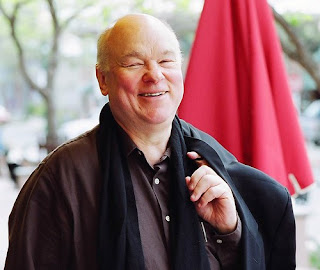
John Baxter
Editor's Note: Below is an extract from John Baxter's The Paris Men's Salon  a privately published collection of memoirs and other unpublished writings by the eminent Australian critic, commentator, scholar and film-maker. I was given a copy when I recently met John in his Paris apartment and asked his permission to publish this extract which deals with his early days as a cinephile and film-maker growing up in Sydney. Among those he recalls is Barrie Pattison, Sydney's resident supercinephile and frequent contributor to the Film Alert 101 blog. 

“TITLE WILL NOT BE REVEALED UNTIL FLASHED ON THE SCREEN.”
The film of tomorrow will not be directed by civil servants of the camera, but by artists for whom shooting a film constitutes a wonderful and thrilling adventure. Francois Truffaut.
Australia never had a Cinémathèque or National Film Theatre, so we had to improvise. The result was a loose network of individuals and small groups devoted to the collection and appreciation of old films. Many, including myself, came to tentative rest at the Commonwealth Film Unit. 
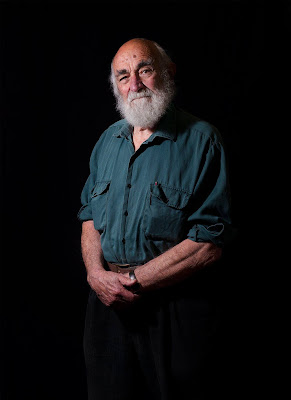
John Flaus (present day)
Isolation encourages eccentricity, something most of we lonely obsessives exhibited on a grand scale. The anarchist critic John Flaus wore a heavy beard but went everywhere barefoot, even to official receptions. Accused by one bureaucrat of exhibiting “wilful personal enthusiasm for films of unedifying taste and questionable allegorical significance,” he cheerfully quoted this opinion whenever asked for a reference.
 Another fanatic built a tiny twenty-seat cinema in his garden, furnished with seats and fittings scavenged from demolished movie houses. This was less odd than his insistence on screening nothing but films starring one performer, British character actor George Arliss. The career of the horse-faced Arliss, which included portrayals of Benjamin Disraeli, Cardinal Richelieu, the Duke of Wellington, Alexander Hamilton and members of the Rothschild banking dynasty, ended in 1937, but his fan’s loyalty to “Mister Arliss,” as he always called him, was deep,  sincere and apparently eternal.
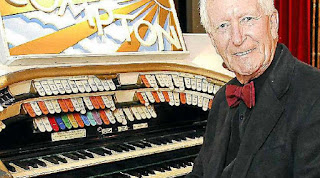
Ron West
Ron West, a piano and organ virtuoso, found his niche on the CFU projection staff. Always ready to improvise a musical accompaniment for a silent movie, he came into his own when American critic Gideon Bachmann appeared at the Sydney Film Festival with an illustrated lecture on Salo, Pier Paolo Pasolini’s much-banned version of the Marquis de Sade’s The 120 Days of Sodom, set in the last days of Italian fascism. 
Bachmann brought with him a collection of explicit slides, together with sheet music for some of the popular songs of the period used by Pasolini as a score. Ron appeared on stage at Sydney’s most lush picture palace to play them, but was repeatedly distracted by the succession of terrible and erotic images on the screen overhead. Only with great effort could he drag his attention back to the keyboard.
To visit Ron’s disordered home in the rural edges of the city was to confront obsession at its purest. Organs rescued from cinemas and fairgrounds crowded almost every room. Ask for the toilet and you’d be led past a WC jammed with organ pipes to the back door, where Ron would wave at the open field and murmur, “Just go anywhere.”
Only slightly less single-minded was film editor Barrie Pattison. Once or twice a month, Barrie would appear dramatically at the door of my office. Born with the classical profile of a silent movie star, Barrie further emphasised it with a thin moustache, a fierce grin, a swept back pompadour of oiled black hair, and a gliding flat-footed walk, like someone crossing a recently waxed floor.
At rest, he struck an even more startling pose, not unlike a Futurist sculpture of the 1920s – face in profile, feet turned out, knees slightly bent, one hand grasping the forearm of the other behind his back.
“Screening this Sunday,” he’d announce without preamble.
“What are you showing, Barrie?”
We asked reflexively, knowing he’d always give the same answer - the stock phrase traditionally displayed on cinema marquees to announce the sneak preview of a new film. 
“Title Will Not Be Revealed Until Flashed On the Screen,” he snapped, true to type, before sledding away down the corridor.
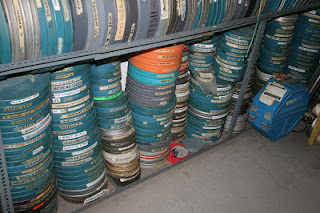
A section of Barrie Pattison's film collection
Barrie was one of those adventurous Australians who had made their way overseas in search of a cinema career. He’d flourished as a film editor in London, where his theatricality caught the attention of the film scholar/director Kevin Brownlow. Kevin cast him as the fascist leader Oswald Mosley in his film It Happened Here  (click on the link to see Barrie's finest performance), which credibly created an imaginary Britain under Nazi occupation. 
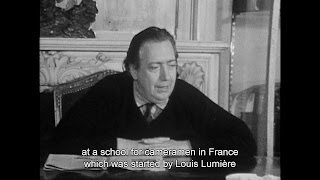
Henri Langlois
Barrie even penetrated the tight society of Parisian cinephiles who congregated at Henri Langlois’s Cinémathèque Francaise. As he knew more French than they did English, they relied on him to translate the more obscure American jargon – a challenge when the line was something like the greeting in Roger Corman’s The Little Shop of Horrors, “How’s the rain on the rhubarb?” 
Forced for personal reasons to return to Australia, Barrie took an editing job at the Film Unit. Thereafter, he lived as a wild man in chains, lavishing his erudition on articles for the amateur magazine I edited, Film Digest, and running a one-man Cinémathèque with which he hoped to recreate in the front room of his parental home some vestige of St Germain des Prés.
Such was our respect for Barrie’s sources and his knowledge that most of us, even without knowing the program, made the pilgrimage on Sunday afternoons to his house in the bushland north of Sydney.
The gate was jammed shut and the garden choked in weeds, but even had you been able to reach the dark varnished front door with its leaded glass insert, you would knock or ring in vain, since it hadn’t opened in years.  
Instead, those in the know walked round the back, pushed through a tall fence, its splintered planks grey with age, and followed a well-trodden track across a yard knee-deep in unmown grass. Through a laundry where, for as long as I went there, a tap dripped dolefully into concrete tubs full of scummy grey water, one transited a disordered kitchen into the living room. Swaybacked couches and imploding armchairs were ranged in front of a never-ignited fireplace. Behind them stood a 16mm projector, aimed at a spot over the mantelpiece. Whenever I see again a film first viewed on Barrie’s wall, I mentally insert the picture hook that, like a private trademark, decorated all his screenings.
With the start of television, whole libraries of Hollywood films arrived in Australia to feed the voracious new medium. They were the cheapest kind of programming, and networks used them indiscriminately, seldom caring what they ran, but simply taking the next can off the shelf and shoving it into the telecine. The stations didn’t much care what became of the print after that, a fact exploited by a network of collectors and connoisseurs.
Barrie could zero in on that obscure early comedy by Billy Wilder, the experimental drama written by a covert Communist, the sole film by some literate director who came from Broadway and quickly returned there. In Paris, he’d absorbed the most important lesson about an art; that it can’t be taught. One teaches oneself, by immersion; swimming in the stuff: devouring it, until you no longer know where the medium ends and you as an individual begin. When Bernardo Bertolucci, himself a cinephile in Paris during the 1960s, had his young American film student in The Dreamers explain why true film lovers sat in the very first row of the Cinematheque, I recognised some of Barrie’s obsession.     
“Why do we sit so close? Maybe it was because we wanted to receive the images first. When they were still new, still fresh. Before they cleared the hurdles of the rows behind us. Before they'd been relayed back from row to row, spectator to spectator; until worn out, second-hand, the size of a postage stamp, it returned to the projectionist's cabin. Maybe, too, the screen was really a screen. It screened us from the world.”  
These screenings began my mental separation from the Film Unit, and from Australia. I’d already distanced myself physically from my former life by abandoning my neat modern harbour-side flat for a clutch of rooms in a 19thcentury mansion nearer the studios. With the Music Officer, James “Diamond Jim” McCarthy. and some friends, we divvied up its high-ceilinged parlours and bedrooms into massive apartments, where we lived like Edwardian bachelor officers in some outpost of empire, dallying with our lovers, and gathering on the verandah to toast the sunset in champagne. 
At the time, this life-style seemed daringly bohemian. It took a while to discover I had an awful lot to learn.
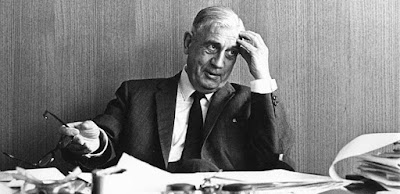
        
Stanley Hawes
 During spring 1968, I was mesmerized by events taking place in Paris.  The sacking of Henri Langlois as head of the Cinematheque Francaise had ignited nation-wide riots, fanned by the directors of the Nouvelle Vague, whom he’d been instrumental in launching, When Francois Truffaut and Jean-Luc Godard prevented the opening screening of the Cannes Film Festival by clinging to the curtain, Australia no longer appeared to be on the other side of the world from where things were happening, but on another planet. Which made my summons to the office of my boss, Stanley Hawes, all the more surprising.
“I believe this man Langlois has been dismissed from the French film museum,” he said.
Stanley interested in the Cinematheque??? 
“So I hear,” I said.
“You know we’ve been trying for years to get a copy of the 1896 Melbourne Cup…..”
Marius Sestier
The first film known to have been shot in Australia is a newsreel of the 1896 Melbourne Cup horse race. Filmed by an itinerant French cameraman, Marius Sestier, one of several who travelled the world under contract to the Lumière brothers, it had been sent back to France, and there remained, conserved by Langlois.
Repeated requests from the CFU for a copy went unanswered. This was nothing new. Langlois was notorious for never responding to letters, and his assistant Mary Meerson did so only when the mood took her. Otherwise, they ran the Cinematheque like a private club. Langlois showed movies to whoever wanted to see them, even if it meant screening the world’s only surviving print. Just as eccentrically, he would halt a screening if he felt the audience had shown itself  “unworthy” by not liking the film as much as he did.  
Langlois’s status as the loosest of loose cannons mandated his dismissal. Inflammable nitrate prints he’d squirreled away in houses around Paris had a tendency to combust, destroying not only an irreplaceable portion of the national patrimoine but the building housing it. It counted for little with the bureaucrats that his methods producedthe greatest outpouring of cinematic creativity in half a century. This simply Wasn’t How Things Were Done. 
Stanley agreed.
“Now that a new man is in the job,” he told me, “we should ask him for a copy of the Melbourne Cup film.”
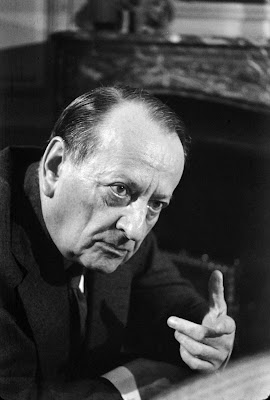
Andre Malraux
Culture Minister Andre Malraux’s choice as Langlois’s replacement was the little-known but malleable Pierre Barbin, former director of the Annecy Film Animation Festival.  A month later, a copy of Stanley’s letter to Barbin landed on my desk.
The letter didn’t quite say “Thank God that barbarian Langlois is gone,” but the tone was decidedly salt-and-vinegar.
 I laid it beside the clipping a friend in Paris had sent from Le Monde. On 22ndApril, Malraux bowed to national pressure and reinstated Langlois, who was already back at his desk when Stanley’s letter arrived. No doubt it gave him a moment of amusement before he dropped it into the bin.   


Editor's Further Note: I found it impossible to find a photo of Barrie Pattison hence I decided to put in a link to his performance in Andrew Mollo & Kevin Brownlow's It Happened Here to enable readers to appreciate his 'classical profile of a silent movie star'. Barrie's picture does not even appear on his recently published tome "The Man Who Ate Films: The Life and Work of Michael Curtiz" co-authored with John Howard Reid.
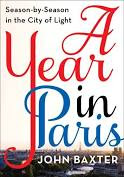
John Baxter is an Australian-born all-round writer, scholar, critic and film-maker who has lived in Paris since 1989 with his wife Marie-Dominque Montel and daughter Louise. His Wikipedia entry  details the many books he has written which include the first  ever critical volume devoted to the Australian cinema as well as studies of Ken Russell, Josef von Sternberg, Stanley Kubrick, Woody Allen, Federico Fellini, George Lucas, Robert De Niro and Luis Bunuel. His most recent book, one of a number of studies of Paris is A Year in Paris, described by the New York Times thus "In “A Year in Paris,” (Baxter) strings together the beautiful beads of the French everyday, all held together by the invisible act of imagination that makes a country cohere and endure." 


Bologna Diary (2) - A round-up

In the past I posted near to daily diary notes on what I saw in Bologna’s Il Cinema Ritrovato but maybe I'm getting too old, or maybe it was the energy sapping heat and the aircon failures or simply the good company that kept me from the task this year. There have been some quite comprehensive reports already and you can find them if you go to the web postings by scholars and critics David Bordwell,  David Cairns and  Jose Arroyo

As for an initial reaction maybe it was what I chose to see  but there was no blinding light equivalent brilliant new copy of those masterpieces from previous years The Crime of M. Lange  or  In a Lonely Place or Trouble in Paradise to set the pulses throbbing

Los Olvidados, Luis Bunuel, 1950
But the crowds did come out in droves to most of the Restored and Rediscovered section for new digital copies of films by, inter alia, Mauritz Stiller, Lupu Pick, Rene Clair, Luis Bunuel (2), Raymond Bernard, John Cassavetes,  Jean Epstein, Marco Ferreri (Queen Bee/L’Ape regina from 1963, boy was that a film whose meaning passed a youthful moi by back in the day), Jean Renoir (3), George Marshall, Vittorio De Sica, John Huston, Byron Haskin, Budd Boetticher, Jacques Doniol-Valcroze, Manoel de Oliveira, Terence Young, Frank Beyer, Roger Corman, Aleksander Petrovic, Dennis Hopper, Federico Fellini, Alejandro Jodorowsky, Charles Chaplin, Dario Argento, Abbas Kiarostami, David Lynch, Jane Campion, John Cameron Mitchell and Frances Ford Coppola. 

If you want to check out the full list, you can find it online if you click here.  The splendid printed edition once again stretched to more than 400 pages and had a cover photo (above) featuring Jean Gabin and Marlene Dietrich from the 1948 Martin Roumagnac  (Georges Lacombe) a film which didn’t actually feature in the selection devoted to Gabin’s career which otherwise ran through nine films from 1931’s Coeur de Lilas (Anatole Litvak) to the Le Chat  (Pierre Granier-Deferre, 1970) and included the very hard to see film by GW Pabst Du Haut en Bas.

Flowers of Shanghai, Hou Hsiao-hsien, 1998
There was also a new restoration of Hou Hsiao-hsien’s Flowers of Shanghai (1998) by original producer Shochiku and the Shanghai Film Festival whose chief immediate eye-popping restoration decision was to redo Tony Rayns’ original subtitles. The titles, still credited to Rayns in the copy on display, were first done in close collaboration with the film’s scriptwriter Chen Tien-wen. The upstart new subtitler simply mangled them. Why it was decided to update the formal early twentieth century language by rendering it into phrases like “Cut to the chase” and “Hey guys” as well as inserting the word ‘brothels’ to describe the houses where the action took place is a matter of complete bewilderment. Regrettably this will now be the standard digital version of the film shown around the world and Shochiku will be no doubt be showing off the botch to ever-increasing numbers. You can take a step forward with a restoration and you can take a step back.

The new Il Cinema Ritrovato management structure of four (I’m resisting) – equally older, younger, male, and female had some tricky structural issues to manage, not least giving the more than 3000 passholders (some unverified claims said more than 5000) a decent shot at seeing what they want to see when the indoor daytime theatre capacity is only 2000 or so. There was muttering from the regulars and veterans that the event has got too big, too unwieldy and is under too much pressure. The sight of people lining the walls at large numbers of screenings may be modified next year when a renovated cinema in the basement of the Palace hotel comes on stream and further alleviated the year after when the Modernissimo restoration is complete. 

Street Angel, Frank Borzage, 1928
More problematically the mining of a strand of old Hollywood ‘auteurs’ this year reached Henry King and the annual selection of an Italian for attention gave us Eduardo De Filippo. Still Dave Kehr’s second selection of late silent and early sound films from the Fox Studio, notwithstanding his regular warning not to expect masterpieces, did in fact show two such, Ford’s Three Bad Men (with superb accompaniment from Maud Nelissen) and Borzage’s  Street Angel  on a fine digital copy which incorporated the original music.  There was also a selection of films by B-meister Felix Feist which included the film Tomorrow is Another Day (1951) dubbed his best by the cognoscenti and a genuine hard to see rarity to the point that Bologna screened a scan of a 16mm TV print held by the Harvard Film Archive, possibly the only known copy.

Elsewhere the strands proved once again that beyond Hollywood there is much to excite the interest. Nine films by the Egyptian Youssef Chahine, dubbed “The Last Arab Optimist”, culminating in his sombre epic (with amazing decor and costumes by Shadi Abdel Salam) Al Nasser Salah Ad-din (1968), an antidote to all the nonsense taught in western schools about the Crusades. They were screened in superb copies starting with a sight of the master himself as the lead actor in his own Central Station (1958) playing a crippled, sex-starved newspaper seller/common thief in such a way as to severely embarrass his family, according to Tewfik Hakem’s intro. The sight of the young Omar Sharif in his debut film, Chahine’s  Serâa Fi Al-Wadi (1954), drew gasps with its opening shot showing the actor’s near impossible handsomeness in a beautifully lit profile.

In Jenen Tagen Helmut Kautner, 1947
For the first time there were films from South Korea, a selection dubbed as from that nation’s “Golden Age”, made during the years of repressive military dictatorship and yet again evidence that political adversity brings out the best in film-makers. It was similar with a small selection post-war West Germany. A lot of those featured the last vestiges of Weimar cabaret, most especially the now rarely-used trope of the all-knowing narrator guiding the audience. This included the justly famous In Jenen Tagen (Helmut Kautner) in which the narrator’s voice is that of a car first seen brand spanking new and a witness to Jewish persecution, followed by the fire at the Reichstag and Kristallnacht and then finally a part of the post-war detritus which gave the genre the name of ‘rubble films’. The cabaret element of the films, their senses of sketches poking at German’s post-war underbelly renders them quite unique in their national cinema. A subject for further examination by the German Film Festival perhaps, in the absence of a Sydney Cinematheque.

Le Plaisir, Max Ophuls, 1952
In the square, you could sit with 5000+ people each night and see, during the week we were there, Miracle in Milan,  Easy RiderLos Olvidados,  The Cameraman, Roma (the Fellini version), The Circus, Apocalypse Now, Final Cut  introduced by Coppola,  Le Plaisir, and finally an entry I have always found problematically ‘Australian’. Jane Campion was there to do the intro and bask in the glow of a Piazza Maggiore screening of her 1992 The Piano.  The Piazza Maggiore free screenings in fact go on for nine weeks over the Italian summer. 

Otherwise nothing from Oz on show amongst the selection of 400+ items long and short, not even in the Cento Anni Fa/100 Years Ago section curated by ever-buzzing Marianne Lewinsky. Her annual selection program once again overlooked anything from these parts, including our most famous silent film The Sentimental Bloke.

Friday, 5 July 2019

At the Sydney Instituto Cervantes - Barrie Pattison tracks down KAMIKAZE (Álex Pina, Spain, 2014)

A rom-com in which the male lead is a terrorist with an explosives vest under his shirt is not something the English language cinemas are likely to come up with. That’s what you get with Álex Pina’s 2014 Spanish Kamikaze. It’s not a great film but it went down gangbusters with the original language audience I saw it with at the Instituto Cervantes and it’s a nice example of the kind of popular entertainment movie that doesn’t stand much chance of getting here if it misses the Hispanic events.

We see severe, bearded Álex García being briefed on his suicide mission - bringing down a passenger jet while filled with aviation kerosene over a highly populated Russian civilian area - as a way of drawing attention to the systematic deprivation of "Karadjistan” which has cost the lives of his family. Between two candidates for martyrdom, he gets to be the winner.

All goes smoothly with him through airport security but then he finds his flight grounded by bad weather and himself put up in the remote snow sports Lombards Hotel. At this point everything goes wrong. The ever reliable Carmen Machi turns an ordinary piece of writing into a conspicuous character thrusting her baby into Garcia’s hands. A lovable dog adopts him. García marches into the dining room to enunciate the wrongs done his country before he sets off the vest and the fellow passengers think he’s proposing a toast and join in raising their glasses, while the so fetching Verónica (Yo soy la Juani) Echegui (if they ever give an Oscar for nice teeth, she’s a shoe-in) cozies up to him because, of all the people who interrupted her suicide attempts, he’s the only one who ever told her what was wrong with the way she was slashing her wrists. 

I’m not sure this is the information that should be put out in a popular entertainment but it is an indication of the film’s tone. 

Kamikaze’s great skill is the way it manages switching from grim to farcical and back again. The cast are spot on reflecting the skill of the director on his first feature and his casting. An actor whose work I don’t know called Eduardo Blanco has the annoying shoe salesman roommate spot and makes the character rounded and engaging. Rising star Leticia Dolera does a karaoke song which gets her character attention and the great Hector Alterio sings, plays piano and delivers the film’s message  “Son, no matter how much you have suffered, there is always someone who suffers more than you ... And you only have two choices: Either rot inside or dance to the rhythm of life.” Alterio’s delivery and the fact that the film is tuned exactly to this greeting card sentiment win over an audience.

Viewers with a long memory may recognise here the structure of Argentinian heavyweight Hugo Fregonese’s best film, the 1954 U.S. made The Raid,particularly in the rescue of the lost child in the thirty degree below weather. What made that notable, works here too. Is there something Hispanic about the situation?

There are a few nice touches like the wicker chair covered in snow, the kids bouncing on the bed with the concealed bomb or the kite flying sequence. The film isn’t too much concerned about plausibility and its air plane model work is a bit cheesy, but what the heck. It’s genuinely crowd pleasing.

Monday, 1 July 2019

On Cable and streaming - Barbara Grummels is an enthusiast for the adaptation of Elena Ferrante's MY BRILLIANT FRIEND

Literary adaptations for the screen often miss the mark. Not so with the eight episode adaptation for TV of My Brilliant Friend.  Each episode is a television one hour and I only wish I could have seen it on the big screen. Available in Australia on Foxtel, My Brilliant Friendis the adaptation of the first volume of a quartet of novels by Elena Ferrante. (Elena Ferrante is a pen name, she protects her privacy).

Each volume of the four Neapolitan novels is planned to become eight episodes of television, a mammoth 32 episodes in all. Ferrante has become an international literary sensation and having personally succumbed to ‘Ferrante fever’ I started watching this first series with high expectations. It was also with trepidation fearing the screen version wouldn’t be able to do justice to the original novels. 
The story begins in present day Turin. Elena Greco is a celebrated writer. Elena is in her mid-sixties and has had a phone call which woke her in the middle of the night. Lila, her ‘brilliant friend’ since childhood has vanished. Elena is angry because she thinks by disappearing without trace, Lila has tried to erase their past life. 

Elena ‘sees’ Lila as a child sitting opposite her in the dark study of her modern apartment. The image of Lila prompts Elena to open her laptop and write about the competitiveness of their friendship : “I promised you I’d never do it but now I’m really angry, and so I’ll write your whole story, not just what I saw but what I know and what you told me, everything you told me over the years. This time I’m going to go all the way too and we’ll see who wins.”

We are transported back to their early days growing up in the insular small town poverty of post-war Naples. The first scenes occur in an early primary school classroom where the intense contrast between the fearless Lila (Ludovica Nasti) and the demure, admiring Elena (Elisa Del Genio) is played out.

This is a handsome production true to the novel, perhaps in part because Ferrante is credited as one of the screenplay writers. The Italian director Saverio Costanzo has led a skilled team who have put flesh on a large cast of beautifully written characters. They have treated the original stories with due reverence. It’s gratifying to see the sizeable cast of characters emerge off the pages and find physical form.

The visual style is inspired by post-war Italian neo-realist directors (the early films of De Sica, Rossellini and Visconti*) and is achieved here in many ways. The filmmakers chose an Italian language with Neapolitan dialect (and English subtitles) which delivers real authenticity.

The casting of inexperienced performers who comprise the nine neighbouring families is uncannily faithful. They live in apartments around a crowded courtyard where they can see each other’s washing and witness each other’s humiliations. Though the production design is beautifully detailed, this is no chocolate box historical drama. 

With eight episodes per book, time is granted and care is taken to portray all the tenderness, and wretchedness of family life and relationships in the neighbourhood, the rione. All the particulars of the streets and poverty of post war Naples are captured here in vivid, stark reality but the biggest achievement of this adaptation is in the way it captures the emotional realities of women’s lives. 

The powerful portrayal the of bond between two young women at the heart of My Brilliant Friendis quite unlike the female friendships in that other HBO series, Big Little Lies.The middleclass American women of Monterey California are worlds away. I found the unsentimental reality of Naples quite an antidote to the glossy feminism of Big Little Lies, where issues of the day and the smell of garlic is absent. 

In My Brilliant Friend the friendship between the two little girls develops with such intensity. Their performances, as young girls, then teenagers are extraordinary. Yet we never lose sight of the wider setting so often missing in drama for television. Like the early Italian neo-realist films that dealt with economic injustice and moral concerns of the time, this story takes shape against a climate of gang violence, class division and the desperation of post-war Naples. 

Elena Greco’s education is her to a path escape the rione– the poverty, the confines of patriarchy and the stranglehold of the Camorras. The smart, mischievous Lila Cerullo, is held back because she won’t have Elena’s educational opportunities. Her father responds to Lila’s pleas for costly further schooling by throwing her out of a window.

Through stories and letters that only Elena will see, Lila inspires Elena’s writing career.  They give Elena the confidence to begin. However Lila is unable to escape and will have to find another path to survive. 

Ferrante describes her expansive sentences as “having a cool surface while visible underneath is a magma of unbearable heat”. So it is with this fine adaptation for the screen. A melodrama in the very best sense of the word.
[Winter is the ideal time for TV binge watching. My Brilliant Friend  and Big Little Lies are available with a Foxtel ten-day free trial. Alternatively, you’ll have to wait patiently for the DVD as Foxtel require very long release windows.  For more info and pictures  
click here to go to the official HBO site or Click here to watch the trailer]

*I saw many of the Italian neorealist films courtesy of Bruce Hodsdon at the NFTA in the late 70s and early 80s. Sadly there is no Cinematheque for screenings like this in Sydney. Will it ever happen?


Director Saverio Costanzo, with actors Elisa Del Genio, Margherita Mazzucco, Ludovica Nasti, Gaia at the world premiere in Venice last year.

On YouTube - David Hare posts a further note on Eisenstein's IVAN THE TERRIBLE

Sergei Eisenstein
Editor's Note: David Hare has already written an appreciation of the new French edition Blu-ray of the restored copy of Sergei Eisenstein's Ivan the Terrible. 
You can find  the note if you Click on this link
Now David has now located a key sequence on YouTube.  Fedor and the Orpochnik's orgy/dance,  is available if you click 


David writes:

If you dig around beyond the Stalinist censored history of Ivan you discover that Fedor was reputed to be Ivan's lover, until he, like all the others who fell prey to Ivan's madness was executed by a now totally paranoid Ivan towards the end. This tidbit still remains suppressed and denied in Modern Homophobic Russia under a Capitalist Gansgter who is in his own way is as bad as Stalin, and in a culture that's again as lethally homophobic as the nightmare of 30s and 40s Stalinism.
This sequence was surely one of the most daring, risky things Sergei ever committed to film. Stalin and the Bureau must have banned the movie for this alone but there was plenty more they didn't like.

Ronald Bergan added a Facebook comment as well

"See chapter 16 and 17 of my bio Sergei Eisenstein: A Life in Conflict."

Adam Bowen's Talkie Talk #65 - New movies, Hitchcock & Herrmann movie music, a Charles Crichton Ealing rarity and films by Kazan, Kubrick and Billy Wilder on TV

NEW IN CINEMAS THIS WEEK

An Unexpected Love/El Amor Menos Pensado– (2018) empty nesters wonder if their relationship will wither or bloom. Starring Mercedes Morán & Ricardo Darín. Previously mentioned in Film Alert by Barrie Pattison in his coverage of the 2018 Cine Latino Film FestivalDecember last year. 


After – Girl meets boy with murky past.

Mystify: Michael Hutchence – Richard Lowenstein tries to de-mystify MH (documentary)

Spider Man: Far from Home– more melodramatic web untangling required by Peter Parker.

Soundgarden: Live from the Artist’s Den -full concert film from 17/02/2013 

Sunshine Family – dad gets involved in a hit-and-run accident, and tries to destroy the evidence. Phillipine/Korean drama.

The Third Wife (2018) – In 19th century Vietnam, a 14 year-old girl is betrothed to a wealthy landowner. Screened at the 2019 Sydney Film Festival.


One Day: Justice Delivered – Hindi thriller about bad behaviour in high places.

The Eight Hundred/Ba bai – Chinese war epic, set in 1937.


VOLVO SCANDINAVIAN FILM FESTIVAL – a programme of 21 films screening in cinemas nationally from 9 July. Go North!


MOVIE MUSIC: Saturday @ 6pm om Fine Music 102.5 or stream it, later, on finemusicfm.com
Hitchcock – Herrmann (left): The Wrong Man (1956); Vertigo (1958); North by Northwest( 1959); Psycho (1960) 


ON THE TELLY

Monday Noon, 9Gem: Fans of French actress, Simone Signoret, and of British director, Charles Crichton (not to be confused with Michael Crichton), should enjoy their collaboration in the WW2, Ealing Studios, documentary-style spy thriller, Against the Wind (1948)

Monday 8.30pm & Tuesday 10.20am, Fox ClassicsOn the Waterfront (1954) Gripping drama, starring Marlon Brando as Terry Malloy, an ex-boxer, now longshoreman, who rebels against a vicious union boss (Lee J. Cobb). Also starring Eve Marie Saint; Rod Steiger and Karl Malden. Script, Bud Schulberg; direction, Elia Kazan; photography Boris Kaufman; score, Leonard Bernstein.


Monday 10.20pm Fox ClassicsSpartacus (1960) – Earnest sword and sandal epic, starring Kirk Douglas as the leader of a slaves’ revolt against Roman tyrants. Directed by Stanley Kubrick, written by Dalton Trumbo, and photographed by Russell Metty. Also stars Jean Simmons, Laurence Olivier and Tony Curtis.

Saturday Noon Fox ClassicsThe Magnificent Seven (1960) Star-studded western about gunfighters (Yul Brynner, Steve McQueen, Horst Buchholz, etc), hired by Mexican peasants to rid them of a tyrant (Eli Wallach). John Sturges’ stolid direction is enlivened by the stars and by Elmer Bernstein’s score. (A re-make of The Seven Samurai). Not to be confused with the lacklustre re-make of 2016)

Sunday 5pm 9GemSome Like It Hot (1959) Wonderfully loopy black comedy, directed and co-written (with I.A.L. Diamond) by Billy Wilder (right).  In 1920s Chicago, two male musicians (Jack Lemmon and Tony Curtis) witness the St Valentine’s Day massacre, flee, disguise themselves as females and join an all-girl band, which features Marilyn Monroe.

Instagram:#adam.bowen.productions