Showing posts with label Melbourne Film Festival. Show all posts

Sunday, 13 October 2024

At the Melbourne International Film Festival - Rod Bishop discovers 'the near perfect" CLOSE YOUR EYES (Victor Erice, Spain, Argentina, 2023)


After a 30-year absence, Spanish director Victor Erice (above, The Spirit of the Beehive) has reappeared with his fourth feature. 

Memory, death, friendship, love and truncated careers meld into the 84-year-old Erice’s three-hour film, his masterly control and quiet formalism recalling, and comparable with, the later films of Nuri Bilge Ceylan.

For those who believe the best of cinema is preferable to real life, there’s a lot to relish in this story of a “heart-throb” actor who walked off a film set 20 years ago. He left no trace, no body, and the film unfinished. Many presumed suicide, but the film’s director Miguel Garay (Manolo Solo), an old friend of the actor, thinks otherwise.

Miguel talks of his doomed film on an investigative television program and it produces one viewer who claims to know of the actor’s possible location. Miguel sets out to find him.

In a lengthy but always absorbing quest, Miguel reconnects with the actor’s daughter; the film’s original editor; and a woman both he and the actor once loved. 

There’s padding though, and it’s filmic in-jokes. Knowing mentions of Dreyer’s miracles; Josef von Sternberg; a song from Rio Bravo performed gratingly off-pitch; the film editor looking at shelves of cans and lamenting digitization; and empty, disused cinemas, bio-boxes and abandoned projectors from an analogue past.

It's difficult placing this material in Erice’s narrative. Are we meant to presume Miguel’s - and Erice’s - careers as film directors failed due to changes in production methods? Or like the actor, did Erice walk away from his chosen career? Or are these questions just too literal?  

Many films have included film buff references. Tarantino can’t help himself and is constantly winking at his knowing audiences. In Kings of the Road (1976) Wim Wenders used the film references metaphorically and made Germany’s dying provincial cinemas stand for a dead German film industry.

Closer to home, in Dave Jones’s Yacketty Yack (1973) a film crew of film buffs and a film critic verbally interject with a deranged Godard-worshipping director. The film jokes are a self-referential part of a meta-text that includes, among others things, entropy, existentialism, misogyny, chaos theory, political correctness, cultural exploitation, academic tenure and violence.


In Close Your Eyes, despite the plot of a film director searching for his lost main actor, the film jokes seem like disruptive additions. 

They are not entirely honest, either. An important sequence from the unfinished film screened in an abandoned cinema is in pristine condition. Not a sign of dust, markings, or scratches after 20 years, with no splice marks suggesting a workprint, and with a very nicely mixed soundtrack.

Maybe Erice’s film does offer some parallels with the Spanish director’s 30-year absence, but as the film progresses any comparisons fall away. If Miguel had been a plumber instead of a film director, and the actor his lost brother, Close Your Eyes would still have the same power and emotional strength.

This compelling, near perfect work with its mesmerizing performances from all in the cast, didn’t need the in-jokes. 

Maybe it’s one of the reasons some have referred to Close Your Eyes as a “near masterpiece”.


Wednesday, 11 September 2024

MELBOURNE AND THE MOVIES (2) - An extract - Ross Campbell recalls visits by Josef Von Sternberg and Warren Beatty


Editor's Note. This is the second post devoted to Ross Campbell's recently released memoir. For more details and information regarding purchase of the book CLICK HERE 

In 1967, following a screening of The Saga of Anatahan (1953), I found myself standing in the Palais downstairs foyer alongside Josef Von Sternberg (above). I didnt utter a word. Thinking about the extraordinary films he made with Marlene Dietrich, the few I had seen, I simply basked in the glow of proximity. Later that same day, The Scarlet Empress (1934), his long unseen masterpiece, was shown in a dazzling 16mm print at the Classic Elsternwick. A one-off screening at that location chosen for its 16mm carbon arc illumination. I thought of the film as a baroque concerto for Dietrich and orchestraso powerful was the interplay between music and images. It had bewildered audiences in 1934 - comic nightmare or claustrophobic tragedy? At the Classic it held the audience spellbound. 

Here was a director like few others, an inheritor of Erich von Stroheim’s celebration of excess sustained by the potential for greatness amid the intrinsic extravagance of Hollywood. A living link with the glorious past. And I had stood beside him only hours previously.

In 1975 multi-award-winning writer-producer-director Warren Beatty was in Melbourne to introduce Hal Ashby’s comedy-drama, Shampoo. Beatty co-starred with Julie Christie, Goldie Hawn, Lee Grant and Carrie Fisher. Beatty co-wrote and produced the film. 

Striding onto the Palais stage, looking into the vast, warmly lit auditorium, packed all the way back to the projection room, Beatty exclaimed, ‘What a beautiful theatre!’


The audience loved him. Charismatic in the spotlight, he spoke fondly about his 1967 film, 
Bonnie and Clyde (above). Directed by Arthur Penn, it starred Faye Dunaway, Gene Hackman, Estelle Parsons and Michael J Pollard. Beatty was active in all aspects of its production. Especially sound. As a teenager he was greatly influenced by George Stevens’ film, Shane (1953). This immediately caught my attention. I too had seen Shane at a Camden Saturday matinée and loved the film. 

For a young Beatty, the sound of gunshots in that film, the manner in which they exploded vividly on the soundtrack, was particularly impressive. He never forgot it. He wanted that quality in Bonnie and Clyde and worked with sound mixer Dan Wollin to achieve it. They previewed the film in an out-of-town cinema in Los Angeles. To Beatty’s astonishment the all-important explosions of gunfire were strangely lacklustre, reaching below the peak level achieved in the re-recording studio. Was someone fading sound during the shootouts? Totally perplexed, Beatty went up to the projection room. The elderly projectionist was surprised to see the star in his doorway. 

‘How’s it running?’ asked Beatty. ‘Quite well,’ replied the projectionist. ‘But I’ve had to ride the volume all the time. This is the most difficult film I’ve run since Shane!’

The explosive soundtrack for Shane


Tuesday, 8 March 2022

Vale Colin Bennett - A final tribute from long time Melbourne cinephile Michael Campi

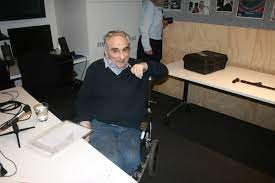
Colin Bennett at the Melbourne office of the NFSA, 2017

 As I am part of the generation which first engaged with the cinema in the early 1950s during primary and secondary school years, my first experience of Colin Bennett's writings on the cinema was in opening the Literary Supplement of The Age newspaper each Saturday to find Colin's column, imagining beforehand what the topic might be. Would we learn something about a contemporary film or filmmaker that would be more expansive than the regular weekday reviews? If it were around Easter time, there was the anticipation of discovery of what the next Melbourne Film Festival  might offer in June. 

I was too young to participate in the film festival for several more years, not until 1964 in fact. Sometimes Colin might provide news on new activities of special films for children and the specific bodies set up to make, distribute and exhibit them. There might be a tirade against censorship. Underlying each week's article was the understanding that the writer was a special kind of wordsmith who had thought deeply about the topic of the day before committing it to a final form. He had carefully developed an aesthetic of what mattered to him in cinematic expression, influenced, as others have written already, by his own formative years in London in the early part of the 1950s. For him there was a need for the cinema to open new windows and investigations of the complex lives and hopes of those who might be oppressed. 

The best contemporary cinema stories for him would have concerns for the betterment of the characters portrayed. Some have linked his concerns with the ideals of the British Film Institute and the journal Sight and Sound at the time.  This is not to imply that only dark and serious subjects might interest him. He might be equally engaged by a western directed unusually by George Cukor. Moreover I remember how fondly he greeted the hilarity of a Buster Keaton film during a screening one night when Colin visited my home with his family in the 1970s.

Colin's enthusiasm for local filmmaker practitioners, at a time when almost no Australian films appeared in regular commercial cinemas, was also felt to be most urgent. It was in his articles that I first learned there was a film society movement so that when such a society was established in my local area at the end of 1962, it was impossible not to become involved very deeply with it, and the Federation to which it belonged, for the next twenty years. 

My first conversations with Colin were probably hesitant exchanges at the Palais Theatre, St. Kilda, during the many years that the Melbourne Film Festival found its home there. As I was a regular on the information desk, Colin might drop by to collect an envelope of information or stills or leave something important for another audience member.  At the end of the 1960s, when I became involved in the Victorian branch of the newly formed National Film Theatre of Australia, Colin was of great help when he was very enthusiastic for commencement of some regular and frequent curated screening events, equivalent to the National Film Theatre in London which he had experienced first hand some years before. In his Saturday articles, he gave unstinting support. His enthusiasms might ensure full houses of 300 to 400 people in the weeks following. As the National Film Theatre screenings quickly became regular more than once a week events, Colin's enthusiasm for the programmes would be expressed in his Saturday and other columns. On occasion, if my memory is correct, he expressed politely his disappointment at a technical aspect of one regular venue. His letter to us expressing how he believed improvements could be achieved was passed to the provider of the venue. Well-judged suggestions from a figure of authority in Melbourne's film community brought about a quick improvement. 

In the the 1970s, apart from Colin's visits to NFTA screenings, I might see him at a festival screening or perhaps at a preview or another festival function of some kind. After a gap of some years, my daughter's enthusiasm for horse riding brought us to visiting Colin and his partner at their country property in Buxton to which we would drive on some Saturdays and enjoy lunch together before or after the riding instruction. Colin was passionate about horses and any filmmaker who depicted them being treated badly would probably suffer harshly in a later review.  

Following his departure from The Age newspaper, a topic which was silently off limits it seemed, Colin may have stopped seeing films, at least new releases.   During our Buxton visits in the later 1980s, he was always genuinely interested in new developments of expression in the world cinema, new regions of discovery or what was so and so doing now.  He was keen to know what I'd seen recently and what excited others internationally. I don't know if he continued to read regular journals and this was before the internet clamoured for attention.  

Through mutual friends I was heartened to learn that Colin kept well and  busy with other pursuits and that he'd returned to Melbourne at some point.  As I mentioned a few years ago, I believe my last time to chat with him at any length was when I found myself in an adjacent seat for many hours when I was flying to Vancouver film festival and he was about to start a vacation in Hawaii. 

It's over forty years since the regular Colin Bennett articles and reviews appeared in The Age newspaper. Let's hope there will be a publication of collections of his writings. 

***********
A Celebration of Colin Bennett’s life will be held in the White Lady Brighton Chapel, 139 Marriage Road Brighton, on Friday 18th March 2022 commencing at 2.30pm.