Showing posts with label Colin Bennett. Show all posts

Tuesday, 8 March 2022

Vale Colin Bennett - A final tribute from long time Melbourne cinephile Michael Campi

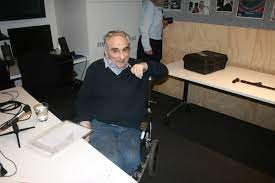
Colin Bennett at the Melbourne office of the NFSA, 2017

 As I am part of the generation which first engaged with the cinema in the early 1950s during primary and secondary school years, my first experience of Colin Bennett's writings on the cinema was in opening the Literary Supplement of The Age newspaper each Saturday to find Colin's column, imagining beforehand what the topic might be. Would we learn something about a contemporary film or filmmaker that would be more expansive than the regular weekday reviews? If it were around Easter time, there was the anticipation of discovery of what the next Melbourne Film Festival  might offer in June. 

I was too young to participate in the film festival for several more years, not until 1964 in fact. Sometimes Colin might provide news on new activities of special films for children and the specific bodies set up to make, distribute and exhibit them. There might be a tirade against censorship. Underlying each week's article was the understanding that the writer was a special kind of wordsmith who had thought deeply about the topic of the day before committing it to a final form. He had carefully developed an aesthetic of what mattered to him in cinematic expression, influenced, as others have written already, by his own formative years in London in the early part of the 1950s. For him there was a need for the cinema to open new windows and investigations of the complex lives and hopes of those who might be oppressed. 

The best contemporary cinema stories for him would have concerns for the betterment of the characters portrayed. Some have linked his concerns with the ideals of the British Film Institute and the journal Sight and Sound at the time.  This is not to imply that only dark and serious subjects might interest him. He might be equally engaged by a western directed unusually by George Cukor. Moreover I remember how fondly he greeted the hilarity of a Buster Keaton film during a screening one night when Colin visited my home with his family in the 1970s.

Colin's enthusiasm for local filmmaker practitioners, at a time when almost no Australian films appeared in regular commercial cinemas, was also felt to be most urgent. It was in his articles that I first learned there was a film society movement so that when such a society was established in my local area at the end of 1962, it was impossible not to become involved very deeply with it, and the Federation to which it belonged, for the next twenty years. 

My first conversations with Colin were probably hesitant exchanges at the Palais Theatre, St. Kilda, during the many years that the Melbourne Film Festival found its home there. As I was a regular on the information desk, Colin might drop by to collect an envelope of information or stills or leave something important for another audience member.  At the end of the 1960s, when I became involved in the Victorian branch of the newly formed National Film Theatre of Australia, Colin was of great help when he was very enthusiastic for commencement of some regular and frequent curated screening events, equivalent to the National Film Theatre in London which he had experienced first hand some years before. In his Saturday articles, he gave unstinting support. His enthusiasms might ensure full houses of 300 to 400 people in the weeks following. As the National Film Theatre screenings quickly became regular more than once a week events, Colin's enthusiasm for the programmes would be expressed in his Saturday and other columns. On occasion, if my memory is correct, he expressed politely his disappointment at a technical aspect of one regular venue. His letter to us expressing how he believed improvements could be achieved was passed to the provider of the venue. Well-judged suggestions from a figure of authority in Melbourne's film community brought about a quick improvement. 

In the the 1970s, apart from Colin's visits to NFTA screenings, I might see him at a festival screening or perhaps at a preview or another festival function of some kind. After a gap of some years, my daughter's enthusiasm for horse riding brought us to visiting Colin and his partner at their country property in Buxton to which we would drive on some Saturdays and enjoy lunch together before or after the riding instruction. Colin was passionate about horses and any filmmaker who depicted them being treated badly would probably suffer harshly in a later review.  

Following his departure from The Age newspaper, a topic which was silently off limits it seemed, Colin may have stopped seeing films, at least new releases.   During our Buxton visits in the later 1980s, he was always genuinely interested in new developments of expression in the world cinema, new regions of discovery or what was so and so doing now.  He was keen to know what I'd seen recently and what excited others internationally. I don't know if he continued to read regular journals and this was before the internet clamoured for attention.  

Through mutual friends I was heartened to learn that Colin kept well and  busy with other pursuits and that he'd returned to Melbourne at some point.  As I mentioned a few years ago, I believe my last time to chat with him at any length was when I found myself in an adjacent seat for many hours when I was flying to Vancouver film festival and he was about to start a vacation in Hawaii. 

It's over forty years since the regular Colin Bennett articles and reviews appeared in The Age newspaper. Let's hope there will be a publication of collections of his writings. 

***********
A Celebration of Colin Bennett’s life will be held in the White Lady Brighton Chapel, 139 Marriage Road Brighton, on Friday 18th March 2022 commencing at 2.30pm.

Tuesday, 1 March 2022

Vale Colin Bennett - Ross Campbell and Peter Hourigan add some fond memories


Ross Campbell writes: At the age of 16, in year 10 at secondary school, I was thirsting for knowledge about this medium of film I loved so much. An article appeared in The Age  Green Guide indicating Orson Welles’ Citizen Kane was to be shown for the first time on Melbourne television. As a keen reader of the paper’s film critic, Colin Bennett, I recalled he would mention Kane whenever writing about a new film by Orson Welles. My radar was on full alert. We had not invested in a television at home but a schoolfriend’s parents had. It was decided. After dinner and homework: Citizen Kane at his place. 

Astonishingly, my friend’s father, a senior detective in Victoria Police, spoke just as the film began: “It’s the sled that’s called Rosebud.” The greatest ‘spoiler’ of all time. Somehow, this untimely revelation did nothing to diminish what followed. From the very beginning, it was to be a unique experience.

The next day at school, bursting with enthusiasm for what I had seen the night before, I approached my History and English Literature teacher. To my amazement, his only reply was, “Harrumph! Citizen Kane. Vastly overrated!” I couldn’t believe my ears. I decided immediately to write to Colin Bennett. 

“In the few years that I have been reading your columns, I have often come across references to Kane when you sometimes wrote of a film with Orson Welles in it. I often wondered about the identity of this Kane character until recently I saw an article in the TV supplement of ‘The Age’ about the film Citizen Kane which was to be screened that week on television… For those two hours we were awestruck, overwhelmed, and completely absorbed in the whole of the fantastic production. We had never seen anything like it before. The photography, technique, plot, camera movements and angles, acting – the whole thing – was breathtaking… I wish to know just where Citizen Kane stands in the history of film as an art. I would also like to know your personal views in regard to the film. Were our reactions in proportion to the quality of the film, or are we just a pair of easily impressed youths?”

Two weeks later I was astonished to find that Colin had fashioned an entire article around my letter in The Age Saturday Literary Supplement. What followed was a brilliant estimation of Kane, compressing into those narrow columns of type succinct and eloquent descriptions of Welles’ film and its place in cinema history. I was overjoyed – vindicated that my enthusiasm for the film and the entire medium of cinema was not only justified but publicly endorsed by my journalist hero. A copy of my clipping from The Age is attached below.

It was from that moment I resolved that film – this medium that uniquely encompassed all my enthusiasms – music, photography, lighting, drama, storytelling, editing, performance – this medium that had enthralled me from my earliest years, would now be the driving force in my life. Vale Colin Bennett.


Click on the image to enlarge

Peter Hourigan writes:  Colin’s support of what we now call Film Culture extended beyond his professional journalist responsibilities. His articles about films showing at the Festival were part of his work, but he also made many contributions in an honorary capacity, including work for the Jury for the Festival’s Short Film Competition for a number of years. (At that stage, the Festival’s international accreditation did not allow it to have a competition for Feature Films.)

      I had the privilege of being on his jury for a couple of years, including 1966 when one of the films we were considering was a 52 minute history of the Amalgamated Clothing Workers Union (of America( by Harold Mayer, The Inheritance. Colin had a strong interest in socially progressive films, and probably this was one factor in his strong support for the film.

       There were times when some of us thought this attitude led him to overrate poor films because they were tackling social problems such as racism (Think – Stanley Kramer.) But I was certainly more than happy to support him on this film, and it was awarded our Grand Prix for that year.

      Since seeing it for our judging, I have seen it a number of times, and I’m still happy we gave it the top prize. And it can now be seen on YouTube and other sites.   Copies are not all great, but this is probably the best. https://www.youtube.com/watch?v=EszSvYl_LC4&t=1795s  Watch it, for your own enjoyment, and as a thought for Colin.


Vale Colin Bennett - A valued film critic at the Age in Melbourne, friend to many and a serious contributor to the development of an Australian film industry


It sometimes takes the test of time for us to appreciate the lives and contributions made by a very few people who genuinely made a difference. 

I first encountered Colin Bennett's name when my mother decided to add The Age's Saturday edition to our weekly newspaper deliveries. That added it to The Sun, the biggst selling newspaper in Australia, the Sporting Globe, and The Herald, the biggest selling and most respected afternoon newspaper in Australia. The latter was a broadsheet no less. They both employed high quality journalists - most memorably E W Tipping, Keith Dunstan, Frederick Howard and Alf Brown. Times have changed.

As someone who spent a lot of time in his mid-teen years going to the Padua, the Western, the Liberty, The Empire, the Plaza and the Alhambra - all within walking distance or a short tram or bus ride, a revelation then occurred when each Saturday there would be a long essay in the The Age Literary Supplement devoted to such matters as film censorship, an Australian film industry, the Melbourne Film Festival or the offerings at cinemas I'd never been to - The Australia, The Savoy, the Curzon, the Brighton Dendy. 

Still I just read about these things apart from bravely venturing all the way into the city by tram and dodging school sport to see, on Bill Hannan's additional recommendation Satyajit Ray's The World of Apu.

It wasn't until I got to university that I started to see all those films and do all those things Colin Bennett got us excited about. Then he0 turned up at a MUFS night season to see something or other and I was more than a bit in awe. Things got trickier then because the university film societies of the day were all trying to seek out the films that Cahiers du Cinema wanted us to see - Hawks, Hitchcock, Ford, Raoul Walsh, Jerry Lewis.

Colin was much more sympathetic to the left-wing humanism of Sight & Sound with its focus on Brit and other realists, Bergman, Bunuel, the daring Poles like Wajda and other dissenting voices from Eastern Europe, the famous Russians like Eisenstein.

But from those times in the 60s through to 1980, the moment when Neil Jillett manouevred Colin right out of The Age and the standards instantly dropped, you never stopped reading him and never stopped being impressed by the fervour with which he espoused the causes of Australian film-making (notwithstanding the bagging he gave Tim Burstall's Two Thousand Weeks), the ending of the Menzian nanny state where idiot Liberal Ministers used to make fools of themselves banning books and films at the direction of the Chief Censor the fabulously nicknamed One-Armed Dick Prowse. (One Ministerial dope even got up in the Parliament and lamented how he had make a decision to ban the Kama Sutra and "it had placed him in a very difficult position").

Colin covered it all, provoked arguments, advanced causes, remained supremely affable, sucked on that pipe of his and was never deterred. I hope when he left the Age and left film criticism he did it with a sense of pride and achievement because he had earned that over two and half decades.

Back in 2016 I published a piece on this blog called Remembering Colin Bennett. Peter Hourigan added his thoughts.. When I read it again the memories flooded back. You can read it if you click here. That caused a minor flood. Contributions were received from Adrian Martin & Rod Bishop, Scott Murray, Michael Campi & Bruce Hodsdon, and Richard Brennan & Brian Kavanagh. Colin responded here. Click and go through to the memories

Peter Hourigan, Colin Bennett, NFSA Melbourne office, 2017

Then back in 2017 Peter Hourigan and I were able to sit down and record some of Colin's memories. Later that year I described it 
as the moment when hopefully I made my peace with the legendary Colin Bennett. An interview with Colin by Peter Hourigan and I for the NFSA’s oral history program provided the opportunity to say sorry for the very shabby way his departure from The Age was ignored by the Melbourne Film Festival all those years back in 1981. The interview and the discovery (and publication) of Colin’s memoir (on this blog) were highlights not to be forgotten.

If you are curious about the memoirs then click on this link

People have been sending things to me and posting things on Facebook. Here are the first couple. I'll post more as they are received,

From film-maker Phillipe Mora: That is sad news indeed. Colin was an early friend of my family. When Melbourne was a cultural desert in the Fifties my parents and Colin were the kind of intellegentsia that congregated and created modern Australia. His distinguished family and deep cultural knowledge made him the important critic in the creation of the Australian film industry. Hanging out at the Balzac and Mirka cafe he met all the nascent players in the arts. Personally he was very encouraging to me as a baby film maker.  He was the un-Les Patterson and he was sorely needed. His contribution is uncalculable.

Adrian Danks Posted this on Facebook: Very sad to hear of the death of the extraordinary Melbourne film critic, Colin Bennett, after a very full life. He left reviewing in the early 1980s, but his tenure at THE AGE in the 1950s, 60s & 70s is one of the great runs of any Australian film critic & set the stage for wonderful periods there inhabited by Adrian Martin & Jake Wilson (though I still have a grudge with Bennett for leaving too early & leaving us stranded with the appalling Neil Jillett for 15 formative years). I hardly read any of Colin's reviews when they were first published - by the time I was an adult he was gone by a few years - but have rediscovered his writing over the years. He was the central figure (along with Sylvia Lawson) in the recent essay I published on Bergman's reception in Australia. His writing always demonstrated a deep knowledge of overseas opinions & trends but was never beholden to them - he would have been such a lifeline during an era when the patterns of film distribution & exhibition in Australia were idiosyncratic at best (& where important films were often censored). I've also just finished a final draft of a book on international production in Australia (with Verevis) in which he appears more than any other writer of the time under discussion (1946-75). He was always a supporter of the local industry, but also - essentially - an astute critical voice. In some respects he was a symbol of the strength of film culture in Melbourne; always sensitive & alive to the film he was reviewing & always questioning of received wisdom. Having read many of his reviews & longer pieces in recent times - he was kinder to the epochal elements of Kramer's ON THE BEACH than I would have been, but his long review said so much about the time & space of its release in Melbourne - a collection of his work would make a fascinating read. I never met him, but wish I had - a critic's critic who was a trusted & sophisticated voice for a mainstream paper (that's always been a rare thing).  

Further comments welcome. Send them to filmalert101@gmail.com and they will be published.