|
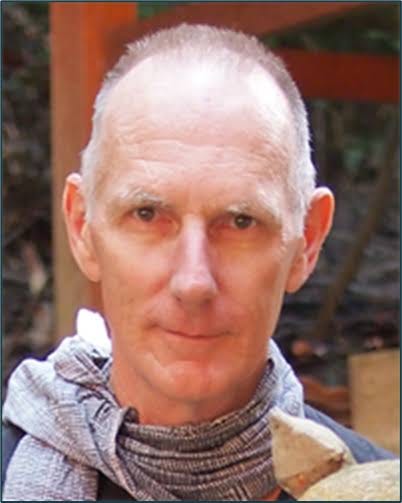
| Brian Davies (Photo: Lloyd Carrick) |
Editors Note: This is the final Cinematheque screening of the year - marking the 75th anniversary of MUFS & the 40th of the Melbourne Cinematheque. Peter Carmody will be introducing Nothing Like Experience.
Eight films constitute the core of the Carlton ‘ripple’. Four of the films are features or short features (50 mins or more) three shorts and one quasi-documentary. Members of the Melbourne University Film Society (MUFS) found inspiration in the French New Wave in what was a spontaneous outbreak of filmmaking taking advantage of lightweight 16mm synchronised cameras and sound equipment then becoming available, occupying a space between the fully amateur and the commercial feature film. Two key figures were then MUFS eminence grise Brian Davies (who produced, co-wrote and directed Pudding Thieves and Brake Fluid) and the agent provocateur Bert Deling (Dalmas, Pure Shit).
The French New Wave transformed a national cinema aesthetically and re-jigged it structurally marking the advent of cinematic modernism in mainstream narrative features. In this it can be distinguished from smaller and more focussed art film movements (often termed ‘new waves’). Anthropologist A.F.C. Wallace has offered the definition of ‘revitalisation movement’ as ‘a deliberate and self conscious attempt to provide a more satisfying culture’. In Carlton and the more tightly knit UBU Group in Sydney the outbreak of filmmaking on 16mm in the sixties was driven simply by the desire to make personal films in what was seen to be something of a moribund film culture. In this context ‘energy centre’ seems more appropriate than ‘movement’ or ‘school’ to describe the cluster of related films produced through the 60s in Carlton and in Sydney although the latter were closer to the above definition than the Carlton filmmakers. The recurring thread between the MUFS Production Group Films was Lloyd Carrick on sound and Nigel Buesst cinematography.
For most of the MUFS films any validation through bums on seats or film festival screenings was never an overriding consideration of the individual filmmakers who were making films more or less to please themselves within the loose parameters imposed by funding from Unifed and University Union Councils.
The MUFS films
Pudding Thieves (54 mins), self-funded on a final budget $3,500 by Davies, was made over four years but was largely conceived and shot in 1963-4, its well attended premiere at the St Kilda Palais being in 1967. He felt that the Godard-like fragmentation of the narrative “was little more than fortuitous” a reflection on low budget filmmaking with a hand-held 16mm camera involving frequent improvised departures from the formal conventions of classical narrative. Davies nevertheless thought that at this stage his filmmaking aspired more to the dispassionate style of Claude Chabrol than of Godardian or cinema-verite stylistics. “Starting with a bare outline of two male photographer-friends (Bill Morgan and George Tibbets) dabbling in pornography... a theme of betrayal, a reaction to Jules and Jim and Les Cousins - sentimental ideas of friendship...I got interested in each scene for its own sake.” For Davies directing was a learning curve interwoven with his cinephilia. After directing Pudding Thieves he directed a number of plays produced by student theatre companies and at La Mama in Carlton, activity in the spirit of the Cahiers critics making films instead of just writing criticism. Pudding Thieves is not included in the Cinematheque program.
Davies' motivation to make Brake Fluid (51 mins) co-scripted with John Romeril - the title is a red herring suggested by playwright Jack Hibberd – was also by Davies' own admission made “to overcome his fear of directing,” his feeling with Pudding Thieves, that he didn't have enough commitment to the idea that he was “actually directing a feature film,” that he was “far too tentative.” He said that in making Pudding Thieves”I was frightened (I) didn't know the actors, didn't relate to them properly.
Pudding Thieves is more about liberating the camera and narrative from seamless classicism (the Jules and Jim influence). Brake Fluid, made on the eve of the Oz feature film revival, is more about freeing the narrative from cause and effect continuity (the 'Godard effect') while hanging onto the threads of a unifying idea – 'boy meets girl but finds he can't talk to her'. Assistant producer (uncredited) of Brake Fluid, Geoff Gardner, recalls in the late 60s Brian repeatedly viewing 16mm French Embassy prints of Jacques Rozier's Adieu Philippine with its special sense of spontaneity in the unfolding of a narrative, and the innovative cinema verite of Chronicle of a Summer .
Nothing Like Experience (1969 50 mins) a MUFS Production Group film commissioned by Unifed for filming at the Second University Arts Festival, direction and script by Peter Carmody. Comedy and documentary are loosely structured around three student 'types' filmed during the festival including a seminar replete with an in-joke or two in a Q&A including Brian Davies.
Watt's Last Voyage (1965 7 mins) was self-funded by Davies as the pilot of a proposed series of program fillers for TV, rejected by the ABC as too long for the purpose. Davies spoke of it as “a mistake,.. you should never leave an actor (here Graeme Blundell and Robin Laurie) to their own resources,” seemingly the first phase in Davies' engagement in the director-actor relationship.
 |
| Alan Finney Hey Al Baby |
Hey Al Baby (1968 34 mins) Dir,sc.ed. David Minter. Funded by Unifed. Al (Alan Finney) is temporarily left alone as the sole male in a Carlton flat with three female flatmates which generates a certain amount of tension partly attributable to Al's edgy response to the situation. Biographical threads structured as seven dialogue sequences varying from about 3 to 10 minutes in length, in what Minter called “dramatically small” situations played with 'extreme naturalism' comparable to Rozier's Adieu Philippine and the films of Czech directors Milos Forman and Ivan Passer. Filming was cut tragically cut short when Chrissie Loh playing one of the women with considerable camera presence died in a car accident before filming, as originally envisaged, had been completed.
The Girl-friends (1968 25 mins) Dir.,scr. : Peter Elliott. Cast includes Jack Hibberd, Graeme Blundell. Jane Washington. Funded by the Union Council Melbourne University, like Monash 66 funded as a student orientation film with two freshettes, one of whom forms a liaison with a character played by Hibberd. A comedy with a satirical edge perhaps the most adept of the Ripple films in capturing something of the surfaces of nouvelle vague comedy such as Godard's Bande à Part (1964).
Monash 66 (1966 31mins), a MUFS production group film funded by Monash University Union directed by Chris Maudson and Robin Laurie for orientation of new students through a series of interviews by Laurie intercut with tracking shots and music score seemingly evoking Alain Resnais' tracking camera through the endless rows of books in the Bibliothèque Nationale in Toute le Memoire du Monde (1956). Laurie subsequently appeared as an actor in feature films Molly and Dimboola and collaborated with Margot Nash on We Aim to Please (1976), a feminist inspired take on the theme of female sexuality,
An additional “MUFS film” not included in the Cinematheque program is the feature length Sympathy in Summer (1968 88 mins) originally titled None of Us is Perfect, written and directed by Tony Ginnane “under the star of Godard, Resnais and Truffaut” and premiered at the Grand Cinema Footscray in 1971.
The initial ripple was a planned feature with the working title of the Student Action Film written and directed by Bert Deling which never proceeded beyond the filming of shots for several sequences reported in the student paper 'Farrago' in 1962.
See also “The Carlton Ripple and the Australian Film Revival” Screening the Past (accessible online) and “The Carlton Ripple – a prelude to the Oz Film Revival : Brian Davies and Bert Deling