Showing posts with label Lawrence Kasdan. Show all posts

Saturday, 16 April 2022

“Story matters because story is a metaphor for life…” - Tom Ryan revives screenwriting guru Robert McKee's memories - Part One - Patricia Highsmith, Anthony Minghella, Saul Zaentz, Charlie Kaufman and Brian Cox

Robert McKee

Now 81 and the author of a solid handful of books about screenwriting, Robert McKee joined the faculty of the School of Cinema and Television at the University of Southern California (USC) in 1983, where he began offering his now famous "Story Seminar" class. In 1984, he opened the course to the public and now travels the world presenting it to eager participants.
 

To some, he’s inspirational, a screenwriting guru. Played by Brian Cox, he even features as a character in the Charlie Kaufman-written, Spike Jonze-directed film, Adaptation (2002). Others see him as a constraining influence: according to one critic, he’s “the patron saint of hack writing, the world’s foremost proponent of writing-by-numbers”. I’ve found his books useful and occasionally enlightening about the machinery of storytelling.


One thing is for sure: he is a great conversationalist. He has a way of sweeping a listener along with his train of thought, insisting on assent with a rhetorical “Right?”, “OK?” or “You know what I mean?” before he moves on. And his passion for the art of humanist storytelling is designed to turn you into a true believer. 


I spoke to him by phone in January 2003, not long after the release of Adaptation and shortly prior to a visit he made to Melbourne to conduct his three-day seminar at the Nova (for a whopping $595 a head) and to present a session on Art Film for Popcorn Taxi.


Tom Ryan: Where are you as we speak?


Robert McKee: In Los Angeles. In my house.


In your study? 


In my study.


What can you see from where you’re sitting? I’m designing the mise-en-scene for the interview, you see….


Well, eat your heart out, Tom. From my study, I have a beautiful view over all of West Los Angeles out to the Pacific Ocean and Catalina Island. The sun is slowly setting in the west. 


And what books are on your shelf, within reach?


Ah, superb! Interesting books. I’m doing a new book. It’s to be called The Art of Darkness. It’s not just for screenwriters, but for novelists and playwrights, and everybody. About the dark side of life. I’m researching the nature of evil and so I have books such as Evil in Modern Thought by Susan Nieman, Dark Nature: A Natural History of Evil by Lyall Watson, a wonderful book called Evil by Roy F. Baumeister, subtitled Inside Human Violence and Cruelty (heh! heh!). So that’s the sort of thing I’m reading. 


No fiction on this subject?


On my nightstand in the bedroom is a collection of short stories by Patricia Highsmith.


Touching the darkness…


Patricia Highsmith at her home in Montcourt, France

Ah, she’s great. Strangers on a TrainThe Talented Mr Ripley. There’s a woman well-acquainted with the nature of evil.


And with, as I understand it, a very hard edge herself. Did you know her?


No. Of course not. She’s a bit before my time. But there’s a wonderful photo of her there. She was beautiful. You could compare her to Barbara Stanwyck. She has a look: the kind of woman you could make a fool of yourself over.


I guess. A friend once visited her, and, although he didn’t exactly fear for his life, he was not received well. [The friend was Geoff Gardner]


(Editor's Note: Indeed it was. I still wonder whether I am the only Australian ever to have met her. I mentioned the visit here)


That wouldn’t surprise me. I mean, did he come unannounced?


No, I think he’d written to her beforehand, but perhaps caught her on a bad day.


Well, she’s the kind of writer who would inspire people to make a pilgrimage. You put her books down and you go, ‘Man is this dark!’ It’s that simple. She doesn’t cycle cliches and she lets you see how twisted the human mind and relationships can get. 


I know you didn’t like the film of The English Patient, but what did you think of Anthony Minghella’s Ripley film?


I have seen it five times, at least. You know, on cable TV where you have the choice of umpteen films every night and you’re surfing the channels, as we say, and looking for the least offensive something to watch? The Talented Mr Ripley is one of those films that, if I’m skimming through and in the middle of it, I just have to stop and start watching it all over again. It’s just superb, I think. 


Anthony Minghella

I was ready to write Minghella off, you know. But after seeing Ripley and looking back on The English Patient, I realised that the real villain was not Minghella but Saul Zaentz. He’s a good producer – AmadeusCuckoo’s Nest – and he understands what I call the commercial art movie. How to make the commercial art movie (ha-ha): it’s got to be long and full of decorative photography. 


The general public goes to see what they think is an art movie believing that they’re having some sort of cultural experience. The English Patient  has about 90 minutes of flawed storytelling, but that’s crammed into three hours of decorative photography. Really dreadful. But I think that was Saul Zaentz sitting on Minghella. And when Minghella was able to do something that he had control over, he produced a wonderful thing like The Talented Mr Ripley. So I think the excesses that are The English Patient are probably traceable to Saul Zaentz.


Saul Zaentz

I should preface my next questions by saying that I haven’t been able to get hold of the published screenplay for Adaptation, so I haven’t read your Afterword and might duplicate things you’ve already dealt with.


Are you comfortable with the film’s depiction of your views on screenwriting?


Well, it doesn’t actually depict my views on screenwriting. There’s nothing actually said that I teach. It takes the notion, without saying it, that he teaches Hollywood movies. And that’s all it says about what I teach.


Charlie’s brother, Donald [both characters are played by Nicolas Cage], does present a particular line on your work, though…


Oh, he does, he does. He says things like “Bob says there should be an image system”. But he doesn’t explain what an image system is. In The Talented Mr Ripley, there’s a superb image system: beautiful, subtle, subliminal, the way it should be. Donald goes about his image system in a rather heavy-handed, on-the-nose way that I rail against in this class. 

I’m delighted by the film. The fun they have with me – man, I’ll do anything for a laugh. I’ll drop my pants for a laugh, and it would get a laugh. But I said, “I want my redeeming scene.” You can throw stones, whatever. I’m bulletproof. And he understood. The fun he has with my character compared to the inquisition he put himself through is nothing! I said, “Charlie, if you’re gonna humiliate yourself in front of the world with all those jerking-off scenes and everything, you can do what you like. But I want my redeeming scene.”

I must tell you, I read many, many drafts – I had many meetings during the development process – and you have no idea all the stuff that was taken out.


I said, “Charlie, if you’re putting yourself up for this kind of ridicule, how can I, or any of us…?”

Charlie Kaufman

Susan Orleans, Charlie’s agent, John Larouche, all the people who were portrayed in the film, knew when we read the first draft that none of us were in the film. He’s using us to portray aspects of his own personality and the film is about a writer’s struggle between his personal expression and the commercial imperative. OK? 


Once again, the question is how to make a commercial art movie. How to make something you deeply believe in, that will stand up as a serious work of art, and brilliant satire in this case, but make money. OK? So he chose to use the McKee character as the voice of commercial imperative. Right? 


That’s not what I teach, in fact. I just teach people to be responsible enough to make movies that make their money back, whether or not it makes hundreds of millions. You’ve just got to make films on a budget that you think will attract an audience appropriate to that film that is sufficient to repay the money. If you do that, that’s a commercial success. You’ll be making a movie next year. If you don’t, you’re in trouble. Just be responsible. Don’t even think about making hundreds of millions.


A film like, what, On Golden Pond, or The Accidental TouristThe Accidental Tourist made $300 million.


Really?


Yeah. It was a huge success everywhere in the world. 


Lawrence Kasdan

Or A River Runs Through It. It was another huge success. How can Larry Kasdan – he’s a buddy of mine – know that The Accidental Tourist was going to make $300 million? He just did his very best adapting and tailoring, and he did a very beautiful job. And people found it to be such a rich, satisfying film. Or Ordinary PeopleShine! Right? Who could have predicted the success of Shine? So make a film on a reasonable budget for what you think is the appropriate audience and, if you’re lucky, it might be a huge success.

You know what the most successful film in history, dollar for dollar, is?


Tell me.


My Dinner with Andre. It cost $150,000. To date, world-wide, with all the ancillary markets, the film made something like $15 million. That means there were some very happy investors, and I think most of that money was Louis Malle’s own. No one can predict these things. So I do not advocate people trying to anticipate the market, or follow trends, or write blockbusters. That’s the fastest way to lose your shirt that I know of. You write from your heart, you write what you believe in; you’re fiscally responsible in making the film on a budget that makes sense, given the audience. And, if you’re lucky, you at least get the money back so that you’re back in the chair writing and directing again. 


So I said, “Charlie, if you want to portray me as the commercial imperative, fine. ’Cause I got a sense o’ humour. But I want my redeeming scene.”


So he made you a restrained curmudgeon with a heart of gold!


Yes. He wrote a wonderful redeeming scene complete with a clinch when Nicolas Cage throws his arms around Brian Cox and gives him a hug. Ah, Jesus!


Brian Cox (in Succession, 2019- )

Are you comfortable with Brian Cox’s performance?


I cast him. I had to have a say in the casting. It was one of the conditions I set to use me. And, most importantly, I needed to know their philosophy of casting. I couldn’t tell them exactly who to cast because such a person might not be available. I wouldn’t hamstring a director in that way. So I said, “Gimme a list and I’ll go through it and I’ll check off anyone I think is inappropriate. And I’ll leave you plenty of choices.”


Mostly I wanted to see that list because I wanted to see what was in their heads. It could have been that their philosophy was Dan Aykroyd, Danny De Vito, John Lithgow. But they gave me their list and it was the top ten British actors of all time: Christopher Plummer, Michael Caine, Terence Stamp, Albert Finney. It goes on and on. Why they wanted to go with British actors impressed me. And I said, “I want Brian Cox. He’s done seven films this year and, if he’s available, he’s my number one choice.” And so they went to London and talked to Brian.


What was there about Brian Cox that made you want him?


He’s one of the greatest actors alive today. 


But he’s only ever played supporting roles…


Supporting roles that we know. But, you see, I lived in England for 10 years and I’ve seen Brian umpteen times in the West End and in these little films that don’t get far beyond England, where he has played leads. But I know Brian to be a great actor, and what I love about him is this: all these other actors are wonderful, but in the subtext of their work – say, when Michael Caine is playing a villain or anything – there’s this love-me-love-me thing. There’s a sense of charm, or a sense of “It’s not my fault”, something that tries to draw your empathy, your love, no matter what they’re doing. OK? I mean like Michael Caine in The Cider House Rules: “You gotta love me!” 


I said, “I want Brian because he won’t do that.” Brian Cox is kind of like a Humphrey Bogart-Jack Nicholson kind of actor. He doesn’t play for the heart. If you go with the guy, you go with him. But he’s not asking you to love him. It’s more rigorous somehow. 

If it’s required, an actor like Bogey, or Jack Nicholson, or Brian Cox can draw that love. They know how to do that. But if it’s not required, they don’t do it because they’re tougher than that somehow. And that’s a critical consideration if you’re gonna put me in front of the world. Because I do not want that dependency relationship with writers. 

You know they call me “the guru of screenwriting”, which is always a bit annoying because it’s denigrating to students. I mean, I’ve got a couple of dozen Oscar winners and a hundred Emmy winners coming to my courses, excellent writers. Calling me a “guru” suggests they’re mindless devotees hanging on the coat tails of the master. That’s bullshit. I’m a teacher! OK. And I make certain that students understand that they cannot call me on the phone.


You’re a writer. You know. These people have to sit in a room for months, sometimes years. I’m not there to hold their hand. They have to be artists on their own two feet and tough and disciplined and dependent on no-one but themselves to produce the best work that they’re capable of. So I don’t want dependency from my students. And I don’t want Christopher Plummer or somebody getting up there and suggesting I’m this warm-hearted guy who throws his arms around his kissy-faced students.


I want to inspire them to love the art. There has to be love in what they do, but love of the art. Respect for themselves as artists, and caring about the audience and ensuring that the work they’re doing is civilising. 


So I said, “All those others guys are all wonderful and would be all fine and I’ll accept them if you can’t get Brian. But if you can get him, do it because he’s gonna do me in an honest way, without that lovey thing.”


Did he come and study you by way of preparing for the part?


Oh, sure. He attended my lectures in Scotland. And once he was cast, he attended other lectures.


I took my son to a screening at Columbia about six months before the film came out. Now it’s one thing for me to sit there and watch myself being portrayed. And I’ve portrayed myself in another movie called 20 Dates [1998, directed by Myles Berkowitz]. I’ve seen myself on the screen. When I lived in England, I did two long TV series on the arts and in fact won a BAFTA for one of them. But imagine what it’s like for a son to see his father portrayed by a movie star, you know. So when we left the film, I turned to Paul and said, “What’d you think, Paul?” And he said, “Dad, he nailed ya.” 


Which parts exactly?


You know, there’s a line where they talk about “ripping Charlie Kauffman a new arse-hole”. I turned to Paul and I said, “Is that what it’s like to be on the receiving end of me?” And he said, “Yeah.” 


(To be continued)


Friday, 29 October 2021

"I really do care about all of them" - Part Two of a 2003 conversation between Tom Ryan and Lawrence Kasdan

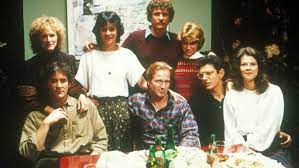
The Big Chill  ensemble

Do you think it was the Star Wars films that you wrote or films like The Big Chill and Grand Canyon that have given you the freedom to more or less do what you want?


Body HeatBig ChillAccidental TouristGrand Canyon, these were movies that were unusual for Hollywood. They did well enough and they were well-received by the critics. Those are the things that have given me my freedom, you know. 


The big blockbusters that I wrote, including one that was an original of mine but that I didn’t direct, The Bodyguard: those things are on your resume, everybody remembers them, but they have nothing to do with my directing career really. 


Except for the fact that after I had written Raiders of the Lost Ark and The Empire Strikes Back, when I said to the studio head, ‘I am not gonna write any more. I’m gonna direct,’ because I had written these two big hits, he was much more receptive. I wrote Body Heat to be my first directing job and I haven’t really gone back since then. And if I had not had a success as a director, I wouldn’t be able to do what I do. 


Everybody’s career is a question of ‘Was the last thing successful enough for you to control your destiny?’ Not ‘Was it good? Was it bad?’ Who knows? I think only time can tell that. It’s like, were there enough positive things around it so that you can go in and say, ‘I have another thing I wanna do’?


Loren Dean, Hope Davis, Mumford
 

Why didn’t Mumford work in the US?


I think it was crazy. They should never have made it. It was made by Disney. Joe Roth was running the company at the time. I’d made Grand Canyon with him and we had been very successful with that. It was sort of an offbeat movie for a studio to make. And I think that out of friendship or whatever, he agreed to make this movie for a very low price. I gave up all my salary. Everybody worked cheap and we made the movie very economically. 


It tested very well but was not easy to sell and was certainly outside the experience of Disney, which has only succeeded with high-concept material. At that time, Joe Roth left the studio and the movie became a kind of orphan. And it was not an easy film to begin with because it’s not what’s happening in American movies. I had a non-star vehicle, a gentle ensemble comedy about people’s identities. You could take that description to any studio today and they’d all kick you out the door. There was no effort to sell it and they didn’t really distribute it overseas. 


Alfre Woodard, Jason Lee, Mumford

If Tom Cruise had played Mumford, it might’ve worked. It was a very tough movie to sell and sometimes that kind of movie is very hard to get a movie star for. But if you could, it’s the only thing that could carry it. It’s a very low concept, very gentle, very European, I think.


Yes. It’s a film I’ve got an affection for.


Thank you. I’m glad. You know, it’s a funny thing, Tom. I go all over the world and, when you have a long career, you carry a bunch of injuries and regrets and also some pride in what you’ve created. As I go around – it doesn’t matter where I am – people come up to me and they’ll have some movie that they like. The movie could have flopped terribly in the United States, but because of video, or because of foreign distribution, they may have this affection for I Love You to Death [1990] or there are a lot of Silverado fans, or people will come up to me about Grand Canyon. And you realise that these movies have a life long after your immediate thrill or disappointment and people do relate to them in a personal way. 


When I was in Europe, I had a lot of people tell me that about Mumford, but as far as I was concerned Mumford never got a release in Europe. So the fact that they were seeing it anyway was delightful and the fact that they liked it was great. I do still have a bruise from it not being released, sold and supported. But I do think that the reality of Hollywood is that that kind of movie can’t really be made. Maybe independently, but then you pretty much know that it’s not going to be seen by many.


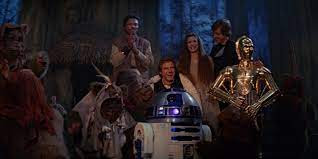
Return of the Jedi  ensemble
 

To look at another of my favourite films of yours, The Big Chill: have you considered a 20 years-on sequel?


(Chuckles) I’ve been asked many times, but, you know, I’m not actually a fan of sequels. I wrote Return of the Jedi for George Lucas because he had been very supportive of me and had helped me to get to direct Body Heat. So he’d been good to me and he asked me as a favour. He was in a hole doing Return of the Jedi and so he asked me, just as he’s asked me to do all of these other movies since then. But I don’t really like sequels. I think there are so many movies to be made, I don’t really understand the attraction of sequels. It’s obviously purely a business proposition. I’m not sure anyone wants to know where these people are now. 


Um. I do.


(Laughs)


I had a real affection for the characters and they’re still alive in my consciousness. And surely there’s a story to be told about where these baby boomers have ended up at the beginning of the 21st century?


Yes. I’m interested in that. But I don’t know if I’m the person to tell it.


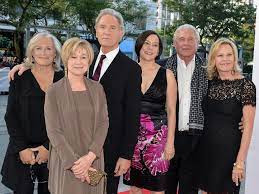
Cast reunion, The Big Chill

I sensed your empathy for those characters through the film. Why would you let them go?


I do have an empathy for them. I think they’re foolish and they’re funny and they’re very much like people I know, real people. They’re not always smart and they’re not always good and they’re very human.


One of the criticisms that was always directed at the film, wrongly I believe, was that these characters were never real ’60s radicals…


(Chuckles)


…. whereas my view was that that was part of the point of the film.


It is. But the closer you get to ’60s radicals, you realise there were no real "’60s radicals". There were people who did things passionately, as these people did, at the time. There aren’t too many surviving, you know. You only hear that objection from people, I think, who have a misguided sense of their own selves. These people in the movie have drifted, but it’s impossible to tell how sincere they were at the time. Obviously there was a variety of commitment the way there is in any group, and it seems presumptuous to me for people to say that they weren’t real radicals but we were.


Aside from Dreamcatcher, which are the babies you care most about?


You know, I really do care about all of them. The ones that have been difficult releases, where you’ve done a lot of hard work and they haven’t been well-received, you hold them dearest sometimes. Each one represents at minimum a year, sometimes two years of my life. That’s why the current system where the judgement is over on Friday afternoon of the first Friday of a film’s release, where it’s decided whether it does or it doesn’t work commercially, is a very rough system. It batters people. It really does. Nobody’s trying to make a bad movie. Everybody thinks they’ve done pretty well at the time they give it to the world. And when the world rejects it, it’s traumatic. 


I don’t have a favourite. I’ve directed ten movies and each one represents a period in my life and a group of people that I worked with who’re still important. And I have two sons and I love ’em both. And they’re very different.


Jonathan Kasdan


Jake Kasdan

Although one of them at least is in the movies.


That’s right. And the other one is writing television and will soon be in movies I think.


Apart from being an inspiring parent and role model, have you worked with your sons in any way?


No. I can’t get ’em to work with me. Jake has, wisely I think, created a career independent of me and directed Zero Effect when he was 22 years old: way ahead of the schedule I was on. And with no help from me whatsoever, he went out, he wrote a script and he got someone to let him direct it which was sort of mind-boggling. 


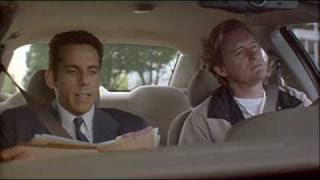
Ben Stiller, Bill Pullman, Zero Effect,
(Jake Kasdan, 1998)

And he directed another movie after that which was very successful here (Orange County) and a lot of the kind of television where you create the show, although I don’t think he’s gonna do that anymore. He’s very much in demand for that because he was associated with Freaks and Geeks, a show that was very well-received here.


I didn’t do anything to help him, and the younger one, Jon, is doing the same thing. I haven’t helped him. All I’ve done is be encouraging and supportive, but neither of them has worked with me really and I would love to have them work with me. But I think it’s important to them to establish themselves without any association with me. Maybe they’re just ashamed of me.


From a distance, given the reference points shared by Jake’s Zero Effect and your Body Heat, it’s pretty clear that the son was going to follow in the father’s footsteps?


It’s very interesting that he came upon such an idea. When he was so young, he wrote this script that was a perfect metaphor for the difficulty of moving from being an observer to a participant, you know. And that’s what Zero’s problem is: he’s a brilliant observer who has a lot of trouble talking to people, becoming emotionally involved with them. I thought that was an amazing metaphor for a 21 year-old to come up with, and in a very entertaining way. And then he went out and directed the movie very well. So I was very impressed with that. I didn’t see it relating to Body Heat which was about very different issues for me.


I was thinking more in terms of the reference points: the private-eye story, the hard-boiled connections…


I’m still fascinated by that. I’d still like to do a regular detective movie. I love those movies. I’ve been reading a lot of that fiction. It got to me when I was very young and I’ve never been able to shake it. The genre is a wonderful springboard that lets you tell a lot of different stories.


************************


Editor's Note: This is a second part of an interview with the American film-maker Lawrence Kasdan. It was recorded by Melbourne film critic Tom Ryan in 2003 as the basis of a feature article for The Age. The first part can be found IF YOU CLICK HERE. Previous posts in this series have been devoted to Costa-Gavras Jonathan Demme (Part One)  Jonathan Demme (Part Two) Click on the names to read the earlier pieces


Friday, 15 October 2021

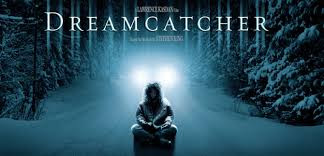
“I’m just beginning to understand what film is.” - Part One of a conversation between Tom Ryan and Lawrence Kasdan shortly after the premiere of DREAMCATCHER (USA, 2003) -

Lawrence Kasdan

When I spoke to him in March 2003, Kasdan was in “an unusually stormy but still beautiful” Hawaii, looking out over the sea from his hotel room and enjoying a long overdue break from work. He’d just finished an exhausting post-production on
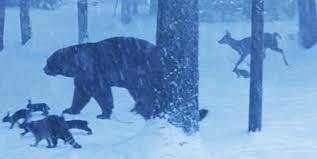
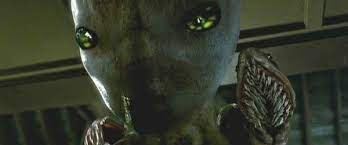
 Dreamcatcher (2003), based on the Stephen King novel written a couple of years earlier. A big-budget horror film bursting with gross-out moments, body-snatching monsters on the rampage and a human villain or two, it’s mostly set in or around a cabin in the woods in Derry, Maine – regular King country – where four thirtysomething male friends have been meeting annually for more than 20 years.

For the writer-director of films such as Body Heat (1981), The Big Chill (1983), The Accidental Tourist (1988) and Grand Canyon (1991), Dreamcatcher was an opportunity to move in a new direction. He’d written action movies before: The Empire Strikes Back (1980), Raiders of the Lost Ark (1981) and Return of the Jedi (1983). And he’d directed a couple of Westerns, Silverado (1985) and Wyatt Earp (1994), but they’d had more in common with the reflective ensemble films for which he’d earned his reputation than with any regular shoot-’em up aspects of the genre. 


Then the two films he’d made during the late ’90s – the romantic comedy, French Kiss (1995), with Kevin Kline and Meg Ryan, and Mumford (1999), an appealing small town comedy with a then largely unknown cast, had been all-but-ignored in the US. Mumford wasn’t seen in Australia until its video release a couple of years later.


When I spoke to Kasdan, his sons, Jon and Jake (with wife and occasional writing collaborator Meg Kasdan), were several years into the process of building careers in the film and TV business after making their screen debuts as little kids in The Big Chill


By that time, Jon had worked as a writer on the much-loved TV series, Freaks and Geeks (2000), as well as on Dawson’s Creek (2001 – 2002). Since then, he’s teamed with his father on the screenplay for Solo: A Star Wars Story (2018), a partnership that Kasdan senior had long hoped would eventuate. He has also directed a couple of features (including the In the Land of Women in 2007), as well as several episodes of the undervalued Roadies (2016), and is the showrunner for Disney’s forthcoming series of Willow.


Jake made his writer-director debut on the very impressive Zero Effect (1999), which stars Bill Pullman, going on to work extensively on TV series, including Freaks and Geeks  and New Girl (2011 – 2018), and to make films such as Walk Hard: The Dewey Cox Story (2007), Sex Tape (2014) and a couple of contributions to the Jumanji franchise (2017 & 2019).


Since the interview, Kasdan senior has written and directed the mostly disappointing Darling Companion (2012) and written a further two Star Wars films – Star Wars: Episode VII – The Force Awakens (2015) and Solo: A Star Wars Story – as well as a so-far unmade screenplay for November Road, an adaptation of Lou Berney’s terrific 2018 novel. He’s currently at work on the script for Stay Close, an eight-part TV series for Netflix based on a 2012 novel by Harlan Coben. 


Tom Ryan: Was working on Dreamcatcher constraining or liberating?


Lawrence Kasdan: To me it was liberating. I chose to do it so as I could work in those areas where I’d never gone before. You know, with effects, with action, with a lot of hardware… things. So it was a whole new education for me. I loved working with ILM on the effects. It was a very satisfying, entertaining experience for me.


The films you’ve directed are usually more about character than plot, even the Westerns. But Dreamcatcher seems to reverse that. Not that I’m saying character is absent, just that the plot is the driving force.


That’s fair and it was deliberate. I wanted to do that. I’ve been doing a lot of general ensemble comedies and a few other things, so I chose something with a strong narrative.


Is it true that Stephen King sold the movie rights for $US1, and have you been in touch with him?


I was in touch with him all the time. He has some sort of special arrangement with Castle Rock where they’re able to set up the movie for no money. He takes no money. But once it’s set up, he has a very rich deal. 


He has been incredible about this movie, totally supportive. He says that he loves it and he was along with every draft and every cut and then was at the premiere two weeks ago. So he’s been very involved. 


He’s an interesting guy. I had never met him before. He’s very charming, self-effacing, funny. He’s very aware of what he’s about. Whatever’s weird about this story involves Stephen. 


What attracted you to the project in the first place?


I heard about the book and I read it because I’d been looking for something to do where I could do visual effects. I had written movies like that, but I’d never directed them. So I wanted to try them and to use effects in a very realistic setting, where it wouldn’t be some entirely digital universe. And I thought this presented a lot of things like that. 


It wasn’t just because it began with a group of friends, which related to other things I’ve done, but because they are then thrown into this extraordinary situation. And so I thought that it would be a lot of fun. 


Certainly there’s a lot of sparkling dialogue in the opening sequences between the four characters.


Ahuh.

Four friends, Dreamcatcher
 

I’ve always sensed something very Hawksian behind your work, about group interactions and characters working themselves out through that.


Yes. 


I thought that might have been one of your responses to the question about what attracted you to the project.


That’s what I’m trying to say, that the way the group works is that their friendship is ultimately their only hope. That’s sort of a theme that has been running through all my movies and I think it’s strong here, except that it takes off in this very extravagant adventure.


Did you spend a lot of time at the post-production stage with this film?


Yes. In fact, I just finished it right before the opening. That was the eye-opener about doing a visual effects film. When you finish shooting the regular film, it’s as though you start a second film the next day, despite the fact that we had been doing the effects all through production. I didn’t realise that for nine months of post-production we would be working on these 400 effects shots. And every day talking to ILM, you know. 


So you’re really creating new images right up until the very end which is not the usual thing. Usually you shoot the film and then you spend your time editing it, rewriting it in the editing room and so on. Here you’re actually still creating the movie right up until the very end.


When you’re directing, how sacred is the script you’ve written and how much are you rewriting it as you’re blocking it out.


On set, you know, I try to be very open to what’s going on. And what you want is to let everybody’s contributions be felt at the same moment in the frame, so that there’s some kind of spontaneity to it. Sometimes you achieve that well, sometimes you don’t at all. I believe in the scripts when I write ’em and I don’t let people change them easily. But I always say the script is innocent until proven guilty. 


Jason Lee, Dreamcatcher

Of course, when you’re on the set you’re trying to be open to ideas from everybody. And also to discard the ideas that might be good ideas but might not be appropriate. Then in the editing room, it’s a whole new ball-game because you discover things about a movie that you could never figure out while you’re writing it. For example, that you don’t need a whole scene, that a glance between two actors can take the place of four lines of dialogue, and that kind of thing. 


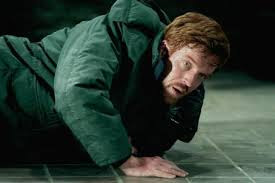
Damian Lewis, Dreamcatcher

So you try to be very open from the get-go when you’re writing, when you’re actually shooting the movie and then when you’re finishing it. You say, ‘What’s really going on here?’ And, frankly, most of the time it’s very hard to have any perspective on it. 


Some people think that the worst person in the world to cut a movie is the guy who just directed it. You’re very much in love with the conception and you’re happy about it on film. And you’ve won so many little battles that you may lose sight of the war.


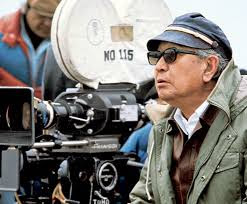
I’m constantly amazed. I went to the Directors’ Guild when they gave the Lifetime Achievement award to Akira Kurosawa, who’s my favourite director and who was about 80 years old at the time. He said, ‘I’m just beginning to understand what film is.’ And all the directors in the place knew exactly what he was talking about. 


"...my favourite director..." Akira Kurosawa

It’s just incredibly hard, you know, to figure out how it works. Sometimes you make mistakes. You think something works a certain way but it has exactly the opposite effect. And it’s different for everybody who sees the movie because they bring their whole history to it. It’s a very plastic kind of form, you know. You work very hard to achieve certain kinds of effects but it’s really like alchemy: you don’t know how it’s gonna come out. 


When you’re writing, do you always like to fly solo or do you show it to friends, read it around the dinner table and so on?


I have several people that I trust whom I show it to. In this case, Bill Goldman had started writing the script, then we did a draft together and then he stepped out. But I showed him everything that I wrote after he left. And, of course, Stephen King and the people in the company, and all my circle of people. So there was a lot of people looking at it. 


But that doesn’t give you any guarantees of anything because, once you enter a movie, you’re sort of on the inside of it and everyone working with you is on the inside of it and you’re solving problems every day. So there’s this general feeling of satisfaction. But whether you’ve seen the forest is another question. 


It’s very tricky. I’ve written almost everything I’ve done and some of the things have been very personal. Some of them have been very successful for me and they’ve given me the power to do my movies the way I’ve wanted to do them. But it doesn’t always work. 

Sometimes your personal interests and drives match up perfectly with some sort of zeitgeist in the world and a lot of people respond to your movie. Other times, the thing that you’re trying to convey finds no connection to the world. It’s very hit or miss, you know.


*******************

Editor's Note: This is a first part of an interview with the American film-maker Jonathan Kasdan. It was recorded by Melbourne film critic Tom Ryan in 2003 as the basis of a feature article for The Age. Previous posts in this series have been devoted to Costa-Gavras Jonathan Demme (Part One)  Jonathan Demme (Part Two) Click on the names to read the earlier pieces