Thursday, 14 January 2016

Paul Harris posits an alternate cinephiliac history of David Bowie and the movies


              A DAVID BOWIE PHANTOM FILMOGRAPHY 
                             The projects that never saw the light of day
One  EGON SCHIELE
On at least on two occasions Bowie nearly played Egon Schiele.

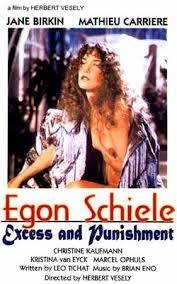
Circa 1979 he was approached to play the title role in a biography of Schiele , the Viennese Expressionist artist to be directed by the Austrian Herbert Vesely. By the time the film's financing fell into place Bowie was nowhere to be seen (Matthieu Carriere played the role). I seem to remember that this film played a very limited season at the Trak Cinema in Melbourne before disappearing from view.

Bowie's personal interest in the artist's work dates back to the 70's when he was based in Berlin (The album cover for Lodger in 1979 with its physical contortions clearly shows his influence,see below).
Earlier, in 1977 plans were announced for Wally, a completely separate Schiele project which director Clive Donner pitched to him, to co-star Charlotte Rampling. (The title Wally refers to one of the artist's girlfriends). But nothing came of that either which is probably a stroke of good luck when looking at Donner's other latter-day work (Vampira ,Charlie Chan And The Curse Of The Dragon Queen)


Two THE EAGLE HAS LANDED
 Bowie was mentioned by several sources as a candidate to play a major role in The Eagle Has Landed (1976), a WWII drama set in 1943 about a plot by the Germans to kidnap Churchill and the Allies to assassinate Hitler .The same reports stated that due to scheduling conflicts he was forced to step down. Actually Bowie underwent an unsuccessful screen test and hard-nosed ' old school ' director John Sturges was not at all impressed with him . With only one starring role behind him (the sci-fi allegory The Man Who Fell To Earth ) it was also felt that he was a rocker dilettante, leading to the unfortunate nickname ,The Ego Has Landed .


Michael Armstrong


Three THE HAUNTED HOUSE OF HORROR/HORROR HOUSE
Bowie's first screen role was in an experimental short film The Image (1967), directed by Michael Armstrong. The 20-year-old Bowie plays a ghostly presence who steps out of a painting and wreaks havoc with the artist. Shot in a derelict house the film, which contains no dialogue, was slapped with an X certificate for its violent content. In 1969 Armstrong got his break with The Haunted House Of Horror ( originally called The Dark) , an AIP 'haunted house' flick, a British-American coproduction aimed at an international market, starring AIP's contract players Frankie Avalon and Jill Haworth.The initial plan was to cast Bowie as a closeted gay character but AIP objected to this strategy , insisting that Avalon and Bowie would not be a good match. What this meant when translated into everyday English was that they didn't want Avalon's Philadelphia pop crooner being overshadowed by a Space Oddity. The resultant film was compromised by poor casting, reshoots and post-production tampering. It is, nevertheless, a Quentin Tarantino favourite.

Bowie expressed embarrassment in later years about The Image. Prior to its production, Armstrong had proposed to Bowie that he play a modern-day Orpheus in ‘A Floral Tale’, a proposed feature based upon Orpheus Of The Underworld , the role that of a rock idol literally torn to pieces by his frenzied fans. When the screenplay was vetoed by the British Board Of Film Censors for its 'explicit homosexuality’, that was the end of that enterprise.

In 2012 Armstrong detailed his working history with Bowie:
“David and I first met after I had heard his debut album and felt both his wit and his musical talent ideal for my intended film about mythological Greece, “A Floral Tale”. I had approached him with the idea that he would play the role of Orpheus in the film plus write songs and additional music as part of the overall score. He was extremely enthusiastic about the project and we spent a couple of most enjoyable meetings at his manager, Ken Pitt’s flat in London, discussing it.
At the time, it was a far more modest screenplay than the epic three hour comedy that would eventually result by the time it reached a final draft. David was not contracted to start work on writing any songs or music as the film was not fully financed at that point so, I’m sorry to tell you, no songs were actually written for it. While completion funds were being found, the production company concerned asked me to put it to one side, temporarily, and make them a short film I had written, “The Image”. This I did and cast David as the boy.

I then returned to “A Floral Tale” but in writing a second draft found it developed into a film of epic proportions. The hugely increased budget together with incredibly ambitious special effects for the time, meant that the film proved impossible to fund. Consequently. it meant that David was never required to put pen to paper and so no songs were ever written for it.
Again the project was put to one side as I embarked upon my first feature, “The Dark” which later became re-titled as “The Haunted House of Horror”, a film for which, again, I wanted David to play a lead role and which I adapted in order for him to be able to write and perform a couple of his own songs. This was, alas, not made possible when the American producers objected to his being in a film as they felt he would clash with their already contracted singing star, Frankie Avalon and that should any songs be performed at all in the film, he should be the one to perform them. The result was that I was forced to cast another actor in the role I had rewritten specially for David.

My last attempt to work with him came with a screenplay I wrote specially for him, “Mutants”. Although I would have wanted David to write the score and perform a couple of songs on the soundtrack, the role was purely for David as an actor and not as a performer. The project never progressed further than a screenplay and was put to one side when I was contracted to write and direct “Mark of the Devil”.

Upon completing “Mark of the Devil”, I returned to London and set about working on a comedy revue I had written and which I was to direct at the Arts Theatre in the West End. I was also acting in the show alongside David who I had invited to be a member of the small company. Unfortunately, rehearsals had barely got under way before the producer ran into financial difficulties and disappeared which meant me having to take on the role as producer of the show as well and find the necessary funding to continue. During the resultant delay in production, the company broke up and by the time it was re-formed and ready to go back into rehearsal with a largely different cast, David was one of those original members no longer available.


Four  UNSUCCESSFUL AUDITIONS
This is just a partial list of films that Bowie unsuccessfully auditioned for
1968 : The Touchables (Robert Freeman, UK)
1969 : Oh! What A Lovely War (Richard Attenborough, UK)
1971 : Sunday,Bloody Sunday (John Schlesinger, UK, the role went to Murray Head)
1972 : The Triple Echo (Michael Apted, UK)
(any further suggestions ???)

Five  REJECTED
Two major roles that Bowie turned down:
A View To A Kill (John Glen, UK, 1985) as the villainous Zorin (Chris Walken played the role)
Hook (Steven Spielberg, 1991) as Captain Hook

Six  BUSTER KEATON
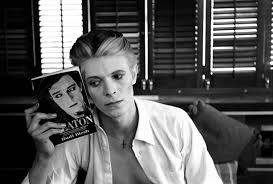
Bowie was fascinated with the silent comic's work and contemplated making a screen biography in the late 70's. In the halfway point of the music video Miracle Goodnight, taken off the 1993 LP Black Tie,White Noise he channels Keaton in a quick collage . The photo below shows him perusing Rudi Blesh's landmark biography of The Great Stone Face, adopting a copycat pose while falling to earth.  See it on Youtube HERE


Seven  DOWN UNDER
The closest David Bowie got to making a film in Australia was via actor turned producer-director David (Just A Gigolo) Hemmings. In 1979 the latter was starring in and co-producing Harlequin , a contemporary reworking of the Rasputin story, on Perth locations, for the Antony I. Ginnane assembly line. When writing the screenplay, originally titled ‘The Minister's Magician’, Everett De Roche had Bowie in mind .But when push came to shove this idea was placed in the 'too hard' basket and Hemmings turned to fellow British actor Robert Powell who had previously starred in Hemmings' first film as a director Running Scared (1972) and presumably came at a cheaper rate.

The still and poster art suggest that at least Bowie might have looked the part. It is difficult to believe that he would have even temporarily given up his lucrative career in other parts of the world including an impending Brodway stage debut in ‘The Elephant Man’ for what we now recognise as a routine Ozploitation assignment and possibly a recurrence of the Just A Gigolo debacle a couple of years earlier.


Eight  FAERIE TALE THEATRE
Does anybody remember the Faerie Tale Theatre series, executive produced, hosted and narrated by Altman discovery Shelley Duvall in the 80s? 


FTT was an anthology series, produced for cable on video, dramatising children's fairy stories and directed by industry heavyweights like Coppola and Tim Burton. Duvall claims she got the idea for the concept while shooting Popeye (Robert Altman, USA, 1980) in Malta. Bowie was cast as The Pied Piper in the episode The Pied Piper Of Hamelin (1985) and was replaced by Eric Idle when he dropped out just prior to shooting. At 4 days' notice without having read the screenplay, which was in verse, Idle stepped in .The costume fittings had already been done and he was of a similar physical stature so that was a much needed cost saving. Bowie wanted to make the episode in Canada for tax reasons so the production crew headed off to Toronto for this one occasion. My memory is that Idle acquitted himself well in the part even though the ex-Python was so identified with comedy that it was a shock to see him in a morose, downbeat part like this.

Click here for a news report in the Montreal Gazette (March 13, 1984) which gives detailed background information and above is a photo of Duvall and Bowie, presumably taken before she found out he was decamping at the 11th hour.


Nine  AUTEURS & OTHERS
Three odd possibilities that may have been real or could have just been idle cocktail conversation to help pass the time.
R W Fassbinder

Bowie met with Rainer Werner Fassbinder during his time in Berlin in the 70's to discuss the possibility of making a film version of "The Threepenny Opera"

Lina Wertmuller suggested a movie together but he didn't like her politics .

Bowie, a bibliophile, is on the record as saying that a film version of "The Delinquents" (based on the 1962 novel)  would be a good idea. The original book by Deirdre Cash, writing under the Irish sounding pseudonym of Criena Rohan, was first published in London where she had moved to. According to several unconfirmed sources Bowie was approached to be music director on what turned out to be a totally misbegotten attempt at promoting
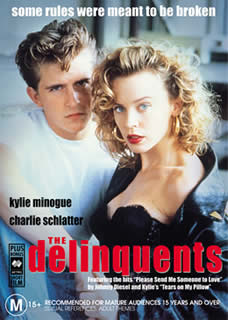
Kylie Minogue's talents on the big screen (Directed by Chris Thompson, Australia, 1989). During this period Bowie was spending much of his spare time in Sydney at an apartment he owned. Make of that what you will.


Ten  MANDRAKE THE MAGICIAN

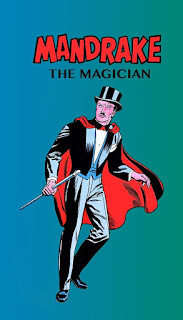
And so we come to Mandrake The Magician which I referred to recently via the Fellini-Mastroianni connection. In 1980 the English sales agent-production company Goldcrest announced an ambitious Mandrake project to be produced by Eric Rochat, who had produced The Story Of O (Just Jaeckin, France/Germany,1975). Screen rights had been obtained from King Features Syndicate and Julien Temple, with just The Great Rock N Roll Swindle (1980) to his resume,was announced as director .
Eventually it was decided by the suits in front office that as the budget and the attendant financial risk increased that maybe Temple was slightly inexperienced for such a massive logistical undertaking.
So Julien went off back to the world of music videos where he worked with his good friend on music clips and Jazzin' For Blue Jean (1984),the promotional short designed to promote the release of the single " Blue Jean ". Then in 1986 Goldcrest , in a radical change of attitude, bet the house on him by offering Temple the chance to direct a mega-musical Absolute Beginners and who did he cast as the lead? David Bowie played Colin , the young photographer in 1958 London , caught up in his love for Crepe Suzette (Patsy Kensit) and the Notting Hill Race riots . The result was an expensive and expansive looking,stylish musical with some great showstoppers amidst all the visual clutter , which he intended as an homage to the Fifties Hollywood work of his heroes Minnelli and Tashlin .Castigated by the press and the industry there was a feeding frenzy of bile directed against him as though he was the UK's Michael Cimino.

Temple suffered a breakdown and a temporary career setback but has bounced back in the last decade with an Australian feature project The Eternity Man (2008) a series of excellent music documentaries (Dr.Feelgood,Wilko Johnson,Ray Davies) and his splendid archival history, London : The Modern Babylon (2012).
It's difficult to talk about Temple without bringing in Bowie's name. They were good friends and frequent collaborators. As a teenager Temple first saw Bowie perform at Glastonbury in 1971. Just this week he was quoted as saying about him:" He was the patron saint of misfits ...it's hard to think of him as history because he was always the future - he was also the patron saint of risk".
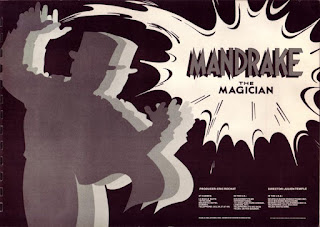
Above and below the poster art used to sell the Mandrake project at Cannes
:

Monday, 11 January 2016

A Cinephile Diary - Pillaging Paul Harris's Facebook Posts for the greater glory

Michael Mann
Alejandro Inarittu
January 11  PUFFING STUFF

In November last year director Michael Mann got together with Alejandro Inarritu to shoot the breeze on stage in one of two conversations to discuss the making of The Revenant, organised through the auspices of the DGA (Directors' Guild Of America). It was, for me, a much more harrowing experience than anything to be found in Inarritu's elephantine survival saga as I watched the idiosyncratic director of the infinitely superior The Last Of The Mohicans (1992) brown-nosing and grovelling to the wunderkind of the moment. The Argentinian director is a charming conversationalist to the extent that he makes Quentin Tarantino seem like a Trappist monk by comparison. The words poured from his mouth but revealed little about The Revenant's production and the director's creative methods that can't be found in a multitude of puff pieces clogging up the media in the Golden Globes-Oscars lead-up season . Mann is deferential to an embarrassing degree and we learn nothing at all of the lengthy 14 year development process , nor is much curiosity expressed about the film's  themes .Next up was Darren Aronofsky who, like Mann, seems to be primarily interested in the logistical challenges (the bear attack,the avalanche, difficult scenes in long takes in remote locations in available natural light, short shooting days because of extreme weather conditions), blah blah blah)) and the delays not caused by the weather but by the availability of " Leo ". (compare this with the highly detailed and analytical articles by Sandy George on the creative development process and financing of Australian films Last Cab To Darwin and Downriver.) And,of course, neither interviewer brings up any of the many ' man- against- nature' cinematic forebears in passing which might include A Man In The Wilderness (Richard C Sarafian, 1971), (1971),Jeremiah Johnson (Sydney Pollack, 1972), First Blood (Ted Kotcheff,1982) and The New World (Terrence Malick, 2006) to name a few.


First Blood was shot in winter, also in British Columbia and Vancouver, in similarly hazardous conditions without the enhanced help of CGI .The result was an action masterpiece and box office smash in the capable hands of director Ted (Wake In Fright) Kotcheff and star, co-writer Sylvester Stallone At film's end a tearful Sly moans " I only wanted my country to give back some of the love I gave It " . Chilling stuff just 7 years after the end of the Vietnam conflict. And I write this as news comes through that David Bowie has died from cancer and Stallone has won a Gold Globe for, of all things ,Creed .So be it.
January 10 I've been reading Clare Wright's The Forgotten Rebels Of Eureka (Text Publishing). It's written with a passion and scholarship which is just as well. At over 500 pages of densely packed historical detail I found it a slog. Too many popular histories wash right over me and leave no lasting impression. A slog in this case is definitely not a pejorative description for a page-tuner of a book that details not only the participation and key role of women in the Eureka Rebellion but also the stories from the goldfields which provides an authentic overview of what it must have been like just to survive on a day-to-day basis - the hardships endured by gold seekers, both male and female in ' the land of plenty' (i.e.,Victoria). Annabel Crabb is quoted as saying " I want to see the bloody movie " .It comes as no surprise to learn that Ruby Entertainment have optioned the TV rights for a projected miniseries .


January 9 THE BEST OF EVERYTHING (1959)
Rona Jaffe's Fifties, semi-autobiograhical bestseller ,a glossy Eisenhower-era tale about the one-sided sexual politics in the corporate high rises of a Manhattan publishing company follows a trio of secretaries who would describe themselves as ' modern women ' hoping to advance up the corporate ladder. and rope an appropriate Prince Charming into the bargain.
A precursor to Sex And The City and Mad Men behind the high gloss of the gorgeous looking Cinemascope and Color by De Luxe settings lies an entertaining melodrama that captures a culture in transition.

Hope Lange starts out in the typing pool and eventually graduates to editor where she falls in love with the too-good-to-be-true executive Stephen Boyd who positively stinks of decency.
Meanwhile naive country girl Diane Baker is harassed and exploited by worldly males at every turn, impregnated by the film's most rapacious sleaze bag (Robert " The Kid Stays In The Picture " Evans ,and then unfairly punished by the usual Hollywood double standard which by then was starting to fray around the edges.

Suzy Parker plays a character named Gregg who is yearning to be a serious actress in her spare time, falls badly for stage director Louis Jourdan and ends up being a seriously disturbed stalker, unable to accept that her beau enjoys playing the field. Parker , a former model with great screen presence ,who was under contract to Fox at the time, was being groomed as the next big thing but her career gradually fizzled out.

They don't make films like this anymore. Well,actually they do.The Devil Wears Prada (2006) and The Proposal (1909) with Sandra Bullock as an icy bitch (again in publishing) come to mind but there is a sharp intelligence behind this film , namely that of the Romanian-born Negulesco, a painter who was taught by Brancusi and knew Modigliani. He directed a unique quartet of features at Fox over the space of a decade in which a trio of women searched for love in increasingly exotic settings (How To Marry A Millionaire, 1953,Three Coins In The Fountain 1954 and The Pleasure Seekers 1964).
Negulesco took great pride in persuading diva Joan Crawford into accepting a supporting role as an acid-tongued senior editor. She was promised a more substantial role and shot a drunken tantrum sequence set in a bar, which ,although cut from the finished film , can still be glimpsed in the film's trailer
(Available on import , released by Twilight Time).

January 7 CHICAGO CALLING (1952)
(Warner Archive Collection)
The spectre of Italian neo-realism looms large in this impressive but forgotten urban drama in which the Windy City only features indirectly. Dan Duryea plays an alcoholic outcast, a photographer by trade, who has squandered life's opportunities one too many times.His frustrated wife (Mary Anderson) and daughter walk out on him and soon after he receives word that his daughter has been injured in a car accident just outside of Chicago.
Bereft of the funds to maintain the phone connection and keep in touch with his geographically distant wife he leaves his miserable walk-up tenement flat and heads out into the shabbier neighbourhoods of downtown Los Angeles ,initially with only his dog for company, befriending a young boy in desperate need of a friendly father figure along the way . As his plight gets worse so he becomes increasingly reliant on the chance kindness of others.

Robert De Grasse's semi-documentary style lensing , apart from a few studio interiors, splendidly evokes an urban demimonde ,notably the long demolished Bunker Hill area (also prominently featured in Losey's 1951 remake of M) The obvious reference points here are De Sica's Bicycle Thieves and Vidor's The Crowd (1928) Duryea, always impressive on screen and at home in the noir environment ,usually as a villain or layabout pimp (in real life a devoted family man and scoutmaster) , effortlessly engages audience sympathies as an Everyman figure in the ' there-but-for-the-Grace-of-God-go-I ' category John Reinhardt, an Austrian expat, directed a handful of noirs none of which I have yet seen. I intend to rectify that situation ASAP. The low budget independent production clocks in at an economical 74 minutes, its many virtues hidden under its generic title.

January 4 FELLINI SATIRICAL COMIC 


Excuse the laboured pun above . Federico Fellini never got to make his own version of Flash Gordon but was even more obsessed by another character from the King Features Syndicate stable, Mandrake The Magician, which dates back to 1934 and was around when I was a kid in , of all places, the Women's Weekly.. Dino De Laurentiis wanted the talented cartoonist (but not comic strip artist he sometimes claimed to be) to direct a movie version ,even setting up a meeting in Rome in 1971 with the strip's creator Lee Falk.It was fated not to happen but not for lack of trying.
The suave,moustachioed Marcello Mastorianni was an obvious casting choice and Fellini , as guest editor used his services for a photo shoot in French Vogue (December,1972). 
In his penultimate feature Intervista (1987) Mastroianni is seen at the Cinecitta studio in a cameo dressed in the distinctive Mandrake cape with magic wand , alas not for a movie but a TV commercial. The sequence takes aim at lowbrow Italian television, a Fellini pet hate.
In a future post I will talk about various attempts to bring Mandrake to the screen.Here's some original comic art from the Italian strip and a short clip from Intervista
https://www.youtube.com/watch?v=AEzGp8LGdEU

January 2 LOVE IS THE LAW
" An angel can't love, an angel is love " (Pygar in Barbarella)
John Phillip Law and Jane Fonda formed a friendship on Preminger's Hurry Sundown (1967) in which they appeared together. Law,a kind of blankly inexpressive Adonis figure, was on a roll at this time, starring for Preminger a second time in the much maligned Skidoo (1968), Mario Bava (Danger: Diabolik)(1968) ,John Flynn's gay-themed military drama The Sergeant (1968), produced by Robert Wise, and the greatly missed if erratic Marco Ferreri (L'Harem co-starring Carroll Baker)(1967) .Speaking of the latter ,much of Ferreri's earlier work seems to have vanished from view and is difficult to find. I remember it was a rite of passage for film buffs to attend the Richmond Valhalla to watch the R-rated La Grande Bouffe (1973) or a bit later Tales Of Ordinary Madness (1981), a Bukowski adaptation with Ben Gazzara .And who can veer forget La Derniere Femme (The Last Woman) (1976) in which Depardieu playing his ultimate portrayal of male narcissism, slices his manhood with an electric carving knife.

At the time of its original release I I felt strongly that Rolf De Heer's fable Bad Boy Buddy (1993) , itself an Australian-Italian coproduction, was strongly influenced by Ferreri's work. When the opportunity came up to put this to the filmmaker he claimed to have never heard of Ferreri. I have no reason to doubt him. For more on Ferreri here's a useful tribute page : http://marcoferreri.weebly.com/index.html

Vadim directs Fonda and Phillip Law in Barbarella
January 1 CREDIT WHERE CREDIT'S DUE
The last film I watched in 2015 was yet again Barbarella , the1968 screen adaptation of the erotic French comic strip,which i showed on DVD to a pair of bored teenage lads at a New Year's Eve party. They seemed to enjoy it. The film is equal parts cheesy titillation and camp, and can now be seen as a dry run for producer Dino De Laurentiis's 1980 space opera, Flash Gordon 
(he originally wanted Fellini, settled for Nicolas Roeg , but finally ended up with Mike Hodges as director) . Barbarella is truly a cook's broth with various hands involved in concocting a useable screenplay involving the original comic creator Jean-Claude Forest and fellow French screenwriter Claude Brule . Director Roger Vadim exercised his creative control over an additional team of credited screenwriters including Terry Southern, Clement Biddle Wood, Tudor Gates, Vittorio Bonicelli who would later adapt The Garden Of The Finzi Continis (1970) and Brian Degas. At this time Southern was at his creative peak with Dr. Strangelove and The Loved One on his resume.(Degas and Gates also worked on De Laurentiis's 1968 spy spoof Danger _ Diabolik, also based on a popular comic strip)

Also heavily involved on an uncredited basis was Corman veteran Charles B. Griffith (Little Shop Of Horrors) on the recommendation of pal John Phillip Law who played Pygar, the blind angel of love.Griffith was a last minute addition after the film had gone into production . 
Here's a shot of a pensive Fonda, a disconsolate Law in his bulky wing costume and Vadim whose thoughts seem to be elsewhere on the set in a Rome studio.


December 29 What is the worst single aspect of sitting through a Todd Haynes film ? No, it's not the self-conscious stylisation or thudding formalism . It's the utter lack of humour,ensuring that these characters have no inner life, can barely crack a smile (it's the stultifying angst-ridden 1950's after all) . When Carol and Therese finally consummate their relationship couldn't they share a giggle , a fumble or laugh at their situation,even if only fleetingly so ? In my limited experience sexual congress is inherently funny, all the more so when furtive and ' forbidden ' but you wouldn't suspect that here. It's grim, portentous and sombre. Apart from that, there is much to recommend but I thought I'd get in early before the Oscar season hysteria begins .

Sunday, 10 January 2016

AFTRS – has the national film school become a TAFE?


During its first 30 years from 1973 to 2002, the Australian Film Television and Radio School produced 70 graduates who have directed 204 feature films. A complete list is included below.

For an industry as small as ours, it’s impressive.  AFTRS is about more than training directors, but much like the acting students at NIDA, the graduates who direct feature films attract the attention and their skills are arguably the most significant drivers in the film industry.

The roll call of leading directors from this period includes:

Phillip Noyce, Jane Campion, Chris Noonan, Gillian Armstrong, Stephen Wallace, Mario Andreacchio, Rolf De Heer, Alex Proyas, PJ Hogan, Jocelyn Moorhouse, Sue Brooks, Shirley Barrett, Kriv Stenders, David Caesar, Peter Duncan, Rowan Woods, Robert Connolly, Warwick Thornton, Rachel Perkins, Ivan Sen and Cate Shortland. (124 features between them).

The new School
 Following this first 30 years, the educational remit of AFTRS to produce feature film directors has gone into catastrophic decline. Between 2003 and 2012, only three graduates have directed four feature films and the last of those graduated from the “old” School 10 years ago in 2005.

Alarmingly, AFTRS stopped publishing its graduate credits in feature films after 2012.

What happened?
 Eight years ago, AFTRS moved from North Ryde to Moore Park and the new CEO Sandra Levy and her Council set about overhauling the School’s curriculum, the intake and its educational philosophy.

The existing Master of Arts and M.A (Honours) programs were scrapped in favour of Graduate Diplomas, Graduate Certificates and a Foundation Year; the student intake was tripled; and the educational philosophy moved from the immersive specialisation model favoured by national film schools around the world into something more akin to a very expensive TAFE.

During the past eight years, the new School has offered TAFE-sounding courses such as Graduate Certificate in Webisodes, Graduate Certificate in Multi Platform Content and Graduate Certificate in Camera Assistant.

New School ‘master plan’
The CEO of the new School, Sandra Levy wrote in the AFTRS self-published, on-line magazine LUMINA #10:

I asked the staff three questions:

·         if you could start from scratch, what would your ideal film school look like?

·         how could we take into account the technological and industry changes likely to take place in the next ten years?

·         in the light of the plethora of short films being made, how can the School differentiate itself in the future?

I asked graduates:

·         what did they value from their time at the School, what would they change, what problems did they see?

I also talked to the industry and wanted to know what the industry as a whole thought of AFTRS and what suggestions they could make to give us the chance to be better, to be more relevant and effective.

I was aware that some of the industry criticisms of the School were that it was elitist and was making films that were a triumph of style over substance. I wanted to see how we could change this perception. It was a chance to re-present the School with a new building, new courses, new attitudes and new values which would hopefully see a great flowering and blossoming of talent. That was the master plan.

Old School awards
Over the first 30 years at the old AFTRS there was, to borrow a phrase, a “great flowering and blossoming of talent”.

Graduates won the Palme d’Or at Cannes (Jane Campion), the Camera d’Or at Cannes twice (Shirley Barrett, Warwick Thornton), Academy Awards in Cinematography (Andrew Lesnie, Dion Beebe) and Best Original Screenplay (Jane Campion). Academy Award nominations were also bestowed on graduates Chris Noonan (Direction, Adapted Screenplay), Pip Karmel, (Editing), Dion Beebe (Cinematography) and Jane Campion (Direction).

Despite the perceived “triumph of style over substance”, three student films were nominated for Academy Awards. Student films have won over 300 local and international awards.

Mission becomes Purpose
 As previously reported in a widely circulated post on this blog, AFTRS was initially established to provide elite training for a very small burgeoning Australian Film Industry. In its 2002/03 Annual Report the Mission of the School was “to develop the skills of students and industry practitioners to the highest creative and technical standards to promote innovation and excellence of production in Australian’s film, television, radio and new media industries”.

By 2014/15 the Mission had become a “Purpose”: “AFTRS’ purpose is to provide specialist education and training to advance the skills and knowledge of talented individuals to meet the evolving needs of Australia’s screen arts and broadcast industries.

No longer are words such as “excellence”, “highest” or “creative” part of the School’s “Purpose”. Rather, providing “specialist education and training to advance the skills and knowledge of talented individuals” might fit well with a TAFE mission statement.

Increased student numbers
 Over the last decade, while the number of graduates directing feature films from the new School has fallen away to almost nothing, AFTRS has enrolled almost three times the number of students in film and television. In ten years between 1993 and 2002 the School enrolled 532 students in film and television, but between 2003 and 2012, the School enrolled 1,441 students in film and television.

Despite this spike in enrolments, AFTRS has made less student films than it made during its first 30 years.
  
                                           2003-2012        1993-2002         1983-1992    1973-82

Students
enrolled in film
and television                        1,441                   532                   347             155

AFTRS
short films                              218                     246                   220             325                     

Paradoxically, vastly increased numbers of students are being trained in film and television but are making fewer student films. This cannot produce the quality of education AFTRS was initially set up to provide.

A new Bachelor of Arts qualification being introduced  in 2016 may be a sign the School Council is finally concerned about the drastic TAFE-like new School, but it may be too little too late.

The Old School model
 National film schools choose the small intake/ high intensity model for a reason. They want a continuous supply of “industry-ready” practitioners to feed their film industries. The expectation is that these practitioners will contribute at the quality end of film-making. 

Two other distinct advantages of the small intake/ high intensity AFTRS model of the first 30 years are missing from the new TAFE-like model. Students formed invaluable life-long friendships with students from other specialisations and this was carried forward into their professional working lives.

Secondly, the flexibility of the high intensity/small intake model of the past allowed students from disciplines other than Directing to pitch ideas and direct films during their time at AFTRS. Cinematography students Kriv Stenders, David Caesar, Alex Proyas and Scriptwriting students Rowan Woods, PJ Hogan and Peter Duncan all directed while at AFTRS and have directed 34 feature films since.

Indigenous
 Another significant marker of the differences between the old and new AFTRS can be found in the approach to Indigenous training. On the AFTRS website under “AFTRS Indigenous Award Course Alumni” there are 56* graduates in film and television listed, yet only seven have graduated since 2005. The remaining 49 are all from the old School and specifically from the period 1993 to 2005. They include the Indigenous directors who have made feature films - Ivan Sen, Rachel Perkins, Warwick Thornton, Beck Cole and Catriona McKenzie, a total of 10 feature films between them. No Indigenous feature film directors have graduated from AFTRS since 2001.

*Although listed as an Alumnus there is no record of Wayne Blair, director of The Sapphires, 2012, graduating from AFTRS. Blair was the recipient of the AV Myer Indigenous Fellowship in 2006. Darren Dale, currently Deputy Chair of the AFTRS Council and recipient of an Honorary Degree is also excluded.

The Questions
The old School is gone and with it the industry-ready graduates who would make their mark both here and overseas. It’s to be hoped those unnamed industry professionals, AFTRS staff and graduates consulted for the new School are happy with the result. Many others aren’t and feel it’s only a matter of time before Canberra looks at this very expensive outlay for so little result.

Why did the School Council - under three Chairs over the past 8 years - decide to re-invent the wheel or fix something that wasn’t broken?

It remains a mystery. The record shows the old model worked extremely well despite what some might feel about elitism. And now that the dreaded elitism has gone, just what is AFTRS doing?

·         Do increasing student numbers, devaluing the courses and failing to produce industry-ready practitioners justify a $25 million a year Federal Government appropriation?

·         Does our industry really need AFTRS to graduate more than 200 students a year?

·         Why was the successful small intake/high intensity model abandoned for a model that doesn’t produce feature film directors?

This is a complete listing of AFTRS graduates who have directed feature films. Like all data quoted here the information comes from the AFTRS website. The data stops at 2012.


1973 to 1982

1973
Phillip Noyce – Backroads 1977; Newsfront, 1978; Heatwave, 1982; Echoes of Paradise, 1987; Dead Calm 1989; Blind Fury, 1989; Patriot Games, 1992; Sliver, 1993; Clear and Present Danger,1994; The Saint, 1997; The Bone Collector, 1999; Rabbit Proof Fence, 2002; The Quite American, 2002; Catch A Fire, 2006; Salt, 2010; The Giver, 2014  
Gillian Armstrong  – My Brilliant Career, 1979, Starstruck, 1982; Mrs Soffel ,1984; Hightide, 1987; Fires Within, 1991; The Last Days of Chez Nous, 1992; Little Women, 1994; Oscar and Lucinda, 1997; Charlotte Grey, 2001; Death Defying Acts, 2007
James Ricketson – Third Person Pural, 1978; Candy Regentag,1989; Blackfellas, 1993
Chris Noonan – Babe, 1995; Miss Potter, 2006 

1974
Open program only

1975
No graduates

1976
No graduates

1977
Sophia Turkiewicz – Silver City, 1984
Stephen Wallace – Stir, 1980; The Boy Who Had Everything, 1985; For Love Alone, 1986; Prisoners of the Sun, 1990; Turtle Beach, 1992;  
Martha Ansara – The Pursuit of Happiness, 1988

1978
Mario Andreacchio – Fair Game, 1986; The Dreaming, 1988; Napoleon, 1994; The Real Macaw, 1998; Sally Marshall is Not an Alien, 1999; Young Blades, 2001; Paradise Found, 2003; Elephant Tales, 2006; The Dragon Pearl, 2011 
Geoff Bennett – Boys in the Island,1990, Turning April, 1996; Hating Alison Ashley, 2005

1979
Rolf De Heer – Tale of a Tiger, 1984; Incident at Raven’s Gate, 1988; Dingo, 1991; Bad Boy Bubby, 1993; The Quiet Room, 1996; Almost Alien, 1997; Dance Me to My Song, 1998; The Old Man Who Loved to Read Stories, 2001; The Tracker, 2002; Alexandra’s Project, 2003; Ten Canoes, 2006; Dr Plonk, 2007; The King is Dead!, 2012; Charlie’s Country, 2013
Di Drew – Right Hand Man, 1987; Whipping Boy, 1996; Hildegarde, 2001
Ray Argall  - Return Home, 1990; Eight Ball, 1991
Denny Lawrence – Emoh Ruo, 1985; Afraid to Dance, 1989; Rainbow’s End, 1995


1980
Alex Proyas – Spirits of the Air, Gremlins of the Clouds, 1989; The Crow, 1994; Dark City, 1998; Garage Days, 2002; I, Robot, 2004; Knowing, 2009; Gods of Egypt, 2016   
Peter Andrikidis – The Kings of Mykonos, 2010; Alex and Eve, 2015

1981
Karl Zwicky - Vicious, 1988; Paws, 1997; The Magic Pudding, 2000
Laurie McInnes – Broken Highway, 1993 
Gerard Lee – All Men are Liars, 1994
  
1983 to 1992

1983
Jane Campion  – Sweetie, 1989; An Angel at My Table, 1990; The Piano, 1993; Portrait of a Lady, 1996; Holy Smoke, 1999; In the Cut, 2003; Bright Star, 2009
PJ Hogan – The Humpty Dumpty Man , 1986; Muriel’s Wedding, 1994; My Best Friend’s Wedding, 1997; Unconditional Love, 2001; Peter Pan, 2003; Confessions of a Shopaholic, 2009; Mental, 2012
Jocelyn Moorhouse – Proof, 1991; How to Make an American Quilt, 1995; A Thousand Acres, 1997; The Dressmaker, 2015
Julie Money – The New Girlfriend, 1999
Alison Tilson – Japanese Story (co-director), 2003                           


1984
Sue Brooks – Road to Nhill, 1997; Japanese Story (co-director), 2003; Subdivision, 2009; Looking for Grace, 2015

1985
Leslie Oliver  – You Can’t Push The River, 1985                                  
Nicholas Parsons – Dead Heart, 1994                                                     
Stephen Prime – Powderburn, 1999                                                       

1986
Megan Simpson Huberman – Alex, 1986; Dating The Enemy, 1996                                           
David Caesar – Greenkeeping, 1992; Idiot Box, 1996; Mullet, 2001; Dirty Deeds, 2001; Prime Mover, 2009; Nowhere Boys: Book of Shadows, 2016   
Peter Leovic – Roadman, 2010                                 

1987
Monica Pellizzari – Fistful of Flies, 1996                                
Shirley Barrett – Love Serenade, 1996; Walk The Talk, 2000; South Solitary, 2010               

1988
Kay Pavlou – Mary, 1994                                             
Pip Karmel – Me Myself I, 1999                        
Kriv Senders – Illustrated Family Doctor, 2004; Blacktown, 2005; Boxing Day, 2007; Dark Frontier, 2009; Red Dog, 2011; Kill Me Three Times, 2014                                    

1989
Jonathan Ogilvie – Emulsion, 2006; Tender Hook, 2008  
Belinda Chayko – Bored Olives (aka City Loop), 2000; Lou, 2010                 

1990
Pauline Chan – Traps, 1990; Little White Lies, 1999; 33 Postcards, 2011                   
Mojgan Khadem – Serenades, 2001                                                        

1991
Stavros Kazantzides – True Love and Chaos, 1997; Russian Doll, 2001; Horseplay, 2003

1992
Murray Fahey – Get Away, Get Away 1992; Voyage in Fear, 1993; Sex is a Four Letter Word, 1995; Dags, 1998; Cubbyhouse, 2001
Shawn Seet – Two Fists, One Heart, 2008
  
1993 to 2002

1993
Peter Duncan – Children of the Revolution, 1996; A Little Bit of Soul, 1998; Passion, 1999; Unfinished Sky, 2007
Daniel Krige – West, 2007; Inhuman Resources, 2012
Andrew Lancaster – Accidents Happen, 2009
Rowan Woods – The Boys, 1998; Little Fish 2005; Winged Creatures, 2009

1994
Robert Connolly – The Bank, 2001; Three Dollars, 2005; Balibo, 2009; The Turning, 2014; Paper Planes, 2015
Sam Lang – The Well, 1997; Monkey’s Mask, 2000; L’Idole, 2002
Craig Monahan, The Interview, 1998; Peaches, 2003; Healing, 2014
Daniel Nettheim, Angst, 2000; The Hunter, 2011

1995
Tony McNamara – The Rage in Pacid Lake, 2003; Ashby, 2015
Warwick Thornton – Samson and Delilah, 2009
Anna Reeves – Oyster Farmer, 2004

1996
Rachel Perkins – Radiance, 1999; One Night The Moon, 2001; Bran Nue Dae, 2009
Michael James Rowland – Lucky Miles, 2007
Mark Forstmann – Monkey Puzzles, 2007
Martin Murphy – Lost Things, 2004


1997
Adam Blaiklock – Caught Inside, 2011
Ivan Sen – Beneath Clouds, 2002; Dreamland, 2009; Toomelah, 2011; Mystery Road, 2014

1998
---

1999
Louise Alston – Jucy, 2001; All My Friends are leaving Brisbane, 2007;
Serhat Caradee – Cedar Boys, 2008
Kim Farrant – Strangerland, 2015
Cate Shortland – Somersault, 2004; Lore, 2012

2000
Sean Byrne – The Loved Ones, 2009; The Devil’s Candy, 2015
Tony Krawitz – Dead Europe, 2012
Clare McCarthy – Cross Life, 2007; The Waiting City, 2009
Steve Pasvolsky – Deck Dogz, 2004
Catriona McKenzie – Satellite Boy, 2012

2001
Beck Cole – Here I Am, 2011

2002
Rupert Glasson - Coffin Rock, 2009; What Lola Wants, 2015

 2003-12

2003
Alister Grierson – Kokoda, 2006; Sanctum, 2010

2004
---
2005
Dean Francis – Road Kill, 2009
Granaz Moussaui – My Tehran For Sale, 2010

2006
---
2007
---

2008
---
2009
---
2010
---
2011
---
2012

---

Friday, 8 January 2016

AFTRS News

During the course of 2015, this blog published a number of widely read pieces about the current state of things at the Australian Film, Television & Radio School. You can find the key piece here and a short update piece written just recently here. 

Since that post, which also mentioned the Federal Government's inaction regarding the appointment of the Chair of the Council, a request to the immediate former Chair Professor Julianne Schultz for clarification of the current position has produced the following response:

Dear Geoff

Thank you once again for your enquiry. Julianne is still technically on leave over the holiday period. She has asked that I pass on the following message.

'I have greatly appreciated the opportunity to chair AFTRS during what has been an important transition period and I look forward to a continuing relations with the School.'


Well I guess now we know.