Saturday, 12 September 2015

Inside the Tent - Metro Screen to fold after Screen Australia pulls the pin

Maybe it’s just a sign of the times. Those inside the tent decide the fate of those outside: ....we will decide who comes here and....etc... and that decision never involves a good hard look at just what is being done inside that warm tent. No doubt Screen Australia has all sorts of reasons for closing down Metro Screen by the simple expedient of knocking off a paltry annual subvention. Needless to say it wont debate this in public and the victim itself, stoic and proud of what it’s done over thirty years, cops it sweet and resists any volcanic eruptive response of the kind that would at least make it feel good. The Medici class of bureaucrats making life and death decisions on the fate of the poor, bewildered and helpless rolls on. (George Brandis is in fact creating a whole new group of them to hand out money to opera, ballet and theatre companies according to George’s own personal tastes and whims. Some serious money, $100million + is involved in that exercise, but I would not expect Metro Screen to scramble back in through that door.)

On the Australian Cinema Facebook page, I posted a comparison no doubt thought of as quite unwarranted by those identified if not named that went thus. “Screen Australia has made this decision - We will end Metro Screen and we will keep our own Strategy and Communications team going. This consists of a Senior Manager, (Strategy and Communications), a Manager,(Research), a Senior Policy Advisor, an Information Analyst, a Research Analyst, two Researchers, a Strategy Analyst, an Events & Team Co-ordinator, a Communications Manager, a Communications Co-ordinator (Publishing), a Communications Co-ordinator (Production), a Communications Co-ordinator (Industry) and a Communications Support Officer. By my estimate an annnual cost about $1.5m per annum tied up there alone. Those are interesting priorities.”

My point being that no matter what work Screen Australia may do as part of its Strategy and Communications, (happy to be informed about any recent examples) none of those people are film-makers or have anything to do with making films or teaching the making of films. I suspect they and their work is entirely superfluous to anything that happens with Australian film-making and developing Australian film-makers but I am happy to have a case argued. But I should remind you, if indeed you need reminding, it was from the Strategy and Communications Team at Screen Australia that the news was put about only a month or two ago that Screen Australia has started a “scoping study to figure out new approaches to building pride in Australian films.”  This has been commenced by hiring a PR firm, no doubt at a cost far in excess of the annual subvention to Metro Screen, because “The workshopping of ideas is a tacit recognition that the Australian cinema ‘brand’ was tarnished last year by a string of films that underperformed at the B.O., reflected in the lowly market share of 2.43 per cent.”  The agency, For the People, has been hired to consult with a variety of industry stakeholders on ideas to develop a more engaged market for Australian films.”  So there you go. The volunteers and battlers at Metro Screen are out and the PR firm is in. As I said...it may be a mean comparison.......

The Duvivier Dossier (17) - Chair de Poule - Max Berghouse reviews a James Hadley Chase adaptation

Chair de Poule Dir: Julien Duvivier, Script; Julien Duvivier, René Barjavel. With Robert Hossein/Daniel Boisset, Catherine Rouvel/Maria, Jean Sorel/Paul Genest, Georges Wilson/Thomas, Lucien Raimbourg/Roux, Nicole Berger/Simone. 107 minutes, France, 1963.
This film while generally highly regarded, is frequently compared, to its detriment to the prior and truly excellent film noir, The Postman Always Rings Twice (Tay Garnett, USA, 1946). This arises from the fact that the American film is so truly excellent. However this appears to be a superficial view because both films, while sharing a similar ultimate plot, deriving from the 1934 novel of the same name by James Hadley Chase, are really quite different. Garnett’s film is certainly noir but Duvivier’s, only marginally so, at best. The general underlying characteristics of noir: man out of his depth, and untrustworthy femme fatale in a closed in environment are lacking.

Now to a quick summary of the plot which will bring up some similarities to Postman. Daniel Boisset and Paul Genest work together as locksmiths in Paris, having commenced their apprenticeship together. Perhaps they have engaged together in burglary before, it is not clear, but they decide to burgle the elegant apartment of a wealthy customer whose home safe they have just repaired. The action commences in heavy rain with both protagonists seated inside a pathetically small Citroen 2 CV car. The attempted burglary is a complete debacle resulting in the death of the customer, Daniel  wounded by the building's concierge, arrest and sentence to 20 years. He takes the complete fall, including for Paul, who is principally responsible for the customer's death.

While on the train to prison, he manages to free himself from shackles (after all he is a locksmith), jumps from the train and walking on the roadway, meets Thomas. A friendship develops almost immediately, particularly from Thomas to Daniel, with the result that Daniel is invited to work and live at the isolated petrol station/wrecking yard/cheap diner in a self-contained area off the main roadway. Within is the deeply dissatisfied Maria who wants to pillage the home safe of Thomas and escape to a "better life". Everything goes wrong: firstly Thomas is killed by Maria, problems ensue in that Thomas' s deepest friendships appear to be male, his former war service buddies who enquire very forcefully when he does not turn up to a planned reunion. Maria dies. Paul turns up with the sole intention of getting whatever money he can from Daniel or Maria. Daniel is wounded, apparently fatally and Paul abandons him, only for Paul himself to be killed and the money burnt.

The film finishes with the wounded Daniel laughing at the loss – of everything.

Nearly every commentator on Julian Duvivier notes his misanthropy and pessimism. Of course this is surely evident in the film but it is leavened by it’s dark humour. The truth is that all the main characters are not merely stupid in action but dumb in character and the director views all of them with a quite objective, if not disdain, then ironic indifference. It is well nigh impossible to form any emotional attachment to any of the significant characters. Early in the film, after Daniel is arrested and sentenced, his workmates comment that it was inevitable he would have been caught because of the recent work he had done on the safe. His capacity to break-in, would very quickly have been brought back to him. This is the first signifier that Daniel's desire for a better life will be impeded by his own lack of capacity.

When he escapes, there is a gentle sense of humour and irony played out by the director on society at large: of course a locksmith is able to slip his handcuffs – that's what locksmiths do. Then Daniel meets Thomas, apparently a mechanic, but one quite unable to fix his own elderly truck. Daniel does this and this is his entree to work at the isolated garage in the mountains. I'm not quite sure where this is set, presumably in the south of France, I would have thought on the way to Marseilles. Perhaps I am wrong and it is an Alpine area, toward Switzerland. In any event, it is a very inhospitable area and it is quite clear that it is not only physically isolated. The dark bitumenised roadway contrasts sharply with the muddied area of the restaurant garage.

Thomas in fact earns most of his living from salvaging wrecks from the roadway and on selling them. What he has made by so doing is the cash desired by Maria. Maria's self-description changes several times in the film, but it is clear that she has been a prostitute. The fact that she is stuck out in the sticks, with an unhappy marriage, seems a further emphasis on the stupidity of people. She is clearly attractive enough to be a very successful tart.

The twists and turns of the plot are very engaging. It makes little difference to one's enjoyment to have them described here. I should however emphasise the production values which materially assist the dramatic narrative. Of all the classic French masters, it seems to me that Duvivier has the greatest comfort in exterior shots. The initial setup of pelting rain (always a sign of trouble in one of Duvivier's films) is significantly set outdoors, emphasising wide boulevards and elegance of the particular, obviously rich, area. When Daniel jumps from the train, the perspective of the disappearing train, moving forward, is clearly Daniel's perspective and shows very considerable control of the camera. There are numerous other instances.

There are some very subtle touches which I think are illustrative of the general theme of the film and the director' s work. Looking out from the restaurant, towards the fuel service bay, on one occasion, there is parked a Facel 500 car, almost certainly the most expensive French motorcar of the period. It immediately instils a sense that Daniel and his cohorts are permanently separated from the life of success that a car such as this connotes. In a subsequent scene, a quite stupid couple, man and woman, drop-in when the action between the main players is proving "complex", create difficulties and then disappear. That said they are driving in what I think is a coach built (Farina) Lancia convertible.

I don't see this as a film noir because it lacks many of the generally settled agreed to stylistic tropes. In particular the femme fatale is recognised as such by Daniel the principal protagonist. He never falls for her. He thinks he can control her, just as she thinks she can manipulate him. They are both wrong. So the film is a straight thriller, interleaved with the director' s usual pessimism. But there is a gentleness in his observation of his characters. He does not expect much of them and neither he nor we are the slightest bit surprised when everything runs amok.

Absolutely great fun.


Wednesday, 9 September 2015

On Television (2) - The Americans, series three

The sinewy narrative that winds through series three of The Americans, a cable television series masterminded by Joe Weisberg, doesn't lead very far. It's almost as if this year's contribution put the series into a holding pattern while the creators went off to think of a slam bang finale that might coincide with the arrival of Bill Clinton in the White House. Key characters are re-positioned for what you assume will be some of the  action and excitement of series one and two. Tantalising plot elements develop with such small steps that its all you can do to speculate. Nina Sergeyeevena, formerly embedded in the Rezidentura in Washington, shagging both a KGB and an FBI agent and giving both the impression of love, is so far away from the action, being cooped up on a Siberian research institute attempting to make a kidnapped Jewish scientist work harder towards cracking the specifications of America's stealth bomber. The strand is far out of the mainstream story line except for the fact that Nina's name keeps being mentioned by FBI Agent Stan Beeman as a possible trade for a captured Soviet agent.

Maybe start from the start. The Americans  is posited on the idea, no doubt beloved of the spook fraternity in the USA that back in the 70s and on into the 80s, the Russians trained and then planted  a network of sleeper spies in deep cover eventually to be activated and to work as ruthlessly efficient operatives in the service of the Soviet Union. Notwithstanding their youth, these operatives were ruthlessly efficient killing machines, able to draw on a panoply of physical skills and spy craft to bamboozle their pursuers and wreak havoc with the minds and the structures of the American internal security system. Now spy story aficionados know that the peculiar pleasure of the genre lies in seeing or reading the details - the application of tradecraft, those deliciously brilliant acts of deception that spies can employ to outsmart their opposition or competition. Simple things quite often and if you read for instance John Le Carre's The Secret Pilgrim  you can get an idea of the particular pleasure that spies have in outsmarting others. 

Joe Weisberg, who is the brains behind The Americans is a former CIA employee and no doubt would claim to have seen more than a little front line action. his storylines revel in employing it in a series that is high on narrow escapes, improbable deceptions and endless disguise. Endless! The person who creates the wigs for the series deserves special credit because the young Soviet infiltrators routinely adopt anything up to half a dozen personas per ep, each designated by a hairy wig with an 80s hairstyle.We recognise them but nobody else does. In the small world of Washington DC its hard to believe that nobody ever runs into persons in the wrong place in the wrong disguise but there you are.

As per usual with 13 ep seasons, and 9 hours or so of drama, much attention is devoted to characters and tangling up their personal webs. It's probably over-coincidental that the Soviet agents find themselves living next door to an FBI agent, that the FBI agent will fall for the Russian agent in the Soviet Embassy and turn her into a double agent, that she in turn will fall for another and so on. The Soviet agents also get away with importuning a secretary at the FBI, frumpish and middle-aged, who plants a pen with a listening device in her Director's office. No doubt Joe Weisberg can give you chapter and verse of just such occurrences. 

There was apparently some doubt about FX renewing for another season but it appears that spy aficionados have won over the network.  Bring on Series four but not till 2016 apparently.

Tuesday, 8 September 2015

The Duvivier Dossier (16) - Max Berghouse reviews the Simenon adaptation A Man's Head

La  tête d'un homme/A Man's Head. Dir: Julien Duvivier, Script;: Pierre Calmann, Louis Delaprée, Julien Duvivier, based on a novel by Georges Simenon, With Harry-Baur/Commissaire Jules Maigret, Valéry Inkjinoff/Radek (billed as Inkjinoff), Alexandre Rignault/Jospeph Heurtin, Gaston Jacquet/willy Ferrière, Louis Gauthier/Le Juge, 90 minutes, France. 1933
Given my affection for this director's work, it will thus be highly unlikely that I will give this film other than a very favourable review. The film is no doubt relatively minor although by the time of it's production Duvivier was already in his prime as a director. The film is based on a novel of the same name by Simenon who originally intended to "create" the film himself – I'm not sure whether as director and producer, or what, due to his dissatisfaction with productions of his work to that date. Nothing came of this and the project passed to the Duvivier. It is the same plotline as the generally underrated The Man on the Eiffel Tower (Burgess Meredith,1949) in which Charles Laughton played Maigret and Franchot Tone played the villain.


 The plot concerns the extraordinarily elegantly groomed Willy, an hard up boulevardier dependent for his future upon his expectation as beneficiary of his elderly aunt. At his regular pub haunt, Willy ruminates that he would pay Fr.100,000 for his aunt's death. This is picked up by Radek a tubercular former medical student, with a "superman" complex who wants to see if he can commit the perfect crime before his inevitable death. An arrangement is secured by exchange of notes although whether this is a genuine conspiracy loses interest because we are swept up into what is a very early "policier" in which the everyday slog work of the police force, including by Maigret, is emphasised.

Both this film and the Franchot Tone/Charles Laughton 1949 film take some liberties with the novel but nonetheless both remain functionally true to the novel's character – despite the disapproval of Simenon. It is trite to say that a visual work cannot exactly match a written work because of the constraints and differences of the media. Radek, although the actor "Inkijinoff" (as he was billed in the film) was in fact Russian born, looked remarkably Asiatic and I imagine that that easily gave rise to a prejudice against him as villain, whereas in the latter film, the superman complex is much more formally worked out because the very polished Tone would not immediately capture one's attention as a villain.

It is only from seeing this film that I have begun to understand the disdain with which the Cahiers movement viewed Duvivier. The film unfolds in a completely linear fashion – just like a novel of the period, taking no advantage of the stylistic tropes of the visual media which can allow for distortions of time and space and emphasise from moment to moment character, as it suits the director's s desire for emphasis or plot development. The emphasis in Duvivier here is to sequentially follow the novel and as such it is much easier to denigrate his work as "derivative". In my view on the other hand it is an advantage, especially in this sort of work where a policier emphasises procedural matters.

The second is a somewhat tangential aspect of the increasing pessimism of the director's s work. Many critics have associated this with his loss of religious faith. Whatever the causes may be in this film there is an almost ironic detachment from the action so that we see events without any emotional attachment, as does the director. Maigret is just another police officer doing his job and even when crossed by a supervisor (the investigating magistrate) puts on absolutely no histrionics. That Willy could conspire to kill off his aunt, is a matter of no surprise. Nor is Radek's megalomania. It's all: this is what life is. At the climax of the film when Maigret and his cohorts moved to arrest Radek, a young bumptious, rather overweight junior policeman who has consistently shown great enthusiasm for his job, is knifed by Radek and dies with Maigret observing the death. Again there is no sympathy from Maigret at the loss, just rueful acknowledgement.

I have tried to discipline myself over the last number of days, to study as many of Duvivier's films as I can, to the exclusion of practically everything else. The tone of pessimism in his work is now so obvious to me that it takes some effort to acknowledge it and this is partly because my own character is similarly downbeat. Yet, when I make a simple comparison of this film with for example a host of Warner Brothers gangster movies in roughly the same period, with their Production Code requirements of reconciliation, just punishment and reward for goodness, I am astonished at the comparison and the power of presentation of Duvivier's film and the trace memory it leaves with me.

A number of the stylistic features mentioned by the eminent David Hare are in evidence here and seem to reflect the best use Duvivier could make shooting substantially in studio sets. As I have noted previously he moved on to very well integrated use of outdoor sets. The film is also beautifully staged. The acting, as befits a troupe of actors also well known in theatre, is great ensemble work.

Saturday, 5 September 2015

My Best European Movies - Take the quiz

Whiling away the time trying to throw off a cold and inspired by J Rosenbaum's list of an alternate American top 100, here's a parlour game which anyone can play and indeed, if you go to the site, replicate.


Thursday, 3 September 2015

An AFTRS Update...... and why downgrade the School Library

In an earlier post which you can find here, a contribution to discussion which has resulted in record page views for this blog, comment was made about what the school is up to these days and especially about the fall in the numbers of feature film directors being produced by the institution

There has been a bit of comment about the blog piece, some very private, but for some more interesting thoughts you can go
here. The various contributions have also caused one specific complaint to be received regarding the state and working methods of the AFTRS Library.

Here’s what my correspondent, whose anonymity I’m protecting, has written: When AFTRS moved from North Ryde to the Entertainment Quarter, the building was supposedly purpose built to accommodate all aspects of what a film school needed, including a library. 

At the EQ, the library was situated at the front of the building, and although the library staff had a rather small and unsatisfactory space to work in, the library itself was well laid out for general access to books, magazines and DVDs.
However in recent times it seems the importance of the library has been severely downgraded. The library has been moved to a smaller space, the previous library space is now a ‘student area’.

While it may be important to have a ‘student area’, should that have come at the cost of the school's library?  Surely one of the most important aspects of a learning institution is access to information and history of the subjects being taught?

The new library space at AFTRS is not as "usable or serviceable" as the previous space, and one would suspect that the hard working library staff have even smaller areas to work in. Now almost half the library has been put into the stacks (i.e. a part of the library not available for perusal by browsers). Not that you can't ask for the books or magazine to be taken out of the stack, but anyone who uses a library (and especially students) know how helpful it can be to browse the shelves and be able to check randomly on a book or magazine.

The new system in the library is now that one looks up what one wants on the computer. If it's not on the shelves, then a request is put in and the library staff go to the stack to retrieve the item.  The stacks, in this purpose built building are not next to the library space, but some distance away.

I’m not a librarian but have spent many hours in libraries. It would seem that this system wastes a lot of time for library staff, not to mention library users. It should be emphasised here that there is no criticism of the library staff who are always helpful and accommodating.  But they, like those who use the library are put at a disadvantage. This is especially so when, after getting material from the stack it turns out not to be what was required. Instead of a book being put back on a shelf (easy) it means another trip to the stacks for the staff.

It's unknown if with cost cutting on all fronts these days whether the library's budget has been reduced. However it is known that when the library has a book sale, the funds raised are returned into general revenue not back into library funds.


Even though things are changing in a digital age and many books are only being made available as e-books, as an elite teaching institution, the national film school should hold its library in pride of place not continue to constantly reduce its space and usefulness.

Wednesday, 2 September 2015

The Duvivier Dossier (15) - David Hare examines Duvivier's films of the 30s

In an earlier post which you can find here, serious cinephile David Hare wrote about the silent films made by Julien Duvivier. David has now written a companion piece devoted to the decade of Duvivier’s greatest artistic success, the 30s. The effort is heroic and I have to note that readers from around the world, greatly assisted in part by some tweeting, are hopefully enjoying the scholarship on display. This remains a long term project and contributions, reviews of individual films, anecdotes, reports or whatever are most welcome

16 FILMS BY DUVIVIER FROM THE 30S
This is an attempt to give thumbnails of 16 Duviv’s complete feature film output for the 1930s. Four films are missing;  of these, La Venus du College from 1932 no longer exists, Le Petit Roi exists in a single print at the Belgian Cinematheque and, according to Norwegian French cinema expert Oystein Tvede, La Machine a Refaire la vie from 1933 is merely a film history montage from 1924 that was re-released in a sonorized version in 1933. There is also a Maurice Chevalier vehicle from 1934,  l’Homme du Jour which I can’t access.    

Here is the remainder, and I want to briefly mention a small dedicated clique of film collectors and hard working enthusiasts, saints all who literally uncovered, curated and slaved over video searches, forgotten TV broadcasts and semi clandestine 16mm and Telecine screenings, video tech repair work and subtitling, and effectively magically regenerated this crucial chapter of film history, in the almost complete absence of “official” sources, through a particular closed web community. Special thanks to Neil McGlone, and to “Kinsayder” who may not wish to have his name published at this time given the insane straitjacket of the French so called “Intellectual Property” regime which has itself been the primary cause of so much suppression of Duvivier’s and Charles Spaak’s work for the  last forty years plus. With the advent of the Eclipse box and the 4k restoration of La Belle Equipe by Pathe now in the works one hopes this age of exclusion and copyright malfeasance is coming to an end. 
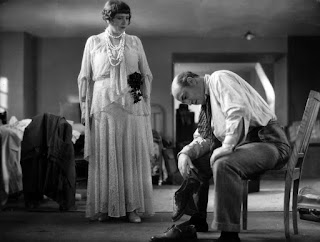
1931 and David Golder.  For his first talkie Duviv pounced on the newly published 1930 novel by Irene Nemirovsky which documents a wealthy Jewish financier and paterfamilias who ruthlessly makes his money through brutality and mendacity, in large part to service the whims of his vain and self absorbed wife and daughter. At a key point in the film he turns his life around, in a stunningly filmed sequence in which he tries to choke his wife to death with her recently acquired pearls.  He leaves this life behind and takes to the high seas in a state of terminal despair.   Nemirosvky’s novel was centrally addressing what she perceived as a “problem” she identified as a French (and European) social issue at the time; the so-called “Good Jew/Bad Jew” issue. Given the concerns of anti-Semitism that arose over the following years , and despite her own Jewishness,  these tended to dog her through her career up to her tragic deportation to the camps during the Occupation and her murder by the Gestapo in 1942.  Duviv’s wife was also Jewish and his cycle of 20s Catholic devotional films as a devout believer had come to an effective end with the now highly ambivalent late 1929 silent La Divine Croisiere (the Divine Cruise) when it had become clear he was losing his faith. Thus the volume of films with biblical and Christological material that so marked his silent period would be reduced to only one striking sound film in 1933, Golgotha.

Duvivier worked with Nemirovsky to minimize the Bad/Good Jew dynamic of the book re- shaping the material textually to incorporates his own growing misanthropy, a personal characteristic that would never be absent from his later work. And thus it is for this first striking talkie, in a film similar in genre to L’Herbier’s L’Argent (1929), David Golder is certainly the equal of if not actually superior to L’Herbier’s film.  It has a deft blending of European-wide social spectacle with an intensely private emotional vision.

Of a small number of films inspired by the beautiful Pal Fejos silent/part talkie romantic comedy Lonesome (1928), my own favorite is Allo Berlin, Ici Paris (1932). This is Duviv’s first UFA co-prod through Tobis Klangfilm with both French and some German dialogue.  The film’s technical and social dimensions give voice to the relatively  new transcontinental wire services and easy rail travel between France and Germany, so the endless narrative opportunities for the lead boy’s and girl’s missed meetings and all the tropes of that romantic sub-genre are deftly explored through the screenplay. If there were ever a classroom for comic timing and pacing this movie presents itself. The tone of this beguiling little film never wavers from gentle, and  the sentiment of looking forward to a united Europe is both touching and melancholy given what was about to happen in Germany.  This is essentially genre Duvivier and he’s clearly a master of it.  Unmissable. 

Les Cinq Gentlemen Maudits (Moon Over Morocco, 1933), also unmissable, is a seemingly lightweight but surprisingly personal journey film and the second in which Duviv travels to his beloved Algeria (the first was in the Divine Croisiere in 1929.)  The film is largely overlooked and little seen (the source I have is ragged) but he delivers a pictureque personal diary-style tale of a group of men (invariably) whose comradeship on the holiday is tested and under threat from the appearance of “woman” into the pack. Here is another central theme in many of Duvivier’s movies, the bonded male group and its undoing by a woman which, in this comedy-drama, takes a bittersweet tone. It clearly suggests the far more sinister later themes of betrayal and treachery that characterize his reputation by some (if not me) as misogynist. The tone here is the thing to watch, pre-Charles Spaak and his development with Spaak of the “meddling female” notion into the fully blown Femme Fatale character a couple of years later.  Harry Baur who first acted for Duviv as the paterfamilias in David Golder is lead here, along with the sublime Rene Lefevre, an archetypically sweet French actor “type” whose shy masculine beauty is the defining feature of his unforgettable roles here, and in Renoir’s La Crime de M. Lange (1936) and Gremillon’s astonishing Gueule d’Amour (1937).
A German-language version of this was made with Anton (then Adolf) Walbrook released through UFA. I have not been able find any source for this.

And again in 1933 Duvivier revisited Poil de Carotte (Carrot Top), now with Harry Baur. Along with the addition of panchromatic film stock and long lenses Duvivier could now shoot great slabs of the film outdoors with greater freedom than  previously and the mise-en-scene of this talkie version of the beloved weepie has both the benefit of superior actors to the 1925 silent, and a much more limpid and fluent visual style. I still think it’s a “project” picture as much as a personal project but he infuses it with hints of threat and unease that aren’t necessarily a given from the novel. Certainly in terms of novelistic adaptation it’s a demonstration piece, as are all his fictional adaptations from this point on.
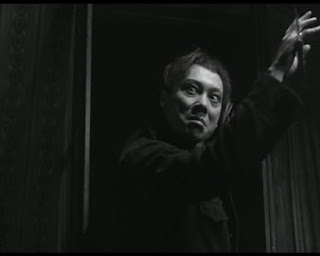
Valery Inkijinoff in La Tete d'un Homme
Made in 1932 and released in 1933, only a matter of weeks after Renoir’s own Simenon/Maigret adaptation La Nuit du Carrefour, Duvivier followed with, La Tete d’un Homme (Man at the Scaffold.) Where Renoir’s wonderful (and still little seen) film seems to play out in an opium infused narcotic haze, with inexplicable narrative  details seemingly lost in the blur of cross purpose mayhem, Duvivier’s movie opens with the audible and visual frenzy of a bar and he keeps up, using the duality of chaos vs. obsession for  the rest of the film. It gives a sense of narrative and emotional implosion with a visual battery of tricks from Hitchcock to Lang and beyond. Stylistically there’ s nothing else like it in French cinema including the Avant-Garde, except perhaps Renoir’s own great Maigret film (with bro Pierre as the detective.) If the Eclipse box’s presentation of this doesn’t have new viewers scraping themselves off the floor I’ll eat my hat. 

Maria Chapdelaine (1934) brings Jean Gabin to Duvivier’s world, and both of them to Quebec French Canada. If this beautiful, great outdoors romance and journey film reminds me of any film it’s Vidor and Northwest Passage (1940), but the three man, three woman narrative here has inflections of conflict and unease that are again Duvivier-esque.  This is one of three Duviv 30s pictures magnificently  restored and released on excellent French Warner DVDs back in the mid 2000’s.
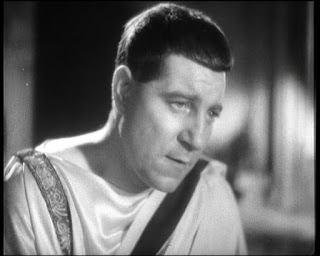
Golgotha (1934)  is the very last of Duviv’s “devotional” cycle of pictures, albeit one made after he had essentially abandoned his Catholic faith for non-belief. As one who is genetically allergic to Biblical costume pictures myself, I find this unlike almost any other similar movie - an unusual blending of action film with meditation. Gabin plays Pontius Pilate in a fetching combination of flowing curtain fabric toga and page boy wig. Once one gets over the costume aspects as one always must with these things, it’s actually a compelling action narrative of guilt and responsibility. The cast includes Baur,  again and the first time in Duviv’s canon  Robert le Vigan, playing Christ (!!), the notable young actor who would appear in key films from Renoir and Carne up to 1939 and his role as the suicidal poet maudit in the fabulous Quai des Brumes (1938). Le Vigan sadly became better known as a rabid anti-semite and Vichy supporter during the war.  
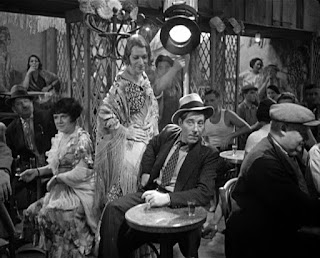
La Bandera (1935) is Duviv’s first film with Spaak as screenwriter and his first with Gabin playing the original “mec on the lam” precursor to the eventual France/Algeria/otherness trope that formalized the new era of Poetic Realist cinema. I love this movie to death. The apparently outrageous narrative lurches from one continent to another, from chamber drama to Foreign Legion battle epic with the introduction of the Fantastic “Other”/Woman, in this case the actress Anabella in heavily applied Egyptian Dusk, whom Gabin weds in a staggering blood sharing ceremony of outrageous eroticism, in one of the high points of 30s French/Algerian exoticism. An early scene with Gabin on the lam in a dive in Barcelona has him circled by and then embracing bare breasted flamenco dancers and ruthlessly butch-faced drag queens just before he’s picked off by his fellow Frenchmen who steal his passport and set him up for deportation. While administering his usual dose of corrupt cynicism Duviv here manages to depict decadence and sin with the most and endearing glee. There’s a true spirit alive here folks. And another superb Warner France restoration from 2005. Le Vigan turns up later in the Legion along with a bevy of unlikely characters including a short dumpy “American” actor who has befriended Gabin and who seems to be gay, as he is constantly wrestling off le Vigan and sitting on his face to keep him at bay. There are some unbelievable things going on in this masterpiece by an unabashed man of the world .  

Viviane Romance,star of La Belle Equipe
If there’s any such thing as a common accord about Duvivier it’s probably that his next film La Belle Equipe (1936) is an undisputed masterpiece, and possibly also Spaak’s I think. I don’t want to say much more prior to a major 4K restoration and Blu Ray release next year except that this is a peak thirties French cinema, a peak Duvivier and peak Spaak. This is the very heart and soul of Poetic Realism, all the more as the faith in the “Group” or the “Collective” is so frail it ultimately collapses in tragedy. The film also seems to predict the rise and the fall of the Daladier government and the turmoil that will engulf France by the start of the War.
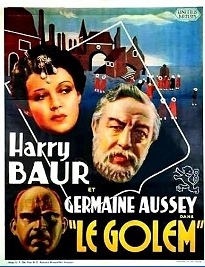

Duviv’s 1936 remake of the frequently filmed Le Golem again stars Harry Baur in a relatively energetic reworking of the oft –visited subject. It’s his least interesting film from this period to me, but it requires a re-viewing.
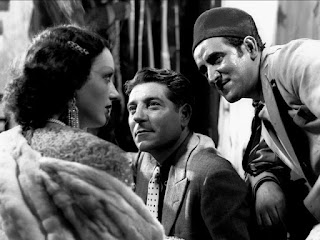


The next film is possibly one of the best known Classical French films of all time, Pepe le Moko (1937), another great Spaak screenplay set in Algeria with a flawless cast including the extraordinary Mireille Balin, the female lead who goes “slumming” in Algiers and becomes sexually enthralled with Gabin.  There is already a mountain of commentary written on this wonderful movie but I would only add some recent notions that the playing by Mireille Balin, indeed Duvivier’s direction of her, is alchemical, as though while giving her the dimensions of a flesh and blood Femme Fatale, she seems to remain untouchable, almost ethereal, beyond judgment, simply without guile of malice, despite the  nightmarish consequences her appearance has triggered.  I adore the actress and her parts in this,  Gremillon’s Guele d’Amour (Spaak again) and Delannoy’s very funny, and rich 1939 dawn of war adventure pic Macao L’Enfer du Jeu. She is a neglected and tragic figure in French cinema.
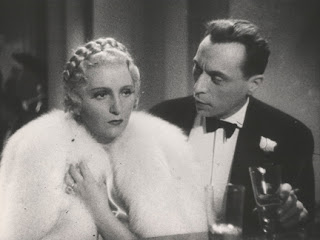
Un Carnet du Bal (1937) has happily had a more extended life in repertory cinema and its reputation is deserved. Among other things it deploys a large ensemble cast with finesse and Duviv can explore that variety with narrative depth. 


And it’s not far in some respects from his first American film, made on a first “Scouting mission” to Hollywood in 1938, The Great Waltz for Metro.  More than pure Duviv sadly the movie strikes me as pure Louis B and it’s frankly a miracle the exercise comes off with as much grace and style as it does. Duviv was not happy doing the project, indeed while MGM under the hideous Mayer in particular could and did smother any auteurist with ease, it must have been especially galling to Duviv. Personally the single most beautiful and surprising things in it is the post production  addition of a gorgeous Waltz montage filmed by Sternberg as “filler” to a totally ham and baloney  finale directed by Victor Fleming after Duviv had fled back to France.

Which leaves us with two more pictures in 1939:

La Fin du Jour, written by Spaak (his final screenplay for Duviv) is perhaps the director’s best ensemble piece. It is set in an actor’s “retirement “  home with another gift cast for the day, especially the sublime Louis Jouvet.  For people who enjoy the greatness of so much cinema by directors like Cukor and Carne, with their focus on performance and text, this resides in the stratosphere alongside both those masters’ work. This is the film I wish Sondheim had become attached to for a possible musical, rather than La Fete a Henriette (1952).


Then a remake of the Sjostrom silent picture La Charette Fantome  (The Burning Chariot) (1939), an energetically stylish forecast of the horrors that many were feeling about the oncoming war. It’s not intentionally an allegory for the imminent war but it has great power as personal expression. Fantasy and delirium are never very far away.