Wednesday, 13 May 2020

At Home - Eddie Tamir and his team at the Ritz (Sydney) and Classic (Melbourne) launch a new Video on Demand service to cope with the Plague Times

Editor's Note: Cinema Reborn subscribers and supporters would be only too aware of the strong bond that exists between Cinema Reborn and the very independent cinemas owned, operated and programmed by Eddie Tamir and his family and staff in Sydney and Melbourne. Eddie's intervention saved the 2019 season of Cinema Reborn and in 2020 the program was intended to expand from the Ritz Randwick to the Classic Cinema in Melbourne's Elsternwick. In response to the current cinema closures a new streaming service called At Home is about to be launched. Here is the first announcement.

Classic, Lido and Cameo Cinemas in Melbourne and Sydney's Ritz Cinemas (left) are proud to announce the launch of their own VOD (video on demand) service called 'At Home', available online now. 
The teams at Classic, Lido, Cameo and Ritz Cinemas have always been passionate about championing the whole spectrum of films up on their big screens: Australian cinema, festival fare, arthouse cinema and holiday blockbusters. Now, they're extending that passion to this new online platform – At Home – which is the first of its kind for Australian cinemas. At Home offers curated programs of unique, compelling and high quality content from both local and international distributors, covering everything from new and recent releases to hidden gems from extensive back catalogues.

Launching with hundreds of titles to browse, the At Home VOD service is accessible from each of the cinemas' websites and gives loyal fans of the cinemas the opportunity to support them by renting or buying titles to watch at home. Rental prices vary from $4.99 to $7.99 for most titles for 48 hours viewing time over 14 days. 
Local distributor partners include Madman, Umbrella, Roadshow, StudioCanal, Vendetta, Potential Films, Hi Gloss, JIFF Distribution and FilmInk Presents. Titles have also been sourced from international rights holders, including the American Genre Film Archive, which specialises in preserving the legacy of genre movies that might otherwise have been forgotten. The team at Classic, Lido, Cameo and Ritz Cinemas are working hard to add more distributors and additional films to the selection, ensuring that there is something new to watch every week.
The programming ranges from classic back catalogue films to recent releases, and there are even a handful of films that are completely brand new to market, also known as PVOD (Premium Video on Demand). Films are arranged into carefully curated programming streams including 'Female Gaze' (spotlighting women filmmakers), Australian Cinema, LGBTQI+ and 'Weird and Wonderful'.
Some titles already on offer include: psychedelic horror starring Nicolas Cage Color Out of Space (2019); indie sci-fi Vivarium (2019) starring Jesse Eisenberg and Imogen Poots; the completely new to VOD and two-time Oscar nominated documentary Honeyland (2019) about the last female bee-hunter in Europe; and France's breathtaking queer romance hit from last year Portrait of a Lady on Fire
"We are cinema people, first and foremost," said Eddie Tamir, owner of the four cinemas and director of programming. 
"We are thrilled that our new At Home platform allows us to present great films of the recent and distant past alongside our cinema experience. We love being able to refer our customers directly to our personal film favourites and many of the great films in history on our very own streaming service.
"Our At Home platform allows us to place the new releases in our cinemas in context of what came before them. Our film-obsessed staff will provide reviews to films they personally care about and act as guides through this magical mystery tour of films. Our catalogue will be a place of film discovery with an eclectic range of content to browse, just as our cinemas have always offered."
Classic, Lido, Cameo and Ritz Cinemas have always upheld the importance of spotlighting Australian films of all sizes, and the At Home VOD platform will keep up that tradition with dozens of Australian titles included in the library. These range from the recent climate change documentary 2040 (2019) to Ozploitation classic The Chant of Jimmie Blacksmith (1978). 
The four cinemas annually host several film festivals, including the Jewish International Film Festival (JIFF), Children's International Film Festival (CHIFF), and Fantastic Film Festival Australia (FFFA). Curated collections of films underneath these banners will be found on the At Home platform, selecting from festival programs from previous years.
This includes exclusive films found on no other streaming platforms: German supernatural horror film Luz (2018); Hungarian Holocaust drama 1945 (2017); much-talked-about Australian documentary Man on the Bus (2019); and one for the kids, Gordon & Paddy (2017). 
Other upcoming exclusive titles to the At Home platforms for Classic, Lido, Cameo and Ritz will be the new Lassie Come Home remake; the winner of Outstanding Children or Youth Film at the German Film Awards this year, When Hitler Stole Pink Rabbit; and winner of Best Film at the 2019 Ophir Awards (the Israeli Oscars), Incitement, which details the events leading up to the 1995 assassination of Israel's Prime Minister, Yitzhak Rabin.
The At Home platform also presents premieres of films via PVOD such as Hearts and Bones starring Hugo Weaving (available now) and Berlinale audience award-winning documentary Talking About Trees (coming soon), which chronicles the efforts of four retired Sudanese filmmakers to revive an old cinema. 
To celebrate the launch of At Home, each of the four cinemas is opening up their box office windows or front doors for a short time this Friday and Saturday, May 15 and 16 from 4pm to 8pm to sell choc-tops and popcorn at special rates. Customers who come by to pick up some popcorn or choc-tops to take home can also pick up a promotional code to use on their first film rented from At Home.

Melbourne Cinemas:
Classic Cinemas At Home: 
https://athome.classiccinemas.com.au/
Lido Cinemas At Home: https://athome.lidocinemas.com.au/
Cameo Cinemas At Home: https://athome.cameocinemas.com.au/
Sydney Cinema:
Ritz Cinemas At Home: 
https://athome.ritzcinemas.com.au/

Tuesday, 12 May 2020

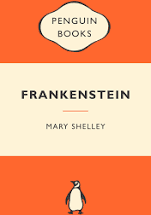
Plague Times Diary (31) - Peter Hourigan ponders the FRANKENSTEIN variations

I’ve frequently been fascinated with the way that some stories take on a life of their own, surviving any number of variations, enriching or interpreting other works, and in turn being enriched by countless other works.  And the story of Frankenstein is one of the supreme examples of this.  A week ago, I picked up Mary Shelley’s book Frankenstein or the Modern Prometheus. First published in 1818, within five years a version had been staged in London. 
     She was writing at a time when science was playing more of a part in a world previously dominated almost exclusively by religion. She does raise questions such as the morality of science and medicine. Ideas of ethics and responsibility are very much part of the narrative though never in an overt polemical way.  These questions remain relevant two hundred years later, the myriad versions amply proving that. But she also told a ripping monster yarn.
 Which led me to thinking about all the manifestations her creation has had. So, my viewing in the last lock-down week has been Frankenstein, the first known film version made in 1910, ten features and shorts, a National Theatre production, a TV series, even a Mr. Magoo cartoon.  But so fertile has been the off-spring of Mary Shelley’s creation that this is a mere fraction of all the various versions, continuations, satires, references, and so on over the years. (See my list at the end of this article.) 
    The structure of Shelley’s book fits literary conventions of the time. Supposedly a series of letters or journals, there are three narrators.  The first letter writer is a ship’s captain, writing from St. Petersburg to his sister in England, her telling about a strange meeting he had in Arctic waters with one Victor Frankenstein. Frankenstein has been chasing a creature that he says he created. His account is the books’ second narration.  And the third narrator is the Monster itself, articulate and literate.
  In looking at the various versions, I became aware of several key points. First is just how the monster is created. Then there is the nature of the monster, and then the fate of several key characters by the end of the story.
  
In his narrative, Victor Frankenstein very explicitly does not tell us how he created Frankenstein or brought him to life. He is so horrified with what he has done, he has no desire to leave details that someone else could replicate. But when James Whale made one of the first full-length film versions in 1931, James Whale felt that the audience had to be shown how the monster was made, if they were going to go along with the strange events to follow.  (There were stage versions produced almost before the ink was dry on the first edition of the book.) 
   To hold the audiences, he inserted the detailed creation scene – body parts gathered, and stitched together, elaborate laboratory equipment, lots of arcing electricity, and bubbling test tubes. The make-up for Boris Karloff was part of this, visually spectacular, but all justifiable in the narrative being developed. Stitches showing the different body parts, bolts in the neck to be conductors for the electricity needed to bring him to life.  Whale’s vision quickly became the image for the Monster, imitated in countless subsequent films. 
 Also, so many films now have their own interpretation of Whale’s account of the creation, not Mary Shelley’s.  Of course, it is reprised in Whale’s follow-up Bride of Frankenstein, which incidentally is closer to parts of Mary Shelley’s story than I imagined. Frankenstein is importuned make a mate, in the book by the Monster, in the film by a sinister Dr. Pretorius. 
  Whale made another significant contribution to the monster’s image. A tall, lumbering, grunting,  inarticulate monster, there is not much intelligence or sensibility here. Yet, Mary Shelley’s monster could read, and speak. He could quote Milton’s Paradise Lost– and understand it. He apprehends the morality of what he is doing, and what has been done to him.  His killings are not random or acts that he doesn’t understand. This is a significant re-characterisation. Mary Shelley’s monster is not a random killer. His murders come from his deep sense of loneliness, difference and estrangement. He does have an experience of being accepted as ‘normal’ by the blind man from whose household he learns to read and philosophise. He knows what he is missing by never having been loved, even by his creator.  He demands a mate from Frankenstein and the two killings of members of Frankenstein’s family stem directly from his being thwarted in this request.  With this perspective, his killings are understandable, and evoke a painful understanding from us. But these murders are never justified or excused by Mary Shelley.
 With Whales’ approach the killings are still horrific. Now they have the sense of being random – and we fear we could be a victim. Or anyone in the story could be a victim. So we have a different sense of the horror. Later versions (for example Morrisey’s Flesh for Frankenstein) add a new dimension, where the monster is controlled by Frankenstein to carry out specific murders - perhaps like Caligari’s Somnambulist.
  
A third interesting variation affects the ending.  Branagh’s Mary Shelley’s Frankenstein is perhaps closest to the novel, with Frankenstein pursuing the monster to the North Pole. Frankenstein’s chase was motivated by revenge for the monster’s killing of Frankenstein’s bride Elizabeth on their wedding night.  
   But filmmakers often think that audiences need a happy ending. So, many versions (starting with James Whale’s) see Frankenstein and Elizabeth survive and live happily ever after (or until the next sequel).  Whale’s changes to the monster’s character are consistent with how such an ending can be provided. 
  The monster has appeared in many other films, based on the idea that he survived. These have been some of the more interesting films as they explore more potentials for the creature.  
   So many variations, adaptations, re-interpretations. Many are very entertaining or satisfying films in their own right. But all prove one thing – after two hundred years, Frankenstein’s creation still lives!
…..
These are the films I watched, with brief comments and indication of sources. Clearly there are many more I did not watch, including the large number of ‘Frankenstein meets ….’  films. Check justwatch.com for other sources some films may have.
 Frankenstein (J. Searle Dawley) 1910   Watch it on YouTube 
              A beautiful restoration of the full 12-minute film. It really packs in the spirit of the book surprisingly well, with some very effective cross-cutting, a bit surprising for its date.
Frankenstein (James Whale) 1931 Available on DVD
              Still a terrific film. Significant differences from the source novel, but the impact of the film justifies them. Many of these changes have themselves become part of the Frankenstein legend and ethos.
Bride of Frankenstein (James Whale) 1935 Available on DVD
              Whale again makes a great film. Surprising little prelude explaining how the story came into being, with Elsa Lanchester as Mary Shelley.  Then, Lanchester re-appears as the Monster Bride. Is Whale making a comment about Shelley’s inspiration?
The Famous Adventure of Mr. Magoo – Doctor Frankenstein (Abe Levitow) 1965  Watch it on YouTube
               Standard Mr. Magoo when he moved from his Cinema slots to a cheaper on-going children’s TV show in the 60s.
Frankenstein The True Story (Jack Smight)  1973   Watch it on YouTube
      A two-part story made for English TV, with an overladen Quality Prestige cast (James Mason, Jane Seymour, Margaret Leighton, etc)  Michael Sarrazin is the monster, so beautiful at creation, but like Dorian Gray his appearance regresses as his true nature comes out. Passable.
Flesh for Frankenstein (Paul Morrisey) 1973 Available on DVD
       Produced by Andy Warhol, and originally shown in 3D, so you could flinch at body parts thrust at you.  Kind of fun in a shlocky way, this is a continuation where Frankenstein uses his monster in his vendetta against the Serbs.  Morrisey seeks any excuse for having beautiful virgins naked. And because Joe Dallesandro is in it, he’s there full-frontal too.
[Monster of] Frankenstein (Yuugo Serikawa) 1981 Watch it on YouTube
      A Japanese cartoon version made for Toei, in an English-dubbed version.  Absolutely basic animation, though some reasonably attractive backgrounds. Curious.  
Frankenstein Unbound (Roger Corman) 1990 Watch it on Youtube
      A discovery.  Here’s a story with imagination. It starts in 2030, but through a time slip our hero John Buchanan (a very young looking John Hurt) finds himself (and his 1990 idea of a driverless car for 2030) finds himself in the Swiss village where Mary Shelley (Bridget Fonda) is living with Shelley (Michael Hutchence – yes) and struggling to write her novel. Buchanan tells her it will be a great success. Raul Julia is Frankenstein.  Lots of fun. I’m sure the source novel by Brian Aldiss is significant here. And Corman really knows how to sling a film together.
Mary Shelley’s Frankenstein (Kenneth Branagh) 1994 Available on DVD
    A prestige production, boasting complete fidelity to the novel. This is probably about 80% correct.  Branagh directs and stars as Frankenstein.  He’s probably not charismatic enough without Shakespeare to animate the film, but Robert de Niro is a compelling monster.

Frankenstein (Danny Boyle, National Theatre Stage Production) 2011 
    Very much a stage production. A prestige theatrical event for people who wouldn’t go to see a Frankenstein film.  The theatrics are over-produced, though probably effective in a theatre. It’s gimmick was being performed alternately with its stars Benedick Cumberbatch and Jonny Lee Miller as Frankensein and the monster. 
I, Frankenstein (Stuart Beattie) 2014 Screening on Netflix       
      A multi-plex CGI video-game type story, where the monster has survived for over 200 years.  Gargoyles and Demons are engaged in a war for dominance over mankind.  If they can get Frankenstein’s notebooks now in the possession of the Monster, the Demons can animate hundreds of bodies they have stockpiled.  I was surprised to see that this was actually made in Melbourne. Good production values, but no interest in characterisation, or real creative ideas.
The Frankenstein Chronicles  2 X 6 episodes (Benjamin Ross, Barry Longford ) 2015-2017  Screening on Netflix
   Taking the story further can be rewarding.  This is London 1828, about ten years after the publication of Mary Shelley’s book. Some gruesome murders of children from the slums and river side areas could be inspired by Dr Frankenstein.  Attention to historical events and people is great. Shelley, William Blake are involved at one point. Trying to report for his newspaper is a young journalist Charles Dickens, calling himself Boz. As he was at that date. And events are taking place against the introduction into Parliament of the Anatomy Act, which was first tabled in 1828, a bill aimed at eradicating the use of bodies from graves, and so on in anatomy dissections and research. I’m not quite finished the second series at time of writing. Very much enjoying, though just a feeling with a couple of episodes to go, it may be circling to jump a shark.
Mary Shelley (Haifaa Al-Mansour) 2017       Screening on Beamafilm
    A bio-pic of Mary Shelley. A very interesting life story to tell.  But it doesn’t rise about the prestige British film. And Elle Fanning just doesn’t work in the title role.
Frankenstein’s Monster’s Monster Frankenstein (Daniel Gray Longino) 2019 Screening on Netflix
      A 30-minute self-indulgent piece, with the main curiosity being, how did this get to Netflix? Using the tedious mockumentary format a filmmaker is trying to investigate the career of his father who had played Frankenstein in a television play some time back. 

Monday, 11 May 2020

On Netflix - John Baxter unpacks HOLLYWOOD (Created by Ryan Murphy, Ian Brennan, USA, 2020)

HOLLYWOOD.  WHAT IF YOU COULD REWRITE THE STORY?
         
Hollywood  Poster (Laura Harrier)
Anyone writing about the American film industry, a business more plagued than most by prejudice and ignorance, has played the “what if?” game. Imagine that the deputation of stars, led by Humphrey Bogart and Lauren Bacall, which went to Washington in 1947 to “observe” the House Un-American Activities Committee hearings, wasn’t scared off, but instead sent the HUAC running for cover. Would there have been a Hollywood Ten or a black list? Suppose Newton Minow’s stigmatizing of American television as a “vast wasteland” had reversed the slide into mediocrity. Would Playhouse 90and not I Love Lucy have become the norm?

Under the slogan What If You Could Rewrite the Story, Netflix’s seven-part series Hollywood rounds up every complaint about sexual and racial prejudice in today’s commercial cinema and imagines them nipped in the bud by a single 1947 film. In this alternative universe, the 1948 Oscar for Best Supporting Actress wasn’t won by Celeste Holm for Gentleman’s Agreement, Darryl Zanuck’s tepid sermon against anti-Semitism, nor was Dorothy McGuire nominated for Best Actress in the same film. Instead, the statuettes went to Camille Washington, a fictitious black actress, and real-life Chinese performer Anna May Wong for a film called Meg. Moreover, its scriptwriter was a black homosexual who seized the opportunity of his appearance on the red carpet to be seen holding hands with his white lover, none other than the young Rock Hudson.  

Meg begins as Peg, inspired by the true story of Welsh actress Peg Entwistle, who, in despair at her failure to make it in movies, threw herself in 1932 off the HOLLYWOOD (or as it was then, HOLLYWOODLAND) sign. One of the period’s few surviving artifacts, the sign gets plenty of use in Hollywood, beginning with the series credits in which its protagonists, after helping one another scale its giant letters, stand triumphant, facing the rising sun (right). 
         
        After Camille Washington (Laura Harrier) has protested repeatedly about being cast as a maid, Archie Coleman adapts his screenplay Peg into Meg, tailored to her talents. Notwithstanding studio chief Carl Reiner succumbing to a sex-induced heart attack and evil agent Henry Willson burning the negative, the film is made. Following which, we assume, everyone lives happily ever after.

In the run-up to the release of Once Upon a Time in… Hollywood, Quentin Tarantino recorded a long interview about the films that inspired it. On French TV, and presumably elsewhere, portions of the interview were used to introduce screenings of the films, which included Gunman’s Walk, model for the western in which Leonardo DiCaprio plays the heavy,and The Wrecking Crew,  which Margot Robbie’s Sharon Tate revisits one Westwood afternoon. 
         
      Tarantino adulates the commercial cinema of the fifties and sixties and the people who created it. Who, then, are the gods of Hollywood’s creators Ryan Murphy, Janet Mock and Ian Brennan, who were not even born until the mid-sixties? Mainly, one would guess, they’re from television: writer/producer Steven Bochco of Hill Street Blues and L.A.Law, Stephen J. Cannell of The Rockford Files, and, among series, those, like Cagney and LaceyIronside, Hill Street Blues and Cheers, which featured  ensemble casts, urban settings, and edgy plots that sometimes pushed at social and sexual boundaries. 
         
       
David Cronenswet, Darren Criss, Jake Picking, Jeremy Pope
Hollywood 
tries to apply the sensibility of these films and film-makers to the problems of the forties film industry, beginning with the prejudice against homosexuality. Its key text is Scotty Bowers’ memoir Full Service, about the male prostitution service run out of a Wilshire Boulevard gas station. Three of the series’ principals, Jack Castello  (David Corenswet), Rock Hudson (Jake Picking) and Archie Coleman (Jeremy Pope) work there for horny-handed entrepreneur Ernie West (Dylan McDermott) before they make the Big Time. 

Other films have already documented the gay poolside parties of James Whale and George Cukor, and their significance as an extension of the casting couch tradition. Hollywood adds more graphic episodes, mostly drawn from Robert Hofler’s The Man Who Invented Rock Hudson.Jim Parsons plays notorious gay agent Henry Willson with vulpine glee. His performance of The Dance of the Seven Veils à la  Isadora  Duncan in full drag for an incredulous Rock Hudson may be long on energy and short on art, but Parsons is the only actor in the series who convinces as someone living in 1948. 

To call the premise of Hollywood “improbable” is hardly a criticism, since probability has never been the test of cinematic success. The more preposterous the premise, however, the greater the artistry needed to persuade an audience. On this count, Hollywood fails dismally.  Its lack of authenticity is in contrast to another current Netflix offering, Babylon Berlin, which evokes that city’s pre-war life in all its glitz and squalor. You can smell the drains and sweat. Its characters appear literally warts and all - not to mention pimples, tattoos, crooked teeth, hairy armpits and scars. The male principals of Hollywood have none of these, nor do they suggest men who have lived through a war. One glaring anomaly is the near absence of tobacco. Butts, ashtrays, packs, lighters, matches and smoke were ubiquitous at the time in cars, cafes, private homes, offices, even cinemas.  It’s clear, however, that smoking, along with how to eat with chopsticks, is not a skill taught to today’s young actors. The gingerly way these performers place a fag between their lips suggests that, given the choice between a Lucky and the male member, they would not hesitate.

Whatever one thinks of Once Upon a Time in… Hollywood,  it deserves credit for attention to detail. Margot Robbie’s starry-eyed Sharon Tate and Leonardo DiCaprio’s self-disgusted Rick Dalton belong to a tradition that encompasses Gloria Swanson in Sunset Boulevard, Tim Robbins inThe Player and Ian McKellen’s James Whale in Gods and Monsters. In Hollywood, however, the performances, excepting those of Parsons, Dylan McDermott’s genial pimp and Joe Mantello’s oppressed studio executive, are indifferent to both the sensibility of the time and the demands, such as they are, of the text. Clients of the gas station looking for a sexual assignation would say “I want to go to Dreamland.” Sorry, but you can’t get there from here.

Sunday, 10 May 2020

Adam Bowen's Talkie Talk - THIS WEEK BEGINNING May 11th, 2020 - Free to Air TV Recommendations

Monday

930pm SBS World Movies: Ray (2004) – Jamie Foxx is thoroughly convincing and compelling as Ray Charles, the blues & r&b genius in an absorbing biopic, directed by Taylor Hackford.

Tuesday

2am SBS World Movies: La Vie en Rose/La Môme (2007) – Marion Cotillard gives a brilliant performance as Edith Piaf in this episodic biopic with warts and all and then more warts. As a whole it’s not easy to ingest, but parts of it are compelling, and unforgettable.  

730pm SBS World Movies: The Namesake (2006) -  Charming, if slight story of a born-in-America Indian boy who wants to be accepted by his fellow New Yorkers, while his family adhere to their Indian roots. Directed Mira Nair, and beautifully scored by Nitin Sawhney. 

[Repeated on Wednesday at 2.20am and at 1130pm]


Wednesday

730am SBS World Movies: Midnight Run (1988)– Charles Grodin is a dodgy accountant who jumps bail and is hunted down by the mafia, the FBI and a very determined bounty hunter (Robert de Niro). A road trip, buddy movie with a lot of laughs.


Thursday

530pm SBS World Movies: Mr Holmes (2015),a slender novella of a film with an engaging depiction of an ancient, retired Sherlock Holmes (Ian McKellen), who’s suffering from dementia, and is haunted by the memory of a mysterious woman. Also stars Laura Linney.

[Repeated on Friday at 11.15pm and on Saturday at 4.10 am]


Friday 

3.30pm 9GemHD: Went the Day Well? (1942) - A curious, dark story, in which WW2 British villagers defend their turf against an invasion by Nazi paratroopers. Which one of the villagers is a traitor? Based on a story by Graham Greene, and effectively directed by Alberto Cavalcanti.

9.35pm SBS World Movies: Love and Mercy (2014) – biopic of Beach Boys genius, Brian Wilson; jumping between his musical triumphs of the 1960s and his psychosis in the 1980s. Wilson is played alternately by Paul Dano (60s) and John Cusack (80s). His creepy therapist, Dr Eugene Landy, is played by Paul Giamatti. It’s a bit like having therapy yourself, but fascinating, and there’s the music.

[Repeated at 12.30am Sunday]

Saturday

5.20pm 9GemHD: The Rat Race (1960) – enjoyable entertainment, starring Tony Curtis as a jazz saxophonist from the mid-west, who comes to NYC to try his luck, and meets Debbie Reynolds, who’s not playing a sweetie-pie girl next-door, but a tough taxi dancer. Lots of jazz standards on the soundtrack, but also some excellent original music by Elmer Bernstein.

8.30pm SBS World Movies: The Thin Red Line (1998) - Terrence Malick’s mesmerising adaptation of the James Jones novel set in Guadalcanal during WW2. A star-studded cast includes Sean Penn, Miranda Otto and Adrien Brody.

Adam Bowen Productions 

Saturday, 9 May 2020

Plague Times Diary (30) - Barrie Pattison has a trawl round the SBS World Movie channel and finds Mads Mikkelsen, Steve Coogan and Ringo Lam


In lockdown, SBS’s World Movies, a twenty-four hour movie channel on digital 32, takes on a new significance. Treated by critics, enthusiasts and possibly its programmers as a collection of entertainments that didn’t make the cut or an unwelcome increase in the work load, this lot has become a kind of Salon des Refusés. If you slog through them, your take on popular entertainment shifts.

I’ve already commented on the neglect of the new Euro Western - Blackthorn or Jacques Audiard’s The Sisters Brothers, the latter being one which never got past a glancing encounter with the festival circuit here, though it’s big in Europe. Kristian Levring’s 2014 The Salvation joins them.

Attention getting opening titles with lettering on de-focussed scenes of the train pulling in to the period Western station that could be in Heaven’s Gate to go sharp as Danish soldier Mads Mikklesen, back from fighting the Germans, steps into frame.

With brother Mikael Persbrandt, he’s collecting wife Nanna Øland Fabricius and the ten year old son to whom he has to be introduced. A pair of rowdies pile into the coach taking them to the plains home Mads has extended. it’s not long before our hero is pounding through the black cloud night on the vengeance trail.

I remember the activist movie where their expert tells us the male rape in Deliverancegets retribution not seen for violence to women in films. Geesus - Revenge for a Rape, Last Train from Gun Hill, Rancho Notorious (“Son, she was spared nothing.”). Go to the movies feller!

Cut to thundering hooves and local heavy Jeffrey Dean Morgan demands the lives of two frontier town citizens in compensation for the death of his kin. He’s not satisfied with a granny who spits on him and the legless man sheriff-preacher Douglas Henshall and mayor–coffin maker Jonathon Pryce select and shoots a family man as well.

There’s more going on here. Morgan (“You can’t use the same methods you used on the Indians!”) is in the pay of the company buying up the sticky oilfield titles.

Turned in by Henshall, Mads is left to die of exposure hanging on a post in a burnt out town in front of Morgan’s former County Bank building headquarters while Morgan is delighted to take care of his brother’s accountant-widow, unsmiling one time Bond Girl Eva Green whose tongue the Indians cut out. That doesn’t work out so, at Top Hand Eric Cantona’s suggestion, he says “Once you’ve all had your way of her, cut her throat.”

Mads disposes of the bad hats - shot, incinerated or stabbed in the eye. Things become bleak beyond credibility by the time we get to the would be terse confrontation with Henshall‘s posse. Spotting Green, the townsman pull back jackets over their side arms and it’s “You don’t want to go down that road John ... may the lord have mercy on both your souls.” Dissolve to the area covered with wooden oil derricks.

They just about get away with their idea of old west and English dialogue but the accumulating grimness and another hammered superhuman hero finally strip away the piece’s dignity. Still...

I’d only caught a few glimpses of Steve Coogan’s Alan Partridge character, who appeared a decade after Dabney Coleman’s great Buffalo Bill series aced the obnoxious broadcaster format without creating the same fan following, but I enjoyed the Partridge telemovie Alpha Papa in the Channel 32 line up.

We pick up Coogan/Partridge hosting Norwich Digital Radio’s "Mid-Morning Matters." Panic has gripped the station as a new board takes charge. “People people sack people.” Particularly concerned is fellow broadcaster Colm Meany/Pat Farrell whom Coogan re-assures, promising to go into the meeting and speak for him only to find they are making a decision on which of them to let go. Soon he’s daubing “Just sack Pat” on the white board.

Stepping out of the party welcoming the new management that night, our hero goes back to find the station deserted and a shotgun blast smashing through the door glass near his head. Meany has put the operation under siege.

Bolting, Coogan is taken on by the police (“Which was your favourite siege?") as their negotiator and sent in finding himself co-hosting on air with Meany, playing material produced by the captive board, who prove to have all manner of ignored talents. Meany discovers his believed friend’s treachery and Coogan loses his pants climbing through a window only to get a live from the scene TV opportunity. In a shoot–up police raid, the pair end again on air from Norwich pier in the party coloured outside broadcast van. Coogan only to just escape being defecated on (“It’s a septic tank” you can have it if you want”) to face Meany’s shot gun with a gypsy sabotaged air rifle.

Nice coda where they pair profit from their new, siege-inspired celebrity.

It actually works with Alan Partridge even becoming more endearing as he goes on making the worst possible choices. He’s particularly awful with women, kissing the uniformed siege commander on both cheeks or trying to calm his dowdy woman P.A. with the offer of coffee as she snaps back into character asking “How do you take it?”                          

This has been seen as following the trajectory of the Till Death Do Us Part and Are You Being Served  movies. It has the same bad taste gags but the big screen handling here is good as director Declan Lowney foregrounds the tackiness of British regional radio and is not above digressions like the rhythmic close ups of the girl assistant’s scarlet Hot Pants or Coogan instinctively channel surfing his I Phone in a crisis.

Wild City, an unfamiliar movie by the late Ringo Lam looked considerably more promising. Lam was the Don Seigel of Hong Kong Cinema in its great eighties days. His Chow Yun-fat thrillers City On FireWild Search and Full Contact outclassed those of John Woo but when they both deserted the former colony to head up Jean-Claude Van Damme punch-up pieces it was Woo who shot ahead in Hollywood and the mainland.

A Ringo Lam movie, made in 2015 after a twelve year absence, was something to be approached with enthusiasm and maybe trepidation. As it turned out neither were merited.

Wild City is a competent Chinese cop movie and occasionally more than that. However, there’s little to connect it to the director’s best work.

Climbing into her blue Maserati, drunken Liya Wong has a near miss with bar owner Louis Koo, and trying to do the right thing, he takes her home to sober up with his stepmum chubby Qiu Yuen.

The film’s form is its most interesting feature as it fills us in on these characters’ back stories with monochrome and desaturated flashbacks. We get frame within the frame, in the best Léonce Perret manner, from inserted iPhone images, surveillance cameras and once frame within the frame within the frame as the police analyse security footage.

Turns out Koo quit Simon Lam’s police department to avoid taking down half-brother Shawn Yue.  Wong decided to make off with the case full of cash when she found she was part of the package in a deal her low life lawyer–lover Michael Tse set up.  The thugs trying to hunt her down are a group of Taiwanese heavies who can’t go home again. They enquire whether the brothers have Triad affiliations they have to respect when they get into a punch-up. The repeated notion of loyalty is a surprise element of the film.

The Taiwanese gang try to give a dead brother a dignified funeral though all they can manage is to bury his body in waste land. He was chopped up by a speed boat propeller, churning the water red, and a gang supplier gets a beating from Koo in an empty public lavatory, ending bloody in the trough. The film is not short on ultra-violence.

There are also effective action passages. The case proving unexpectedly hard to retrieve from the Harbour, being full of gold bars, needs the use of a frogman outfit.  The repeated chases are vigorously staged to an impressive climax with the escaper’s car crashing through a store parking and into the top of a double deck bus. Repeated cutaways to the Hong Kong High rise sky line front the city as a home to big time corruption but the ending where a blast smashes the statue’s scales of justice is a bit much. Wild City - we already got it guys.

Handsomely produced and fielding plausible one dimensional performances this one gets by but it never involves like the old Ringo Lam movies - which is a disappointment.

These are all what we might expect checking through boxes of five dollar DVDs when there were boxes of five dollar DVDs. Round the clock showings of movies that no one assesses or documents really should be a chance to air more challenging material. Would it be so much extra trouble and expense to field the backlogs of Antonio Resines, Jacky Wu or Mohamed Henedy and give us stay at home movie freaks something to talk about, maybe actually extend our understanding of cinema?

Friday, 8 May 2020

Plague Times Diary (29) - Roger Corman holdings at FILM CLUB

Film Club in Darlinghurst  (136 Darlinghurst Road, Darlinghurst) is the last of the serious video rental stores that only a decade or so dotted the suburbs. Its slogan of The Last, Best Video Store is accurate, for Sydney at least.

Following the posting of a piece  about the recent box-set of Roger Corman Edgar Allan Poe adaptations, Film Club proprietor Ben Kenny was asked to supply a list of the store's holdings of Corman titles. 

Here it is - a good selection which gives you an idea of the breadth of Corman's work - from ultra cheap schlock to quality. Five of the eight Corman/Poe movies are on the shelves. 

Jack Nicholson, The Little Shop of Horrors, 1960 
Little Shop of Horrors
Wild Angels
Death Race 2000 (Dir: Paul Bartel, Prod: Corman)
The Trip
The Pit and the Pendulum
The Masque of Red Death
The Raven
The Terror
Dementia 13
The Tomb of Ligeia
Boxcar Bertha (Dir: Martin Scorsese, Prod: Corman)


Piranha (Dir: Joe Dante, Prod: Corman)
Gas-s-s-s
Caged Heat (Dir: Jonathan Demme, Prod: Corman)
Tower of London
Ski Troop Attack
Creature from the Haunted Sea
A Bucket of Blood
Last Woman on Earth
She Gods of Shark Reef
It Conquered the World

A large tip of a very large iceberg.


On French TV - John Baxter reconnects with Vincente Minnelli's THE BAD AND THE BEAUTIFUL (USA, 1952)

Vincente Minnelli

Director Robert Parrish was one of the more amiable American film people in London during the eighties. We met when I put together a retrospective of John Ford for the National Film Theatre. Though Parrish worked often for Ford as actor and editor, he could never, he confessed, bring himself to call him “Pappy”. “Even when I formed my lips to say the word, it just wouldn’t come out.” 
         
      Parrish also edited Robert Rossen’s 1947 Body and Soul for the short-lived independent Enterprise Pictures, financed mostly by that film’s star, John Garfield. Enterprise prided itself on a work ethic that, for the time and by Hollywood standards, was almost socialist. I’d heard of some fringe benefits: profit sharing, for example, and free life insurance, but Parrish was more enthusiastic about others. “There was coffee and doughnuts twenty-four hours a day They even washed your car!.” 
         
      Doughnuts and a free car-wash didn’t exactly fit the fan-magazine view of movie making. Traditionally, anyone associated with Hollywood was a deity who walked, metaphorically at least, on rose petals. Such people would not even recognise a doughnut, let alone eat one.

This idealised vision of the film business should have dissipated by now in a blizzard of tell-all biographies and what Avant-Garde magazine gleefully called “pants-down profiles and turn-‘em-over-in-their-grave obituaries.” Yet recent productions such as Once Upon a Time in Hollywood, La La Land and Netflix’s new and, from the early episodes, vapid series Hollywood suggest we still prefer the rose-coloured view to, say, the chilly monochrome account of making Casablancain Tamas Yvan Topolanszky’s Curtiz.
         
         One director who conserved this vision was Vincente Minnelli, and from among his films one would single out his 1952 The Bad and the Beautiful. I’ve seen it scores of times, and can recite most of its dialogue from memory, but it took only a few minutes of its presentation last week on French TV to ensnare me all over again.
         
         Tribute to a Bad Man, the magazine story that inspired the film (and provided its working title, later reassigned to a James Cagney western), took place on Broadway but screenwriter Charles Schnee moved the characters to California and created a roman a clef of movie legendsJonathan Shields, heir to a film-making dynasty (David O. Selznick?)  admires hard-living movie star George Lorrison (John Barrymore?) who lived in a mansion called Crows Nest (Rudolph Valentino’s Falcon Lair?) He makes a star of Lorrison’s wastrel daughter Georgia (various actresses passim) but in his ruthless ambition betrays her, as well as his director friend Fred Amiel (numerous candidates) and southern writer James Lee Bartlow (William Faulkner?). 

Lana Turner, The Bad and The Beautiful
Kirk Douglas’s Shields and Barry Sullivan’s Amiel transform a trashy project, The Doom of the Cat Men, by leaving the monsters to the imagination,as Val Lewton did with Cat People,and Shields meets his comeuppance with a Civil War epic suggestive of Selznick’s Gone With the Wind.  Ivan Triesault plays a Teutonic director, perhaps inspired by Erich von Stroheim but more likely Fritz Lang, and Leo G. Carroll is a surrogate Alfred Hitchcock. Gilbert Roland as Victor “Gaucho” Rivera is conceivably a parody of Fernando Lamas, lover at the time of the film’s star Lana Turner. An assistant director, addressed as “Tibby”, is the unique example of someone who actually works in films. He’s played by T.E.B.“Tibby” Clarke, writer of The Lavender Hill Mob. Perhaps he wandered onto the set in search of the men’s room. 
         
     
Barrie Sullivan, Lana Turner, Dick Powell,
The Bad and the Beautiful
The Bad and the Beautiful depicts film-making as sacred, sacramental, and the actors and technicians less as collaborators than co-religionists. Its most seductive episodes resemble acts of worship. A crane shot begins on Georgia sitting by the bed of the dying Rivera, floats past a rapt cast and crew watching the scene and on into the dark at the top of the sound stage where technicians watch in silent delight. Another starts with Jonathan’s discovery of Georgia dead drunk the night before shooting his epic. Carrying her through a moonlit garden, he pauses for a moment, the twoa profane pieta, and, as the camera pulls back to reveal he’s standing at the edge of a swimming pool. As he drops her into the water, David Raksin’s music, interrupted on the way to an ecstatic climax, halts mid-bar with a bump. 


"a profane pieta.." Lana Turner, Kirk Douglas
The Bad and The Beautiful

Everything builds to the film’s final image. Georgia, Fred and James Lee refuse to work with Jonathan again and leave studio boss Harry Pebbel (Walter Pidgeon) to give him the bad news. However, in his outer office they pause and, in silent collusion, pick up the phone to eavesdrop. We don’t need to hear Shields. In fact Minnelli cut a scene showing him in his hotel room describing his project. Instead the camera moves in to frame the trio, no longer individuals but Jonathan’s creatures, subject to a collective will; the will of Hollywood. As is often the case when it comes to films, the French got it right. They changed the title to Les Ensorcelés – The Bewitched.